
June 17, 2026
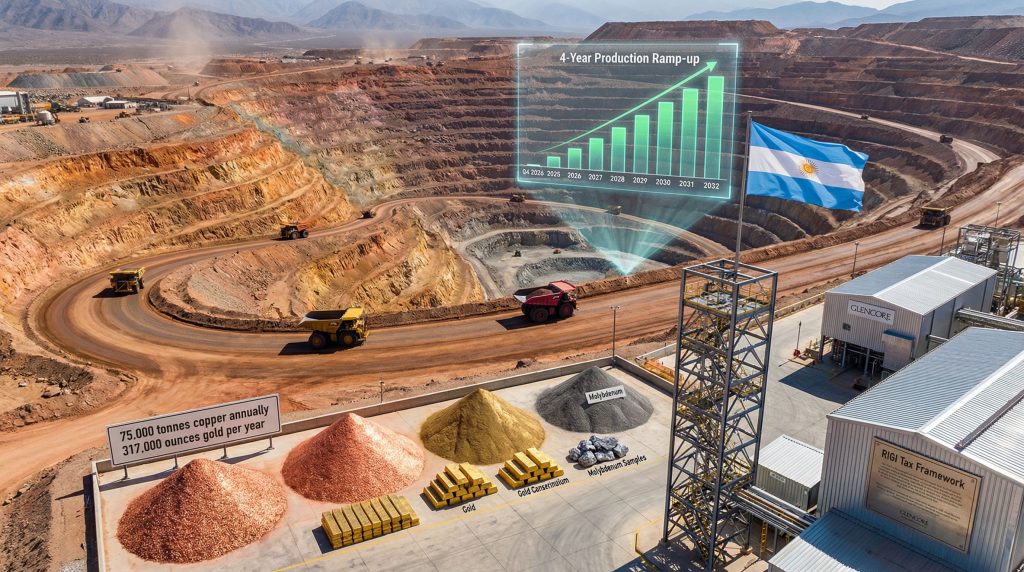
Global mining portfolios face mounting pressure to optimise existing assets amid volatile commodity markets and shifting geopolitical landscapes. When established operations cease production, the decision to restart involves complex calculations spanning technical feasibility, market conditions, and strategic positioning. The Alumbrera project Glencore Argentina exemplifies how these factors create opportunities for companies willing to leverage dormant infrastructure while navigating regulatory frameworks that can dramatically alter project economics.
Argentina's evolving mining industry evolution presents a compelling case study in how policy frameworks can influence major capital allocation decisions. The country's implementation of the Large Investment Incentive Regime (RIGI) has fundamentally altered the risk-reward calculus for international mining companies, particularly those with existing infrastructure assets that have remained in care and maintenance status.
Market Fundamentals Driving Strategic Mine Reactivations
Mining companies increasingly view dormant assets as strategic options rather than stranded investments. The ability to rapidly respond to favourable market conditions requires maintaining critical infrastructure and operational knowledge during closure periods. This approach allows companies to capture commodity price upswings without the extended development timelines associated with greenfield projects.
Copper market dynamics have evolved significantly since 2018, with sustained pricing above historical averages driven by electrification trends and supply constraints in major producing regions. Furthermore, the transition to renewable energy systems and electric vehicle adoption continues to support medium-term demand projections, creating favourable conditions for production restarts at previously marginal operations.
Gold market premiums add substantial value to polymetallic operations, particularly in volatile economic environments where precious metals serve as portfolio hedges. The correlation between base metal and precious metal pricing cycles often creates optimisation opportunities for multi-commodity operations, as demonstrated by recent gold market performance.
Molybdenum demand from steel production and renewable energy applications provides additional revenue streams that can significantly improve project economics. This specialised market often exhibits different cyclical patterns than primary copper markets, creating natural hedging benefits for diversified operations.
Argentina's Regulatory Environment Transformation
The implementation of Argentina's RIGI framework represents one of the most significant mining policy shifts in Latin America. This incentive structure specifically targets large-scale mining investments, offering:
• Accelerated depreciation allowances for capital equipment
• Foreign exchange stability provisions for international investors
• Tax optimisation structures for export-oriented operations
• Repatriation guarantees for international mining companies
These provisions directly address historical concerns about Argentine investment stability, particularly regarding currency convertibility and profit repatriation. The framework's design reflects recognition that modern mining operations require long-term policy certainty to justify substantial capital commitments.
Regulatory stability improvements extend beyond tax policy to encompass environmental permitting, labour relations, and infrastructure development coordination. However, the current administration's focus on mining sector development has streamlined approval processes while maintaining environmental standards.
When big ASX news breaks, our subscribers know first
Strategic Portfolio Integration for Multi-Asset Development
Modern mining portfolios increasingly emphasise operational synergies and infrastructure sharing to optimise capital efficiency. The concept of hub-and-spoke development models allows companies to maximise returns from existing processing facilities, transportation networks, and skilled workforce bases.
Shared logistics networks become particularly valuable in remote mining regions where transportation costs represent significant portions of operating expenses. In addition, the ability to distribute infrastructure investments across multiple operations creates competitive advantages that extend beyond individual project economics.
Infrastructure Hub Strategy Implementation
The integration of multiple projects within geographic proximity enables several strategic advantages:
• Workforce optimisation across seasonal production cycles
• Equipment sharing for specialised mining and processing activities
• Supply chain consolidation reducing procurement costs and logistics complexity
• Processing facility utilisation maximising throughput across multiple ore sources
Risk mitigation through operational continuity becomes increasingly important as mining operations face growing technical and environmental challenges. Maintaining operational expertise during transition periods preserves institutional knowledge that would be costly to recreate during restart phases.
Technical expertise preservation during care and maintenance periods requires deliberate workforce retention strategies. Companies that successfully maintain key personnel relationships during dormancy periods typically achieve faster restart timelines and lower recommissioning costs.
Production Profile Analysis and Market Impact Assessment
The evaluation of restart economics requires comprehensive analysis of production forecasts, market positioning, and competitive dynamics. Understanding how resumed operations fit within broader commodity supply chains helps investors assess both direct returns and strategic value creation.
Regional market dynamics in South American copper production involve complex interactions between established Chilean and Peruvian operations, emerging Brazilian developments, and the Argentina copper system. Each region presents distinct cost structures, regulatory environments, and logistical advantages.
Operational Ramp-Up Considerations
Mine restart operations typically follow predictable phases that influence both cost structures and revenue recognition:
- Infrastructure recommissioning and safety certification processes
- Equipment refurbishment and processing facility optimisation
- Workforce recruitment and training programme implementation
- Production ramp-up with gradual capacity increases toward design specifications
Timeline management becomes critical for restart projects as extended commissioning periods can significantly impact project returns. Companies with strong care and maintenance programmes typically achieve faster restart timelines due to better infrastructure preservation.
Processing facility optimisation opportunities often emerge during extended shutdown periods as technology improvements and operational learnings can be incorporated into restart planning. This creates potential for improved recovery rates and reduced operating costs compared to historical performance.
Argentina's Copper Sector Development Strategy
Argentina's positioning within global copper markets reflects broader strategic objectives to diversify the economy beyond agricultural and energy exports. The country's geological endowments, particularly in the Andes mountain regions, provide substantial mineral resources that remain underdeveloped relative to neighbouring Chile and Peru.
Employment generation in remote mining regions creates significant multiplier effects for local economies, particularly in provinces with limited alternative economic activities. For instance, mining operations typically offer wage premiums compared to regional averages, contributing to skill development and infrastructure investment.
National Mining Strategy Integration
Argentina's approach to mining sector development emphasises:
• Infrastructure connectivity between mining regions and export ports
• Skills development programmes aligned with industry requirements
• Environmental management frameworks balancing development and conservation
• Foreign exchange generation through commodity exports
Regional economic development benefits extend beyond direct employment to include supplier networks, service providers, and infrastructure improvements. Mining operations often catalyse broader economic activity in previously isolated regions.
Foreign exchange earnings from mineral exports provide valuable currency stability for developing economies, particularly during periods of global economic uncertainty. Consequently, diversified commodity export portfolios reduce dependence on individual sector performance.
How Are Mine Restart Operations Evaluated for Risk?
Investment decisions regarding dormant mine reactivation require comprehensive risk evaluation across technical, market, and political dimensions. The extended timeline between closure and restart creates unique uncertainties that differ from both operating mine investments and greenfield developments.
Technical and Geological Risk Factors
Ore grade quality degradation represents a primary concern for restart operations, particularly in open-pit mines where weathering and oxidation can affect mineral recovery rates. Extended exposure to environmental conditions may require adjusted processing parameters or additional beneficiation steps.
Infrastructure deterioration during care and maintenance periods varies significantly based on climate conditions, maintenance protocols, and equipment types. Electrical systems, processing equipment, and transportation infrastructure require detailed condition assessments before restart commitments.
The following technical considerations influence restart feasibility:
• Geotechnical stability of open-pit walls and underground workings
• Water management systems and environmental compliance requirements
• Processing equipment condition and technology upgrade requirements
• Tailings facility integrity and expansion capabilities
Market and Political Risk Evaluation
Commodity price volatility over extended production periods creates revenue uncertainty that must be balanced against fixed restart costs and ongoing operational expenses. Mining companies typically employ hedging strategies and price sensitivity analysis to manage exposure.
Political continuity concerns extend beyond individual administrations to encompass broader policy frameworks affecting mining investment. Countries with stable mining codes and consistent application of regulations typically attract higher levels of international investment.
Regulatory compliance requirements may evolve during dormancy periods, necessitating additional permits or environmental impact assessments. Changes in environmental standards, labour regulations, or tax policies can significantly impact restart economics, requiring detailed drill results interpretation for updated feasibility assessments.
International Comparative Analysis of Mine Restart Projects
Global mining experience provides valuable insights into factors that determine restart project success rates and timeline achievement. Historical analysis reveals patterns that help investors evaluate new restart opportunities and potential risk factors.
Care and maintenance duration correlates with restart complexity, though the relationship varies by climate, equipment types, and maintenance protocols. Operations in harsh environments typically face greater challenges during extended shutdown periods.
Industry Precedents and Success Metrics
Successful mine restart projects typically demonstrate several common characteristics:
• Comprehensive feasibility updates incorporating current market conditions and regulatory requirements
• Stakeholder engagement programmes addressing community and environmental concerns
• Technology integration opportunities identified during shutdown analysis
• Financial structure optimisation aligned with current capital markets conditions
Workforce and community engagement strategies become particularly important for operations with extended shutdown periods. Local communities may have adapted to mine closure, requiring renewed relationship building and economic impact communication.
Capital requirements for restart projects often exceed initial estimates due to infrastructure deterioration, regulatory changes, and technology upgrades. Successful projects typically maintain contingency provisions of 15-25% above engineering estimates.
Competitive Positioning Assessment
South American copper production dynamics involve complex cost curve positioning, with transportation advantages, labour costs, and regulatory frameworks creating differentiated competitive positions. Argentine operations typically benefit from lower labour costs but face higher transportation expenses to major markets.
Processing technology improvements during shutdown periods can create opportunities for operational optimisation and cost reduction. Companies that invest in modern processing equipment during restart phases often achieve superior performance compared to pre-closure operations.
The next major ASX story will hit our subscribers first
Investment Strategy Framework for Mining Restart Opportunities
Mining restart investments require specialised evaluation frameworks that account for unique risk-return profiles compared to operating mines or greenfield developments. The combination of existing infrastructure value and restart execution risk creates complex investment considerations.
Direct Investment Exposure Analysis
Corporate investment strategies for mining restart opportunities typically involve several evaluation criteria:
• Asset quality assessment including ore grade, infrastructure condition, and regulatory status
• Management execution capabilities based on historical restart performance
• Market timing considerations relative to commodity price cycles
• Portfolio diversification benefits within broader mining investment strategies
Cash flow generation from restart operations typically follows J-curve patterns with significant initial capital requirements followed by sustained operational cash flows. Investment timing relative to commodity cycles significantly influences returns, particularly in gold-copper exploration projects.
Dividend policy implications for diversified mining companies depend on portfolio cash flow generation and capital allocation priorities. Restart investments may temporarily reduce dividend coverage while contributing to long-term production growth.
Indirect Investment Opportunities
Regional service providers often benefit significantly from mining restart announcements through increased demand for specialised equipment, technical services, and logistics support. Local suppliers may experience revenue growth even before production commences.
Infrastructure development opportunities emerge from mining restart projects through improved transportation networks, power systems, and telecommunications connectivity. These investments often benefit broader regional economic development beyond mining activities.
Commodity futures positioning strategies can provide exposure to restart production without direct equity investment in mining companies. However, futures markets typically reflect broader supply-demand dynamics rather than individual project impacts.
Understanding Mine Restart Decision Drivers
Closure Rationale and Market Context
Mine closures typically result from unfavourable intersections of ore grade depletion, commodity price deterioration, and operational cost escalation. The 2018 closure environment was characterised by copper prices below USD 6,000 per tonne and challenging cost structures in many global operations.
Economic viability thresholds vary significantly by operation type, with open-pit mines typically requiring lower commodity prices for profitability than underground operations. Processing costs, transportation expenses, and regulatory compliance requirements create baseline cost structures that must be exceeded by revenue generation.
Commodity price environments in 2018 reflected concerns about global economic growth, trade tensions, and oversupply in several mineral markets. The subsequent recovery in copper and gold prices has fundamentally altered project economics for many previously marginal operations.
Market Transformation Factors
Several structural changes have improved restart economics since 2018:
• Sustained copper price improvement reflecting supply constraints and demand growth
• Policy framework enhancement through RIGI implementation in Argentina
• Infrastructure synergy opportunities with adjacent development projects
• Technology advancement enabling improved processing efficiency and cost reduction
Integration opportunities with nearby projects create value that extends beyond individual operation economics. Shared infrastructure, processing facilities, and logistics networks can significantly improve returns across multiple assets.
Global Supply Chain Significance
Regional supply diversification benefits extend beyond absolute production volumes to encompass supply chain resilience and geopolitical risk distribution. New production sources in politically stable jurisdictions provide valuable alternatives to concentrated supply regions.
Strategic importance often exceeds absolute production contribution when considering portfolio balance, operational synergies, and option value for future development. Companies value operational platforms that enable rapid response to favourable market conditions.
What Are the Long-Term Implications for Mining Development?
Mine restart decisions create precedents that influence broader investment patterns and policy effectiveness evaluation. Successful restart projects demonstrate policy framework functionality and encourage additional investment consideration by international mining companies.
Policy Effectiveness Demonstration
Investment attraction metrics for policy frameworks require actual project commitments rather than theoretical incentive structures. Furthermore, restart announcements provide tangible evidence of policy effectiveness and may catalyse additional investment decisions by other companies.
International confidence building through successful restart projects enhances country reputation among global mining investors. This reputation effect often proves more valuable than individual project contributions to national economic indicators.
Catalyst Effects for Broader Development
Infrastructure development stimulated by mining restart projects often benefits broader regional economic activity through improved transportation networks, power systems, and telecommunications connectivity. These improvements can attract investment in other sectors and enhance overall regional competitiveness.
Skills development programmes associated with mining operations create human capital that benefits multiple industries beyond mining. Technical training, safety protocols, and operational management capabilities contribute to broader economic development objectives.
Technology transfer acceleration through international mining investment brings advanced processing techniques, environmental management systems, and operational optimisation approaches that can benefit domestic industries and service providers.
The regional economic diversification enabled by successful mining operations reduces dependence on single-industry economic models while providing stable employment and tax revenue generation for local and national governments.
According to Glencore's latest strategic announcements, the company aims to significantly expand its copper production capacity by 2035, with the Alumbrera project Glencore Argentina representing a crucial component of this growth strategy. Furthermore, recent industry analysis indicates that the restart could contribute substantially to Argentina's mineral export capacity.
"The reactivation of major mining operations demonstrates the effectiveness of Argentina's new investment framework and signals renewed confidence in the country's mining sector potential," according to industry analysts monitoring South American mining developments.
Investment Disclaimer: Mining investments involve substantial risks including commodity price volatility, operational challenges, and political uncertainties. Past performance does not guarantee future results, and investors should conduct thorough due diligence and consider professional financial advice before making investment decisions. This analysis is for informational purposes only and does not constitute investment recommendations.
Want to Stay Ahead of Mining Discoveries That Could Impact Your Portfolio?
Discovery Alert's proprietary Discovery IQ model provides instant notifications on significant ASX mineral discoveries, transforming complex mining announcements into actionable investment insights before market movements occur. See how major discoveries have generated substantial returns by exploring Discovery Alert's dedicated discoveries page, then begin your 30-day free trial today to position yourself ahead of the next breakthrough.