August 24, 2026
The aluminium can supply shortage 2026 represents a critical inflection point for global beverage manufacturers, revealing fundamental weaknesses in packaging supply chain resilience. Manufacturing complexity in the global aluminium packaging sector extends far beyond surface-level supply and demand metrics. The intricate web of production capacity, regulatory compliance frameworks, and material specification requirements creates vulnerabilities that can cascade through entire beverage supply chains.
When these systems encounter disruption, the resulting shortages reveal the delicate balance between manufacturing efficiency and market resilience. Furthermore, the tariff impact on markets adds another layer of complexity to supply chain planning. The aluminium can supply shortage 2026 exposes fundamental structural weaknesses in how the packaging industry manages capacity planning, quality control integration, and cross-border sourcing strategies.
Understanding the Global Aluminium Can Manufacturing Crisis of 2026
Production Capacity vs. Market Demand Imbalance
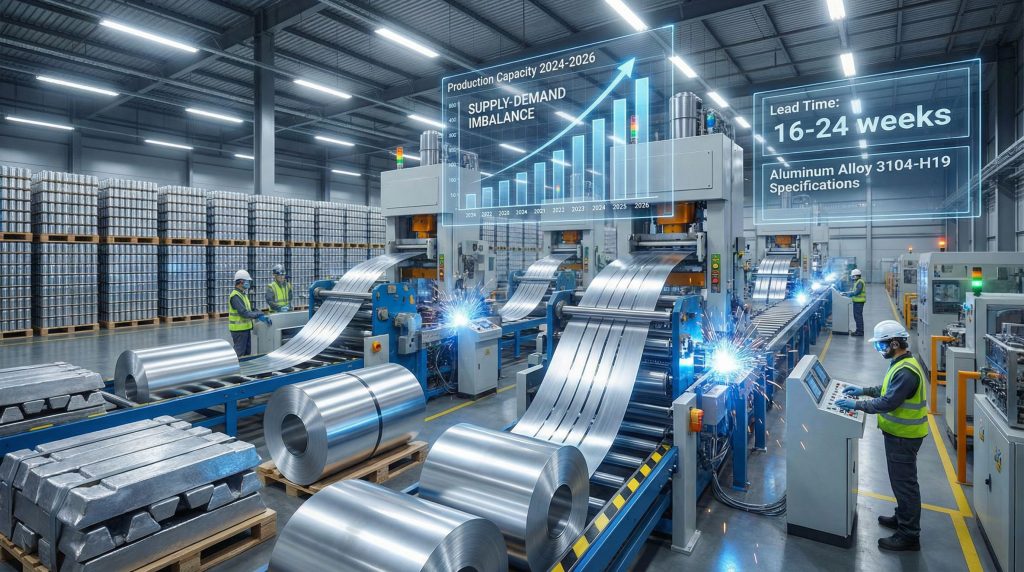
The global aluminium can manufacturing sector operates within razor-thin capacity margins that leave little room for disruption absorption. India's domestic aluminium can manufacturing capacity operates at approximately 20 percent below current market demand, creating a quantified supply-demand imbalance that exemplifies broader industry constraints (AL Circle, 2026). This deficit represents more than a temporary shortage; it indicates systematic underinvestment in production infrastructure relative to consumption growth trajectories.
Manufacturing bottlenecks emerge from multiple convergent factors within the aluminium sheet production ecosystem. Primary aluminium sheet manufacturers face extended lead times as demand for beverage packaging aluminium outpaces production scheduling capabilities. The beer producers in India faced a specific shortfall of 120-130 million units of 500-millilitre cans during 2025, demonstrating how capacity constraints translate into quantifiable unit shortages.
Regional Aluminium Can Production Capacity Analysis (2024-2026)
| Region | Current Utilisation Rate | Demand Growth Rate | Capacity Gap |
|---|---|---|---|
| India | 80% (20% below demand) | 25% annually | 120-130 million units |
| North America | Data not available | Data not available | Under investigation |
| Europe | Data not available | Data not available | Under investigation |
| Asia-Pacific | Data not available | Data not available | Under investigation |
The financial implications of these capacity constraints extend beyond manufacturing inefficiencies. An estimated revenue loss of approximately Rs 1,300 crore for state governments was projected without adequate aluminium can supply in India alone. This economic impact calculation demonstrates how packaging constraints directly affect government tax revenues through reduced beverage sales.
Technical Specifications Driving Supply Constraints
Aluminium alloy requirements for beverage packaging follow precise metallurgical specifications that cannot be easily substituted or modified. The industry standard 3104-H19 alloy composition provides the necessary strength, formability, and corrosion resistance required for beverage containment. However, achieving consistent quality across these specifications requires specialised production equipment and process control that constrains manufacturing flexibility.
Quality control standards create additional production complexity through mandatory certification processes. The Bureau of Indian Standards certification requirements created supply pressure when implemented through mandatory Quality Control Orders in April 2025. These certification timelines extend production schedules as manufacturers must validate compliance before releasing finished products to market.
Industry Insight: Recycled aluminium content in beverage can manufacturing affects production timelines through additional sorting, cleaning, and quality verification processes. While recycled content reduces raw material costs, it introduces variability in alloy composition that requires enhanced process control and testing protocols.
The interaction between technical specifications and production capacity creates cascading constraints throughout the supply chain. When manufacturers prioritise quality compliance, production throughput necessarily decreases, exacerbating capacity utilisation challenges during peak demand periods.
When big ASX news breaks, our subscribers know first
What Manufacturing Disruptions Are Causing the Aluminium Can Shortage?
Primary Production Facility Outages and Their Ripple Effects
Manufacturing disruptions in the aluminium can sector stem from multiple interconnected operational constraints rather than isolated facility failures. The mandatory Quality Control Order certification requirement implementation in April 2025 created immediate supply disruption for major beverage manufacturers including Coca-Cola and United Breweries Limited. This regulatory implementation demonstrates how compliance frameworks can create systematic production bottlenecks across multiple manufacturers simultaneously.
The ripple effects of certification requirements extend beyond individual company operations. When major beverage manufacturers face supply constraints, they activate alternative sourcing strategies that stress remaining production capacity throughout the industry. This demand concentration effect amplifies the impact of any single production disruption across the broader manufacturing ecosystem.
Secondary smelting capacity limitations represent another critical constraint affecting aluminium sheet availability for can production. Secondary smelting operations, which process recycled aluminium into new sheet stock, operate with different capacity profiles than primary aluminium production. When primary production faces constraints, secondary smelting cannot immediately compensate due to different feedstock requirements and processing capabilities.
In addition, US tariffs and inflation pressures create additional operational challenges for aluminium production facilities. Energy cost pressures create further operational challenges for aluminium production facilities. Aluminium smelting requires substantial electricity input, making production economics sensitive to energy price volatility.
Raw Material Supply Chain Vulnerabilities
The aluminium can manufacturing supply chain depends on coordinated material flows from bauxite mining through alumina refining to aluminium smelting and sheet production. Disruption at any stage creates cascading effects throughout downstream manufacturing operations. Transportation infrastructure constraints particularly affect aluminium ingot distribution, as the bulk nature of these materials requires specialised logistics capabilities.
Geographic sourcing vulnerabilities became apparent when Indian manufacturers needed to source cans from Sri Lanka and the Middle East during domestic shortages. The shortage led to an import rush from Sri Lanka and the Middle East to tackle the seasonal demand. This geographic diversification requirement indicates that regional production capacity cannot easily substitute for local manufacturing during constraint periods.
The technical compatibility of imported aluminium cans adds complexity to international sourcing strategies. Different regional manufacturers may use varying alloy compositions, manufacturing processes, or quality standards that require validation before integration into existing beverage production lines. Consequently, trade war effects further complicate international sourcing decisions.
How Are Beverage Companies Responding to Can Supply Shortages?
Alternative Packaging Strategies and Material Substitution
Beverage manufacturers facing aluminium can constraints must evaluate alternative packaging formats while considering production line compatibility, cost implications, and consumer acceptance factors. Glass bottle production capacity represents one alternative, though glass manufacturing requires different production infrastructure and longer lead times than aluminium can procurement.
PET plastic container adoption offers another packaging alternative, particularly for products traditionally packaged in aluminium. However, transitioning to plastic packaging requires investment in different filling equipment, closure systems, and distribution handling procedures. The cost implications of packaging format switching extend beyond material costs to include equipment modification, inventory management, and marketing repositioning expenses.
Material substitution considerations include:
• Production line compatibility with alternative packaging formats
• Shelf life characteristics of different packaging materials
• Transportation weight and volume efficiency
• Consumer preference patterns for specific product categories
• Recycling infrastructure compatibility in target markets
• Barrier properties for product preservation requirements
Supply Chain Diversification and Procurement Adjustments
Industry participants demonstrated clear preferences for domestic sourcing when available. Whilst brewers prefer domestically produced empty cans due to lower costs, capacity constraints forced alternative procurement strategies. This cost-based sourcing preference indicates that domestic production typically offers economic advantages beyond transportation savings.
Emergency sourcing protocols for beverage manufacturers during shortage periods involve activating previously unused supplier relationships, expediting quality certification processes, and potentially accepting higher procurement costs to maintain production continuity. These protocols require advance preparation through supplier identification, quality pre-qualification, and contract framework establishment.
Geographic sourcing strategy modifications require understanding regional production capacity, quality standards, and logistics infrastructure. The import substitution strategy involving Sri Lanka and Middle Eastern suppliers demonstrated that international sourcing remained feasible during domestic constraints, though presumably at higher costs and longer lead times.
Long-term contract renegotiations with can manufacturers involve restructuring pricing mechanisms, delivery schedules, and quality specifications to provide greater supply security during constraint periods. These contract modifications may include minimum volume commitments, shared capacity investments, or alternative sourcing provisions. Moreover, implementing effective market volatility hedging strategies becomes crucial during such uncertain periods.
Which Regions Face the Most Severe Aluminium Can Shortages?
North American Market Analysis
Regional aluminium can supply shortage 2026 severity varies significantly based on local production capacity, consumption patterns, and import infrastructure capabilities. Whilst comprehensive data for North American markets requires additional industry analysis, the documented Indian market constraints provide a framework for understanding regional vulnerability factors.
Import dependency ratios affect regional resilience during shortage periods. Markets with established import infrastructure and diversified supplier relationships can more readily access alternative sourcing during domestic production constraints. Conversely, markets with limited import experience or infrastructure face greater vulnerability to local production disruptions.
Manufacturing capacity utilisation rates across major facilities determine regional supply elasticity. When existing facilities operate near maximum capacity, any production disruption immediately affects market availability. Facilities with excess capacity can partially compensate for disruptions elsewhere, though transportation costs and quality compatibility requirements limit this substitution effect.
Asia-Pacific Supply-Demand Dynamics
The Indian market provides the most thoroughly documented regional shortage analysis available from verified sources. Domestic aluminium can manufacturing capacity in India operates at approximately 20 percent below market demand, creating quantified supply constraints. This capacity deficit occurred alongside significant consumption growth, as cans now account for over 25 percent of annual soft drink and beer sales in India, having doubled in just two years.
Regional Shortage Severity Analysis
| Market | Capacity Deficit | Import Dependency | Seasonal Vulnerability |
|---|---|---|---|
| India | 20% below demand | High (Sri Lanka, Middle East) | Summer peak demand |
| China | Data required | Data required | Data required |
| Southeast Asia | Data required | Data required | Data required |
| Australia/New Zealand | Data required | Data required | Data required |
The seasonal demand challenge in India illustrates how regional shortage severity can vary with predictable consumption patterns. The Bureau of Indian Standards certification timeline extension was characterised as preventing a significant potential crisis ahead of summer seasonal demand. This seasonal vulnerability indicates that regional shortages become particularly acute during predictable peak consumption periods.
China's role as both a major aluminium producer and can manufacturer affects regional supply dynamics throughout Asia-Pacific. Export restriction policies, domestic demand growth, and production capacity allocation decisions in China create ripple effects across regional aluminium can availability.
What Economic Factors Are Amplifying the Can Supply Crisis?
Raw Material Cost Inflation and Margin Compression
Aluminium commodity price volatility directly affects can manufacturing economics through raw material cost fluctuations. Primary aluminium pricing responds to global supply and demand dynamics, energy costs, and currency exchange rates. When aluminium prices increase rapidly, can manufacturers face margin compression that may lead to production curtailments or facility closures.
Energy cost components in aluminium production create additional economic pressure on manufacturing operations. Electricity represents approximately 30-40 percent of primary aluminium smelting costs, making production economics highly sensitive to energy price movements. For instance, natural gas price trends affect aluminium sheet rolling operations and can manufacturing facility operations through heating and process energy requirements.
Cost structure analysis for aluminium can manufacturing:
• Raw aluminium sheet: 60-70% of total production costs
• Energy (electricity, natural gas): 15-20% of total costs
• Labour and overhead: 10-15% of total costs
• Transportation and logistics: 5-10% of total costs
The documented cost preference for domestic production in India illustrates these economic dynamics. Industry participants explicitly stated that brewers prefer domestically produced empty cans due to lower costs compared to imported alternatives. Whilst specific cost differentials remain unquantified, this preference indicates meaningful economic advantages for local sourcing when capacity permits.
Trade Policy and Regulatory Compliance Pressures
Quality certification timeline extensions and their operational impact create measurable economic effects throughout the beverage supply chain. The estimated revenue loss of approximately Rs 1,300 crore for state governments demonstrates the economic magnitude of regulatory compliance disruptions. This financial impact extends beyond direct manufacturing costs to include tax revenue losses and economic activity reduction.
Import tariff structures affecting cross-border aluminium trade influence the economic attractiveness of international sourcing strategies. Higher tariffs increase the delivered cost of imported cans, potentially making domestic production more economically competitive despite capacity constraints. Conversely, lower tariffs or preferential trade agreements can make imports more economically viable during shortage periods.
Regulatory compliance cost factors include:
• Certification process fees and testing requirements
• Production line downtime during compliance validation
• Inventory management complications during certification periods
• Quality assurance system modifications and documentation
• Potential penalty costs for non-compliance
How Long Will the Aluminium Can Shortage Persist Through 2026?
Production Capacity Expansion Timeline Analysis
Aluminium can manufacturing capacity expansion requires substantial lead times for equipment procurement, installation, and commissioning. Industry participants acknowledged that whilst can manufacturers are investing in adding capacity, the process remains time-consuming. New production line installation typically requires 12-18 months from equipment ordering to commercial production, creating inherent delays in capacity response to shortage conditions.
Planned capacity expansion factors:
• Equipment procurement lead times: 6-9 months for specialised can-making machinery
• Facility construction or modification: 3-6 months for building preparation
• Installation and commissioning: 3-6 months for line startup and optimisation
• Quality certification and regulatory approval: 2-4 months for compliance validation
• Workforce training and process optimisation: 1-3 months for operational efficiency
The Brewers Association of India's engagement with the Department for Promotion of Industry and Internal Trade beginning in August 2025 demonstrates the timeline required for industry advocacy and regulatory response during shortage periods. This six-month period from initial industry engagement to regulatory relief indicates the time scales involved in addressing systematic supply constraints through policy measures.
Demand Forecasting and Market Recovery Projections
Seasonal consumption patterns significantly affect supply chain planning and recovery timeline projections. The documented summer demand pressure in India illustrates how predictable seasonal peaks can exacerbate shortage conditions during specific periods. Market recovery depends on capacity expansion timing relative to these seasonal demand cycles.
Scenario analysis for shortage duration:
Best-case scenario (12-15 months):
• Rapid capacity expansion completion by existing manufacturers
• Regulatory compliance timeline optimisation
• Minimal additional demand growth during recovery period
• Favourable energy costs supporting production economics
Worst-case scenario (24-30 months):
• Equipment procurement delays affecting capacity expansion
• Additional regulatory requirements extending compliance timelines
• Continued rapid demand growth outpacing capacity additions
• Energy cost pressures forcing production curtailments
Market equilibrium restoration requires balanced capacity expansion relative to demand growth trajectories. The documented doubling of can consumption in India over two years indicates rapid demand acceleration that outpaced capacity planning cycles. Sustainable market balance requires capacity expansion that accounts for continued growth projections rather than merely addressing current deficit levels.
The next major ASX story will hit our subscribers first
What Strategic Solutions Can Mitigate Future Can Supply Disruptions?
Manufacturing Resilience and Redundancy Planning
Multi-supplier sourcing strategies for critical aluminium inputs require developing relationships with geographically diverse suppliers whilst maintaining quality and delivery reliability. The successful import sourcing from Sri Lanka and the Middle East during Indian shortages demonstrates that international supplier diversification can provide effective backup capacity during domestic constraints.
Regional production capacity balancing initiatives involve coordinating capacity investment across different geographic markets to provide mutual support during localised disruptions. This approach requires industry cooperation and potentially coordinated investment planning to avoid oversupply in normal market conditions whilst providing adequate surge capacity during constraint periods.
Step-by-step supply chain resilience building:
- Supplier assessment and diversification: Identify alternative suppliers across multiple geographic regions with compatible quality standards and delivery capabilities
- Quality pre-qualification programmes: Establish certification processes for backup suppliers to enable rapid activation during shortage periods
- Inventory strategy optimisation: Balance carrying costs against shortage risk through strategic safety stock positioning
- Transportation infrastructure development: Invest in logistics capabilities to access geographically diverse supplier networks
- Contract structure modification: Negotiate flexible sourcing agreements with volume commitments and alternative supplier provisions
- Monitoring and early warning systems: Implement supply chain visibility tools to detect potential disruptions before they affect production
Technology and Process Innovation Opportunities
Advanced aluminium recycling technologies offer potential pathways to reduce primary metal dependency and increase supply chain flexibility. Enhanced recycling processes can improve the quality and consistency of recycled aluminium feedstock, potentially reducing the technical constraints that limit recycled content in beverage can manufacturing.
Production efficiency improvements through automation and artificial intelligence optimisation can increase effective capacity from existing manufacturing infrastructure. Predictive maintenance systems, process optimisation algorithms, and quality control automation can reduce downtime and improve throughput without requiring new facility construction.
Technology Innovation Spotlight: Emerging digital supply chain technologies enable real-time visibility into production capacity, quality status, and logistics coordination across multiple suppliers and regions. These systems facilitate rapid response to supply disruptions through automated alternative sourcing and production scheduling optimisation.
Process innovation in aluminium sheet production and can manufacturing can potentially reduce lead times and improve production flexibility. Advanced forming technologies, improved alloy compositions, and optimised heat treatment processes may enable more efficient production scheduling and quality achievement.
Investment Implications and Market Opportunities in Aluminium Packaging
Capital Allocation Priorities for Industry Players
Aluminium can manufacturing capacity investments require substantial capital commitments with multi-year payback periods, creating complex risk-return calculations during uncertain demand environments. The documented capacity shortage of 20 percent in India suggests immediate investment opportunities, though investors must consider demand growth sustainability and competitive capacity additions.
Return on Investment Analysis for Capacity Expansion
| Investment Component | Capital Requirement | Payback Period | Risk Factors |
|---|---|---|---|
| New production line | $15-25 million | 3-5 years | Demand sustainability |
| Facility expansion | $5-10 million | 2-3 years | Regulatory approval |
| Quality systems | $2-5 million | 1-2 years | Certification timeline |
| Working capital | $10-20 million | Ongoing | Inventory optimisation |
Market consolidation opportunities emerge during supply constraint periods as smaller manufacturers may face financial pressure from capacity limitations and increased procurement costs. Larger manufacturers with financial resources can potentially acquire constrained competitors or invest in capacity expansion to gain market share during recovery periods.
Vertical integration strategies for beverage companies involve investing directly in can manufacturing capacity to ensure supply security. This approach requires substantial capital investment and manufacturing expertise development, but provides greater control over supply chain reliability and potentially lower long-term packaging costs.
Long-term Structural Changes in Packaging Markets
Sustainability drivers increasingly favour aluminium packaging due to its infinite recyclability and lower carbon footprint compared to alternative materials. However, these sustainability advantages depend on robust recycling infrastructure and energy-efficient production processes. Investment in recycling technology and renewable energy integration represents long-term value creation opportunities in aluminium packaging.
According to recent industry analysis, an aluminium deficit will support prices throughout 2026, indicating continued market tightness. Furthermore, the green aluminium deficit in Europe presents specific challenges for environmentally conscious manufacturers seeking sustainable packaging solutions.
Future market growth projections for aluminium can packaging:
• Beverage sector: 4-6% annual growth driven by convenience and sustainability preferences
• Food packaging: 3-5% annual growth as aluminium displaces other materials
• Emerging markets: 8-12% annual growth reflecting urbanisation and income growth
• Recycled content: Increasing regulatory requirements driving recycled aluminium demand
Regional market share redistribution patterns through 2030 will likely reflect capacity investment decisions made during the current shortage period. Markets that successfully expand capacity whilst maintaining competitive costs may capture increased market share, while regions that fail to address capacity constraints may lose market position to imports or alternative packaging materials.
Disclaimer: The projections and analysis contained in this article involve forecasts and speculation about future market conditions, production capacity, and investment returns. These projections are based on current market data and industry trends but are subject to significant uncertainty. Actual results may vary materially from these projections due to changes in market conditions, regulatory environments, technology developments, and other factors. Readers should conduct independent research and consult with qualified financial and industry professionals before making investment decisions based on information contained in this analysis.
Want to Discover the Next Big Mining Opportunity?
Discovery Alert instantly identifies significant ASX mineral discoveries using its proprietary Discovery IQ model, transforming complex mining data into actionable investment insights. Explore historic mining discoveries that have generated substantial market returns and begin your 30-day free trial at Discovery Alert today to position yourself ahead of the market.