May 20, 2026
When Political Rhetoric Becomes the Price Signal: Oil Markets in Uncharted Territory
Commodity markets have always absorbed geopolitical shocks, but they have historically done so by anchoring to measurable variables: production volumes, inventory levels, tanker traffic, refinery capacity. What makes the current US-Iran conflict fundamentally different is that the primary pricing variable is not a barrel count or a shipping lane metric. It is the daily output of a single political actor's public communications, an input that no futures model was designed to process with consistency.
This is the core challenge facing crude oil traders in May 2026. The question of whether oil prices ease after Trump says the US will end the Iran war very quickly is not really a question about supply fundamentals. It is a question about how efficiently markets can discount a statement that sits alongside a contradictory statement made by the same source within the same 24-hour window.
When big ASX news breaks, our subscribers know first
The Arithmetic of Contradictory Signals
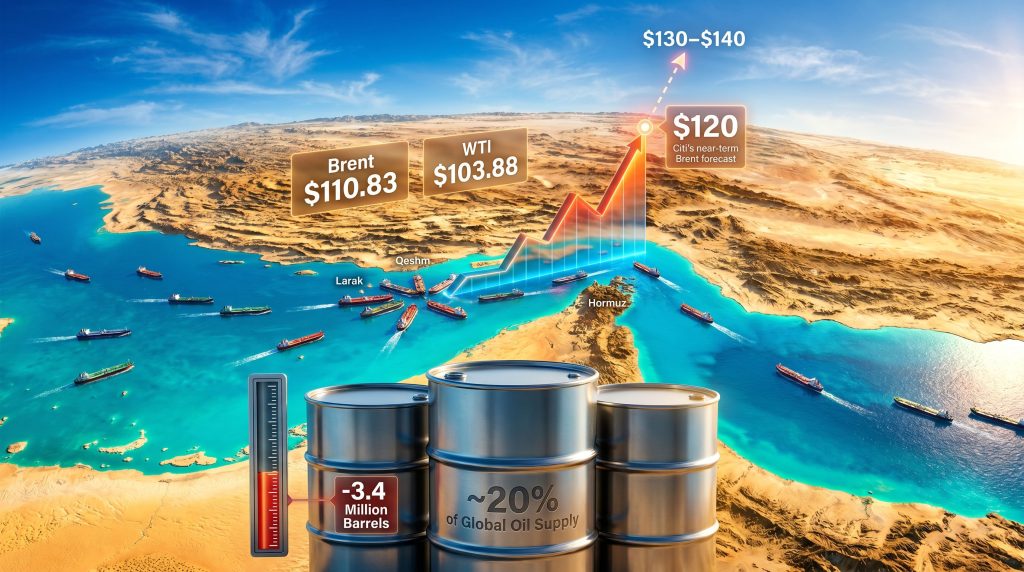
On May 20, 2026, Brent crude futures were trading at $110.83 per barrel, down $0.45 or 0.4% from the prior session, while West Texas Intermediate sat at $103.88 per barrel, off $0.27 or 0.3%. These moves followed comments from President Trump asserting the conflict with Iran would conclude rapidly, delivered to US lawmakers late on the previous evening.
The price response was notable not for its direction but for its restraint. A presidential declaration that a major supply-disrupting conflict is nearly over would, under normal conditions, produce a significantly sharper downward correction. Instead, the market absorbed the statement and moved Brent by less than half a percent. This tells an important story about the credibility discount traders are applying to diplomatic rhetoric in this environment.
The explanation lies in the surrounding context. On the same day Trump offered reassurances about a swift resolution, he also disclosed that the US had been approximately one hour away from ordering a fresh military strike on Iran before the decision was postponed. The day prior, he had warned that renewed US military action could come within days if Tehran failed to produce a deal. Markets are not choosing between these statements. They are weighting all of them simultaneously, which produces a volatility floor rather than a directional trend.
Furthermore, understanding the full picture requires examining the crude oil trade geopolitics that have shaped the broader pricing environment well before this specific conflict escalated.
Analysts at Fujitomi Securities have noted that even if a peace agreement were formalised, crude supply would be unlikely to normalise quickly given the scale of infrastructure disruption, cautious producer behaviour, and the complexity of restoring maritime logistics through the Strait of Hormuz.
The Strait of Hormuz: Understanding the World's Most Consequential Chokepoint
The Strait of Hormuz is a narrow maritime corridor connecting the Persian Gulf to the Gulf of Oman and onward to global shipping lanes. At its narrowest point, it spans approximately 33 kilometres, yet this slender passage functions as the circulatory system for roughly one-fifth of all global crude oil flows, according to the International Energy Agency. No other single geographic feature carries this concentration of energy trade.
What makes a Hormuz disruption qualitatively different from other supply shocks is its simultaneity. When a single major producer experiences disruption, other producers can often compensate with spare capacity. When the Strait closes or becomes effectively impassable, every producer relying on that corridor loses access to export markets at the same time. The disruption is not additive. It is multiplicative.
In addition, the oil logistical risk factors associated with Hormuz closures extend far beyond simple transit delays, encompassing insurance, rerouting costs, and downstream refinery scheduling disruptions that compound rapidly.
How Long Can the World Run on Strategic Inventories?
The global response to Hormuz supply disruption has relied on strategic petroleum reserves and commercial inventory drawdowns. This is the mechanism that prevents an immediate, catastrophic price spike, but it is not a mechanism designed for extended deployment.
In the United States, crude oil stockpiles fell for five consecutive weeks heading into mid-May 2026, according to data cited by market sources referencing American Petroleum Institute figures. A Reuters poll of analysts projected the Energy Information Administration's weekly report would confirm a further decline of approximately 3.4 million barrels for the week ending May 15, 2026.
| Metric | Data Point |
|---|---|
| Brent Crude (May 20, 2026) | $110.83/barrel |
| WTI Crude (May 20, 2026) | $103.88/barrel |
| Brent Daily Move | -$0.45 (-0.4%) |
| Citi Near-Term Brent Forecast | $120/barrel |
| Estimated US Inventory Change (week to May 15) | -3.4 million barrels |
| Consecutive Weeks of US Inventory Decline | 5 weeks |
| Hormuz Share of Global Oil Flows | ~20% |
| Kuwaiti Oil Benchmark Price | $124.63/barrel |
The structural ceiling on inventory-based compensation is a point that often goes underdiscussed in day-to-day market commentary. Strategic petroleum reserves exist to bridge acute, short-duration supply gaps, not to substitute for the permanent output of a major transit corridor. As drawdowns accelerate, the buffer between a supply shock and a genuine price emergency compresses.
Three Scenarios for Oil Prices: Resolution, Stalemate, or Escalation
Scenario A: Rapid Diplomatic Resolution
A formal ceasefire that produces verifiable terms and reopens the Strait of Hormuz to normal commercial traffic would generate significant downward pressure on crude prices. Trump's assertion that oil prices would fall substantially following a deal reflects the conventional logic of risk premium removal.
However, analysts caution against expecting immediate normalisation even under this optimistic outcome. Damaged refinery infrastructure, elevated maritime insurance premiums that persist well beyond active conflict, and the time required to rebuild depleted strategic inventories all create a structural lag between diplomatic resolution and physical supply recovery. The geopolitical risk premium may dissolve quickly. The supply recovery takes considerably longer.
Scenario B: Prolonged Stalemate (Base Case)
The more probable near-term path involves continued negotiations without a conclusive agreement, interspersed with periodic military threats that sustain market anxiety. Under this scenario, Brent crude is likely to remain in the $105 to $120 per barrel range, consistent with Citi's published near-term forecast of $120 per barrel.
Sustained prices at this level introduce a secondary risk that is often underweighted: demand destruction in price-sensitive emerging markets. When energy costs remain elevated for extended periods, industrial output contracts, transport costs rise, and consumer purchasing power erodes. This demand compression can eventually contribute to price relief, but the economic damage it causes in the interim is real and difficult to reverse quickly. The oil market trade war impact running concurrently with this conflict only amplifies these demand-side pressures on vulnerable economies.
Scenario C: Renewed Military Escalation
A breakdown in ceasefire talks accompanied by resumed US or Israeli military action, or a confirmed full closure of Hormuz enforced by Iranian naval assets, would represent the tail risk scenario. Under these conditions, independent analysts suggest Brent could approach the $130 to $140 per barrel range.
The structural mechanics of this scenario carry echoes of the 1973 Arab oil embargo, though the geopolitical architecture is entirely different. What both episodes share is the weaponisation of a supply concentration point to create systemic economic pressure on consuming nations. The difference in 2026 is that the global economy enters this potential shock with already-elevated inflation, constrained central bank flexibility, and significantly depleted strategic reserve buffers.
Why Citi Believes Markets Are Under-Pricing Risk
Citi's research position, published on May 19, 2026, is that crude oil markets are not adequately pricing the probability of a prolonged supply disruption or the broader category of tail risks associated with the conflict. This is a technically precise observation that deserves unpacking.
In options market terms, the current pricing environment suggests traders are assigning relatively modest probability to extreme outcomes on the upside. The downside scenario — a deal that brings prices lower — is already partially embedded in positioning given the series of diplomatic statements suggesting progress. The upside risk scenario — a conflict that expands, damages regional production infrastructure permanently, or draws in additional state actors — remains underweighted in market positioning.
Citi has projected Brent crude rising to $120 per barrel in the near term, arguing that current market positioning does not adequately account for the probability of the conflict extending materially beyond initial expectations or causing lasting damage to regional energy production assets.
This asymmetry matters for investors. When downside risk is priced and upside risk is not, the expected value of holding long crude positions is higher than the spot price implies. Consequently, those positioned short on the basis of diplomatic optimism carry more risk than conventional analysis might suggest. Reuters reporting on these price movements confirms that oil prices ease after Trump says the US will end the Iran war very quickly, yet the broader risk environment remains deeply unresolved.
The Broader Financial Market Cascade
The oil market does not exist in isolation. The US-Iran conflict and its energy market consequences are propagating through multiple adjacent financial systems simultaneously.
Currency markets: The US dollar climbed to a six-week high as uncertainty around the Iran conflict intensified safe-haven demand. A stronger dollar typically creates headwinds for commodity prices denominated in USD, as it raises the effective cost for buyers using other currencies. This dynamic introduces a partially self-limiting mechanism into the oil price spike, though it is insufficient to offset the supply disruption premium in the current environment.
Fixed income: Bond markets are reflecting inflation expectations tied to sustained energy price pressure, with elevated yields creating additional strain across sovereign and corporate debt markets.
Equities: Asian stock markets declined for a fourth consecutive session as the combination of higher yields and energy uncertainty compressed risk appetite across the region.
Regional benchmarks: The Kuwaiti oil price benchmark was trading at $124.63 per barrel, up $0.60 from the prior session, illustrating the premium that GCC producers are commanding amid supply anxiety in global markets.
The safe-haven market reaction to sustained geopolitical uncertainty has been particularly pronounced, with capital rotating out of risk assets and into traditional defensive positions across multiple asset classes.
The next major ASX story will hit our subscribers first
Post-Conflict Supply Recovery: Why History Offers a Cautious Template
One of the least-discussed dimensions of this crisis is what happens to oil supply infrastructure even after a conflict formally ends. Historical precedent across multiple Middle East conflict episodes consistently shows that physical recovery lags diplomatic resolution by substantial margins.
| Conflict Episode | Acute Disruption Duration | Post-Resolution Recovery Timeline |
|---|---|---|
| Gulf War I (1990-91) | Approximately 6 months | 12 to 18 months for full normalisation |
| Iraq War (2003) | 2 to 3 months acute phase | 18+ months for production recovery |
| Libya Civil War (2011) | Approximately 8 months | More than 2 years for sustained recovery |
| US-Iran Conflict (2026) | Ongoing | Estimated weeks to months minimum |
The barriers to rapid post-conflict supply normalisation include:
- Physical damage to refineries, pipelines, storage terminals, and port infrastructure requiring assessment and repair before resumption of operations
- Maritime insurance premiums and war-risk surcharges that shipping companies apply for extended periods after active hostilities end, raising the effective cost of Hormuz transit
- Producer caution, particularly among national oil companies and international operators, who typically require credible security guarantees and inspection windows before restarting suspended operations
- Strategic inventory rebuild requirements, since consuming nations will seek to replenish depleted reserves once supply normalises, creating sustained demand pressure even as production comes back online
Key Indicators Traders Are Watching
Bullish price triggers (potential upside for oil):
- Formal breakdown of US-Iran diplomatic talks with no agreed framework
- Resumption of US or Israeli military action against Iranian territory or assets
- Confirmed destruction of major regional oil production or refining infrastructure
- Acceleration of US strategic inventory drawdowns beyond current pace
Bearish price triggers (potential downside for oil):
- A verifiable ceasefire agreement with enforceable terms
- Physical reopening of Strait of Hormuz to normal commercial shipping traffic
- An emergency OPEC's market influence response to compensate for disrupted regional flows
- Third-party mediation framework with credible monitoring mechanisms
Weekly data releases with highest market sensitivity:
- EIA Weekly Petroleum Status Report tracking US crude and refined product inventory trajectories
- API crude inventory data as an early-read indicator published ahead of EIA figures
- Real-time Strait of Hormuz commercial shipping traffic data
- US-Iran diplomatic communications, which continue to function as the primary sentiment driver in near-term crude futures pricing
The Energy Security Lesson That Outlasts the Conflict
Whatever the diplomatic outcome of the current crisis, the structural vulnerability it has exposed will outlast the immediate price volatility. The concentration of approximately one-fifth of global crude oil flows through a single 33-kilometre chokepoint represents a systemic risk that consuming nations have acknowledged for decades without fully resolving.
The current episode is accelerating policy discussions around strategic petroleum reserve adequacy, import source diversification, and alternative energy infrastructure as long-term geopolitical hedges. For GCC producers navigating relationships with both Washington and their regional neighbours, the conflict is also reshaping the diplomatic calculus of Middle East energy partnerships in ways that will persist beyond any ceasefire.
There is also a longer-term structural question that analysts are beginning to articulate more explicitly: does a sustained period of conflict-driven oil price elevation accelerate the energy transition by making alternatives cost-competitive faster, or does it entrench fossil fuel dependency by demonstrating its strategic indispensability? The answer will likely depend on the duration of the current disruption and the policy decisions consuming nations make in response. Economic Times analysis suggests that even as oil prices ease after Trump says the US will end the Iran war very quickly, the structural questions about long-term energy security remain firmly unresolved for both producers and consuming nations.
The US-Iran conflict has clarified something that market participants long understood theoretically but perhaps underweighted in their positioning: when global energy architecture concentrates critical supply transit through a single geographic point, the risk is not merely theoretical. It activates. And when it does, no combination of strategic reserves, diplomatic statements, or algorithmic hedging is sufficient to fully contain the consequences.
This article contains forward-looking scenario analysis and market commentary. It does not constitute financial advice. Readers should conduct independent research and consult qualified financial professionals before making investment decisions. Commodity market forecasts are inherently uncertain and subject to rapid revision based on geopolitical developments.
Want To Stay Ahead of Major Commodity Market Shifts?
Discovery Alert's proprietary Discovery IQ model delivers real-time alerts on significant ASX mineral discoveries, instantly transforming complex market data into actionable investment insights — explore historic discoveries and their exceptional returns to understand what's possible. Begin your 14-day free trial at Discovery Alert today and position yourself ahead of the market before the next major opportunity emerges.