August 7, 2026
The Quiet Revolution Reshaping What We Drink From
Beverage packaging has long been treated as an afterthought, a functional necessity rather than a strategic decision. Yet across the global drinks industry, aluminium cans winning over beverage brands and consumers is a trend that is reshaping which products people reach for. Format preference, once a secondary consideration driven purely by cost and manufacturing convenience, has evolved into a genuine competitive variable — one that intersects with environmental values, lifestyle identity, and brand perception in ways that were barely imaginable two decades ago.
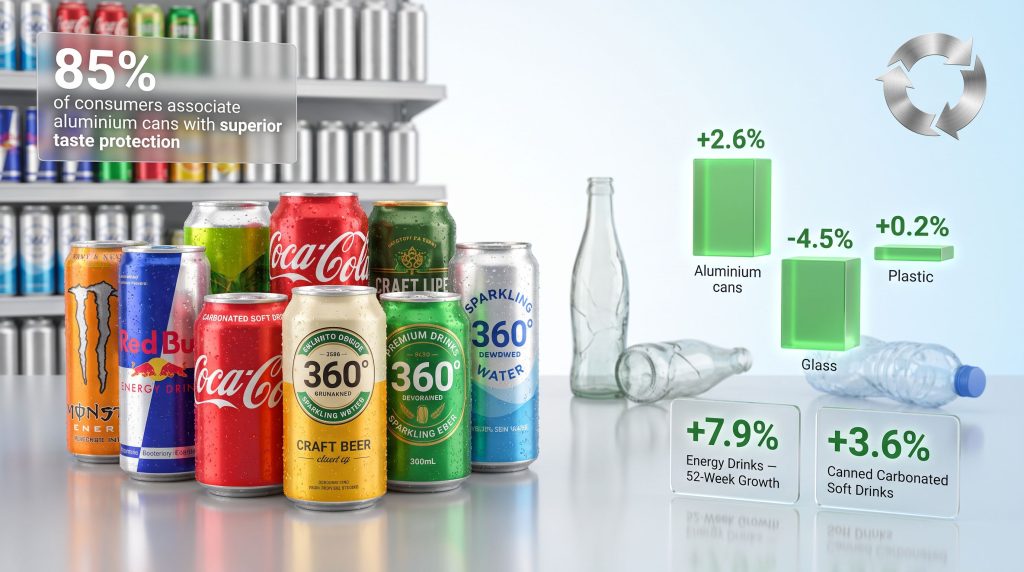
The numbers behind this shift are no longer subtle. Bank of America's analysis of Nielsen scanner data for the week ended July 25, 2026, reveals a clear and accelerating divergence in packaging format performance across virtually every major beverage segment. Aluminium cans are outperforming consistently and across multiple measurement windows, while glass continues its structural retreat and plastic holds on in a narrowing set of applications.
Understanding why this is happening — and why it matters beyond the packaging aisle — requires looking at the forces driving consumer behaviour, the operational realities facing beverage manufacturers, and the structural advantages that make aluminium particularly well-suited to where the market is heading.
When big ASX news breaks, our subscribers know first
Three Converging Forces Behind Aluminium's Momentum
No single factor explains aluminium's rising dominance. Instead, three distinct but reinforcing trends are reshaping format decisions across the beverage industry simultaneously.
Consumer taste and freshness perception ranks as the most immediate driver. Research consistently shows that a significant majority of consumers associate canned formats with superior product freshness, attributing this to the material's ability to form a complete barrier against both light and oxygen. Unlike glass, which transmits UV light and can cause light-struck flavour degradation in sensitive beverages like beer and certain soft drinks, and unlike PET plastic, which has measurable oxygen permeability over extended shelf periods, aluminium creates a hermetically sealed environment that preserves carbonation and flavour integrity from production through to consumption. This is not merely perception; it reflects genuine material science.
Sustainability as a purchasing signal has shifted from niche concern to mainstream behaviour modifier. Consumer rejection of single-use plastic is now a documented market force, not a marginal preference. Aluminium's positioning within the circular economy is structurally different from plastic: the material can theoretically be recycled in perpetuity without degradation in quality, whereas each recycling cycle degrades plastic polymer chains, progressively reducing the material's utility. This infinite recyclability narrative has become a powerful marketing asset for brands operating in sustainability-conscious retail channels.
Brand premiumisation through packaging format represents perhaps the most strategically interesting development. Across craft beer, ready-to-drink cocktails, premium sparkling water, and functional wellness beverages, aluminium cans have shed their historical association with commodity products and emerged as a vehicle for premium positioning. The full 360-degree printable surface of a can provides brands with a visual canvas that opaque labels on plastic bottles cannot match. Emerging beverage brands in the RTD segment are actively leveraging this to command price premiums over PET-packaged equivalents.
Packaging Format Performance: What the Data Shows
The Bank of America analysis of Nielsen scanner data provides one of the clearest empirical snapshots of where packaging format preferences currently stand across both alcoholic and non-alcoholic beverage categories.
| Packaging Format | Latest 4-Week Volume Change | 13-Week Trend | 52-Week Trend |
|---|---|---|---|
| Aluminium Cans | +2.6% | +1.3% | +2.2% |
| Glass Packaging | -4.5% | Declining | Declining |
| Plastic Packaging | +0.2% | Stable | Stable |
The consistency of aluminium's outperformance across all three measurement windows is significant. This is not a short-cycle anomaly or a seasonal effect; it reflects a durable structural trend playing out over multiple timeframes simultaneously.
Why Is Glass Losing Ground?
Glass's decline across mainstream beverage categories is driven by a compounding set of disadvantages that are difficult to offset through branding alone. Weight is the most operationally consequential: glass bottles add substantial freight cost per unit relative to both aluminium and plastic, a disadvantage that multiplies across national and international distribution networks. Breakage losses throughout the supply chain represent a further hidden cost that glass-heavy operations routinely absorb.
Consumer recyclability perception is also a growing challenge for glass. While glass is technically recyclable, collection infrastructure varies dramatically by geography, and consumer confidence in glass recycling outcomes is lower than for aluminium in many key markets.
There is, however, one notable exception worth understanding on its own terms. Non-alcoholic beer in glass bottles posted growth of 15.3% across the latest four-week period, actually outpacing the 11.6% growth recorded for canned non-alcoholic beer over the same window. This anomaly speaks to the specific consumption ritual surrounding non-alcoholic beer: a product often purchased as a premium, lifestyle-adjacent alternative to alcoholic beer, where the tactile and visual cues of glass presentation contribute to the premium experience. This is a useful reminder that packaging format preferences are not monolithic and that category-specific consumer rituals can and do override broader trends.
Plastic's Narrowing Competitive Window
Plastic packaging retains structural relevance in a contracting set of applications. Bottled water recorded +1.5% growth across the latest four-week period in plastic format, representing one of the more resilient pockets for PET. Large-format resealable containers, multi-serve juice, and highly price-sensitive volume categories also retain plastic as the dominant format, primarily because aluminium's per-unit cost premium and the absence of a resealable solution create genuine functional constraints.
However, even within bottled water, the competitive landscape is shifting. Premium and sparkling water brands are increasingly launching in aluminium to access sustainability-conscious retail channels and younger demographics with stronger format preferences for cans. The window in which plastic can rely on cost alone as a sufficient competitive moat is narrowing considerably.
Category-Level Breakdown: Where Aluminium Cans Are Growing Fastest
Non-Alcoholic Beverages: The Primary Growth Engine
Overall non-alcoholic beverage volumes grew 0.7% across the latest four-week measurement period, with aluminium can formats significantly outperforming this category average. The divergence between can and plastic performance within carbonated soft drinks is particularly striking:
- Canned carbonated soft drinks grew +3.6% over the latest four weeks
- Plastic-bottled carbonated soft drinks declined -4.1% over the same period
- This represents a 7.7 percentage point performance gap within the same product category, strongly suggesting active consumer format switching rather than simple category-level growth
Energy drinks represent the most sustained aluminium can growth story in the data. Canned energy drink volumes grew +4.4% across the latest four weeks and recorded +7.9% growth across the trailing 52-week period. The alignment between energy drink consumption occasions and aluminium can attributes is structurally strong: portability, on-the-go consumption, single-serve format, and a performance-oriented brand aesthetic that suits aluminium's association with activity and convenience.
Alcoholic Beverages: Outperforming Within a Declining Market
The alcoholic beverage category presents a more complex picture, with overall volumes declining by mid-single digits across all measurement windows. Within this contraction, however, the relative performance of aluminium versus glass reveals an important structural preference signal.
| Alcoholic Beverage Segment | Aluminium Can Performance | Glass Performance |
|---|---|---|
| Overall Alcoholic Beverages | -1.6% (4-week) | -6.2% (4-week) |
| Imported Beer (Canned) | +6.1% (52-week) | Declining |
| Non-Alcoholic Beer (Canned) | +11.6% (4-week) | +15.3% (4-week) |
The imported canned beer figure is particularly noteworthy. A +6.1% year-on-year growth trajectory within an overall declining alcoholic beverage market demonstrates that international beer brands are successfully using aluminium packaging to capture convenience-driven retail occasions that glass-packaged equivalents are not accessing. The portability advantage of cans for outdoor, event, and on-the-go consumption is a genuine functional differentiator in this context.
The Operational Case for Cans: Beyond Consumer Preference
Much of the public discussion around aluminium can growth focuses on consumer-facing factors. Less discussed, but equally important for understanding why brands are structurally migrating toward cans, are the operational and supply chain advantages.
- Freight economics: Aluminium cans weigh significantly less than glass, reducing per-unit transport costs across long supply chains. This advantage compounds at scale.
- Stackability and durability: Unlike glass, cans do not shatter, reducing breakage losses throughout warehousing and distribution. Their cylindrical shape allows efficient pallet stacking.
- Fill-line throughput: Can filling lines operate at higher speeds than glass bottling lines in high-volume production environments, improving manufacturing efficiency for large-scale producers.
- Shelf-life performance: Aluminium's complete light and oxygen barrier properties extend effective shelf life without requiring cold chain integrity across the entire distribution journey.
- Printable surface area: The 360-degree can body offers brands an uninterrupted visual canvas for brand expression, limited edition artwork, and seasonal packaging campaigns that glass labels and PET shrink-wrap cannot replicate with the same visual impact.
These operational factors mean that the economics of switching to aluminium often improve when assessed across the full supply chain rather than on a simple per-unit packaging cost basis. Furthermore, this dynamic is already well understood by top aluminium producers, who are investing accordingly to meet rising can-sheet demand.
Sustainability: Separating the Narrative from the Nuance
Aluminium's recyclability credentials are well-established and genuinely differentiated from plastic. The material retains its properties through repeated recycling cycles, supporting a true circular economy model in which the same aluminium atoms cycle repeatedly through production, use, and reprocessing without the quality degradation that limits plastic recycling.
Important nuance: The full lifecycle environmental picture of aluminium versus PET plastic is more complex than the consumer narrative suggests. Primary aluminium production is among the most energy-intensive industrial processes in the world. The environmental advantage of aluminium cans depends critically on the percentage of post-consumer recycled aluminium content used in production. Cans manufactured from high recycled content carry substantially lower embodied carbon than those produced from primary aluminium. Brands making strong sustainability claims on the basis of aluminium packaging should be able to substantiate the recycled content percentage behind those claims.
Global aluminium recycling rates compare favourably against plastic. In the European Union, aluminium packaging recycling rates consistently exceed 70%, compared to plastic packaging recycling rates that vary widely but generally remain substantially lower. In the United States, the Aluminium Association has reported that approximately 75% of all aluminium ever produced remains in use today, a figure that reflects the material's unique retention of value through recycling cycles.
Regulatory trajectory is reinforcing aluminium's structural advantage. Legislative pressure on single-use plastics across major markets — including the EU's Single-Use Plastics Directive and extended producer responsibility frameworks in multiple jurisdictions — are creating structural demand pull for aluminium as a preferred alternative. Consequently, considerations around green metals pricing are becoming increasingly relevant for brands and investors evaluating long-term packaging strategies.
The next major ASX story will hit our subscribers first
Emerging Categories Primed for Aluminium Adoption
Several beverage segments are at early stages of a format migration toward aluminium that the data suggests will accelerate over the next several years:
- Canned wine and premium RTD cocktails: These categories are experiencing accelerating format migration as brands seek the portability advantages of cans without sacrificing the premium associations that have historically anchored them to glass.
- Functional and wellness beverages: Kombucha, adaptogen drinks, and enhanced hydration products are increasingly launching in aluminium to signal ingredient integrity, freshness commitment, and sustainability credentials simultaneously.
- Premium sparkling water: A category where aluminium is actively displacing plastic as the format of choice for mid-to-premium tier products, supported by consumer associations between canned formats and carbonation quality.
- Non-alcoholic spirits and premium zero-alcohol beverages: A nascent but rapidly expanding segment where brand positioning requirements favour premium packaging formats.
Key Risks and Headwinds Worth Monitoring
Aluminium's structural advantages do not eliminate meaningful risks to the growth trajectory. Investors and brand strategists should, however, monitor the following:
- Aluminium price volatility: London Metal Exchange aluminium prices are subject to significant cyclical movements driven by energy costs, Chinese production policy, and global demand dynamics. For instance, US aluminium tariffs introduced in 2025 have added further complexity to cost structures for beverage manufacturers reliant on imported metal. Cost spikes can compress margins for beverage brands that have absorbed the per-unit premium of aluminium over PET.
- PET and bio-based plastic innovation: Technological development in barrier-enhanced PET and emerging bio-based plastic alternatives could partially close the performance and sustainability perception gap that currently disadvantages plastic relative to aluminium.
- Can manufacturing capacity constraints: Periods of rapid demand growth have historically produced temporary supply constraints in can manufacturing, as was notably observed during the COVID-19 pandemic when demand surges outpaced the industry's ability to expand capacity quickly.
- Greenwashing regulatory risk: As sustainability disclosure requirements tighten, brands making aluminium-based environmental claims without substantiating recycled content data may face increasing regulatory and reputational exposure. Developments in aluminum and alumina markets are further influencing cost and supply dynamics relevant to this space.
Frequently Asked Questions
Why Are Aluminium Cans Winning Over Beverage Brands and Consumers Simultaneously?
The answer lies in the convergence of consumer preference for freshness and recyclability, operational logistics advantages for brands, and the format's capacity to carry premium brand positioning. These forces are reinforcing rather than independent.
Which Beverage Categories Show the Strongest Aluminium Can Growth?
Energy drinks (+7.9% over 52 weeks), non-alcoholic beer (+11.6% over four weeks), imported beer (+6.1% year-on-year), and carbonated soft drinks (+3.6% over four weeks) represent the strongest documented growth categories in the current data. In addition, Gladstone aluminium operations and similar large-scale smelting investments are reinforcing supply-side capacity to meet this accelerating demand.
Does Glass Have a Future in Beverage Packaging?
Yes, but in an increasingly defined set of applications: premium spirits, fine wine, high-end on-premise hospitality, and specific niche segments where the tactile ritual of glass presentation is a non-negotiable element of the product experience.
Is Aluminium Packaging Genuinely More Sustainable Than Plastic?
On recyclability credentials, aluminium holds a clear structural advantage. On full lifecycle carbon assessment, the picture depends heavily on recycled content percentage. High recycled-content aluminium cans are substantively more sustainable than virgin PET; primary aluminium production, however, carries a significantly higher carbon intensity. Industry KPI reporting provides further data on recycling performance benchmarks across key markets.
Key Takeaways at a Glance
| Metric | Figure |
|---|---|
| Aluminium can volume growth (4-week) | +2.6% |
| Glass packaging volume change (4-week) | -4.5% |
| Canned energy drink growth (52-week) | +7.9% |
| Canned carbonated soft drink growth (4-week) | +3.6% |
| Plastic-bottled soft drink change (4-week) | -4.1% |
| Imported canned beer growth (52-week) | +6.1% |
| Canned non-alcoholic beer growth (4-week) | +11.6% |
| Canned alcoholic beverages (4-week) | -1.6% vs. glass at -6.2% |
The data points toward a durable structural realignment rather than a cyclical fluctuation. Aluminium cans winning over beverage brands and consumers is not the result of a single advantage, but because the format's strengths align with multiple converging pressures simultaneously: rising consumer environmental awareness, brand premiumisation strategies, operational logistics efficiency, and genuine material science advantages in product preservation. The categories most exposed to continued format switching are those where portability, carbonation, sustainability credentials, and premium visual presentation intersect — and that combination is increasingly the defining profile of where beverage market growth is concentrated.
Readers seeking further industry data and analysis on aluminium packaging trends can explore additional perspectives at AL Circle.
Want to Capitalise on the Surging Demand for Aluminium?
The accelerating shift toward aluminium cans across global beverage markets signals powerful long-term demand for the metal — and Discovery Alert's proprietary Discovery IQ model delivers real-time ASX alerts on significant aluminium and base metals discoveries, ensuring subscribers can act on major opportunities the moment they emerge. Explore historic mineral discovery returns on Discovery Alert's dedicated discoveries page and begin a 14-day free trial to position ahead of the market.