August 7, 2026
The Geography Behind the World's Most Vulnerable Energy Corridor
Every barrel of crude oil moving from the Persian Gulf to energy-hungry economies in Asia, Europe, and beyond must pass through a single, narrow ribbon of water. The Iran vessel ban in the Strait of Hormuz has placed this structural dependency at the centre of an active geopolitical crisis. Understanding why that corridor is now under such pressure requires looking first at what the waterway does, why it cannot simply be replaced, and what happens when the states that border it begin to treat commercial shipping as a political variable.
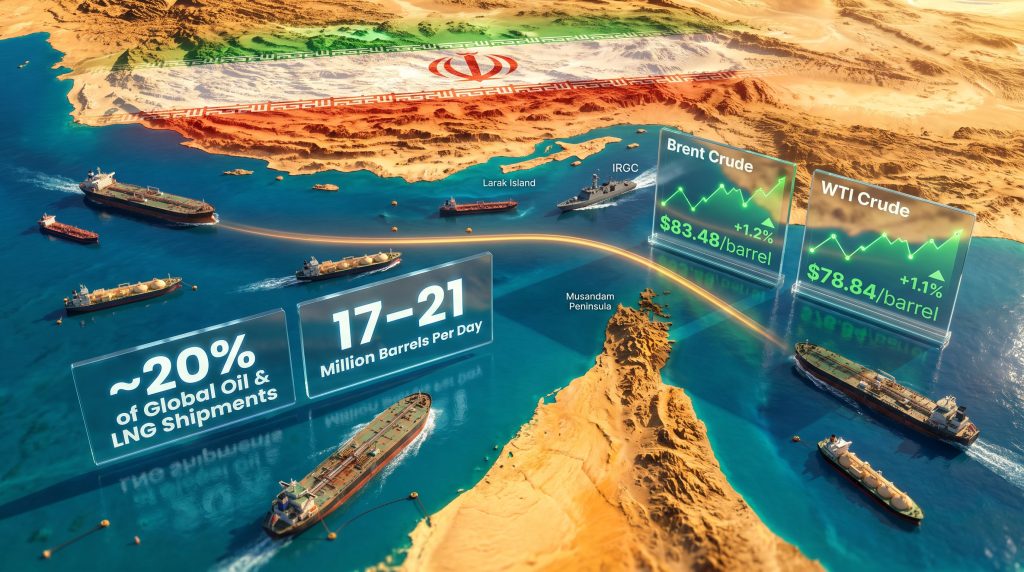
The Strait of Hormuz connects the Persian Gulf to the Gulf of Oman, functioning as the sole maritime exit for crude oil and liquefied natural gas exports from the region's largest producers. Saudi Arabia, Iraq, Kuwait, the UAE, and Qatar all depend on this passage to move their hydrocarbons to market. Under normal conditions, the strait handles approximately one-fifth of the world's entire oil and LNG shipments, representing an estimated 17 to 21 million barrels of oil per day. Its navigable width at the narrowest point is roughly 33 kilometres, making the physical geography acutely sensitive to any form of interference.
What makes this chokepoint structurally irreplaceable is the absence of meaningful bypass infrastructure. Existing overland pipeline alternatives across the Arabian Peninsula carry only a fraction of total throughput capacity. For the majority of Gulf exporters, there is no viable large-scale routing alternative. Any sustained disruption translates directly into supply-side pressure across global commodity markets, as the current crude oil market continues to demonstrate.
| Metric | Estimated Figure |
|---|---|
| Share of global oil shipments via Hormuz | ~20% |
| Share of global LNG shipments via Hormuz | ~20% |
| Navigable width at narrowest point | ~33 km |
| Typical daily oil throughput | 17–21 million barrels |
When big ASX news breaks, our subscribers know first
Iran's Proposed Vessel Ban: What the Draft Legislation Actually Says
An Iranian parliamentary committee is currently evaluating a draft bill that would formally classify certain vessels as hostile and restrict or prohibit their movement through the Strait of Hormuz. Ships deemed to fall into this category, with specific reference to vessels linked to the United States and Israel, could face financial penalties of up to 20% of their total cargo value for non-compliant transit attempts.
The legislation remains in a preliminary review stage. Parliamentary experts are still assessing its scope, and lawmakers have opened the process to specialist submissions before any final version is adopted. This is not yet law, but it represents a formal legislative effort to codify what has already become a practical reality on the water.
Important distinction: The proposed bill must be understood as a legislative formalisation of an existing operational control regime, not a sudden escalation from open access to closure. Iran has already been directing traffic, issuing routing mandates, and requiring vessels to obtain authorisation before transiting. The legislation would give these measures statutory weight.
Iran's Existing Control Regime in Practice
The operational picture in the strait is significantly more restricted than formal diplomatic language suggests. Traffic through the waterway has fallen to less than 10% of typical volumes, reflecting the severity of Iran's current approach. Key elements of this de facto control regime include:
- Vessels are required to obtain Iranian authorisation before attempting transit
- The IRGC naval forces have directed ships to remain within Iranian territorial waters and follow designated routing corridors, including a channel near Larak Island
- Ships attempting unauthorised transit have reportedly been warned of potential military action
- War-risk insurance premiums for Gulf-operating vessels have surged in response
The result is a shifting, layered control environment rather than a single uniformly enforced policy. Conditions have been described at various points as fully closed, partially open, or operating under strict routing constraints, making operational planning extraordinarily difficult for tanker operators and cargo owners alike. The 2026 Strait of Hormuz crisis Wikipedia entry provides useful background context on how these events have unfolded.
The Five-Month Conflict That Created This Crisis
The current restrictions did not emerge in isolation. They are a direct consequence of an active armed conflict between Iran and the United States, which has been ongoing for approximately five months as of this analysis. Iran has explicitly framed any reopening of the strait as conditional upon a US commitment to halt military operations, embedding maritime access into the broader geopolitical standoff.
The IRGC has publicly stated the strait will remain inaccessible to certain vessels until the US military posture in the region changes. Furthermore, this framing transforms what might otherwise be a commercial or regulatory dispute into a direct instrument of military and diplomatic leverage. The broader crude oil price geopolitics at play here extend well beyond the immediate military confrontation.
The Oman Diplomatic Channel and Its Limitations
Parallel to the military standoff, Iran and Oman are engaged in active negotiations aimed at establishing a framework for managing commercial shipping through the strait. Iran has described significant progress in these discussions. The proposed arrangement could potentially grant Tehran a formal role in authorising vessel transit into the Persian Gulf, though critical details remain unresolved:
- The precise scope of Iranian control authority over vessel movements
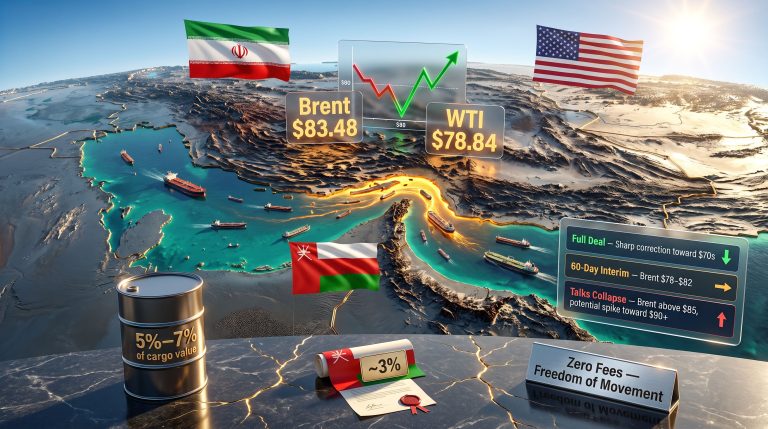
- The structure of any fees or levies applied to commercial vessels seeking authorisation
- Enforcement mechanisms and the treatment of vessels from third-party nations
Oman's involvement reflects its long-standing position as a neutral intermediary in regional disputes, a role it has played in previous US-Iran diplomatic engagements. However, the gap between Oman-mediated progress and a binding, operationally enforceable agreement remains significant.
Complicating matters further, US President Donald Trump has publicly stated that negotiations with Iran are advancing and that a resolution to reopen the strait could be reached in the near term. Iran has contested this characterisation, stating it has not held direct talks with Washington in recent days. This divergence in public messaging creates acute uncertainty for shipping operators, energy traders, and sovereign importers making real-time operational and hedging decisions.
How Oil Markets Are Pricing the Hormuz Risk Premium
Energy markets do not wait for diplomatic resolution before repricing supply risk. The current situation has already generated measurable price movement across benchmark crude contracts.
| Benchmark | Recent Price | Change | % Movement |
|---|---|---|---|
| Brent Crude Futures | $83.48/barrel | +$0.99 | +1.2% |
| WTI Crude Futures | $78.84/barrel | +$0.85 | +1.1% |
| Prior session settlement | N/A | +$3.00+ | Reopening uncertainty |
These movements reflect a geopolitical risk premium being embedded into crude pricing — the probability-weighted market assessment of what prolonged strait closure means for available global supply. With traffic already running at below 10% of normal volumes, the effective supply shock is already material. Price movements to date may understate the full market impact if restrictions persist into the medium term. The scale of this oil market disruption is without recent precedent in terms of its geographic concentration.
Three Scenarios Energy Markets Are Stress-Testing
Scenario A: Rapid Diplomatic Resolution
A US-Iran framework agreement brokered through Oman is reached within weeks. The risk premium dissipates, Brent retreats toward pre-crisis levels, and short-term supply disruption is absorbed by coordinated strategic petroleum reserve releases.
Scenario B: Prolonged Partial Control Regime
Iran maintains permit-based transit control for three to six months. Crude prices stabilise at elevated levels. War-risk insurance surcharges become structural. Alternative producers including the US, Norway, and West African exporters capture incremental market share.
Scenario C: Full Closure Escalation
Military confrontation deepens, transit volumes remain below 10% of normal. Brent crude tests levels above $100 per barrel. Global recession risk increases. A coordinated International Energy Agency reserve release is activated, similar to the mechanism deployed during the 2022 Russia-Ukraine supply shock.
The Legal Architecture of Iran's Transit Restrictions
International Maritime Law vs. Iranian Sovereign Claims
Under the United Nations Convention on the Law of the Sea (UNCLOS), international straits used for navigation carry a right of transit passage that bordering states cannot suspend. Critically, Iran is not a signatory to UNCLOS, and its legal position rests instead on bilateral treaty frameworks and its own interpretation of sovereign authority over portions of the waterway.
The proposed 20% cargo-value fine and the routing mandates already in operation represent a direct challenge to the principle of freedom of navigation that the US Navy and allied maritime forces actively uphold. How international law restricts military force in the Hormuz context has become a subject of serious academic and legal debate. Legal scholars broadly regard these measures as inconsistent with internationally recognised frameworks, though enforcement against a militarily capable state operating in its own territorial waters creates practical complications.
A Precedent With Long-Term Implications
If Iran's control regime persists without a negotiated resolution, the precedent implications extend well beyond the Persian Gulf. Other strategically positioned states could interpret the outcome as validation for imposing unilateral transit conditions on international waterways. The Strait of Malacca, through which roughly 40% of global trade passes, and the Bab-el-Mandeb, linking the Red Sea to the Gulf of Aden, both sit at intersections of territorial claims and global shipping dependency where similar logic could eventually be tested.
The broader geopolitical risk landscape emerging from this situation has implications well beyond energy markets alone.
Geopolitical Stakeholders With Material Interests in Resolution
| Stakeholder | Primary Interest |
|---|---|
| United States | Freedom of navigation; military posture; allied energy security |
| Oman | Diplomatic neutrality; regional stability; transit revenue |
| China | Uninterrupted Gulf crude imports (~50% of oil imports from the region) |
| India | Significant Persian Gulf oil dependency; diaspora remittances at risk |
| European Union | LNG supply security; energy transition buffer stocks |
| Japan and South Korea | Near-total dependence on seaborne crude; no domestic production buffer |
Supply Chain Disruption Beyond Crude Oil
LNG Markets Face Compounding Pressure
Qatar is the world's largest LNG exporter and relies almost exclusively on Hormuz transit for its shipments. This creates a compounding vulnerability for Asian LNG buyers, particularly Japan, South Korea, China, and India, which collectively depend on Gulf LNG to underpin industrial and residential energy consumption. Consequently, the LNG supply outlook for these nations has deteriorated considerably.
European buyers face a distinct but related exposure. Having redirected significant LNG procurement toward Qatar following the 2022 Russian supply disruption, Europe now faces a second sequential supply shock from a different geopolitical vector. The structural lesson is that sourcing diversification across suppliers does not eliminate vulnerability when those suppliers share a single critical transit point.
Tanker Operators Navigating Impossible Trade-Offs
Shipping companies operating in or near the Persian Gulf currently face three deeply unappealing options:
- Attempt strait transit with Iranian authorisation, accepting the permit system, routing mandates, and potential cargo-value fines as operational costs
- Reroute around the Cape of Good Hope, adding approximately 15 to 20 days to voyage times from the Gulf to European and Asian destinations, materially compounding supply delays and freight costs
- Suspend Gulf operations entirely, accepting revenue loss until the situation resolves
Each option carries significant financial, reputational, and operational implications. War-risk insurance surcharges are already making certain voyages economically marginal even before cargo-value fines are factored in.
The Strategic Petroleum Reserve Calculus
The International Energy Agency and its member states maintain coordinated strategic petroleum reserves specifically designed for supply disruptions of this category. A sustained closure affecting 20% of global oil supply would likely meet the threshold for a coordinated reserve release, a mechanism last activated during the 2022 Russia-Ukraine conflict.
The critical constraint is duration. Strategic reserves provide a buffer measured in weeks, not months. If the Hormuz control regime persists into a sustained multi-month scenario, the gap between reserve capacity and market demand cannot be bridged through release alone. This is why the diplomatic timeline matters as much as the military situation for energy market stability.
The next major ASX story will hit our subscribers first
Frequently Asked Questions: Iran Vessel Ban in the Strait of Hormuz
What ships are targeted by Iran's proposed vessel ban?
The draft legislation under review by Iran's parliamentary committee targets vessels classified as hostile, with specific reference to ships linked to the United States and Israel. The bill proposes fines of up to 20% of cargo value for non-compliant vessels attempting transit.
Is the Strait of Hormuz currently closed?
The strait is not formally closed under international maritime law, but Iran has imposed a de facto control regime that has reduced traffic to less than 10% of typical volumes. Vessels are required to obtain Iranian authorisation, follow designated routing instructions, and risk military consequences for unauthorised transit.
What is Oman's role in the current negotiations?
Oman is serving as a neutral diplomatic intermediary. Iran and Oman are negotiating a framework that could formalise Iran's role in authorising vessel transit, though key details including fee structures and the scope of Iranian control authority remain unresolved.
How have oil prices reacted to the Hormuz restrictions?
Brent crude futures rose approximately 1.2% to $83.48 per barrel, while WTI gained 1.1% to $78.84 per barrel. A prior session saw settlements more than $3 per barrel higher as concerns over the strait's operational status intensified.
What is the legal basis for Iran's vessel restrictions?
Iran is not a signatory to UNCLOS, which guarantees transit passage rights through international straits. Iran's restrictions rely on its own sovereign claims and bilateral frameworks. The proposed 20% cargo fine and routing mandates are widely viewed as inconsistent with international maritime law principles upheld by most major seafaring nations.
Assessing the Strategic Risk: Key Takeaways
The Iran vessel ban in the Strait of Hormuz represents more than a regional shipping dispute. It is the intersection of an active armed conflict, a contested legal framework, a fragile diplomatic process, and a structural vulnerability in how the global economy moves energy.
- Iran's proposed legislation would formally codify a control regime that is already operational and already suppressing transit volumes to below 10% of normal levels
- The diplomatic pathway runs primarily through Oman, with US-Iran direct talks either stalled or not yet formally confirmed, depending on which side's account is accepted
- Oil markets are pricing in a risk premium, but current price movements may understate the full impact if restrictions persist into a multi-month scenario
- LNG markets face compounding pressure, particularly for Asian buyers with high Gulf dependency and limited short-term substitution options
- The legal challenge to Iran's measures exists but faces practical enforcement limitations against a militarily capable bordering state
- Resolution timelines remain deeply uncertain, with outcomes dependent on the trajectory of the broader US-Iran military conflict
This article contains forward-looking analysis and scenario projections based on available information as of the date of publication. Energy market conditions, diplomatic developments, and geopolitical situations are subject to rapid change. Nothing in this article constitutes financial or investment advice. Readers should consult qualified professionals before making decisions based on information contained herein.
Want To Stay Ahead of the Next Major Commodity Market Shift?
Discovery Alert's proprietary Discovery IQ model delivers real-time alerts on significant ASX mineral discoveries, instantly cutting through complex data to surface actionable investment opportunities — explore historic examples of exceptional discovery returns to understand what early positioning can mean, then begin your 14-day free trial at Discovery Alert to secure your market-leading edge.