
August 9, 2026
Understanding Global Aluminium Market Fundamentals in Early 2026
The global aluminium market enters 2026 navigating a complex landscape of evolving supply-demand dynamics, where traditional pricing mechanisms face unprecedented challenges from energy transition policies and shifting consumption patterns. Understanding how LME aluminium prices February 2026 develop requires examining the intricate web of factors that influence price discovery in the world's most traded base metal after copper. Furthermore, projects like those analysed in recent bauxite project economics studies demonstrate the importance of upstream supply considerations.
Current Market Positioning and Price Discovery Mechanisms
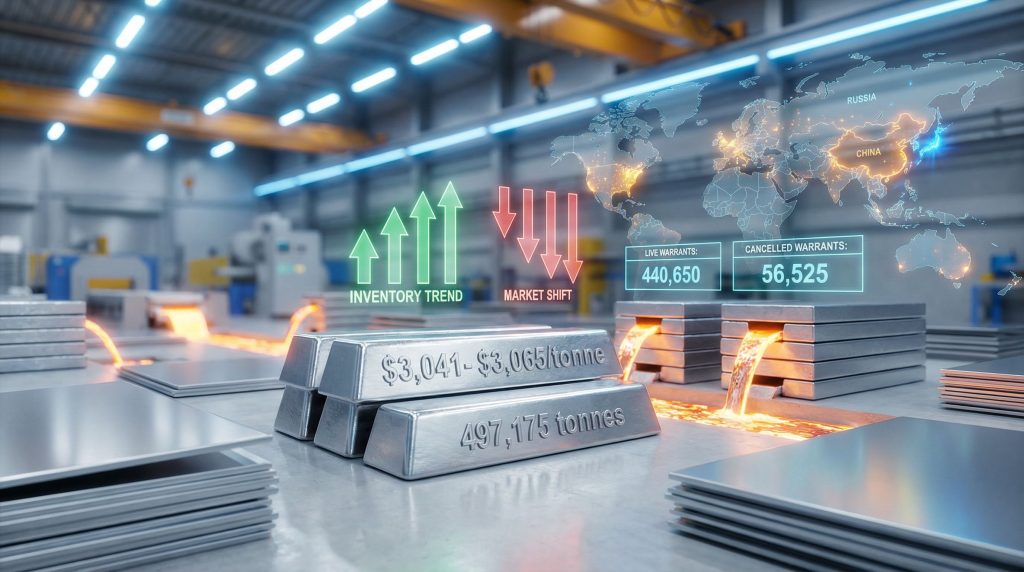
Recent trading patterns reveal significant price pressure across LME aluminium contracts, with cash prices declining from $3,109 per tonne to $3,041 per tonne between January 30 and February 2, representing a 2.19 percent decrease over just two trading sessions. This downward momentum extended to three-month contracts, which dropped from $3,132 per tonne to $3,065 per tonne, establishing a clear bearish sentiment across the forward curve.
The convergence between cash and three-month pricing indicates a market structure that reflects immediate supply availability rather than anticipated tightness. When examining the broader curve structure, December contracts trading at $3,003-$3,008 per tonne suggest a backwardated market where near-term prices command premiums over distant delivery dates.
This pricing architecture typically emerges when:
- Physical metal availability meets immediate consumption needs
- Storage costs exceed the convenience yield of holding inventory
- Market participants anticipate increased production capacity coming online
- Demand expectations for distant periods remain moderate
Supply-Side Economics Influencing February Pricing
Primary aluminium production economics in early 2026 reflect a fundamental shift in cost structures that emerged throughout 2025. Energy-intensive smelting operations continue grappling with elevated electricity costs, while alumina input prices have stabilised around $306 per tonne, creating margin compression scenarios for non-integrated producers.
Chinese production policy remains the dominant supply-side factor influencing global pricing. Domestic environmental regulations and energy consumption targets have constrained capacity additions, while existing facilities operate under stricter efficiency mandates. These constraints create a supply ceiling that supports price floors, even during periods of weakened demand.
Regional production cost disparities have widened significantly, with Middle Eastern and hydroelectric-powered facilities maintaining competitive advantages. Smelters in regions dependent on coal-fired electricity face operational challenges that translate directly into higher breakeven prices, supporting the current trading range above $3,000 per tonne.
When big ASX news breaks, our subscribers know first
How Do LME Inventory Dynamics Shape February 2026 Aluminium Valuations?
Warehouse Stock Analysis and Market Liquidity
LME inventory movements during early February reveal a nuanced picture of supply-demand balance that contradicts surface-level weakness in pricing. Total opening stocks increased modestly to 497,175 tonnes from 495,725 tonnes, representing a 0.29 percent uptick that suggests adequate near-term supply availability without creating excess burden.
The composition of these inventories tells a more detailed story about market dynamics:
| Inventory Category | Current Volume | Change % | Market Signal |
|---|---|---|---|
| Total Opening Stock | 497,175 tonnes | +0.29% | Stable supply cushion |
| Live Warrants | 440,650 tonnes | +0.79% | Available metal expanding |
| Cancelled Warrants | 56,525 tonnes | -3.42% | Physical withdrawals accelerating |
The 0.79 percent increase in live warrants to 440,650 tonnes indicates that more metal became available for potential delivery, which typically exerts downward pressure on near-term premiums. However, the simultaneous 3.42 percent decline in cancelled warrants to 56,525 tonnes signals continued physical offtake from exchange stocks.
Regional Warehouse Distribution Impact
Geographic concentration patterns within LME-approved warehouses significantly influence regional pricing and delivery premiums. When inventory accumulates in specific locations, it creates arbitrage opportunities that affect global price formation. The current distribution likely favours Asian consumption centres, given regional demand patterns and logistics cost optimisation.
Physical aluminium consumers monitor warehouse stock locations closely because delivery costs can add substantial premiums to LME pricing. A concentration of available warrants in distant warehouses effectively reduces liquid supply for immediate consumption, creating local tightness despite apparent global availability.
What Economic Indicators Are Driving Aluminium Demand in Q1 2026?
Industrial Consumption Patterns Analysis
Manufacturing sector activity in early 2026 reflects a mixed demand environment where traditional aluminium-consuming industries exhibit varying growth trajectories. Automotive production schedules show continued aluminium lightweighting trends, with electric vehicle manufacturers increasing aluminium content per unit to offset battery weight and improve range efficiency.
Key demand drivers include:
- Transportation sector: Electric vehicle production scaling drives higher aluminium intensity per vehicle
- Construction industry: Infrastructure spending programmes in developed markets support structural demand
- Packaging applications: Sustainable packaging mandates increase aluminium can and foil consumption
- Electronics manufacturing: 5G infrastructure buildout sustains steady industrial demand
The construction sector's recovery momentum from 2025 carries forward into Q1 2026, supported by government infrastructure programmes and commercial building activity. Aluminium extrusion demand for curtain walls, window frames, and structural applications remains robust despite broader economic uncertainties.
Macroeconomic Headwinds and Tailwinds
Central banking policies across major economies create divergent impacts on aluminium demand patterns. Federal Reserve monetary policy transmission affects construction financing costs and automotive purchase decisions, whilst European Central Bank positioning influences industrial investment cycles across eurozone manufacturing centres.
Chinese economic policy coordination remains crucial for global demand projections. Stimulus measures targeting infrastructure development and green design energy transition create sustained aluminium consumption, whilst property sector policies affect construction-related demand patterns. However, potential trump tariffs impact could significantly alter trade dynamics.
How Do Alumina Input Costs Influence February 2026 Aluminium Pricing?
Raw Material Cost Structure Breakdown
Alumina pricing at $306 per tonne establishes a critical cost foundation that influences primary aluminium production economics across all global facilities. The slight 0.3 percent decline from $306.93 per tonne suggests relative stability in raw material input costs, providing some margin relief for primary producers facing persistent energy cost pressures.
Primary aluminium smelting requires approximately 1.9-2.1 tonnes of alumina to produce one tonne of metal, making alumina costs a significant component of total production expenses. At current pricing levels, alumina represents roughly $580-$640 in direct material costs per tonne of aluminium produced, before accounting for energy, labour, and capital expenses.
Smelter Economics Reality Check: Current alumina pricing at $306 per tonne, combined with persistently elevated electricity costs, creates margin compression scenarios that establish natural price floors for primary aluminium production, even during periods of demand weakness.
Energy Price Correlation and Production Viability
Electricity consumption in primary aluminium production typically ranges from 13,000-15,000 kWh per tonne of metal produced. With energy costs remaining elevated across most global production regions, the combined alumina plus electricity cost structure approaches $2,400-$2,800 per tonne for many facilities, excluding other operational expenses.
This cost structure analysis reveals why aluminium prices below $3,000 per tonne create sustainability challenges for marginal producers. The current trading range around $3,041-$3,065 per tonne provides modest operating margins that support continued production but limit expansion investment.
Integrated vs. Non-Integrated Producer Positioning
Vertically integrated producers maintaining bauxite mining, alumina refining, and primary smelting operations demonstrate significant competitive advantages during periods of input cost volatility. These integrated operations can optimise production across the value chain and avoid spot market exposure for critical inputs.
Non-integrated merchant smelters face greater margin pressure when alumina prices fluctuate or when bauxite supply disruptions affect refinery operations. The stable $306 per tonne alumina pricing provides some certainty for production planning, but any significant increases could quickly impact smelter profitability.
What Are the Technical Trading Patterns Suggesting for February 2026?
Futures Curve Structure Analysis
The LME aluminium forward curve exhibits classic backwardation characteristics during early February 2026, with near-month contracts commanding premiums over distant delivery periods. Three-month contracts at $3,065 per tonne trading above December prices near $3,003 per tonne indicates market expectations of either demand strengthening or supply constraints developing through the year.
This curve structure typically emerges when:
- Physical demand exceeds immediate supply availability
- Storage costs outweigh convenience yields for holding inventory
- Production constraints limit near-term supply expansion
- Seasonal factors create temporary tightness expectations
The Asian Reference Price at $3,056 per tonne trading at a discount to LME three-month pricing suggests regional consumption patterns may be absorbing available supply more efficiently than European or American markets. Current LME aluminium pricing continues to reflect these regional dynamics.
Volume and Momentum Indicators
Trading volume patterns across different contract months provide insights into market participant positioning and conviction levels. The uniform percentage declines across cash, three-month, and distant contracts suggest broad-based selling pressure rather than targeted position adjustments.
Technical momentum indicators would typically examine:
- Moving average convergence across multiple timeframes
- Relative strength compared to other base metals
- Volume-weighted average pricing trends over recent weeks
- Support and resistance levels established during previous trading ranges
How Do Geopolitical Factors Impact February 2026 Aluminium Markets?
Trade Policy and Regional Market Integration
International trade relationships continue shaping aluminium flow patterns and regional pricing disparities. Trade policy frameworks established between major producing and consuming regions influence the efficiency of global supply chain optimisation and arbitrage opportunities.
Regional trade agreements and bilateral arrangements affect the competitive positioning of different production centres. Countries with favourable trade access to major consumption markets maintain pricing advantages that support higher capacity utilisation rates and investment returns.
Strategic Reserve Policies and Market Intervention
Government stockpile strategies across major economies create additional layers of demand that operate independently of commercial consumption patterns. Strategic reserve accumulation or release decisions can substantially impact global supply-demand balance, particularly during periods of market uncertainty.
Central bank commodity exposure through sovereign wealth funds adds another dimension to market dynamics, where investment allocation decisions based on portfolio diversification objectives can influence pricing trends independent of fundamental industrial demand.
The next major ASX story will hit our subscribers first
What Investment Strategies Work Best in Current Aluminium Market Conditions?
Portfolio Construction Approaches
Current market conditions favour diversified exposure strategies that balance physical and financial aluminium investments whilst managing currency and counterparty risks. The modest backwardation in forward curves suggests opportunities for tactical positioning across different delivery periods.
Effective aluminium investment strategies in early 2026 consider:
- Physical vs. financial exposure optimisation based on storage costs and delivery logistics
- Currency hedging for international investors exposed to USD-denominated LME pricing
- Term structure positioning to capture backwardation benefits or avoid contango costs
- Regional arbitrage opportunities between LME and Asian Reference Pricing
Those seeking comprehensive guidance should consult an investing guide 2025 for broader market strategies. Additionally, understanding decarbonisation benefits becomes crucial for long-term aluminium sector positioning.
Risk Management Framework
Volatility expectations for February 2026 delivery periods require careful analysis of historical price movement patterns and options market pricing. The current inventory-to-consumption ratio provides buffer against supply shocks, but demand volatility from economic uncertainty creates downside risks.
Professional traders monitor several risk metrics:
- Daily trading ranges and volume patterns across contract months
- Inventory turnover rates and seasonal consumption patterns
- Correlation coefficients with broader commodity indices and equity markets
- Liquidity depth at various price levels for position entry and exit
Scenario Modelling: Where Could February 2026 Prices Head?
Bull Case Analysis: Path to $3,200+ Territory
Upside scenarios for LME aluminium prices February 2026 centre around supply constraint development or acceleration in demand growth beyond current expectations. Production disruptions at major facilities could quickly absorb the current inventory cushion, whilst infrastructure spending programmes could accelerate consumption rates.
Factors supporting higher pricing include:
- Energy supply interruptions affecting smelter operations in key producing regions
- Infrastructure stimulus programmes increasing construction-related aluminium demand
- Electric vehicle adoption exceeding forecasted growth rates
- Inventory drawdown accelerating beyond current 3.42 percent cancelled warrant decline rates
Bear Case Considerations: Testing $2,900-$3,000 Support
Downside scenarios involve broader economic deceleration reducing industrial aluminium consumption whilst supply remains readily available. The current inventory increase of 0.29 percent could accelerate if demand weakness intensifies, creating oversupply conditions.
Potential negative catalysts include:
- Global recession risks reducing manufacturing activity across key consumption sectors
- Chinese oversupply from efficiency improvements increasing export availability
- Energy cost normalisation reducing production constraints and enabling capacity increases
- Construction sector weakness from higher financing costs or policy changes
Base Case Probability Assessment
The most likely scenario for LME aluminium prices February 2026 involves continued trading within the $3,000-$3,200 range, supported by production cost floors and constrained by adequate supply availability. Current alumina pricing at $306 per tonne provides cost transparency that supports price stability around current levels.
Market balance indicators suggest neither acute tightness nor surplus conditions, creating an environment where prices respond primarily to shifts in economic growth expectations and energy cost developments rather than fundamental supply-demand imbalances.
Strategic Outlook: Positioning for Post-February Market Evolution
Q2 2026 Market Setup Analysis
Seasonal demand patterns emerging from February baseline conditions will likely influence LME aluminium prices February 2026 trajectories through the spring construction season and automotive production cycles. Historical consumption data indicates Q2 typically shows strengthened demand from Northern Hemisphere construction activity and automotive model year production schedules.
Policy implementation timelines for carbon border adjustments and environmental regulations may create additional supply constraints or competitive advantages for different production regions during the second quarter. Historical data analysis provides valuable context for seasonal patterns.
Long-term Structural Trends Affecting Pricing
Decarbonisation initiatives across global aluminium production create fundamental shifts in cost structures that support higher long-term price floors. Low-carbon production processes require substantial capital investment and typically carry higher operating costs, gradually raising the marginal cost of production across the industry.
Recycling rate improvements continue reducing primary demand growth rates, but the absolute volume of aluminium required for energy transition applications creates sustained consumption growth. Battery housings, electric vehicle components, solar panel frames, and wind turbine structures represent expanding demand sectors that offset traditional market maturity.
The intersection of these structural trends with cyclical economic factors will determine whether current pricing levels represent temporary weakness or a new equilibrium range for aluminium markets and beyond.
Disclaimer: This analysis contains forward-looking statements and market projections based on current available information. Commodity prices are subject to significant volatility and various risks including economic, geopolitical, and operational factors. Past performance does not guarantee future results. Investors should conduct independent research and consider their risk tolerance before making investment decisions.
Looking to Capitalise on Base Metal Market Movements?
Discovery Alert's proprietary Discovery IQ model delivers real-time notifications on significant ASX mineral discoveries, including aluminium and bauxite opportunities that could benefit from current market dynamics. Start your 14-day free trial today to receive instant alerts when the next major mineral discovery hits the market, positioning yourself ahead of fundamental supply-demand shifts like those currently influencing global aluminium pricing.