June 21, 2026

Global commodity markets operate within an intricate web of supply chain vulnerabilities that extend far beyond simple production and consumption dynamics. The interconnected nature of modern manufacturing, combined with geopolitical tensions and strategic chokepoints, creates cascading effects that can transform regional disruptions into worldwide pricing shocks. Understanding these transmission mechanisms becomes crucial for investors, industrial consumers, and policymakers navigating an increasingly volatile resource landscape, particularly when considering the US‑China trade impact on global commodity flows.
What Are Aluminium Premiums and Why Do They Matter?
The aluminium market operates on a sophisticated dual-pricing structure that distinguishes between global benchmark rates and regional delivery costs. This mechanism serves as both a price discovery tool and a risk management instrument for global trade flows worth hundreds of billions of dollars annually.
Understanding Regional Benchmark Pricing Mechanisms
Aluminium premiums represent the additional cost above the London Metal Exchange cash price that buyers pay for physical metal delivery to specific regions. This two-tier pricing structure reflects the complex reality of moving commodities from production centers to consumption hubs across continents.
The premium system accounts for multiple cost components that vary significantly by geography:
- Physical logistics and transportation expenses
- Currency exchange rate fluctuations and hedging costs
- Working capital financing requirements during transit periods
- Regional supply-demand imbalances and inventory management
- Insurance coverage for cargo protection during shipping
- Port handling fees and customs clearance expenses
Current market data reveals the scale of these premium variations. Rio Tinto's Q2 Japan aluminium premium offer of $350 per metric ton represents a dramatic shift from earlier negotiations, highlighting how rapidly regional pricing can adjust to changing risk perceptions.
Japan's Role as Asia-Pacific Price Setter
Japan functions as the primary price discovery mechanism for the entire Asia-Pacific aluminium market, with quarterly negotiations setting regional benchmarks that influence pricing across multiple countries. This outsized influence stems from Japan's position as a major industrial consumer and its sophisticated procurement practices.
The quarterly negotiation process follows a structured timeline that typically begins in the final month of each quarter and extends through the following month. Current Q2 2026 negotiations began in February and are expected to conclude by late March, with outcomes affecting supply contracts across Asia.
Japanese buyers' willingness to pay specific premiums creates a reference point that other regional purchasers use for their own contract negotiations. This price leadership role means that Japanese premium decisions have far-reaching implications for industrial costs throughout the Asia-Pacific region.
LME Cash Price vs Regional Premium Structure
The London Metal Exchange cash price serves as the global benchmark for aluminium valuation, but regional premiums add substantial costs that can represent significant percentages of total purchase prices. Understanding this relationship becomes critical during periods of supply chain stress.
Historical context reveals the magnitude of current market tensions:
| Quarter | Premium ($/metric ton) | Notable Market Conditions |
|---|---|---|
| Q2 2015 | $380 | Highest premium on record |
| Q4 2025 | ~$196 | Pre-crisis baseline (implied) |
| Q2 2026 | $350 (proposed) | 79% increase from previous quarter |
The dramatic evolution of Q2 2026 pricing negotiations illustrates how premiums function as real-time risk adjustment mechanisms:
- Late February 2026: Initial industry offers ranged $220-$250/metric ton
- Early March 2026: Producers withdrew offers to reassess Middle East risks
- Mid-March 2026: Rio Tinto proposed $350/metric ton (40% above its earlier $250 offer)
This pricing volatility demonstrates that premiums serve as more than simple delivery cost adjustments. They function as sophisticated instruments for pricing geopolitical risk, supply chain uncertainty, and market sentiment into physical commodity transactions.
When big ASX news breaks, our subscribers know first
How Geopolitical Tensions Reshape Aluminium Supply Chains?
Strategic geography plays a decisive role in global aluminium trade patterns, with certain regions serving as both major production centers and critical transit corridors. When geopolitical tensions disrupt these established flows, the effects cascade through international markets with remarkable speed and intensity, particularly affecting tariffs market impact across various sectors.
Middle East Production Capacity Analysis
The Middle East has emerged as a significant force in global aluminium production, contributing approximately 9% of worldwide output through strategically located smelting operations. This regional concentration creates both efficiencies and vulnerabilities within the global supply network.
Regional Production Significance:
| Production Metric | Value | Global Impact |
|---|---|---|
| Middle East Global Share | ~9% | Strategic regional concentration |
| Japan's Middle East Imports | 20% of primary ingots (2025) | Single-source dependency risk |
| Major Facilities at Risk | Qatalum (Qatar), Alba (Bahrain) | World-class smelting capacity |
The concentration of production in this geographically sensitive region creates systemic risks that extend beyond simple supply shortages. These facilities represent decades of capital investment and technological expertise that cannot be quickly replicated elsewhere.
Critical Infrastructure Under Pressure:
- Qatalum (Qatar): Production shutdown initiated in response to regional conflict escalation
- Aluminium Bahrain (Alba): Force majeure declaration affecting one of the world's largest smelters
- Regional Smelting Complex: Multiple facilities facing operational disruptions simultaneously
Strait of Hormuz: The Aluminium Trade Bottleneck
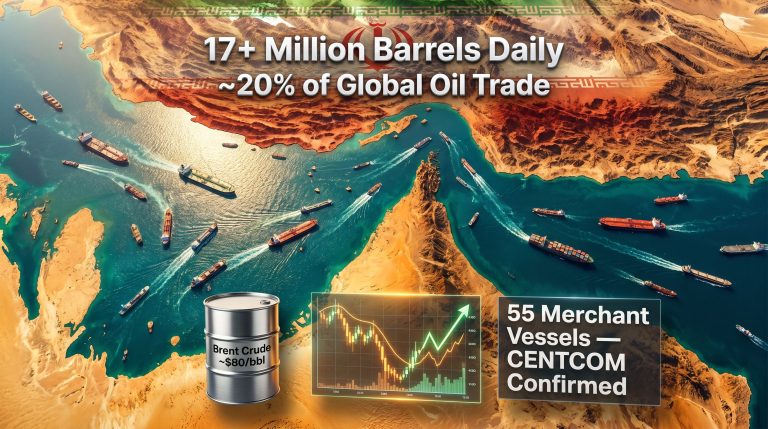
The Strait of Hormuz represents one of the world's most critical commodity chokepoints, with aluminium shipments joining oil and gas flows through this narrow waterway. The strategic importance of this shipping lane cannot be overstated for global trade flows.
Maritime insurance markets have responded to escalating tensions with dramatic rate adjustments, though specific percentage increases remain closely guarded by underwriters. The cumulative effect of higher insurance costs, increased freight rates, and potential routing delays creates a complex cost structure that premium negotiations must address.
Shipping Route Dependencies:
- Primary route for Middle Eastern aluminium exports to Asian markets
- Alternative routes through Red Sea or around Africa add significant time and cost
- Insurance rate escalations affecting cargo protection costs
- Potential delays creating working capital implications for buyers and sellers
The market's response to these shipping risks has been swift and decisive. South Korean premiums have increased sharply since late February, indicating that regional buyers expect sustained disruption to traditional supply chains.
Force Majeure Declarations and Production Shutdowns
Force majeure represents one of the most serious disruptions in commodity markets, legally releasing suppliers from contractual obligations due to extraordinary circumstances beyond their control. The recent declarations from major Middle Eastern producers signal the severity of current regional conditions.
Understanding Force Majeure in Metal Markets: Force majeure declarations occur when extraordinary events make contract performance impossible or commercially impracticable. In aluminium markets, these declarations can affect millions of tons of annual production capacity and reshape global supply patterns for extended periods.
Current Production Disruptions:
- Qatalum Facility Impact: Production shutdown affects Qatar's primary aluminium output
- Aluminium Bahrain Operations: Force majeure declaration disrupts shipment schedules
- Cascading Effects: Regional production disruptions affecting global supply calculations
These production disruptions create immediate supply gaps that must be filled by alternative sources, typically at higher costs and with longer delivery timeframes. The market's pricing response reflects these logistical challenges and supply security concerns.
Why Did Rio Tinto's Q2 Premium Offer Jump 79%?
The dramatic escalation in premium pricing reflects a fundamental reassessment of supply chain risks and market dynamics. This pricing evolution provides insight into how major producers calculate and price geopolitical uncertainty into their commercial offerings, particularly as US tariffs and inflation pressures continue to influence global trade patterns.
Initial Pricing Negotiations Timeline
The progression of Q2 2026 premium negotiations reveals how rapidly market perceptions can shift when faced with evolving geopolitical risks. The timeline demonstrates sophisticated risk assessment processes within major commodity trading organizations.
Premium Offer Evolution:
| Timeline | Offer Range ($/metric ton) | Market Context |
|---|---|---|
| Late February 2026 | $220-$250 | Initial industry consensus |
| Early March 2026 | Offers withdrawn | Risk reassessment period |
| Mid-March 2026 | $350 (Rio Tinto) | 79% increase from baseline |
This negotiation pattern indicates that initial market assessments underestimated the severity and duration of Middle Eastern supply disruptions. The withdrawal of offers demonstrates prudent risk management by producers unwilling to commit to pricing that might prove inadequate.
Risk Premium Calculation Methodology
According to sources directly involved in quarterly negotiations, the premium increases reflect multiple compounding cost factors that have escalated simultaneously. This multi-factor approach to risk pricing represents sophisticated commodity market analysis.
Cost Driver Analysis:
- European and US Premium Spillover: Stronger premiums in other regions create competitive pressure for Asian pricing
- Freight Cost Escalation: Alternative routing and higher shipping rates increase transportation expenses
- Insurance Rate Adjustments: Cargo protection costs rising due to regional conflict risks
- Working Capital Implications: Extended supply chains requiring longer financing periods
The 40% increase from Rio Tinto's earlier $250 offer to the current $350 proposal illustrates how risk assessments evolved during the brief negotiation period. This pricing adjustment reflects real-time market intelligence about supply chain vulnerabilities.
Inventory Dynamics and Demand Recovery Projections
Premium pricing decisions must account for broader market dynamics beyond immediate supply disruptions. Industrial demand patterns, seasonal consumption cycles, and inventory management strategies all influence premium negotiations.
Japanese industrial consumers face particular challenges during fiscal year-end periods when production schedules intensify. The timing of current supply disruptions coincides with traditionally high demand periods, amplifying the impact of reduced availability.
Market Timing Considerations:
- Fiscal year-end consumption patterns creating seasonal demand pressure
- Industrial inventory strategies adapting to supply uncertainty
- Long-term contract structures requiring price visibility for planning purposes
- Post-pandemic demand normalisation continuing across industrial sectors
What Does This Mean for Global Aluminium Markets?
The current premium escalation represents more than a temporary price adjustment; it signals a potential restructuring of global aluminium trade patterns and risk management practices. Understanding these broader implications becomes crucial for market participants across the supply chain, especially considering industry evolution trends shaping commodity markets.
Regional Price Convergence Analysis
Traditional regional price differentials are experiencing unprecedented compression as supply chain disruptions affect multiple markets simultaneously. This convergence reflects the interconnected nature of global aluminium flows and the limited availability of alternative supply sources.
Regional Market Dynamics:
- Asia-Pacific: Sharp premium increases across multiple countries (Japan, South Korea)
- European Markets: Cited as experiencing "stronger premiums" influencing Asian pricing
- North American Pricing: Elevated premiums creating global competitive dynamics
- Cross-Regional Arbitrage: Traditional price relationships under pressure
The fact that European and US premium strength is influencing Japanese pricing decisions demonstrates how regional markets have become increasingly integrated. This integration limits the ability of any single region to maintain pricing advantages during supply stress.
Supply Chain Diversification Strategies
Industrial consumers are reassessing their supply chain strategies in response to Middle Eastern production disruptions. This strategic reassessment involves complex trade-offs between cost efficiency, supply security, and operational flexibility.
Diversification Approaches:
- Geographic Source Diversification: Reducing dependency on single production regions
- Strategic Inventory Building: Maintaining higher safety stock levels
- Long-term Contract Restructuring: Balancing price visibility with supply flexibility
- Alternative Supplier Development: Qualifying additional production sources
These strategic adjustments require significant capital commitments and operational changes that extend far beyond simple supplier switching. The investments involved suggest market participants expect sustained supply chain volatility.
Investment Implications for Major Producers
Higher premium environments create differential impacts across aluminium producers based on their geographic exposure, production costs, and market positioning. Understanding these competitive dynamics becomes crucial for investment analysis.
Producer Positioning Analysis:
- Regional Production Advantages: Producers with facilities outside conflict zones gaining competitive benefits
- Transportation Cost Variables: Proximity to consumption centres providing cost advantages
- Contract Portfolio Mix: Balance between spot and long-term contract exposure affecting revenue stability
- Operational Flexibility: Ability to adjust production schedules based on market conditions
Rio Tinto's ability to command premium pricing reflects its operational expertise and market positioning, but also indicates broader industry supply constraints that benefit multiple producers.
How Will Ongoing Negotiations Shape Q2 Pricing?
The outcome of current premium negotiations will establish important precedents for global aluminium pricing and supply chain risk management. These negotiations extend far beyond simple price discovery to encompass strategic positioning for an uncertain market environment.
Japanese Buyer Response Strategies
Japanese industrial consumers face complex decisions regarding premium acceptance, alternative sourcing, and operational adjustments. Their response strategies will influence not only immediate Q2 pricing but also longer-term market dynamics.
Buyer Decision Framework:
- Premium Acceptance Probability: Evaluating $350/metric ton offers against alternatives
- Alternative Supplier Assessment: Investigating non-Middle Eastern production sources
- Cost Pass-Through Mechanisms: Ability to transfer higher costs to downstream customers
- Inventory Strategy Adjustments: Balancing working capital with supply security
The negotiation timeline extending through late March provides opportunity for market conditions to evolve, potentially influencing final pricing decisions. Japanese buyers must weigh immediate cost increases against longer-term supply security.
Market Volatility Indicators to Monitor
Several key indicators will provide insight into market direction and the sustainability of current premium levels. Monitoring these metrics becomes crucial for understanding broader market trends.
Critical Market Signals:
- LME Three-Month Contract Trends: Base price movements affecting premium calculations
- Shipping Route Status: Strait of Hormuz navigation conditions and insurance rates
- Production Facility Updates: Recovery timelines for Qatalum and Aluminium Bahrain operations
- Currency Exchange Rates: Impact on regional purchasing power and contract economics
Historical Context: Premium Peaks and Market Cycles
Current premium levels approaching the 2015 peak of $380/metric ton provide important historical context for understanding market cycles and recovery patterns. This historical perspective offers guidance for assessing likely duration and magnitude of current market stress.
Premium Peak Analysis:
| Historical Peak | Premium Level | Market Drivers | Recovery Timeline |
|---|---|---|---|
| Q2 2015 | $380/metric ton | Supply constraints | 6-8 quarters |
| Q2 2026 (proposed) | $350/metric ton | Middle East conflict | TBD |
The 2015 premium peak provides a reference point for current market conditions, though the underlying drivers differ significantly. Geopolitical conflicts typically create different recovery patterns compared to industrial supply constraints.
What Are the Broader Economic Implications?
Aluminium premium increases extend beyond commodity markets to affect industrial production costs, consumer prices, and broader economic conditions. Understanding these transmission mechanisms becomes crucial for economic analysis and policy consideration, particularly as tariff policy impact continues to influence global trade relationships.
Downstream Industry Cost Pressures
Industries heavily dependent on aluminium inputs face significant cost pressures that must be managed through various strategies including pricing adjustments, product redesign, or operational efficiency improvements.
Sector-Specific Impacts:
- Automotive Manufacturing: Vehicle component costs increasing with aluminium premium escalation
- Construction Industry: Building material prices affected by higher metal costs
- Packaging Applications: Consumer goods packaging costs rising with raw material prices
- Aerospace Sector: High-performance alloys seeing proportional cost increases
The magnitude of premium increases (79% from previous quarter) creates substantial cost pressures that cannot be easily absorbed without operational adjustments or pricing changes.
Inflation Transmission Mechanisms
Commodity price increases transmit through various channels to affect broader price levels, with aluminium serving as an input to numerous industrial processes and consumer products.
Price Transmission Pathways:
- Direct Input Costs: Manufacturing expenses increasing with raw material prices
- Transportation Costs: Vehicle and transportation equipment cost increases
- Housing Construction: Building material price effects on residential costs
- Consumer Electronics: Device manufacturing costs affected by metal price increases
Central banks monitoring commodity price developments must consider how sustained premium increases might affect broader inflation expectations and monetary policy decisions.
Central Bank Policy Considerations
Commodity price volatility creates challenges for monetary policy implementation, particularly when supply disruptions drive price increases that may persist for extended periods.
Policy Framework Considerations:
- Inflation Target Achievement: Commodity price effects on core inflation measures
- Economic Growth Impacts: Industrial cost increases affecting output and employment
- Exchange Rate Implications: Commodity import costs affecting trade balances
- Financial Stability Concerns: Market volatility effects on commodity-exposed financial institutions
The next major ASX story will hit our subscribers first
Frequently Asked Questions About Aluminium Premium Pricing
Why Don't All Regions Pay the Same Premium?
Regional premiums vary significantly due to geographic factors, transportation costs, local supply-demand dynamics, and market structure differences. Distance from production centres, shipping route efficiency, and regional competition levels all contribute to premium variations.
How Often Do Premium Negotiations Occur?
Japanese premium negotiations occur quarterly, setting benchmarks for the Asia-Pacific region. European and North American markets follow different negotiation schedules, though pricing decisions increasingly influence each other across regions.
What Factors Drive Premium Volatility?
Premium volatility reflects changing assessments of supply chain risk, transportation costs, insurance rates, and regional demand patterns. Geopolitical events, production disruptions, and economic conditions all contribute to premium fluctuations.
Can Buyers Hedge Against Premium Increases?
Traditional financial hedging instruments typically address LME base price risk but not regional premium exposure. Some sophisticated buyers use complex derivative structures or long-term contracts to manage premium risk, though options remain limited.
Future Outlook: Navigating Uncertainty in Aluminium Markets
The current market environment requires sophisticated risk assessment and strategic planning to navigate unprecedented supply chain challenges and pricing volatility.
Scenario Analysis for Q3 2026 Pricing
Future premium levels will depend on multiple factors including Middle East conflict resolution, production facility recovery, and broader market dynamics.
Premium Projection Framework:
| Scenario | Q3 2026 Premium Estimate | Key Assumptions |
|---|---|---|
| Best Case | $280-300/metric ton | Rapid conflict resolution, facility restart |
| Base Case | $320-350/metric ton | Continued tensions, gradual recovery |
| Worst Case | $380-420/metric ton | Escalated conflict, extended disruptions |
Strategic Recommendations for Market Participants
Market participants should consider multiple approaches to managing current uncertainty while positioning for various future scenarios.
Risk Management Framework:
- Diversified Supply Strategies: Reducing geographic concentration risks
- Flexible Contract Structures: Balancing price visibility with supply security
- Enhanced Inventory Management: Strategic stock building during stable periods
- Scenario Planning: Preparing operational responses for different market conditions
Technology and Sustainability Factors
Longer-term market dynamics will be influenced by technological developments in recycling, sustainable production methods, and alternative materials that could affect global supply-demand balances.
Emerging Market Forces:
- Recycling Capacity Expansion: Secondary production reducing primary metal demand
- Green Aluminium Premiums: Carbon-conscious procurement adding new premium categories
- Technology Substitution: Alternative materials potentially displacing aluminium applications
- Regulatory Evolution: Environmental policies affecting production costs and methods
Furthermore, the Rio Tinto Q2 Japan aluminium premium offer negotiations demonstrate the complex interplay between geopolitical risks, supply chain vulnerabilities, and commodity pricing mechanisms. As Rio Tinto continues to assess market conditions, market participants must remain vigilant about evolving supply chain dynamics and their broader economic implications.
Please note that commodity markets involve significant risks, and premium pricing can be affected by numerous unpredictable factors. This analysis is for informational purposes and should not be considered investment advice. Market participants should consult with qualified professionals before making commercial decisions.
Want to Stay Ahead of Commodity Market Disruptions?
Discovery Alert's proprietary Discovery IQ model delivers real-time insights on significant ASX mineral discoveries, helping investors navigate volatile commodity markets with confidence. With geopolitical tensions reshaping supply chains and creating unprecedented pricing pressures, staying informed about emerging opportunities becomes more crucial than ever. Begin your 14-day free trial today and gain the market intelligence needed to capitalise on commodity sector developments before they impact broader markets.