June 24, 2026
Global Economic Turbulence Reshapes Industrial Metal Dynamics
The industrial metals landscape has undergone a fundamental transformation, moving beyond cyclical price fluctuations toward a new era defined by structural supply constraints and accelerating demand pressures. Furthermore, the aluminium price forecast 2026 reflects this paradigm shift, where traditional market mechanisms no longer provide the flexibility they once offered.
Unlike previous decades when surplus production capacity served as a buffer against market shocks, today's aluminium market operates with minimal spare capacity. This absence of shock-absorbing mechanisms creates vulnerability to both supply disruptions and demand surges, establishing a foundation for sustained price elevation throughout 2026 and beyond.
The convergence of policy-driven production limits, infrastructure investment acceleration, and energy transition requirements has created a perfect storm of market tightness. Consequently, these forces operate independently yet reinforce each other, suggesting that current market conditions represent a new baseline rather than a temporary deviation from historical norms.
When big ASX news breaks, our subscribers know first
Supply Constraint Economics Drive Fundamental Market Shifts
The global aluminium supply chain faces unprecedented rigidity, with China's production ceiling policies removing approximately 2-3 million tonnes of potential capacity from global markets. This policy-driven constraint differs fundamentally from cyclical capacity adjustments, representing a deliberate reconfiguration of global supply balances that will persist through the current forecast period.
Energy cost inflation across major producing regions has established new cost floors for aluminium production. European smelters face electricity prices ranging EUR 80-150 per MWh, significantly above historical averages of EUR 40-60 per MWh. Moreover, Norwegian hydropower disruptions have reduced output by 8-12% among affected producers, while similar constraints impact other energy-intensive production regions.
Capital Investment Barriers
New smelter development faces multiple structural obstacles that extend beyond traditional economic considerations. For instance, renewable energy solutions must be integrated into new projects to meet ESG requirements:
• Financing constraints limit project development, with ESG mandates requiring renewable energy partnerships that extend timelines by 12-24 months
• Grid integration requirements create utility connection queues averaging 2-4 years in developed markets
• Environmental approval processes average 24-36 months in regulated jurisdictions, with potential litigation extensions
• Capital costs for new capacity reach USD 1.2-1.5 billion per 500,000 tonne facility, deterring investment in marginal projects
The global pipeline of greenfield aluminium projects has contracted dramatically, with approximately 3-4 major developments currently under active development versus 8-10 annually during the 2015-2018 expansion period. Therefore, this development drought ensures supply tightness will persist well beyond current forecast horizons.
Geopolitical Supply Chain Fragmentation
Supply chains previously organised on pure cost-minimisation principles now incorporate geopolitical risk premiums. Producers in politically neutral or aligned jurisdictions command pricing premiums, while supply diversification away from single-country dependencies creates redundancy costs embedded in final pricing.
The fragmentation extends beyond simple trade relationships, affecting:
• Raw material sourcing decisions prioritising supply security over cost optimisation
• Transportation routing avoiding politically sensitive corridors
• Contract structures incorporating force majeure provisions for geopolitical disruptions
• Insurance costs reflecting elevated political risk assessments
Accelerating Demand Pressures Across Multiple Sectors
Infrastructure investment acceleration in developing economies has created sustained demand growth that exceeds historical patterns. India's infrastructure spending reached approximately USD 100 billion annually during 2024-2025, with continued expansion targets through 2026. Additionally, this represents a 12-15% annual increase in infrastructure-related aluminium consumption across developing markets.
The electric vehicle supply chain transformation requires higher-grade aluminium specifications despite lower per-vehicle content. While EVs contain 120-140kg of aluminium compared to 150-180kg in internal combustion vehicles, the quality requirements approach aerospace-grade specifications, commanding premium pricing and specialised production capacity.
Green Building Standards Impact
Regulatory mandates for sustainable construction have created new demand categories that did not exist in previous market cycles. Furthermore, the energy transition in metals has accelerated these requirements:
• EU Energy Performance Directive requirements mandate aluminium systems in 60%+ of new construction
• North American zero-carbon building standards increased premium aluminium demand by 18% during 2024-2025
• LEED and Passive House certifications require specific aluminium grades and sourcing documentation
• Carbon footprint disclosure requirements drive preference for low-carbon aluminium production
This regulatory-driven demand operates independently of economic cycles, providing sustained consumption growth even during periods of reduced industrial activity.
Monetary Policy Transmission Mechanisms
Central bank policies affect aluminium markets through multiple transmission channels that operate with varying time lags and intensity. The Federal Reserve's positioning in the 3.75-4.00% range during early 2026, down from 5.25-5.50% peaks, reduces carrying costs for commodity inventories while simultaneously stimulating industrial investment demand.
Currency effects create dual pricing pressures for importing nations. The USD Index trading range of 98-105 during 2024-2026 has created significant volatility in local currency pricing for major consuming regions.
Interest Rate Impact Analysis
| Rate Environment | Industrial Investment | Inventory Costs | Speculative Activity |
|---|---|---|---|
| Rising (2023) | Reduced project starts | Higher carrying costs | Decreased positions |
| Peak (2023-2024) | Delayed implementations | Maximum storage costs | Minimal speculation |
| Declining (2025-2026) | Resumed investment | Reduced carrying burden | Increased activity |
The 2025-2026 declining rate trajectory theoretically supports inventory accumulation by reducing carrying costs. However, physical market tightness overrides this mechanism, with available inventory commanding immediate premiums rather than storage value.
Emerging Market Currency Pressures
Currency depreciation in major consuming regions creates effective price increases that reduce import demand. The Indian Rupee's 4-6% depreciation versus USD during 2024-2025 increased effective aluminium costs for Indian importers, reducing import volumes by an estimated 40,000-60,000 tonnes annually.
China's controlled Yuan depreciation from approximately 6.7/USD to 7.1-7.3/USD affects export competitiveness while maintaining domestic consumption patterns. This managed depreciation strategy maintains internal demand while potentially reducing export availability for global markets.
Trade Policy Evolution and Pricing Premiums
The current trade policy framework continues to influence global aluminium flows. In particular, tariffs economic implications have created aluminium-related duties ranging 10-25% on Chinese products, with specific rates varying by product classification. These tariffs represent structural trade policy rather than negotiating positions, suggesting permanence that market participants must incorporate into long-term planning.
US aluminium imports from China declined approximately 30-40% following tariff implementation, forcing supply chain rebalancing toward alternative sources that often carry higher production costs or transportation expenses.
EU Carbon Border Adjustment Mechanism
The CBAM implementation timeline creates new cost structures for aluminium imports into European markets:
• Phase 1 (2026-2027): Reporting requirements for carbon content in aluminium imports
• Phase 2 (2028+): Full carbon pricing for imports not meeting EU production standards
• Administrative costs: Certification and documentation requirements add USD 15-25 per tonne
• Competitive advantages: EU-based renewable energy smelters gain pricing premiums
The CBAM framework creates incentives for low-carbon aluminium production while penalising high-carbon alternatives, effectively subsidising renewable energy-powered smelting operations through regulatory mechanisms.
Regional Trade Bloc Formation
Supply chain regionalisation creates preferential trade relationships that affect global aluminium flows:
• USMCA framework preferences North American aluminium for automotive applications
• EU strategic autonomy policies prioritise European and allied nation suppliers
• Asian trade agreements create internal supply chains independent of Western markets
• Critical materials classifications restrict aluminium export from strategic producing regions
Price Trajectory Scenarios Through 2026
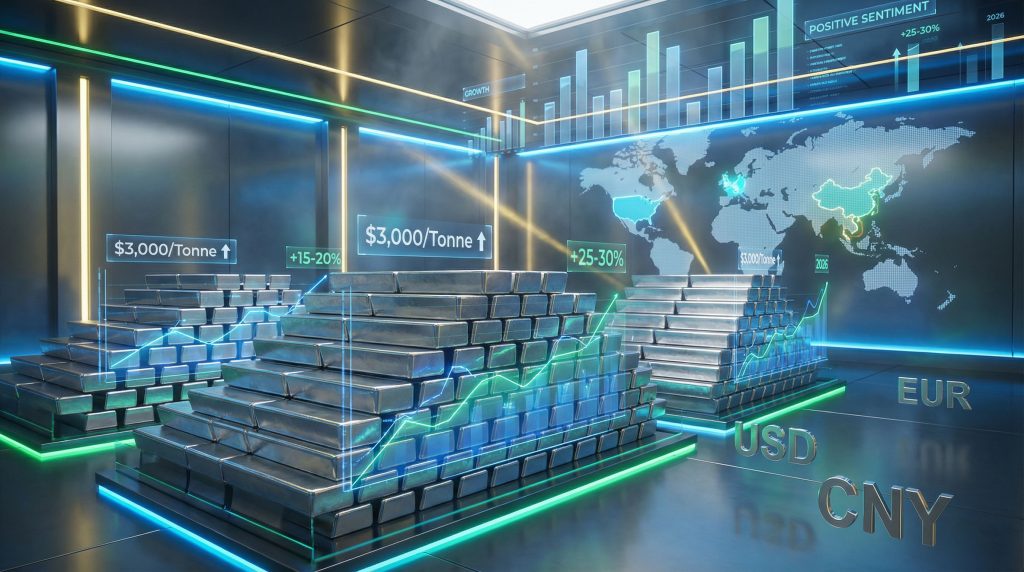
Multiple economic scenarios could drive aluminium prices above the psychologically significant USD 3,000 per tonne threshold that was breached in January 2026. Each scenario operates through different mechanisms but converges on supply-demand imbalances that current market structures cannot easily resolve.
Bullish Economic Catalysts
A global infrastructure boom scenario could increase aluminium consumption by 200-300 thousand tonnes above current forecasts, representing approximately 0.3% of global production. While seemingly modest, this increment exceeds available spare capacity, forcing market adjustment through higher pricing rather than increased output.
Energy crises in major producing regions could remove 800-1,200 thousand tonnes of production capacity, similar to European capacity losses during 2022-2023. Unlike previous cycles, current market conditions lack swing capacity to replace lost production, amplifying price impact.
Trade war escalation could fragment global supply chains further, creating regional scarcity despite global adequacy. This scenario generates premium pricing in affected markets while potentially creating surplus in isolated regions unable to export effectively.
The critical minerals demand surge could increase high-grade aluminium demand by 150-250 thousand tonnes annually, with this demand concentrated in specific product categories that require dedicated production capacity rather than generic primary aluminium.
Supply Shock Economic Models
Geopolitical disruptions affecting major producing regions could remove significant capacity from global markets. Unlike cyclical capacity adjustments, geopolitical supply losses often persist for extended periods and may become permanent if underlying conflicts remain unresolved.
Climate events affecting energy-intensive smelting operations create cascading effects through interconnected supply chains. These disruptions often exceed the immediate physical damage due to grid instability and insurance market reactions.
Labour disputes in key mining regions can constrain alumina feedstock availability, creating upstream bottlenecks that affect global smelter operations regardless of their direct energy or labour situations.
Transportation bottlenecks in global trade corridors affect aluminium differently than bulk commodities due to specialised handling requirements and the need for contamination prevention during storage and shipment.
The next major ASX story will hit our subscribers first
Regional Economic Disparities Create Pricing Complexity
Asia-Pacific economic dynamics continue driving global aluminium consumption patterns, with China's economic trajectory determining approximately 55-60% of global demand trends. China's transition from infrastructure-heavy growth toward consumption-driven development alters the composition of aluminium demand without necessarily reducing total volumes.
India's infrastructure development impact extends beyond absolute consumption volumes to affect regional pricing structures. India's 8-10% annual consumption growth creates incremental demand of approximately 150-200 thousand tonnes annually, with this growth concentrated in infrastructure and transportation applications.
Western Economic Factors
US reshoring initiatives and infrastructure investment create domestic aluminium demand that competes with export markets for limited global supply. The Infrastructure Investment and Jobs Act allocations continue generating construction-related aluminium consumption through 2026-2027.
European Green Deal implementation requires substantial aluminium inputs for renewable energy infrastructure, energy-efficient buildings, and electric vehicle manufacturing. This regulatory-driven demand operates independently of economic cycles, providing consumption floor effects during potential economic downturns.
Canadian energy policy affects global smelter competitiveness through hydropower availability and carbon pricing mechanisms. Canadian smelters benefit from low-carbon electricity sources but face regulatory compliance costs that affect operational economics.
What Investment Positioning Strategies Work for 2026?
Portfolio allocation strategies for 2026 aluminium price movements must account for both traditional commodity exposure and new structural factors affecting long-term pricing. Direct commodity exposure through futures and ETFs provides pure price exposure but requires active management due to contango and storage cost considerations.
Equity positions in major producers offer leveraged exposure to price movements while providing dividend yields and operational diversification. However, producer equities carry company-specific risks that may offset commodity price gains during certain market conditions.
Geographic Diversification Considerations
Regional production cost differences create investment opportunities across the global aluminium value chain:
| Region | Production Cost Range | Key Advantages | Risk Factors |
|---|---|---|---|
| China | USD 1,300-1,500/tonne | Scale, integration | Policy constraints |
| Europe | USD 1,800-2,100/tonne | Low-carbon power | Energy price volatility |
| Middle East | USD 1,400-1,600/tonne | Cheap energy | Geopolitical risks |
| North America | USD 1,600-1,900/tonne | Market access | Regulatory compliance |
Investment strategies should consider these regional disparities when selecting exposure to specific producers or geographic markets.
How Should Hedging Strategies Be Implemented?
Effective hedging for 2026 aluminium price volatility requires understanding the correlation structures between aluminium prices and other economic variables. Additionally, trading economics commodity data provides essential market indicators:
• USD correlation: Negative 0.6-0.7 correlation suggests currency hedging benefits
• Energy price correlation: Positive 0.4-0.5 correlation indicates partial natural hedge
• Equity market correlation: Low 0.2-0.3 correlation provides portfolio diversification
• Interest rate sensitivity: Moderate inverse relationship affects carrying costs
Long-Term Structural Market Evolution
Decarbonisation economics will fundamentally reshape aluminium markets beyond 2026, with low-carbon production commanding premium pricing that reflects regulatory compliance requirements rather than pure production cost differences. This green premium evolution creates permanent market segmentation between standard and certified low-carbon aluminium.
Demographic changes affecting construction and transportation demand operate on multi-decade timeframes but influence current investment decisions in production capacity and technology development. Urbanisation trends in developing economies ensure sustained construction-related aluminium demand through the 2020s and 2030s.
Technological innovation in aluminium applications continues expanding addressable markets while improving efficiency in existing uses. Advanced alloys for aerospace applications, lightweight automotive components, and renewable energy infrastructure represent growth categories that command premium pricing.
Resource Nationalism Implications
Supply security priorities increasingly influence government policies affecting aluminium production and trade. Resource nationalism manifests through:
• Export restrictions during supply shortages or geopolitical tensions
• Strategic stockpile policies removing material from commercial markets
• Domestic content requirements for infrastructure and defence applications
• Foreign investment restrictions in critical mineral production facilities
These policies create permanent changes in global supply chain structures rather than temporary trade disruptions, requiring long-term strategic adaptation by market participants.
Aluminium Price Forecast 2026 Summary Analysis
The aluminium price forecast 2026 reflects convergence of multiple structural factors that support sustained elevation above historical averages. Primary economic forces include supply constraint economics from production caps, demand acceleration from green transition investments, trade policy uncertainty creating risk premiums, and monetary policy effects on commodity valuations.
Base case projections suggest USD 2,700-2,900 average annual pricing for 2026, representing approximately 15-20% elevation above 2025 averages. This forecast incorporates current supply constraints, expected demand growth, and moderate trade policy stability.
Bullish scenarios anticipating USD 3,000+ sustained levels require additional supply disruptions, accelerated green transition investments, or significant trade policy deterioration. These scenarios remain plausible given current geopolitical uncertainties and energy market volatility.
Bearish scenarios projecting USD 2,400-2,600 ranges would require resolution of current supply constraints, moderation in infrastructure spending, or significant economic downturn reducing industrial demand. Current market structures suggest such scenarios have lower probability than elevated pricing continuation.
Key Monitoring Indicators for 2026
Economic indicators providing early warning signals for aluminium market analysis adjustments include:
• Global PMI readings for industrial demand assessment
• Energy price indices for production cost evaluation
• Currency volatility measures for trade impact analysis
• Infrastructure spending announcements for demand forecasting
• China policy statements regarding production capacity management
• Central bank communication affecting commodity investment flows
These indicators operate with varying lead times and reliability, requiring continuous monitoring and analysis for effective market positioning throughout 2026.
Furthermore, proper feasibility studies for projects remain essential for companies considering new capacity investments in this evolving market environment.
Disclaimer: This analysis contains forward-looking statements and projections based on current market conditions and available data. Actual aluminium prices may vary significantly from forecasts due to unforeseen economic, political, or technological developments. Investors should conduct independent research and consider consulting with financial advisors before making investment decisions based on commodity price forecasts.
Ready to Capitalise on the Next Major Aluminium Discovery?
With aluminium prices potentially reaching USD 3,000+ per tonne in 2026, Discovery Alert's proprietary Discovery IQ model provides real-time notifications on significant ASX mineral discoveries, including critical aluminium and industrial metal opportunities that could benefit from this structural market shift. Begin your 14-day free trial today to position yourself ahead of the market and discover why major mineral discoveries can lead to substantial returns.