
May 14, 2026
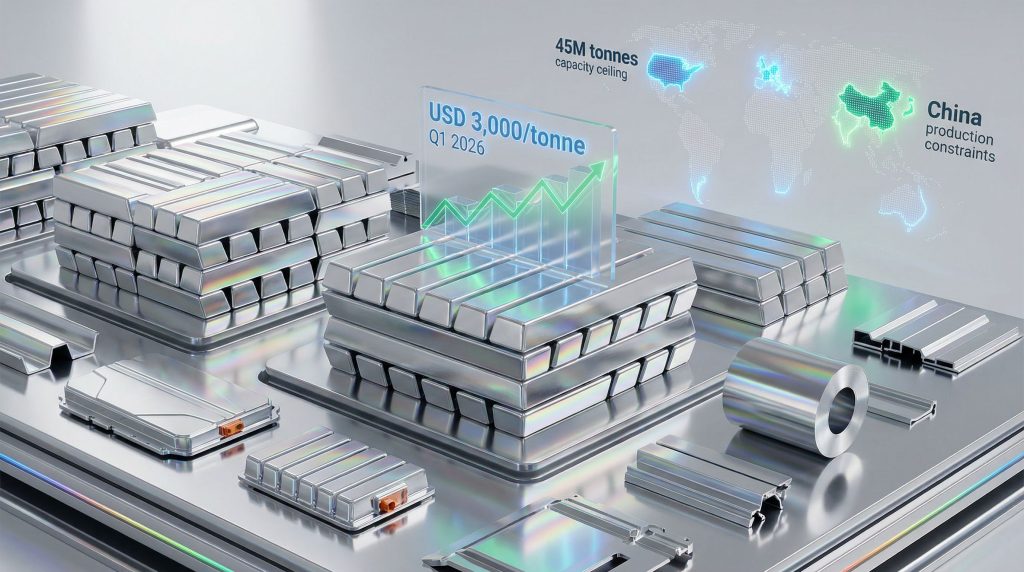
Global monetary systems and trade policies are creating unprecedented structural tensions across commodity markets, with aluminium emerging as a critical case study for understanding how supply rigidity intersects with evolving demand patterns. The convergence of Chinese production constraints, delayed capacity additions worldwide, and accelerating green transition requirements has fundamentally altered the equilibrium dynamics that governed aluminium markets for the past decade. Furthermore, the sustained aluminium price increase reflects these underlying structural shifts that extend beyond traditional cyclical patterns.
Understanding the Fundamental Shift in Global Aluminium Markets
The global aluminium industry is experiencing a profound transformation driven by the collision of supply-side constraints with robust demand growth from emerging sectors. This structural shift represents more than cyclical price volatility; it reflects a fundamental rebalancing of production capacity against consumption patterns that traditional forecasting models failed to anticipate.
Market Deficit Dynamics and Price Floor Mechanisms
The International Aluminium Institute reported a global aluminium market deficit of approximately 371,000 tonnes in 2023, with market conditions tightening further through 2024-2025. This deficit emergence reflects the convergence of multiple supply-side constraints that cannot be easily resolved through traditional capacity expansion mechanisms.
China's primary aluminium smelting capacity stands at approximately 44.2-45 million tonnes annually, representing roughly 56-60% of global production according to the U.S. Geological Survey. However, actual production typically ranges between 42-44 million tonnes annually due to maintenance cycles, environmental shutdowns, and grid management requirements imposed by the National Development and Reform Commission.
The production ceiling effect has created a structural price floor mechanism where even demand weakness cannot substantially reduce prices below production costs of $2,200-2,400 per tonne for average producers. This dynamic fundamentally alters traditional commodity price discovery, creating persistent upward pressure that market participants must factor into long-term planning.
Energy Constraints and Grid Management Challenges
China's aluminium smelting sector consumes approximately 13.5% of the country's total electricity production, requiring substantial grid capacity allocation during peak demand periods. Modern Chinese smelters operate at approximately 13.5-14.0 MWh per tonne, representing efficiency improvements from historical levels but still demanding considerable power infrastructure.
Rolling production curtailments during peak power demand periods affect aluminium smelters as flexible large-load consumers, with production restrictions averaging 5-10% of capacity during constrained periods. These grid management requirements create additional volatility in supply availability that extends beyond traditional economic factors.
| Metric | Current Level | Constraint Impact |
|---|---|---|
| Chinese smelting capacity | 44.2-45M tonnes | Environmental regulations |
| Power consumption per tonne | 13.5-14.0 MWh | Grid allocation limits |
| Peak demand curtailments | 5-10% capacity reduction | Seasonal power rationing |
Bauxite Supply Chain Vulnerabilities
Guinea produces approximately 35-40% of global bauxite, with political instability during 2021-2023 creating supply chain disruptions that highlighted the concentrated nature of raw material sourcing. While current production levels have stabilised near pre-disruption levels by late 2025, alternative supply development from Australia, Brazil, and other sources has increased transportation premiums and logistics complexity.
The geographic concentration of bauxite production creates structural vulnerabilities that extend beyond immediate political risks. Transportation infrastructure limitations, port capacity constraints, and shipping route dependencies compound these vulnerabilities, particularly during periods of elevated global trade tensions.
When big ASX news breaks, our subscribers know first
How Monetary Policy and Inflation Trends Affect Base Metal Pricing
Central bank policy divergence across major economies creates asymmetric impacts on aluminium price increase patterns through three primary transmission mechanisms. The Federal Reserve maintained benchmark interest rates at 4.25-4.50% through mid-2025, while the European Central Bank reduced rates from 4.00% in mid-2024 to approximately 3.00% by Q3 2025, reflecting divergent economic conditions.
Interest Rate Transmission Mechanisms
Interest rate changes influence commodity pricing through multiple channels that extend beyond simple demand elasticity. Moreover, tariff impact analysis reveals additional complexity in price formation mechanisms:
- Opportunity cost of inventory holding – Higher rates increase storage costs and reduce speculative positioning
- Credit availability for end-users – Rate increases reduce financing for construction and automotive sectors
- Currency competitiveness effects – Policy divergence creates exchange rate movements affecting producer costs
- Investment flow allocation – Rate differentials influence capital flows between commodity and financial assets
The USD strengthened approximately 5-7% against emerging market currencies during 2024-2025, increasing input costs for aluminium producers in non-USD jurisdictions while reducing purchasing power for commodity buyers in these regions. Indonesian, Indian, and Brazilian producers faced higher financing costs and input inflation due to currency depreciation, directly affecting competitiveness and capital investment decisions.
Infrastructure Spending Multipliers
China launched infrastructure programs totaling approximately 2-3% of GDP in stimulus announcements during 2024-2025, creating aluminium demand multipliers in construction and transportation sectors. The Infrastructure Investment and Jobs Act in the United States allocated $110 billion for surface transportation, with cumulative spending reaching approximately $40-50 billion by end of 2024.
These infrastructure programs create baseline aluminium demand through construction materials and vehicle lightweighting initiatives that operate independently of cyclical economic conditions. The multiplier effects extend beyond direct government spending to include private sector participation in related development projects.
Regional Production Constraints Creating Price Floor Effects
China's Capacity Limitations and Market Response
China's aluminium market operates under regulatory constraints that prevent capacity expansion despite strong demand conditions. The National Capacity Replacement Program allows new smelter development only if equivalent capacity is retired, effectively capping total production capability while demand continues growing.
Environmental compliance mandates force periodic shutdowns that reduce effective capacity utilisation below nameplate levels. Emissions limits, water usage requirements, and energy intensity regulations create operational constraints that cannot be easily circumvented through technological improvements alone.
The relationship between capacity and actual production reflects multiple simultaneous constraints:
- Environmental compliance requirements – Emissions limits forcing periodic shutdowns
- Grid management protocols – Power rationing during peak demand seasons
- Scheduled maintenance cycles – Required maintenance reducing annual output 1-2 months
- Economic optimisation decisions – Voluntary reductions during low-price periods
Secondary Aluminium Market Dynamics
China processed approximately 8.1-8.5 million tonnes of aluminium scrap in 2024, representing roughly 18-20% of primary production volumes. Import restrictions on lower-grade scrap material implemented during 2024-2025 reduced available scrap volumes and constrained secondary production growth to approximately 2-3% annually versus historical 5-6% growth rates.
The scrap processing capacity constraints create additional supply tightness that extends beyond primary production limitations. Secondary aluminium typically requires 85-90% less energy than primary production, making scrap availability a critical factor in overall supply elasticity. In addition, aluminium scrap assessments demonstrate the growing importance of secondary market pricing mechanisms.
The aluminium price increase momentum reflects structural supply constraints that cannot be resolved through traditional market mechanisms, creating persistent upward pressure that extends beyond cyclical demand patterns.
Indonesian Smelter Development Delays
Indonesia targeted approximately 3.5-4.0 million tonnes of new primary aluminium smelting capacity development through 2025-2027. However, significant delays persist with most projects operating at 60-75% of planned timeline schedules due to infrastructure bottlenecks and regulatory processing delays.
Port facility development and power infrastructure constraints represent primary bottlenecks that add 12-18 months to original project timelines. Environmental impact assessment procedures require 12-18 months for processing, creating pre-construction delays independent of capital availability or technical readiness.
Technology transfer challenges compound these delays, with global supply chain disruptions for specialised aluminium smelting equipment creating 6-12 month delays in equipment delivery through 2023-2024. Installation expertise limitations require extended expatriate engineer rotations and training programs that add 3-6 months to startup timelines.
Demand Amplification Across Multiple Economic Sectors
Electric Vehicle Revolution Driving Consumption Patterns
Electric vehicles require approximately 180kg of aluminium per vehicle compared to 150kg per internal combustion engine vehicle, representing a 20% increase in aluminium content per unit. Battery housing applications demand specific alloy compositions for thermal management and structural integrity that cannot be easily substituted with alternative materials.
The charging infrastructure expansion creates additional aluminium demand through power distribution systems, transformer housings, and cable management applications. This infrastructure demand operates on longer replacement cycles than vehicle production, creating sustained baseline consumption growth.
Global electric vehicle sales projections suggest continued acceleration in adoption rates, with aluminium demand from this sector potentially reaching 2-3 million tonnes annually by 2030 compared to current levels of approximately 800,000-1,000,000 tonnes. Furthermore, this transformation aligns with broader energy transition strategy initiatives across multiple economies.
Construction and Infrastructure Modernisation Trends
Green building standards increasingly favour aluminium's recyclability characteristics in meeting sustainability requirements. Smart city development requires integrated systems utilising advanced aluminium alloys for communication infrastructure, transportation networks, and energy distribution systems.
Climate adaptation infrastructure, particularly in coastal regions, drives demand for corrosion-resistant aluminium applications in flood barriers, transportation systems, and utility infrastructure. These applications typically specify higher-grade alloys that command premium pricing compared to standard construction materials.
| Application Sector | Annual Demand Growth | Price Premium |
|---|---|---|
| Electric vehicle production | 8-12% | Standard alloy pricing |
| Battery housing systems | 15-20% | 5-10% premium |
| Charging infrastructure | 6-8% | 10-15% premium |
| Green building applications | 4-6% | 3-7% premium |
Trade Policy Disruptions and Market Fragmentation
Tariff Structure Impacts on Regional Pricing
US import duties reaching up to 50% on Chinese aluminium products have created substantial regional pricing disparities. Midwest premiums escalated to $1,300-1,900 per tonne above London Metal Exchange pricing, reflecting supply chain re-routing costs and alternative sourcing requirements.
Supply chain re-routing toward Canada, Norway, and Australia has increased transportation costs and extended delivery timelines for North American consumers. These logistical adjustments create persistent cost structures that cannot be easily reversed even if trade policies normalise.
Trade policy fragmentation creates distinct regional pricing ecosystems where North American premiums reach historical highs while Asian spot markets remain relatively stable. This fragmentation reduces arbitrage opportunities and increases hedging complexity for multinational consumers.
Strategic Reserve Policies and Government Intervention
Aluminium's designation as a critical mineral in national security frameworks across multiple jurisdictions has prompted government stockpile management strategies that affect market liquidity. Strategic reserve purchases during periods of price weakness create additional demand that supports pricing floors.
Export restriction considerations represent potential policy tools for major producing nations that could further fragment global markets. These restrictions, whether implemented or merely threatened, influence supply planning decisions and inventory management strategies across the value chain.
Financial Market Dynamics and Investment Flows
Commodity Fund Positioning and Speculative Activity
Managed money positioning in aluminium futures has reached net long positions at multi-year highs, with institutional investors increasingly viewing aluminium as an inflation hedge and green transition beneficiary. Physical-backed aluminium exchange-traded funds have attracted substantial institutional capital flows seeking direct commodity exposure.
Options markets are pricing elevated volatility premiums that reflect uncertainty around supply disruptions, trade policy changes, and demand acceleration scenarios. These volatility premiums create additional costs for hedging activities whilst providing opportunities for sophisticated trading strategies.
Consequently, commodity market volatility requires sophisticated risk management approaches from both producers and consumers in this evolving landscape.
Corporate Hedging Strategies and Price Discovery
Aluminium producers have reduced forward sales positions, creating increased exposure to upside price movements but also greater sensitivity to demand fluctuations. This reduced hedge book coverage amplifies profit volatility whilst potentially enhancing returns during sustained price increases.
Consumer pre-buying behaviour has intensified as end-users seek to secure supply at current price levels before potential further increases. This forward purchasing activity creates additional near-term demand pressure that can accelerate price movements beyond fundamental supply-demand balance indicators.
Financial intermediaries including banks and trading houses are managing elevated inventory risks through sophisticated hedging strategies that can amplify price volatility during periods of market stress. These institutional positions represent significant market influence that extends beyond traditional producer-consumer dynamics.
The next major ASX story will hit our subscribers first
Price Trajectory Analysis and Scenario Modelling
Base Case: Sustained Deficit Conditions Through 2026
Supply-demand fundamental analysis supports price targets in the $2,800-3,200 per tonne range based on current production constraints and projected demand growth. Seasonal adjustment factors suggest potential Q1 2026 demand surge from construction activity resumption following typical winter slowdowns.
Inventory normalisation requires an estimated 12-18 months to restore comfortable stock levels across major consuming regions. This extended timeline reflects the magnitude of current deficits and limited near-term supply additions from new capacity development.
The aluminium price increase trajectory depends critically on the intersection of Chinese production ceiling enforcement and global demand acceleration from green transition sectors. Current market conditions suggest these trends will persist through at least mid-2026. Moreover, current price forecasts support these trajectory expectations.
| Scenario | Q1 2026 Price Target | Probability Assessment | Key Assumptions |
|---|---|---|---|
| Bull case | $3,400 per tonne | 25% | Severe supply disruptions |
| Base case | $3,000 per tonne | 50% | Current trends continue |
| Bear case | $2,400 per tonne | 25% | Demand slowdown in China |
Risk Factors and Downside Scenarios
Chinese economic deceleration represents the primary downside risk, particularly if property sector weakness spreads to broader industrial demand. Trade war escalation through additional tariffs could disrupt global flow patterns and reduce overall consumption efficiency.
Advanced economy recession probability creates demand destruction risks that could overwhelm supply constraints in extreme scenarios. However, the structural nature of current supply limitations suggests prices would remain elevated relative to historical recession levels.
Upside Catalysts and Market Acceleration Factors
Green transition acceleration through faster electric vehicle adoption and renewable energy deployment could drive demand growth beyond current projections. Major economy infrastructure stimulus programs represent potential demand catalysts that could exhaust available supply capacity.
Supply shock events from geopolitical disruptions in key producing regions could trigger rapid price appreciation beyond modelled scenarios. These potential disruptions include political instability in bauxite-producing regions, energy infrastructure failures, or trade route blockages.
Investment Strategy Implications and Portfolio Positioning
Direct Commodity Exposure Considerations
Futures curve dynamics currently exhibit backwardation patterns that favour near-term contract positioning over longer-dated exposures. Storage costs and warehouse financing charges add carrying costs that must be factored into total return calculations for physical exposure strategies.
Liquidity considerations favour London Metal Exchange contracts over alternative trading venues, with bid-ask spreads remaining relatively tight despite elevated volatility. Trading volume patterns support institutional-scale position management without significant market impact costs.
Equity Market Correlations and Sector Rotation
Aluminium producer margin expansion from sustained price increases creates significant profitability enhancement potential for companies with low-cost production profiles. Conversely, downstream industries face input cost inflation that may compress margins unless pricing power allows cost pass-through.
Regional performance divergence reflects geography-specific cost structures, regulatory environments, and market access advantages. North American producers benefit from trade protection and transportation cost advantages, while emerging market producers face currency headwinds and higher financing costs.
For instance, mining industry evolution demonstrates how technological advancement and operational efficiency improvements create competitive advantages in this environment.
Strategic portfolio positioning should consider the structural nature of current supply constraints alongside cyclical demand patterns. The convergence of green transition requirements with capacity limitations creates investment opportunities that extend beyond traditional commodity cycles.
The aluminium market transformation reflects broader themes around critical mineral security, supply chain resilience, and green transition material requirements. Investors must navigate these structural changes whilst managing traditional commodity volatility and geopolitical risks that could accelerate current trends or create temporary disruptions.
Investment Disclaimer: Commodity markets involve substantial risk and volatility. Past performance does not guarantee future results. Investors should conduct thorough due diligence and consider their risk tolerance before making investment decisions in commodity-related assets.
Ready to Capitalise on the Aluminium Price Surge?
Discovery Alert's proprietary Discovery IQ model delivers real-time alerts on significant ASX mineral discoveries, instantly identifying aluminium and base metals opportunities ahead of market movements. With aluminium prices reaching multi-year highs and structural supply deficits creating sustained demand, explore how major mineral discoveries have historically generated exceptional returns during commodity supercycles.