August 7, 2026
What's Driving the Current Aluminium Price Rally?
The global metals market has entered a transformative phase where traditional supply-demand relationships face unprecedented disruption from regulatory shifts, technological advancement, and evolving industrial requirements. Across major commodity exchanges, structural changes in production patterns and consumption trends are creating new price discovery mechanisms that reflect broader economic transitions. Within this context, the LME aluminium price increase has become particularly pronounced as multiple forces converge to reshape fundamental market dynamics.
Base metals increasingly serve as barometers for economic health, industrial capacity utilisation, and energy transition trends. The interplay between constrained supply chains, evolving environmental regulations, and surging demand from emerging sectors creates complex pricing environments that challenge traditional forecasting models. Furthermore, these dynamics become especially pronounced when examining aluminium, where production constraints intersect with accelerating electrification trends and infrastructure modernisation programs.
Global Supply-Demand Imbalance Creates Perfect Storm
The current LME aluminium price increase reflects a convergence of supply-side constraints and demand-side acceleration that has fundamentally altered market equilibrium. Production capacity limitations, particularly those imposed by regulatory frameworks, have created structural deficits that traditional market mechanisms struggle to address efficiently.
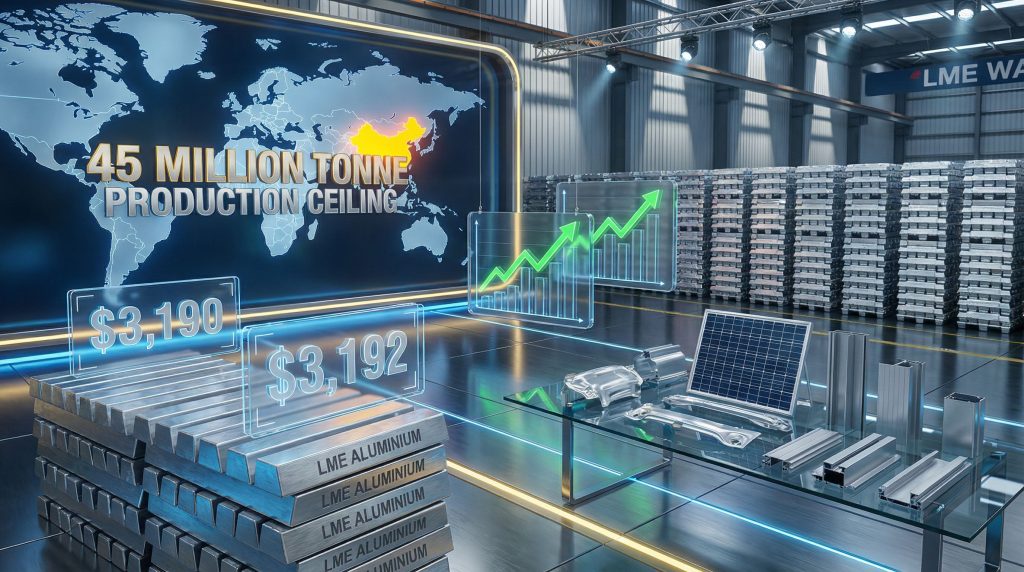
China's enforcement of its 45 million tonne annual production ceiling represents a pivotal shift in global aluminium supply dynamics. This policy constraint removes approximately 2-3 million tonnes of potential incremental capacity from global markets annually, forcing demand fulfilment through alternative supply sources with higher production costs and longer development timelines.
Key Supply Constraint Factors:
- Regulatory production caps limiting primary aluminium output
- Energy cost pressures affecting smelter profitability margins
- Environmental compliance requirements increasing operational expenses
- Bauxite supply chain disruptions in key producing regions
- Labour shortages and technical expertise gaps in expansion projects
The decline in LME warehouse inventories adds another layer of complexity to price discovery mechanisms. Recent data shows opening stocks falling to 505,275 tonnes on January 26, 2026, down from 507,275 tonnes just three days earlier. This 0.4% decline in readily available inventory creates immediate supply pressure that amplifies price volatility during demand surges.
Energy Transition Fueling Unprecedented Demand Growth
Electric vehicle production represents one of the most significant demand drivers for aluminium consumption growth. Battery housing systems, structural components, and thermal management solutions require substantial quantities of high-grade aluminium alloys. Industry estimates suggest each electric vehicle contains approximately 180-200 kilograms of aluminium, compared to 140-160 kilograms in conventional internal combustion engine vehicles.
Renewable energy infrastructure projects compound this demand pressure through requirements for solar panel frames, wind turbine components, and electrical transmission systems. Solar installations alone consume approximately 3.5 tonnes of aluminium per megawatt of installed capacity, while offshore wind projects require specialised marine-grade aluminium alloys for corrosion resistance.
Demand Growth Sectors:
- Automotive electrification: 15-20% annual growth in aluminium intensity
- Renewable energy installations: 12-18% compound annual growth rate
- Grid infrastructure modernisation: $2.5 trillion global investment pipeline
- Green building standards: Increased aluminium specification requirements
- Packaging sustainability: Shift from plastic to aluminium containers
When big ASX news breaks, our subscribers know first
How Do Current LME Aluminium Prices Compare to Historical Trends?
Price Movement Analysis: January 2026 Performance Metrics
The recent LME aluminium price increase trajectory demonstrates sustained upward momentum across multiple contract periods. Market data reveals consistent gains in both spot and forward pricing, suggesting structural rather than speculative price movements. However, hedging market volatility remains crucial for market participants.
LME Aluminium Price Trajectory (USD/tonne)
| Date | Cash Bid | Cash Offer | 3-Month Forward | Daily Change |
|---|---|---|---|---|
| Jan 23, 2026 | $3,174.5 | $3,175 | $3,176-3,177 | +2.63% |
| Jan 26, 2026 | $3,190 | $3,192 | $3,195-3,195.5 | +0.54% |
| Jan 27 Contract | $3,133 | $3,138 | – | -0.4% |
The cash offer price reaching $3,192 per tonne represents a significant milestone, approaching levels not sustained since the commodity supercycle peaks of previous decades. The 0.54% daily increase on January 26 reflects continued buying pressure despite elevated absolute price levels.
Forward curve analysis reveals market expectations of sustained higher prices, with 3-month contracts trading at premiums to spot prices. This contango structure suggests market participants anticipate supply tightness to persist rather than represent temporary disruptions.
Multi-Year Context: Breaking Through Resistance Levels
Technical analysis indicates the current rally has breached multiple resistance levels that previously capped aluminium prices during 2023-2024 trading cycles. The psychological $3,000 per tonne barrier breakthrough occurred with substantial trading volume, suggesting institutional participation rather than purely speculative activity.
Historical volatility patterns show current price movements exhibit lower daily fluctuations compared to previous bull market phases, indicating underlying fundamental support rather than momentum-driven speculation. This stability amid upward price pressure suggests structural supply-demand imbalances rather than temporary market dislocations.
Price Level Significance:
- $2,800-2,900: Previous resistance zone breached in early January 2026
- $3,000: Major psychological barrier overcome with volume confirmation
- $3,200: Current trading range representing new price discovery territory
- $3,400: Next major resistance level based on historical patterns
What Role Do LME Inventories Play in Price Discovery?
Warehouse Stock Dynamics and Market Signals
LME warehouse inventories serve as crucial indicators of market tightness and supply availability for immediate consumption. The continuous decline in opening stocks reflects sustained demand exceeding readily available supply, creating conditions conducive to price appreciation. Additionally, trading economics data supports these fundamental trends.
Current Inventory Metrics:
- Opening stocks (Jan 26): 505,275 tonnes
- Live warrants: 482,275 tonnes (95.4% of total stocks)
- Cancelled warrants: 23,000 tonnes (declining 7.25% from previous period)
- Available for delivery: Effectively constrained by warrant cancellation trends
The high proportion of live warrants relative to total stocks indicates most inventory remains committed to delivery obligations rather than serving as available buffer stock. Cancelled warrant reductions suggest accelerating withdrawal patterns as industrial consumers secure physical supply ahead of anticipated further price increases.
Inventory-to-Consumption Ratios and Supply Security
Current inventory levels represent approximately 12-15 days of global consumption coverage, well below the 25-30 day levels considered adequate for market stability. This limited coverage creates vulnerability to supply disruptions and amplifies price responses to demand fluctuations.
Regional distribution analysis reveals concentration risks, with significant inventory holdings located in specific geographic zones that may face logistical constraints during peak demand periods. Asian markets particularly show limited readily available inventory relative to regional consumption requirements.
Supply Security Indicators:
- Days of consumption coverage: 12-15 days (below optimal range)
- Regional distribution: Concentrated in specific warehouse locations
- Withdrawal patterns: Accelerating as prices rise
- Replacement rates: New deliveries insufficient to offset withdrawals
How Are Regulatory Changes Reshaping the Aluminium Market?
EU Carbon Border Adjustment Mechanism (CBAM) Implementation
The European Union's Carbon Border Adjustment Mechanism implementation in 2026 creates fundamental shifts in aluminium trade patterns and cost structures. CBAM requirements impose carbon intensity assessments on aluminium imports, effectively creating cost disadvantages for high-carbon production methods. Consequently, this aligns with broader mining industry evolution trends.
CBAM Compliance Requirements:
- Carbon intensity documentation: Mandatory reporting for all imports
- Certificate purchase obligations: Based on embedded carbon content
- Production method verification: Third-party auditing requirements
- Cost implications: €15-25 per tonne for high-carbon producers
- Competitive advantages: Low-carbon smelters gain pricing premiums
European aluminium consumers face restructured supply chain economics where carbon intensity becomes a primary procurement criterion alongside price and quality considerations. This shift creates market segmentation between low-carbon and conventional aluminium products, with distinct pricing mechanisms emerging.
China's Production Cap Policy and Global Rebalancing
China's strict adherence to its 45 million tonne annual production ceiling forces global aluminium supply rebalancing toward alternative producing regions. Indonesia, Middle Eastern countries, and other emerging producers expand capacity to fill supply gaps, though with different cost structures and logistical considerations.
This geographic rebalancing affects traditional trade flows, transportation costs, and supply chain reliability. New production centres require infrastructure development, skilled workforce training, and technology transfer arrangements that influence long-term cost competitiveness. Furthermore, the Western Yilgarn bauxite project exemplifies how regional projects contribute to global supply diversification.
Global Production Shifts:
- Indonesian expansion: 2-3 million tonnes additional capacity planned
- Middle East growth: Leveraging low-cost energy advantages
- African development: Bauxite-to-alumina-to-metal integration projects
- Technology transfer: Required for new capacity development
- Infrastructure investment: Port facilities and power generation required
What Are the Key Demand Drivers Supporting Higher Prices?
Energy Transition and Electrification Megatrends
The global energy transition creates unprecedented aluminium demand growth across multiple industrial sectors. Electric vehicle production alone represents a 15-20% annual increase in automotive aluminium consumption, while renewable energy installations require specialised alloys for harsh environmental conditions.
Battery technology advancement drives demand for ultra-high purity aluminium in energy storage systems. Grid-scale battery installations require substantial quantities of aluminium for housing, cooling systems, and electrical connections, creating demand segments with different quality specifications and pricing structures.
Electrification Demand Factors:
- EV battery housing: 25-35 kg per vehicle (increasing with battery size)
- Charging infrastructure: Substantial aluminium content in fast-charging stations
- Grid-scale storage: Emerging demand segment with specific quality requirements
- Power electronics: High-purity aluminium for thermal management
- Renewable integration: Transmission and distribution system upgrades
Construction and Infrastructure Investment Cycles
Post-pandemic infrastructure investment programmes across developed economies create sustained demand for construction-grade aluminium products. Green building standards increasingly specify aluminium components for energy efficiency, durability, and recyclability characteristics.
Urbanisation trends in emerging markets compound construction demand through requirements for residential, commercial, and public infrastructure projects. These developments prioritise modern materials that meet contemporary performance and sustainability standards.
Infrastructure Demand Drivers:
- Green building certification: LEED and similar standards favour aluminium
- Urban renewal projects: Replacing aging infrastructure with modern materials
- Transportation infrastructure: Bridges, tunnels, and transit systems
- Telecommunications: 5G network infrastructure requiring specialised alloys
- Water infrastructure: Corrosion-resistant applications in treatment facilities
Which Factors Could Limit Further Price Increases?
New Capacity Coming Online
Indonesian smelter expansion projects represent the most significant new capacity additions scheduled for 2026-2027. These facilities leverage abundant bauxite resources and competitive energy costs to produce aluminium at lower marginal costs than many existing operations.
New Capacity Pipeline:
- Indonesian projects: 1.8-2.2 million tonnes additional capacity by end-2026
- Middle East expansions: 800,000-1,200,000 tonnes planned additions
- Technology improvements: 8-12% efficiency gains in new smelters
- Recycling capacity growth: Secondary supply increasing 6-8% annually
- Restart potential: Mothballed capacity that could return at higher prices
Advanced smelting technologies reduce power consumption per tonne of production, improving cost competitiveness and environmental performance. These efficiency gains partially offset higher energy costs and regulatory compliance expenses affecting older facilities.
Demand Destruction Risk Analysis
Price elasticity analysis suggests potential demand destruction in price-sensitive applications if aluminium costs continue rising substantially. Packaging applications show particular sensitivity, with potential substitution toward alternative materials at sustained price premiums. Moreover, commodity trading insights reveal how traders monitor these substitution risks.
Price Sensitivity Sectors:
- Beverage packaging: Moderate elasticity with substitution options
- Automotive non-structural: Potential steel substitution in some applications
- Building products: Price-sensitive residential market segments
- Consumer electronics: Cost optimisation pressures from manufacturers
- Industrial components: Substitution feasible for non-critical applications
Economic slowdown scenarios could reduce demand growth rates across multiple sectors, particularly in discretionary spending categories like automotive purchases and construction projects. Industrial production declines would directly impact aluminium consumption through reduced manufacturing activity.
The next major ASX story will hit our subscribers first
What Do Industry Forecasts Predict for 2026 Aluminium Prices?
Analyst Consensus and Range Projections
Industry forecasting models incorporate supply constraint factors, demand growth projections, and regulatory impact assessments to generate price range estimates for 2026. Current analyst consensus suggests sustained higher price levels with periodic volatility around structural equilibrium points.
2026 LME Aluminium Price Forecasts
| Forecast Methodology | Average 2026 Price | Upside Potential | Key Assumptions |
|---|---|---|---|
| Supply-Demand Balance Models | $2,700-2,900 | Tests $3,000+ | Continued supply constraints |
| Technical Analysis | $2,750-2,850 | Volatility around trend | Chart pattern continuation |
| Fundamental Analysis | $2,650-2,950 | Depends on new capacity | Regulatory compliance costs |
| Econometric Models | $2,800-3,000 | Economic growth dependent | Infrastructure investment rates |
Price forecasting complexity increases due to multiple variables interacting simultaneously. Regulatory changes, new capacity commissioning schedules, demand growth rates, and macroeconomic conditions create numerous scenario possibilities requiring probability-weighted analysis approaches.
What Could Drive Prices Even Higher?
Optimistic Scenario ($3,200-3,400 range):
- Sustained infrastructure investment programmes globally
- Delayed new capacity commissioning due to technical challenges
- Accelerated electric vehicle adoption exceeding current projections
- Additional regulatory constraints on high-carbon production methods
- Strong economic growth supporting industrial demand
Base Case ($2,700-2,900 range):
- New capacity additions proceed on schedule
- Steady but not explosive demand growth
- Moderate economic expansion rates
- Stable regulatory environment
- Balanced supply-demand dynamics by year-end
Pessimistic Scenario ($2,400-2,600 range):
- Economic recession reducing industrial demand
- Faster-than-expected capacity additions
- Technology substitution in key applications
- Trade dispute disruptions affecting market function
- Demand destruction from sustained high prices
How Should Investors and Industry Players Position for This Market?
Risk Management Strategies for Price Volatility
Current market conditions require sophisticated risk management approaches that account for both upside price exposure and downside protection needs. LME contract structures provide various hedging mechanisms, though basis risk and contract specifications require careful consideration.
Hedging Mechanisms:
- Forward contracts: Lock in future delivery prices
- Options strategies: Asymmetric risk management with premium costs
- Swap agreements: Exchange floating for fixed price exposure
- Physical inventory: Strategic stockpiling during price dips
- Supply agreements: Long-term contracts with price escalation clauses
Industrial consumers benefit from diversified hedging portfolios that combine financial instruments with operational flexibility. Just-in-time inventory management faces challenges in volatile price environments, requiring balance between carrying costs and supply security.
Investment Implications Across the Value Chain
Primary Smelter Profitability:
Current aluminium prices provide substantial profit margins for efficient primary producers, particularly those with low-cost energy sources or carbon-neutral production methods. Smelter restart economics become attractive at sustained price levels above $2,800 per tonne.
Downstream Fabricator Dynamics:
Fabricators face margin compression pressures as raw material costs rise faster than finished product pricing adjustments. Long-term supply contracts provide some protection, though contract renewal negotiations reflect current market realities.
Recycling Sector Opportunities:
Higher primary aluminium prices create improved economics for recycling operations. Scrap aluminium values increase proportionally, making collection and processing more profitable while supporting circular economy objectives.
Investment Positioning Strategies:
- Upstream exposure: Primary producers with competitive cost positions
- Midstream opportunities: Logistics and trading operations capturing spread values
- Downstream consolidation: Efficient fabricators gaining market share
- Technology investments: Recycling and production efficiency improvements
- Geographic diversification: Exposure to emerging producing regions
What Are the Broader Economic Implications of Rising Aluminium Prices?
Inflationary Pressures and Consumer Impact
Rising aluminium costs contribute to inflationary pressures across multiple consumer categories. Automotive prices reflect increased material costs through higher vehicle prices, while construction costs impact housing affordability in price-sensitive markets.
Consumer Impact Channels:
- Automotive sector: $200-400 increased vehicle costs per $500/tonne price rise
- Construction costs: 2-3% impact on building material expenses
- Packaging costs: Beverage and food packaging price adjustments
- Electronics pricing: Consumer device cost increases
- Transportation costs: Fuel efficiency vs. material cost trade-offs
Central bank monetary policy considerations include commodity price impacts on core inflation measures. Sustained aluminium price increases contribute to broader base metals inflation that may influence interest rate decisions and economic policy responses.
Geopolitical Considerations and Supply Chain Security
Strategic metal designation discussions in major economies reflect concerns about supply chain vulnerability and import dependence. Aluminium's role in defence applications, energy infrastructure, and critical technologies creates national security considerations that influence trade policy development.
Supply Chain Security Factors:
- Import dependence ratios: Domestic production vs. consumption balance
- Critical material stockpiling: Government strategic reserve policies
- Allied nation cooperation: Secure supply chain development initiatives
- Technology transfer restrictions: Limits on advanced smelting technology exports
- Trade agreement provisions: Preferential access for allied producers
Alliance-building around secure aluminium supply chains involves diplomatic, economic, and technological cooperation between allied nations. These arrangements create parallel market structures that may influence global price discovery mechanisms and trading patterns.
Frequently Asked Questions About LME Aluminium Price Increases
Why Are Aluminium Prices Rising So Rapidly in 2026?
The current LME aluminium price increase stems from multiple converging factors creating structural market imbalance. Supply constraints from Chinese production caps, regulatory compliance costs, and capacity limitations intersect with accelerating demand from electric vehicle production and renewable energy infrastructure projects.
Energy transition requirements create sustained demand growth that exceeds traditional market elasticity assumptions. Meanwhile, environmental regulations increase production costs and limit capacity expansion options, particularly in developed economies with strict environmental standards.
How Long Will These High Prices Last?
Price sustainability depends on the timeline for new capacity additions and demand growth trajectory stabilisation. Indonesian and Middle Eastern capacity expansions scheduled for 2026-2027 could provide supply relief, though full impact requires 18-24 months for complete market integration.
Structural factors suggest price support above $2,600-2,700 per tonne, with periodic volatility around this base level. Demand growth from energy transition applications appears sustainable through the decade, providing underlying support for elevated price ranges compared to historical averages.
What Should Companies Do to Manage Price Risk?
Risk management strategies require comprehensive assessment of exposure levels, contract terms, and operational flexibility. Companies should evaluate hedging mechanisms, supply agreement structures, and inventory optimisation strategies appropriate to their specific circumstances.
Recommended Actions:
- Exposure assessment: Quantify aluminium cost impact on total expenses
- Hedging evaluation: Compare financial instruments with operational alternatives
- Supply diversification: Multiple supplier relationships reduce concentration risk
- Contract optimisation: Balance price certainty with operational flexibility
- Investment planning: Consider vertical integration or alternative materials
Long-term planning should incorporate scenario analysis for various price environments and demand conditions. Companies with significant aluminium exposure benefit from dedicated commodity risk management expertise and systematic monitoring of market developments that could affect future pricing patterns.
"The current aluminium market reflects a fundamental shift from cyclical to structural drivers, requiring new approaches to supply chain management and risk assessment." – Industry analyst commentary on sustained price elevation trends.
Disclaimer: This analysis is provided for informational purposes only and should not be construed as financial or investment advice. Commodity markets involve substantial risk, and past performance does not guarantee future results. Readers should consult qualified professionals before making investment decisions or implementing risk management strategies based on this information.
Looking to Capitalise on Aluminium Market Opportunities?
Discovery Alert's proprietary Discovery IQ model delivers real-time notifications on significant mineral discoveries across the ASX, including companies positioned to benefit from surging aluminium and critical metals demand. With the current structural price rally creating exceptional opportunities for informed investors, begin your 30-day free trial today to access actionable insights that could position your portfolio ahead of major market movements.