August 14, 2026
The global aluminium market has entered a paradigm shift that extends far beyond typical commodity cycles. Industrial metals are experiencing unprecedented structural changes driven by environmental regulations, energy transition challenges, and supply chain realignments that collectively challenge decades of established market dynamics. Understanding these forces requires examining how regulatory frameworks, technological demands, and geopolitical tensions converge to create new price equilibrium levels across base metals markets.
What's Driving the Current Aluminium Price Rally?
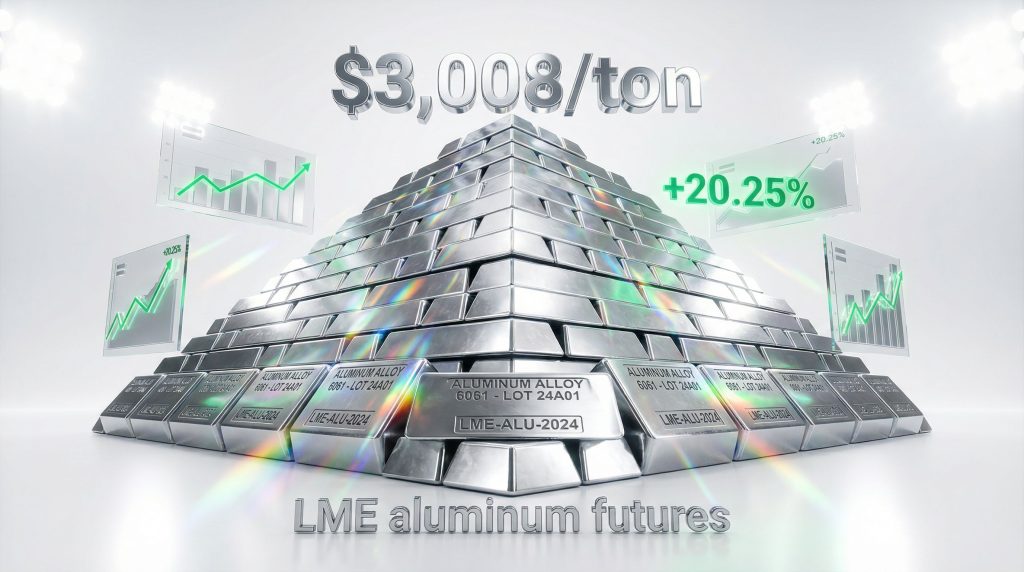
Market fundamentals indicate aluminium price spikes due to supply concern have created a sustained upward trajectory that reflects deeper structural imbalances rather than temporary supply disruptions. London Metal Exchange aluminium futures reached $3,008 per tonne as of January 2026, marking the first breach above $3,000 since mid-2022 when post-pandemic commodity rallies pushed prices to similar levels.
The performance metrics underscore the strength of this movement:
- Annual gains of 17% in 2025, representing the strongest yearly performance since 2021
- Monthly increases of 3.34% demonstrating sustained momentum
- Daily volatility of 1.19% indicating active trading interest and price discovery
This price action reflects convergence across multiple demand vectors that create structural support levels. The construction sector maintains steady infrastructure investment despite economic uncertainty, while renewable energy deployment accelerates globally. Solar panel manufacturing requires aluminium for mounting frameworks and electrical components, with each megawatt of solar capacity requiring approximately 150-200 kilograms of aluminium in structural applications alone.
Electric vehicle production intensifies aluminium demand through lightweighting strategies. Modern EVs contain 250-350 kilograms of aluminium compared to 150-180 kilograms in traditional internal combustion vehicles. As global EV production scales toward 15-20 million units annually by 2027, this demand vector creates baseline consumption that supports elevated pricing regardless of cyclical economic conditions.
Energy storage systems represent an emerging demand category not present five years ago. Grid-scale battery installations require aluminium for thermal management systems, structural enclosures, and electrical connections. With global battery storage deployment exceeding 50 GWh annually and accelerating, this creates additional aluminium consumption that compounds traditional demand sources.
When big ASX news breaks, our subscribers know first
How Are Chinese Production Caps Reshaping Global Supply?
China's transition from production maximisation to capacity management represents a fundamental shift in how the world's largest aluminium producer approaches global markets. Rather than competing through volume expansion, Chinese policy now emphasises production efficiency, environmental compliance, and resource optimisation through regulatory mechanisms that create binding production constraints.
The implementation of a 45 million tonne annual production ceiling establishes hard limits on Chinese aluminium output for the first time in decades. This ceiling operates through multiple policy instruments:
Carbon Intensity Targets:
- Annual efficiency improvements of 3-5% required through 2030
- Facilities unable to meet benchmarks face mandatory curtailment
- Regional variations based on power grid carbon intensity
Emission Trading System Expansion:
China's ETS now covers aluminium smelting operations, creating direct carbon costs for production. Smelters receive carbon allowance allocations based on efficiency benchmarks and historical baselines. Facilities exceeding allowances must purchase additional permits at market prices, typically $8-12 per tonne CO2 equivalent, adding approximately $120-180 per tonne to production costs for less efficient operations.
Regional Production Redistribution:
| Region | Capacity Share | Primary Constraint | Production Impact |
|---|---|---|---|
| Inner Mongolia | 22% | Energy intensity limits | 15-20% seasonal reduction |
| Xinjiang | 12% | Power supply reliability | Intermittent curtailment |
| Henan Province | 9% | Environmental compliance | Facility consolidation |
Inner Mongolia's aluminium industry faces particular pressure as the region balances heavy industrial activity with renewable energy integration targets. The province produces approximately 8-10 million tonnes of aluminium annually but must reduce energy intensity by 18% between 2025-2030, forcing operational modifications that reduce absolute output capacity.
Xinjiang's production constraints stem from power supply mismatches rather than environmental regulations alone. The region's renewable energy expansion creates grid instability during low-wind periods, forcing smelters to operate intermittently rather than continuously. This operational pattern reduces effective capacity utilisation from historical levels of 85-90% to current rates of 70-75%.
The strategic shift toward upstream consolidation accelerates facility rationalisation across China. Smaller, less efficient smelters merge into larger operations or face permanent closure. This consolidation improves overall industry economics while achieving capacity reductions through elimination of marginal facilities rather than proportional cuts across all operations.
What Role Do Energy Costs Play in European Supply Constraints?
European aluminium production operates under fundamentally different economic conditions than hydropower-rich jurisdictions or regions with abundant fossil fuel resources. Energy policy emphasising decarbonisation has created industrial electricity markets where prices fluctuate dramatically based on renewable generation availability and natural gas costs, introducing operational uncertainty that challenges sustained production economics.
Power Supply Economics:
European industrial electricity prices averaged €85-95 per MWh in 2024-2025, representing 50-70% premiums compared to North American equivalents. Given that aluminium smelting requires 13-15 MWh per tonne, energy costs alone contribute $1,200-1,500 per tonne to European production costs, compared to $650-850 in competitive jurisdictions.
The Mozal Facility Case Study:
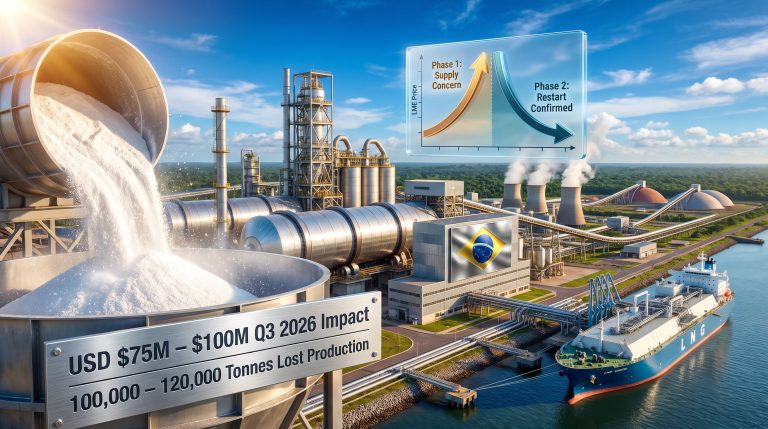
Hydro's Mozal smelter in Mozambique exemplifies how power constraints translate into supply reductions. The facility's transition to care-and-maintenance status by March 2026 removes 560,000 tonnes of annual capacity from global markets, representing one of the largest single supply disruptions in recent aluminium market history.
The facility historically operated as a swing producer, adjusting output based on Cahora Bassa hydroelectric power availability. Mozambique's national grid prioritisation for domestic consumption has reduced industrial power allocation, making continuous smelter operation economically unviable despite relatively low power costs when supply is available.
Renewable Energy Integration Challenges:
European renewable energy expansion creates structural mismatches between supply characteristics and industrial demand requirements. Solar and wind generation produce intermittent output that varies with weather conditions, while aluminium price spikes due to supply concern continue as smelting requires continuous power flow to maintain molten metal electrolysis.
Key Integration Issues:
- Baseload requirement: Smelters cannot operate intermittently without equipment damage
- Grid instability: Renewable variability increases industrial power costs during supply shortages
- Storage limitations: Battery storage remains economically unviable for industrial-scale applications
Modern smelters represent $1-2 billion capital investments with 20-30 year depreciation schedules. European facilities, many constructed in the 1970s-1990s, face technical obsolescence challenges when operating at marginal profitability. While short-term operation may cover variable costs, sustained losses prevent capital reinvestment, creating operational deterioration over time.
Decarbonisation Cost Pass-Through:
European utilities increasingly invest in renewable generation at elevated capital costs, passing these expenses to industrial customers through power purchase agreements (PPAs) that include renewable development charges. These charges typically add €5-15 per MWh to industrial electricity rates, compounding the competitive disadvantage for energy-intensive industries. This reflects broader challenges in the European raw materials supply chain.
How Are Trade Policies Amplifying Price Pressures?
International trade policy has shifted from market integration toward geographic fragmentation, creating distinct regional aluminium markets with substantial price divergences rather than unified global pricing with minor regional variations. This fragmentation increases total system costs by preventing least-cost production from freely reaching all markets while supporting elevated prices in protected regions.
US Tariff Structure:
The United States maintains Section 232 national security tariffs on aluminium imports at 10% for most countries, with higher rates for specific product categories and countries of concern. These tariffs, originally implemented in 2018, create price floors for domestic aluminium that support higher regional pricing amid broader tariffs impact on markets.
The Midwest premium, representing regional aluminium pricing above LME spot rates, has reached historically elevated levels of $260-400 per tonne. This premium reflects supply tightness in regional markets when domestic production cannot meet local demand and imports face tariff barriers.
Supply Chain Reconfiguration:
- Inventory strategy modifications: Users maintain higher stock levels to avoid spot-market premium spikes
- Long-term contract emphasis: Multi-year agreements replace spot purchasing to ensure supply continuity
- Domestic sourcing preference: Regional suppliers gain market share despite higher costs
Carbon Border Adjustment Mechanism (CBAM):
The European Union's CBAM implementation in 2026 introduces carbon-based import costs that reshape trade flows and regional pricing structures. CBAM operates by assessing carbon content of imported aluminium and charging importers for embedded carbon from non-EU production.
CBAM Operational Mechanics:
| Production Source | Carbon Assessment | Import Cost Impact |
|---|---|---|
| Coal-powered smelting | 15-18 tonnes CO2/tonne Al | €375-450 per tonne |
| Natural gas smelting | 8-10 tonnes CO2/tonne Al | €200-250 per tonne |
| Renewable/hydro smelting | 2-4 tonnes CO2/tonne Al | €50-100 per tonne |
This mechanism creates competitive advantages for low-carbon aluminium production while penalising high-carbon imports. European aluminium prices increasingly reflect carbon content rather than production costs alone, establishing new market dynamics where environmental characteristics determine pricing power.
What Does Market Deficit Analysis Reveal About Future Pricing?
Supply-demand modelling indicates the aluminium market is transitioning from structural surplus to sustained deficit conditions, with implications for elevated pricing that extend beyond current supply disruptions. Multiple scenario analyses demonstrate how various supply constraints compound to create persistent market tightness, particularly relevant for aluminium scrap price assessments.
Deficit Scenario Modelling:
| Scenario | 2026 Deficit Estimate | Key Drivers | Price Support Level |
|---|---|---|---|
| Base Case | 300,000 tonnes | Chinese caps, European constraints | $2,850-2,950/tonne |
| Accelerated ETS | 650,000 tonnes | Additional carbon restrictions | $3,100-3,200/tonne |
| Mozambique Closure | 850,000 tonnes | Mozal facility shutdown | $3,200-3,350/tonne |
| Combined Stress | 1,200,000 tonnes | Multiple facility disruptions | $3,400-3,600/tonne |
The base case scenario assumes current Chinese production constraints remain stable, European facilities operate intermittently, and demand growth continues at 2-3% annually. This scenario creates modest deficit conditions that support pricing above $2,850 per tonne as minimum equilibrium levels.
Demand Side Resilience Factors:
Construction sector aluminium consumption demonstrates relative stability even during economic uncertainty. Infrastructure investment programmes across major economies maintain baseline demand that supports market floors during cyclical downturns.
Critical Demand Components:
- Renewable energy infrastructure: 450-500 GW annual global installations require 2.5-3.0 million tonnes aluminium
- Electric vehicle production: 18-22 million unit annual production consuming 4.5-6.0 million tonnes
- Grid modernisation: Smart grid deployments across developed economies require aluminium in transmission infrastructure
Renewable energy demand particularly supports long-term pricing as this sector exhibits limited price elasticity. Solar panel and wind turbine manufacturers cannot easily substitute alternative materials for aluminium's combination of weight, conductivity, and corrosion resistance properties.
How Do Supply Constraints Compound Pricing Pressure?
Furthermore, the combination of multiple supply constraints creates compounding effects that exceed individual disruption impacts. When Chinese production caps coincide with European facility shutdowns and trade restrictions, the resulting supply gap cannot be easily filled by remaining global capacity.
This compounding effect explains why aluminium price spikes due to supply concern have reached levels not seen since 2022, despite global production capacity theoretically exceeding demand requirements. The practical reality involves geographic mismatches and logistical constraints that prevent theoretical capacity from addressing regional shortages effectively.
How Are Industrial Users Responding to Price Volatility?
The aluminium price environment prompts strategic adjustments across downstream industries, from immediate cost management responses to fundamental supply chain modifications that reshape competitive dynamics within aluminium-intensive sectors.
Corporate Pricing Strategies:
Industrial users implement various approaches to manage input cost inflation while maintaining market competitiveness:
Immediate Response Mechanisms:
- Price escalation clauses: Quarterly contract adjustments tied to LME pricing
- Surcharge implementation: Separate aluminium cost components in customer pricing
- Product mix optimisation: Emphasis on higher-margin applications that can absorb cost increases
Major aluminium fabricators including Petersen Group announced 10% price increases effective January 2026, reflecting the pass-through of elevated raw material costs to downstream customers. These increases represent attempts to maintain operating margins rather than profit enhancement, as fabrication spreads compress under input cost pressure.
Supply Chain Adaptation Strategies:
Companies across aluminium-intensive industries implement structural changes to reduce exposure to price volatility:
Inventory Management Evolution:
- Strategic stockpiling: 60-90 day inventory levels replace traditional just-in-time approaches
- Forward purchasing: 12-18 month contract commitments to secure supply at known pricing
- Supplier diversification: Multiple regional sources reduce dependence on single supply chains
Alternative Material Analysis:
Some applications explore substitution possibilities, though aluminium's unique property combinations limit replacement options:
- Steel substitution: Possible in some structural applications but weight penalties affect performance
- Composite materials: Viable for specialised applications but cost premiums often exceed aluminium price increases
- Design optimisation: Engineering approaches that reduce aluminium content per unit while maintaining functionality
What Strategic Shifts Are Companies Making?
Vertical Integration Considerations:
Large aluminium consumers evaluate upstream integration to secure supply and reduce exposure to spot market volatility. Automotive manufacturers and beverage companies increasingly consider direct relationships with primary producers or recycling operations to guarantee material availability.
However, this trend intersects with broader concerns about US economy and tariff pressure affecting long-term planning decisions across industrial sectors.
The next major ASX story will hit our subscribers first
What Do Analyst Forecasts Suggest for 2026-2027?
Professional market analysis reveals consensus around continued price strength through 2026-2027, though institutional projections vary based on different assumptions about supply constraint persistence and demand growth trajectories.
Institutional Price Target Analysis:
| Institution | 2026 Average Target | 2027 Projection | Primary Rationale |
|---|---|---|---|
| Bank of America | $3,050/tonne | $2,950/tonne | Structural deficit, tariff persistence |
| ING | $2,920/tonne | $2,850/tonne | Chinese constraints, facility rationalisation |
| JPMorgan | $3,100/tonne (Q1) | $2,900/tonne | Supply tightness, demand resilience |
| Consensus Range | $2,900-3,100/tonne | $2,800-2,950/tonne | Multiple scenario averaging |
Bullish Case Assumptions:
Optimistic projections assume Chinese production constraints tighten further as environmental regulations intensify, European capacity exits accelerate due to energy costs, and demand growth from renewable energy and electric vehicles exceeds current estimates.
Key Bullish Drivers:
- Enhanced carbon restrictions: Additional ETS tightening in China reduces effective capacity
- Infrastructure stimulus: Government spending programmes boost construction aluminium demand
- EV adoption acceleration: Faster electric vehicle penetration increases automotive aluminium consumption
Bearish Counterpoint Analysis:
Contrarian views project potential surplus conditions developing in 2026-2027 based on Indonesian capacity additions, demand moderation from economic slowdown, and recycling rate improvements that reduce primary aluminium requirements.
Bearish Risk Factors:
- Indonesian smelter startups: New facilities in Indonesia could add 800,000-1,200,000 tonnes annually
- Economic deceleration: Global growth slowdown reduces construction and automotive demand
- Recycling efficiency: Improved aluminium recycling reduces primary metal requirements by 200,000-400,000 tonnes annually
Market Psychology Considerations:
Aluminium markets exhibit momentum characteristics where sustained price moves in either direction tend to create self-reinforcing feedback loops. Current bullish sentiment reflects not only fundamental supply-demand balance but also investor positioning and speculative interest that can amplify price movements beyond fundamental justification.
Financial investors hold substantial long positions in aluminium futures, creating potential for rapid position unwinding if market conditions change. This financialisation introduces volatility patterns that may not directly correlate with physical market fundamentals.
How Might Geopolitical Factors Influence Long-Term Pricing?
Beyond immediate supply-demand fundamentals, geopolitical considerations increasingly influence aluminium market structure and pricing dynamics as governments recognise the strategic importance of reliable aluminium supply for defence applications and renewable energy infrastructure development.
Critical Mineral Classification Impact:
Aluminium's designation as a critical material in numerous national security frameworks elevates its strategic importance beyond traditional commodity status. This classification supports government intervention in supply security through various mechanisms:
Strategic Resource Initiatives:
- National stockpiling programmes: Government agencies maintain strategic aluminium reserves
- Supply chain security requirements: Defence contractors must demonstrate domestic or allied sourcing
- Investment incentives: Tax advantages and subsidies for domestic aluminium production capacity
The United States maintains strategic aluminium stockpiles and provides investment incentives for domestic smelter capacity expansion. These policies create demand floors that support pricing even during cyclical market weakness, contributing to ongoing aluminium price spikes due to supply concern.
Regional Bloc Formation:
Trade policy increasingly reflects regional integration rather than global optimisation:
North American Integration:
- USMCA provisions: Preferential treatment for North American aluminium in automotive and aerospace applications
- Defence production partnerships: Joint US-Canada aluminium supply chain development for military applications
- Infrastructure coordination: Shared renewable energy projects requiring secure aluminium supply
European Strategic Autonomy:
European Union initiatives focus on reducing dependence on non-allied aluminium sources through domestic capacity development and preferential trade agreements with strategic partners.
Key EU Initiatives:
- Green Deal industrial policy: Support for low-carbon aluminium production within EU borders
- Critical Raw Materials Act: Framework for securing strategic material supply chains
- Strategic partnership agreements: Preferential trade terms with Norway, Canada for aluminium supply
Asian Supply Chain Resilience:
Regional cooperation initiatives across Asia focus on supply chain diversification and strategic resource sharing, though these efforts face challenges from varying national priorities and existing trade relationships.
These geopolitical trends suggest aluminium markets will become increasingly regionalised, with strategic considerations influencing pricing alongside traditional economic factors. Regional price premiums may persist or expand as supply security concerns outweigh pure cost optimisation.
What Investment Implications Emerge from Current Market Dynamics?
The aluminium market environment creates distinct opportunities and risks across different segments of the value chain, from primary production through downstream processing and end-user industries, requiring nuanced investment approaches that account for structural changes rather than cyclical patterns.
Primary Producer Investment Thesis:
Companies with low-cost, long-life aluminium assets positioned favourably in the current environment, particularly those with secure power supplies and environmental compliance advantages.
Favourable Producer Characteristics:
- Hydroelectric power access: Facilities in Norway, Quebec, Pacific Northwest benefit from low-cost, low-carbon electricity
- Modern smelter technology: Recent facility investments with superior energy efficiency ratings
- Integrated operations: Companies controlling bauxite mining through primary aluminium production capture full value chain margins
Hydro (Norsk Hydro) Example:
The company's Norwegian operations benefit from abundant hydroelectric power at costs below $30 per MWh, compared to European industrial average of €85-95 per MWh. This structural cost advantage provides operating margins exceeding $1,500 per tonne during current pricing conditions.
Downstream Processor Challenges:
Aluminium fabricators and processors face margin compression from input cost inflation, driving industry consolidation and operational efficiency improvements.
Processor Investment Considerations:
| Company Type | Investment Merit | Key Risk Factors |
|---|---|---|
| Large integrators | Positive | Raw material sourcing power, diversified end markets |
| Regional fabricators | Mixed | Input cost exposure, limited pricing power |
| Specialty processors | Positive | High-value applications, customer switching costs |
| Commodity extruders | Negative | Margin compression, intense competition |
End-User Industry Analysis:
Industries with significant aluminium content face varying impacts based on their ability to pass through cost increases and implement substitution strategies.
Aerospace Sector Resilience:
Commercial aerospace maintains strong demand for aluminium despite price increases, as material costs represent relatively small percentages of final aircraft values. Aluminium's weight advantages remain critical for fuel efficiency, limiting substitution possibilities.
Automotive Sector Adaptation:
Electric vehicle manufacturers continue prioritising aluminium for lightweighting despite cost increases, as weight reduction directly improves battery efficiency and vehicle range. Traditional automotive applications face more substitution pressure as weight considerations are less critical.
Construction Market Sensitivity:
Building and construction applications show greater price elasticity, with potential substitution toward steel or composite materials in applications where aluminium's corrosion resistance and appearance advantages are not critical.
What Strategic Positioning Makes Sense?
Investment Strategy Frameworks:
Value Chain Positioning:
Investors should consider positioning across the aluminium value chain based on different risk-return profiles:
- Upstream concentration: Primary producers with competitive advantages benefit most from sustained high prices
- Midstream selectivity: Fabricators serving high-value, less price-sensitive applications maintain better margins
- Downstream diversification: End-users with aluminium exposure require careful analysis of substitution possibilities and pricing power
Geographic Considerations:
Regional market dynamics create investment opportunities based on local supply-demand imbalances and regulatory environments:
- North American focus: Domestic production benefits from trade protection and strategic material preferences
- European caution: High energy costs create operational challenges despite CBAM protection
- Asian complexity: Diverse regulatory environments and trade relationships require country-specific analysis
The aluminium price surge above $3,000 per tonne represents a structural shift toward higher equilibrium pricing levels driven by environmental regulations, energy constraints, and evolving demand patterns rather than temporary market disruptions. Success in this environment requires understanding both immediate supply-demand dynamics and longer-term forces reshaping industry competitive landscapes.
Market participants must navigate increasing complexity as aluminium markets become more regionalised, energy considerations gain prominence, and strategic resource policies influence traditional economic optimisation. The convergence of decarbonisation pressures, supply chain security concerns, and technological demand growth creates a fundamentally different operating environment than previous commodity cycles.
Investment opportunities exist across the aluminium value chain, but require careful analysis of competitive positioning, energy access, environmental compliance capabilities, and end-market exposure. Companies that successfully adapt to new cost structures while maintaining operational flexibility will outperform in this increasingly complex global marketplace.
Ready to Capitalise on the Next Major Mineral Discovery?
Discovery Alert instantly alerts investors to significant ASX mineral discoveries using its proprietary Discovery IQ model, turning complex mineral data into actionable insights. Begin your 30-day free trial today to position yourself ahead of the market and discover why major mineral discoveries can lead to substantial returns by exploring our dedicated discoveries page.