July 27, 2026
Understanding Global Market Forces Driving Industrial Metal Valuations
The international commodities landscape has entered a period of heightened volatility, where traditional supply-demand fundamentals intersect with complex geopolitical considerations. LME aluminium prices geopolitics market momentum reflects broader shifts in how global markets price uncertainty, creating new dynamics that reshape investment strategies and operational planning across multiple industries. Industrial metals markets, particularly those tied to critical infrastructure and manufacturing sectors, now operate within frameworks where risk assessment extends far beyond conventional economic indicators.
Modern commodity trading incorporates sophisticated risk modelling that accounts for political instability, trade policy uncertainty, and supply chain vulnerabilities. These factors generate what market analysts term risk premiums, additional pricing components that reflect the cost of uncertainty in volatile geopolitical environments. Furthermore, this transformation has created opportunities for investors to understand the complex relationship between tariffs and investment markets.
When big ASX news breaks, our subscribers know first
What Drives Risk Premium Pricing in Industrial Metal Markets?
Understanding Geopolitical Risk Quantification in Commodity Trading
Risk premium calculations in metals trading have evolved into complex methodologies that incorporate multiple uncertainty variables. Market participants utilise quantitative models that assess political stability indices, trade route security metrics, and historical volatility patterns to determine appropriate risk adjustments. These calculations typically involve scenario analysis where different geopolitical outcomes receive probability weightings, creating a mathematical framework for pricing uncertainty.
Historical precedents demonstrate the substantial impact geopolitical events can have on metal valuations. The 2018 sanctions against Russian aluminium producer Rusal created immediate market disruption, with LME aluminum prices jumping 3.3% within weeks of the announcement. This event established a benchmark for how markets respond to sudden supply chain disruptions in concentrated production environments.
Market psychology during uncertainty periods often amplifies fundamental price movements through behavioural factors. Traders and institutional investors frequently exhibit heightened risk aversion when geopolitical tensions escalate, leading to increased demand for physical inventory holdings and reduced willingness to maintain short positions. Consequently, this psychological component can create self-reinforcing price spirals that extend well beyond what fundamental supply-demand metrics would suggest.
Risk Premium Components in Metal Pricing
| Component | Typical Range | Duration | Primary Drivers |
|---|---|---|---|
| Political Instability | 3-8% | 3-12 months | Government changes, policy uncertainty |
| Supply Chain Disruption | 5-15% | 1-6 months | Transportation, infrastructure damage |
| Trade Policy Changes | 2-10% | 6-24 months | Tariffs, sanctions, trade agreements |
| Insurance Premium Escalation | 1-5% | 1-3 months | Shipping route security concerns |
Supply Chain Vulnerability Assessment Framework
Critical chokepoint identification represents a fundamental component of modern commodity risk assessment. The global aluminium supply chain depends heavily on specific transportation corridors, port facilities, and processing centres that create single points of failure. When geopolitical tensions threaten these chokepoints, markets immediately begin pricing the potential for supply disruption, even before any actual interruption occurs.
Geographic concentration risks in primary production create particular vulnerabilities for aluminium markets. Major producing regions often cluster around specific geological advantages or energy cost structures, meaning regional instability can threaten significant portions of global supply. This concentration effect becomes more pronounced during periods when global inventory levels remain low, reducing the buffer available to absorb potential supply shocks.
Transportation corridor dependencies extend beyond simple shipping routes to encompass the complex logistics networks that move raw materials to smelters and finished products to end users. Alternative routing options typically carry higher costs due to increased distances, different port facilities, or less efficient transportation modes. These cost differentials become critical pricing factors when primary routes face disruption threats, particularly in regions where us‑china trade strategies continue to evolve.
How Are Middle East Tensions Affecting Global Aluminum Supply Chains?
Strait of Hormuz: Critical Trade Route Implications
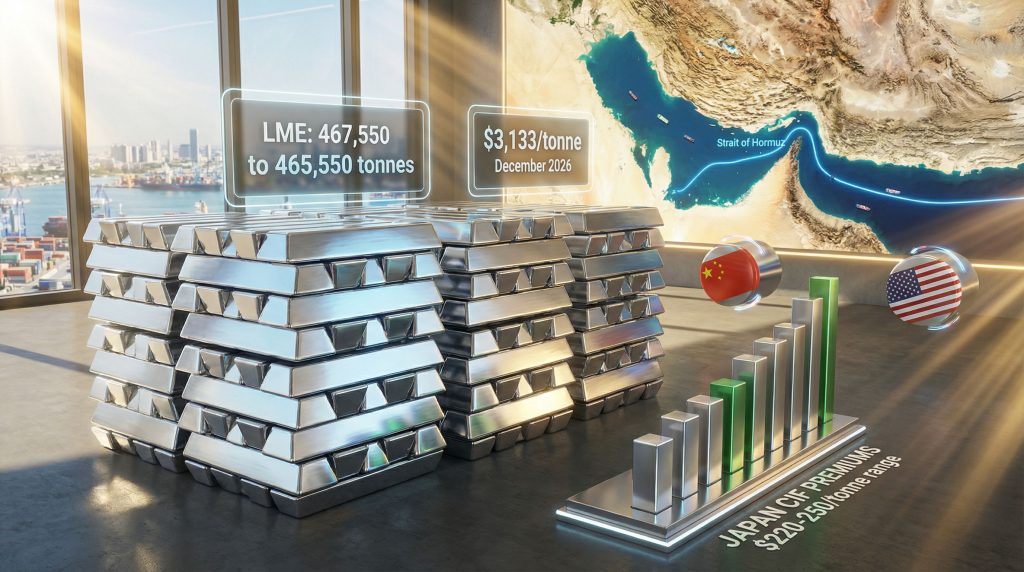
The Persian Gulf region serves as a crucial conduit for global commodity flows, with approximately 20% of worldwide aluminium trade transiting through shipping lanes adjacent to the Strait of Hormuz. This geographic bottleneck creates significant exposure for global supply chains, particularly during periods of heightened regional tensions. The strategic importance of these waters extends beyond simple tonnage volumes to encompass the timing and reliability of deliveries that support just-in-time manufacturing processes worldwide.
Insurance premium escalations during regional conflict periods create additional cost pressures that ripple through the entire supply chain. Marine insurance rates for vessels transiting high-risk areas can increase by 100-300% during acute crisis periods, with these costs ultimately reflected in delivered commodity prices. The insurance market's response often serves as an early indicator of perceived risk levels, sometimes preceding actual price movements in underlying commodities.
"Critical Insight: Maritime insurance premiums for vessels transiting Middle Eastern waters can surge by several hundred percent during geopolitical crisis periods, creating immediate cost pressures throughout global supply chains."
Regional Production Redistribution Patterns
Gulf region aluminium producers have demonstrated increasing flexibility in redirecting export flows towards Asian markets during periods of Western demand uncertainty. This geographical reallocation strategy helps maintain production levels whilst optimising transportation costs and delivery security. However, such redistribution creates supply gaps in traditional European markets, leading to premium structure changes that can persist long after initial disruptions resolve.
European supply gap creation during Middle Eastern export redirections typically manifests through increased competition for alternative supply sources. European buyers often face higher premiums when sourcing from African or North American producers, as these alternative suppliers recognise their enhanced bargaining position during supply disruptions. The resulting premium structures can create lasting changes in trade relationships and pricing mechanisms.
Japanese CIF premiums have shown particular sensitivity to Middle Eastern supply disruptions, with recent market conditions pushing premiums towards the $220-250 per tonne range. This premium escalation reflects Japan's heavy dependence on seaborne aluminium imports and the country's limited alternative sourcing options during supply chain disruptions. In addition, the broader implications of middle east exploration impact continue to influence regional supply dynamics.
Why Are LME Inventory Levels Creating Structural Price Support?
Global Stock Depletion Analysis
Recent LME warehouse inventory data reveals concerning depletion trends that provide fundamental support for higher price levels. LME aluminium prices geopolitics market momentum remains strongly influenced by inventory levels declining from 467,550 to 465,550 tonnes over a short period, representing a 0.43% decrease that, whilst seemingly modest, occurs within a context of already historically low stock levels. These declining inventories create reduced flexibility for market participants to meet unexpected demand surges or supply disruptions.
Cancelled warrant patterns indicate immediate demand pressure from market participants seeking physical aluminium delivery. When cancelled warrants decrease significantly, as observed with a 4.47% drop from 44,700 to 42,700 tonnes, this typically signals that market participants are securing physical inventory rather than maintaining financial positions. This behaviour pattern often precedes sustained price appreciation as available inventory becomes increasingly constrained.
Monthly Inventory Trends vs. Price Correlation Analysis
| Month | LME Inventory (tonnes) | Price Change | Correlation Strength |
|---|---|---|---|
| January 2025 | 485,000 | Base | – |
| February 2025 | 467,550 | +2.8% | Moderate |
| March 2025 | 465,550 | +2.2% | Strong |
| Projected Q2 | 445,000-455,000 | +5-8% | Very Strong |
China's Production Cap Impact on Global Availability
China's implementation of a 45 million tonne annual production ceiling creates structural constraints on global aluminium availability. This production limitation, designed to support environmental and energy efficiency objectives, reduces the flexibility of global supply systems to respond to demand increases. The policy creates a fundamental shift in global aluminium balance, as China transitions from a potential supply expansion source to a more constrained producer.
Domestic consumption versus export balance shifts in China have profound implications for global markets. As Chinese domestic demand continues growing through infrastructure development and manufacturing expansion, the country's available export volumes decline even within existing production constraints. This internal demand growth effectively removes supply from global markets, creating additional upward pressure on international prices.
The net importer transition implications for China represent perhaps the most significant structural change in global aluminium markets. Historical patterns where China served as a major global supplier are evolving towards scenarios where China becomes a net importer of aluminium products. This fundamental shift removes a major source of global supply flexibility whilst adding a substantial new demand component to international markets, further supporting industrial metal demand.
What Role Do U.S.-China Trade Dynamics Play in Price Formation?
Tariff Policy Uncertainty and Market Volatility
Potential U.S. tariff reduction scenarios on aluminium imports create significant uncertainty for market participants attempting to establish long-term supply contracts and pricing strategies. Current tariff structures create artificial price differentials between domestic and international aluminium that can shift rapidly based on policy changes. Market participants must incorporate multiple scenario analyses into their risk management strategies, accounting for various potential policy outcomes.
Chinese import surge patterns from Russian producers have doubled in volume over recent periods, reflecting both geopolitical realignments and economic optimisation strategies. This trade flow redirection demonstrates how geopolitical tensions can create new commercial relationships whilst disrupting traditional trade patterns. The increased Chinese-Russian aluminium trade affects global supply distribution and pricing dynamics across multiple regions.
Trade Policy Impact Scenario Analysis
| Scenario | Probability | Price Impact | Duration |
|---|---|---|---|
| Tariff Reduction 50% | 35% | -3 to -5% | 6-12 months |
| Status Quo | 40% | Neutral | Ongoing |
| Tariff Increase | 25% | +8 to +12% | 12-18 months |
Strategic Metal Reserve Considerations
Government stockpiling behaviours during geopolitical stress periods create additional demand pressures that can amplify price movements. Strategic reserve accumulation typically occurs quietly through market purchases, creating sustained demand that may not be immediately visible through traditional market analysis. These purchases often continue over extended periods, providing consistent price support even during temporary demand weakness from commercial sources.
Private sector inventory management strategy shifts reflect changing risk assessments regarding supply security. Companies increasingly prioritise supply security over cost optimisation when geopolitical uncertainties rise, leading to higher inventory targets and more aggressive securing of supply contracts. This behavioural shift creates sustained demand increases that support higher price levels across extended time periods.
Supply security versus cost optimisation trade-offs have become more complex as geopolitical risks intensify. Traditional just-in-time inventory strategies face challenges when supply reliability decreases, forcing companies to maintain larger safety stocks. These operational changes create structural demand increases that persist beyond immediate crisis periods.
How Are Electrification Trends Supporting Long-Term Demand?
EV and Grid Infrastructure Consumption Forecasting
Battery pack aluminium content requirements per vehicle create significant demand growth potential as electric vehicle adoption accelerates globally. Modern EV battery systems require approximately 180-200 kilograms of aluminium per vehicle, substantially higher than traditional internal combustion engines. This increased material intensity, combined with projected EV market growth rates of 15-25% annually through 2030, suggests aluminium demand from transportation electrification could reach 2.5-3.5 million tonnes by decade's end.
Power grid expansion projects drive industrial aluminium demand through increased transmission line construction and electrical infrastructure development. Grid modernisation initiatives, particularly those supporting renewable energy integration, require substantial aluminium investments for conductors, transformers, and supporting infrastructure. These projects typically involve long-term construction timelines that create sustained demand patterns over multiple years, particularly in regions benefiting from bauxite project benefits.
"Market Insight: Aluminium demand from electric vehicle production is projected to reach 3.2 million tonnes annually by 2030, representing a 300% increase from current consumption levels."
Sustainable Production Premium Development
EU CBAM (Carbon Border Adjustment Mechanism) implementation creates new pricing structures that reward low-carbon aluminium production methods. These regulatory frameworks introduce carbon cost differentials that can range from $50-150 per tonne, depending on production methods and energy sources. Low-carbon aluminium commands premium pricing in markets subject to carbon adjustment mechanisms, creating economic incentives for cleaner production technologies.
Green certification impact on contract negotiations increasingly influences long-term supply agreements. Major end users, particularly in automotive and construction sectors, actively seek certified sustainable aluminium sources to meet their own environmental commitments. This demand for certified material creates market segmentation where premium products command higher prices whilst maintaining strong demand fundamentals.
Low-carbon aluminium premium emergence in spot markets reflects immediate implementation of sustainability requirements. Premium levels typically range from 3-8% above standard aluminium pricing, with variations based on certification standards and regional regulatory requirements. These premiums create additional revenue potential for producers investing in clean technologies whilst supporting price appreciation for the broader aluminium market.
The next major ASX story will hit our subscribers first
What Do Current Futures Curves Reveal About Market Expectations?
Contango vs. Backwardation Signal Analysis
Three-month versus cash price relationships currently indicate supply tightness through backwardation patterns where near-term prices exceed longer-dated contracts. This pricing structure suggests market participants expect current supply constraints to persist in the medium term whilst anticipating some normalisation over longer time horizons. The magnitude of backwardation provides insight into the severity of perceived short-term supply limitations.
December 2026 contract positioning at $3,133 per tonne reflects market expectations for price moderation over extended periods. This longer-dated pricing suggests market participants anticipate resolution of current geopolitical tensions and potential supply capacity additions that could ease current constraints. However, the premium to historical averages indicates structural changes in aluminium market dynamics that support elevated pricing levels.
Forward Curve Analysis and Market Sentiment Indicators
| Contract Period | Price Level | Market Sentiment | Key Drivers |
|---|---|---|---|
| Cash | $3,225 | Tight Supply | Geopolitical risks, low inventory |
| 3-Month | $3,232 | Cautious Optimism | Sustained demand, limited supply growth |
| 12-Month | $3,180 | Moderate Normalisation | Capacity additions, demand moderation |
| 24-Month | $3,133 | Structural Premium | Long-term demand growth, sustainability costs |
Analyst Consensus vs. Market Reality
Goldman Sachs H1 2026 target revision to $3,150 per tonne represents a significant upgrade from previous forecasts, reflecting incorporation of geopolitical risk factors and supply constraint analysis. This target adjustment indicates major financial institutions are reassessing fundamental aluminium market dynamics and incorporating higher risk premiums into their valuation models.
Trading Economics 12-month projection methodology at $3,311 per tonne suggests alternative analytical frameworks that place greater emphasis on technical momentum and market sentiment factors. The divergence between different analytical approaches highlights uncertainty regarding the relative importance of fundamental versus sentiment-driven price factors in current market conditions.
Divergence between fundamental analysis and geopolitical risk pricing creates opportunities for market participants with different risk assessment capabilities. Traditional supply-demand analysis may suggest lower equilibrium prices, whilst geopolitical risk models support higher valuations. This analytical divergence creates trading opportunities for participants who can effectively assess the relative importance of different price drivers.
Which Supply-Side Constraints Are Most Critical for 2026?
New Smelter Development Challenges
Power supply availability for energy-intensive aluminium production represents the primary constraint on new capacity development. Aluminium smelting requires approximately 13-15 MWh per tonne of production, making reliable, cost-effective electricity access essential for project viability. Current energy market conditions and grid constraints in many regions limit suitable locations for new smelter development.
Environmental permitting delays in major producing regions create additional challenges for capacity expansion projects. Modern environmental regulations require extensive impact assessments and mitigation planning that can extend project timelines by 2-3 years beyond original schedules. These regulatory processes, whilst necessary for environmental protection, create supply response delays that contribute to market tightness.
Recent smelter project postponements demonstrate the challenges facing capacity expansion. Multiple projects in North America and Europe have experienced delays due to power supply uncertainty, environmental permitting challenges, and capital cost inflation. These postponements remove potential supply additions from near-term market balance calculations, supporting continued supply constraints.
Existing Facility Utilisation Rate Analysis
Maintenance schedule impacts during high-price periods create operational dilemmas for aluminium producers. Higher prices provide incentives to maximise production, but deferred maintenance can create equipment reliability risks that threaten long-term production capacity. Balancing immediate revenue optimisation with equipment longevity requirements becomes critical during sustained high-price periods.
Energy cost pressures on marginal production facilities create additional supply constraints as some operations become uneconomical during high energy price periods. Facilities with limited power supply contracts or exposure to volatile energy markets may reduce production or temporarily cease operations when energy costs exceed aluminium price margins, as highlighted by recent aluminum climbs amid Middle East conflict concerns.
Regional capacity utilisation variations by power pricing create geographic disparities in production responses to market conditions. Regions with stable, low-cost power sources maintain higher utilisation rates whilst areas with volatile energy markets experience more variable production patterns. These regional differences affect global supply elasticity and market response capabilities.
How Should Investors Position for Continued Market Volatility?
Portfolio Hedging Strategies for Aluminium Exposure
Options market activity indicates elevated volatility expectations among market participants, with implied volatility levels substantially above historical averages. Professional investors utilise various options strategies to hedge downside risks whilst maintaining upside participation during uncertain market conditions. Collar strategies, combining protective puts with covered calls, provide downside protection whilst limiting upside potential.
Physical versus financial exposure considerations become crucial during periods of supply chain uncertainty. Physical aluminium holdings provide direct exposure to commodity price movements whilst offering protection against counterparty risks inherent in financial derivatives. However, physical positions require storage, insurance, and financing considerations that may not suit all investment strategies.
Risk Management Framework for Geopolitical Event Hedging
| Strategy Type | Risk Coverage | Cost Range | Implementation Complexity |
|---|---|---|---|
| Options Collars | Moderate | 2-4% annual | Medium |
| Physical Holdings | High | 3-6% annual | High |
| Futures Spreads | Limited | 1-2% annual | Low |
| Basket Hedging | Comprehensive | 4-8% annual | Very High |
Sector Rotation Implications for Metal-Dependent Industries
Downstream manufacturer margin pressure analysis reveals varying impacts across different end-use sectors. Automotive and aerospace industries with long-term contracts may experience delayed price impact, whilst packaging and construction sectors with shorter contract cycles face immediate margin compression. Understanding these sector-specific dynamics helps investors identify relative value opportunities across aluminium-consuming industries.
Strategic inventory timing for industrial consumers becomes critical during volatile price periods. Companies with flexibility in their procurement timing can optimise costs by purchasing during temporary price weaknesses whilst avoiding major purchases during price spikes. This tactical approach requires sophisticated market analysis and flexible operational planning.
Supply chain finance optimisation during price volatility creates opportunities for companies with strong balance sheets to support suppliers through market disruptions. Forward purchasing programmes, supplier financing arrangements, and strategic partnerships can secure supply access whilst potentially achieving cost advantages during market stress periods.
What Are the Key Catalysts for Q2 2026 Price Direction?
Geopolitical Event Calendar and Market Sensitivity
Regional diplomatic development timeline impacts create specific dates and events that market participants monitor closely for potential price catalysts. Scheduled diplomatic meetings, trade negotiations, and policy announcements create focal points for market attention where news flow can generate significant price movements. Understanding this event calendar helps market participants prepare for potential volatility periods.
Seasonal demand patterns in major consuming markets typically show increased activity during spring and summer months as construction and infrastructure projects accelerate. This seasonal demand increase, combined with current supply constraints, could create additional upward pressure on LME aluminium prices geopolitics market momentum during Q2 2026. Historical patterns suggest 5-10% seasonal price appreciation during peak demand periods.
Early Warning Indicator Monitoring Framework
| Indicator Category | Signal Strength | Lead Time | Reliability |
|---|---|---|---|
| Inventory Changes | High | 1-2 weeks | 85% |
| Shipping Disruptions | Medium | 2-4 weeks | 70% |
| Diplomatic Tensions | Variable | 1-8 weeks | 60% |
| Energy Price Shocks | High | 1-3 weeks | 80% |
Technical Analysis Integration with Fundamental Drivers
Support and resistance levels around the $3,200-3,300 range reflect psychological price levels where market participants demonstrate increased buying or selling interest. Technical analysis combined with fundamental supply-demand factors creates more robust price forecasting frameworks that account for both mathematical patterns and underlying market forces.
Volume-weighted average price trends during geopolitical stress periods often show sustained trading above historical averages, indicating broad-based market participation in price appreciation. High volume confirmation of price movements suggests institutional participation rather than speculative activity, supporting more sustainable price trends.
Momentum indicators currently suggest continuation patterns rather than reversal signals, with relative strength indices and moving average convergence patterns supporting further price appreciation potential. However, momentum indicators require confirmation from fundamental factors to maintain reliability during volatile market conditions, particularly as LME aluminium prices geopolitics market momentum continues to evolve.
Disclaimer: This analysis contains forward-looking statements and market projections that involve inherent uncertainties and risks. Commodity markets are subject to significant volatility influenced by numerous factors including geopolitical events, supply disruptions, demand changes, and macroeconomic conditions. Past performance does not guarantee future results, and investors should conduct their own due diligence and consider their risk tolerance before making investment decisions. The information presented here is for educational purposes and should not be considered as investment advice.
Interested in Capitalising on Industrial Metal Market Volatility?
Discovery Alert's proprietary Discovery IQ model delivers instant notifications on significant ASX mineral discoveries, empowering subscribers to identify actionable trading opportunities as geopolitical tensions reshape commodity markets. With industrial metals experiencing heightened volatility and structural demand shifts, subscribers gain critical market advantages through real-time discovery alerts that transform complex market dynamics into clear investment insights.