May 18, 2026
The global aluminium recycling market is witnessing transformative consolidation as major producers pursue strategic acquisitions to capture the growing demand for secondary metal production. EGA to acquire 80% stake in Italy's Eco Green represents a significant milestone in this evolution, reflecting the compelling economics and strategic positioning opportunities within European recycling markets. This acquisition underscores how energy cost advantages, regulatory pressures, and mining consolidation strategies are reshaping traditional supply chain architectures across the global aluminium industry.
Strategic Context Behind Secondary Aluminium Consolidation
Market Forces Driving Recycling Industry Consolidation
The aluminium recycling sector operates within compelling economic fundamentals that drive acquisition strategies amongst major producers. Recycled aluminium production requires approximately 95% less energy than primary aluminium smelting, creating substantial operational cost advantages that justify acquisition premiums. Primary aluminium smelting consumes 13,000-16,000 kilowatt-hours per tonne, whilst secondary aluminium production requires only 400-500 kilowatt-hours per tonne when processing scrap material.
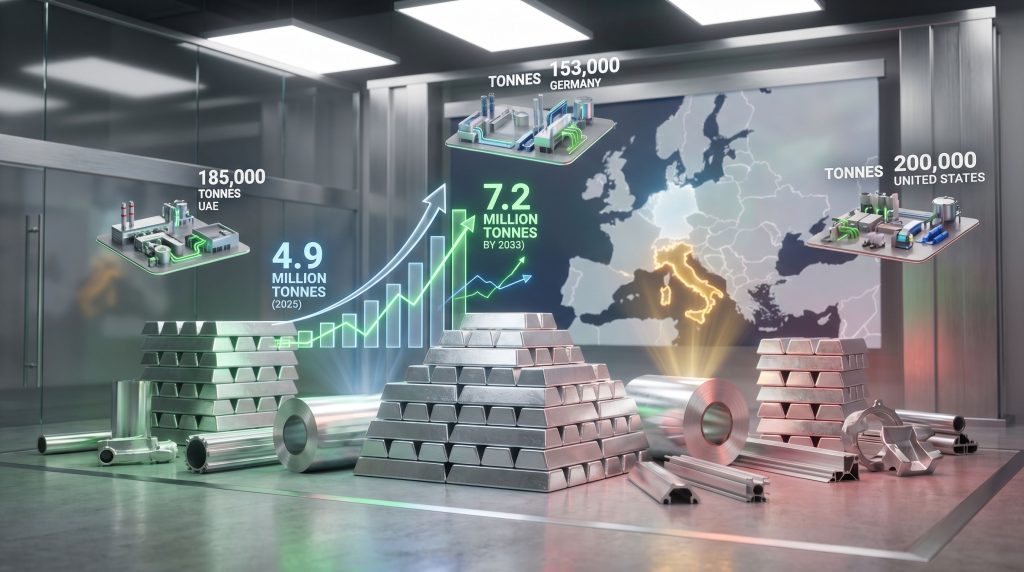
European aluminium recycling markets demonstrate quantifiable supply-demand imbalances that create strategic opportunities. Current recycled aluminium consumption stands at 4.9 million tonnes annually as of 2025, with industry projections indicating expansion to 7.2 million tonnes by 2033. This growth trajectory represents a compound annual growth rate of approximately 5.5% over eight years, significantly exceeding primary aluminium market expansion rates.
The energy differential translates directly into competitive positioning advantages. An aluminium recycling facility processing 70,000 tonnes annually would require approximately 28-35 megawatt-hours of energy consumption for secondary production, compared to 910 million-1.12 billion megawatt-hours for equivalent primary production capacity. These mathematical relationships explain why companies pursue recycling asset consolidation as complementary strategies to primary production operations.
Furthermore, regulatory frameworks increasingly mandate circular economy development, particularly within European Union directives on Extended Producer Responsibility and carbon border adjustment mechanisms. European automotive manufacturers face requirements trending towards 50% recycled content in certain component categories by 2030, creating stable long-term demand for recycled aluminium with specific technical specifications.
EGA's Multi-Regional Expansion Strategy Decoded
Emirates Global Aluminium's recycling expansion demonstrates a geographically distributed model with specific capacity targets across four strategic regions. The company's approach reflects sequential market entry prioritising high-volume capacity foundations, followed by processing capability expansion, then scrap sourcing network optimisation.
In the United Arab Emirates, EGA operates Al Taweelah recycling plant with 185,000 tonnes annual capacity, which began production in late February 2025. The German expansion through Leichtmetall acquisition in May 2024 implements a USD 170 million investment designed to create 110,000 tonnes per year scrap sorting capacity and 153,000 tonnes per year melting and casting capacity, with operations expected by 2028.
The United States expansion through Spectro Alloys acquisition in September 2024 established 165,000 tonnes per year capacity following July 2025 completion, with an additional 35,000 tonnes of billet capacity scheduled for 2027. EGA to acquire 80% stake in Italy's Eco Green adds 43,000 tonnes current capacity with 15,000 tonnes under development, projected for completion in H2 2026.
| Region | Current Capacity | Under Development | Total by 2028 |
|---|---|---|---|
| UAE | 185,000 tonnes | – | 185,000 tonnes |
| Germany | – | 153,000 tonnes | 153,000 tonnes |
| United States | 165,000 tonnes | 35,000 tonnes | 200,000 tonnes |
| Italy | 43,000 tonnes | 15,000 tonnes | 58,000 tonnes |
The 80% equity stake structure (rather than complete acquisition) represents a deliberate governance model balancing operational control with local market expertise retention. This partnership approach preserves founder family involvement whilst providing EGA operational authority, indicating organisational preference for collaborative rather than purely acquisitional integration.
These geographic selections position EGA relative to primary aluminium flows and end-use markets. The company exports more than 600,000 tonnes of primary aluminium annually from the UAE to Europe, supplying automotive and construction sectors, creating integrated supply chain opportunities where recycling operations complement primary distribution networks.
When big ASX news breaks, our subscribers know first
How Secondary Aluminium Markets Are Reshaping Global Supply Chains
European Recycling Capacity Gap Analysis
Europe faces quantifiable supply-demand imbalances in recycled aluminium that create acquisition-driven consolidation opportunities. The projected expansion from 4.9 million tonnes (2025) to 7.2 million tonnes (2033) implies approximately 2.3 million tonnes of additional annual demand over eight years, or roughly 287,500 tonnes annually. The gap between projected demand and current capacity exceeds 15% by 2033.
Europe represents the third-largest recycled aluminium market globally, trailing the United States and China, yet possesses higher penetration rates than primary aluminium production regions. Recycled aluminium currently accounts for 40% of Europe's total aluminium demand, compared to global averages where recycled aluminium comprises approximately 30-35% of supply.
The capacity-demand relationship operates through specific material flow mechanisms across end-use sectors:
• Automotive production: Approximately 3.2 million tonnes annually, with regulatory requirements trending towards 50% recycled content in certain components by 2030
• Construction applications: Approximately 1.8 million tonnes, with recycled aluminium particularly valued in architectural applications
• Packaging and industrial: Remaining 700,000+ tonnes across packaging, electrical applications, and industrial manufacturing
Germany's automotive sector represents the largest technical buyer of recycled aluminium in Europe. Premium automotive manufacturers producing 600,000-700,000 vehicles annually utilise 140-180 kilograms of aluminium components per vehicle across engine blocks, transmission housings, structural components, and trim elements, creating stable long-term demand with specific technical specifications.
Geographic Distribution of Recycling Infrastructure
Northeast Italy's Veneto region occupies strategically important positioning within European aluminium supply chains due to geographic, transportation, and demand-side factors. The region generates approximately 180,000 tonnes of aluminium scrap annually from industrial manufacturing, automotive component production, and construction activities, yet current processing capacity approximates 90,000 tonnes, creating structural supply-demand imbalances.
Transportation economics favour regionally distributed recycling networks. Aluminium scrap transportation costs range from EUR 30-60 per tonne over distances exceeding 300 kilometres, making localised processing economically preferable when capacity exists. Northeast Italy's location within 400 kilometres of Munich, Zurich, and Vienna positions it as a natural collection hub for Central European scrap flows.
The region's proximity to Trieste port (approximately 120 kilometres southeast) enables maritime scrap import from Mediterranean and Eastern European sources, whilst proximity to northern European transportation corridors facilitates rail and truck distribution of processed material. The Villafranca facility's location within 30 kilometres of Verona's industrial zone provides access to approximately 8,000 manufacturing facilities across various sectors for consistent scrap feedstock generation.
What Makes Eco Green's Operations Strategically Valuable?
Operational Scale and Customer Diversification
Eco Green operates at scale and customer diversification levels that distinguish it as a strategically valuable acquisition target within European recycling markets. The company processes more than 70,000 tonnes of aluminium scrap annually across two primary facilities, establishing it as a significant regional player within Veneto's processing landscape.
Customer diversification spans 60+ European processors and fabricators, with end-use sectors including automotive, construction, and industrial applications. This customer base reflects established market relationships and quality control capabilities essential for technical aluminium applications. The supplier network exceeds 350 scrap sources, indicating geographic reach and reputation within regional collection networks that typically range from 80-120 suppliers for comparable facilities.
Founded in 1993 by the Scappini family, Eco Green demonstrates operational consistency spanning over three decades, providing acquisition targets with established processes, environmental compliance records, and technical expertise. This operational history reduces integration risks and regulatory approval complications compared to newer recycling operations.
Vertical Integration Capabilities
Eco Green's dual-facility model demonstrates vertical integration across the aluminium recycling value chain. The Villafranca di Verona facility processes 23,000 tonnes annually through scrap collection, sorting, and distribution operations. The Nogara di Verona facility produces 20,000+ tonnes of secondary sows annually, along with dross processing and material recovery operations.
This vertical integration creates operational efficiencies and quality control advantages. Material flows from Villafranca sorting operations directly supply Nogara casting facilities, reducing transportation costs and enabling coordinated production scheduling. The planned 15,000-tonne expansion at Nogara (completing H2 2026) demonstrates existing infrastructure capacity to absorb incremental improvements.
| Facility | Location | Current Capacity | Operations |
|---|---|---|---|
| Villafranca | Northeast Italy | 23,000 tonnes sorting | Collection, sorting, distribution |
| Nogara | Northeast Italy | 20,000+ tonnes casting | Secondary sow production, dross processing |
| Expansion | Nogara | +15,000 tonnes | Additional melting/casting capacity |
The dross processing capabilities provide additional revenue streams and material recovery opportunities. Aluminium dross typically contains 50-70% recoverable aluminium content, making processing operations economically attractive when integrated with primary recycling activities. These capabilities distinguish Eco Green from pure scrap trading operations.
How Does This Acquisition Fit EGA's Global Recycling Portfolio?
Comparative Analysis of EGA's Recycling Assets
EGA to acquire 80% stake in Italy's Eco Green complements existing recycling assets across multiple geographic regions, creating a globally distributed processing network exceeding 400,000 tonnes annual capacity with 200,000+ tonnes under development. This portfolio reflects strategic diversification across primary aluminium markets and regulatory environments.
The UAE Al Taweelah facility represents the largest single recycling asset at 185,000 tonnes annual capacity, though operations faced disruption following Iranian military activity at Khalifa Economic Zone Abu Dhabi. The German Leichtmetall expansion targets 153,000 tonnes melting/casting capacity by 2028 through USD 170 million investment, incorporating 110,000 tonnes scrap sorting capability.
US Spectro Alloys operations currently process 165,000 tonnes annually with completed July 2025 expansion and additional 35,000 tonnes billet capacity targeted for 2027. Italian operations through Eco Green add 43,000 tonnes current capacity with 15,000 tonnes under development, creating the smallest regional footprint but providing crucial European market access.
Portfolio Synergies and Market Positioning
The recycling portfolio creates synergies with EGA's 600,000+ tonnes annual primary aluminium exports to Europe, enabling integrated supply chain management and customer relationship optimisation. Primary aluminium distribution networks provide established customer relationships that recycling operations can leverage for market development.
RevivAL brand positioning in premium recycled aluminium markets benefits from geographic diversification and technical capability expansion. Different regional facilities provide varying technical specifications and processing capabilities, enabling customer requirements matching across automotive, construction, and industrial applications. However, these developments align with broader mining sustainability trends affecting the entire metals industry.
The 80% ownership structure across multiple acquisitions (rather than 100% control) demonstrates strategic preference for partnership models that retain local expertise whilst providing operational control. This approach reduces integration risks and preserves established supplier/customer relationships that pure acquisitions might disrupt.
Regional capacity distribution provides supply chain resilience against geopolitical disruptions, regulatory changes, or natural disasters affecting individual facilities. The UAE facility's disruption following Iranian attacks demonstrates vulnerability of concentrated capacity, making geographic diversification strategically valuable.
Investment and Market Implications
Valuation Drivers in Recycling Asset Acquisitions
Recycling asset valuations reflect multiple drivers including established customer relationships, processing capacity, geographic positioning, and technical capabilities. Revenue multiples for established scrap processing operations typically range from 0.8x to 1.5x annual revenues, though strategic premiums for European market access can increase multiples significantly.
Energy cost advantages create sustainable competitive moats justifying acquisition premiums. The 95% energy reduction versus primary production translates into operating margin advantages of EUR 200-400 per tonne depending on regional electricity costs. These margins remain stable across aluminium price cycles, providing cash flow consistency valuable to acquirers.
Regulatory compliance advantages increase valuation multiples for established operations with proven environmental records. European Union environmental directives increasingly require extensive permitting and compliance documentation for new recycling facilities, making EGA's European expansion through aluminum recycling valuable for immediate market access.
Technical capabilities command premium valuations when facilities demonstrate quality control for high-specification applications. Automotive-grade recycled aluminium requires precise chemical composition control and mechanical property consistency that newer operations struggle to achieve consistently.
Competitive Response Scenarios
Major aluminium producers including Norsk Hydro, Alcoa, and regional European players face strategic decisions regarding recycling capacity development versus acquisition strategies. Market consolidation trends suggest acquisition premiums will increase as available recycling assets decrease and demand growth accelerates. Furthermore, these dynamics reflect broader industry evolution trends affecting global metals markets.
Barriers to entry for new recycling capacity development include environmental permitting timelines (typically 18-36 months), capital investment requirements (USD 1,500-2,500 per tonne capacity), and technical expertise scarcity. These barriers favour acquisition strategies over greenfield development for immediate market positioning.
Competitive responses may include:
• Counter-acquisition strategies targeting remaining independent recycling operations
• Technology partnerships with advanced sorting and processing equipment manufacturers
• Vertical integration through automotive and construction sector partnerships
• Geographic expansion into emerging recycling markets with lower competition
Future Aluminium Supply Dynamics
Demand Growth Projections for Recycled Aluminium
Industry analysts project recycled aluminium demand could double by 2040, contributing approximately 60% of global aluminium supply growth by 2030 and 70% between 2030-2040. These projections reflect regulatory mandates, sustainability requirements, and cost advantages that favour secondary production over primary smelting.
Regional variations in recycling adoption rates create different growth trajectories. European markets demonstrate advanced circular economy development with 40% current recycled content, whilst emerging markets maintain lower recycled aluminium penetration rates, suggesting geographic expansion opportunities that align with the green transition in mining.
Automotive sector demand drives significant growth projections. Global automotive aluminium consumption exceeds 12 million tonnes annually, with electric vehicle production increasing aluminium content per vehicle by 15-25% compared to internal combustion engines. Regulatory requirements for recycled content in automotive applications create stable long-term demand growth.
Technology and Process Innovation Opportunities
Advanced sorting technologies enable processing of increasingly contaminated scrap sources, expanding feedstock availability and reducing collection costs. Sensor-based sorting systems using X-ray fluorescence and near-infrared spectroscopy increase recovery rates from mixed metal waste streams by 15-20% compared to traditional magnetic separation.
Energy efficiency improvements in melting operations through recuperative burner technology and improved furnace design can reduce energy consumption by additional 10-15% beyond current recycling advantages. These improvements increase margin advantages versus primary production and reduce carbon footprint.
Quality enhancement technologies enable recycled aluminium use in higher-specification applications previously reserved for primary metal. Advanced degassing and filtration systems remove hydrogen content and inclusions that compromise mechanical properties, expanding market opportunities into aerospace and high-performance automotive components.
Industry experts emphasise that recycling acquisitions represent long-term positioning for circular economy transition. Geographic diversification and technical capability expansion enable companies to capture growing recycled aluminium demand whilst providing supply chain resilience against regional disruptions.
The next major ASX story will hit our subscribers first
Challenges and Risks for Investor Consideration
Operational Integration Complexities
Cultural and management integration across diverse geographic markets presents significant challenges for recycling portfolio development. Different regional markets operate under varying environmental regulations, labour practices, and customer expectations that require localised management approaches.
Standardisation of quality control and environmental procedures across multiple facilities requires substantial management attention and capital investment. Different regional facilities may utilise varying technologies, creating compatibility issues and training requirements that affect integration timelines.
Supply chain coordination between primary and recycling operations involves complex logistics including material flow optimisation, inventory management, and customer allocation decisions. Integration benefits require sophisticated planning systems and coordination mechanisms that many companies underestimate during acquisition planning.
Market and Regulatory Risk Factors
Scrap availability and pricing volatility create operational challenges for recycling facilities dependent on consistent feedstock supply. Global scrap markets experience 20-30% price volatility annually, affecting margin consistency and requiring sophisticated hedging strategies or long-term supply contracts. Additionally, the geopolitical mining landscape continues to influence raw material availability and pricing structures.
Environmental compliance costs and regulatory changes represent ongoing operational risks. European Union environmental directives continue evolving, requiring continuous investment in monitoring, reporting, and emission control systems. Compliance costs typically range from EUR 15-30 per tonne processed.
Competition for qualified technical personnel intensifies as recycling capacity expands faster than workforce development. Skilled furnace operators, quality control technicians, and environmental compliance specialists command premium wages and experience high turnover rates during industry expansion periods. Moreover, the aluminum recycling expansion in Europe demonstrates the growing importance of technical expertise in this sector.
Technical risks include equipment maintenance and replacement costs for specialized recycling machinery. Melting furnaces, sorting equipment, and emission control systems require substantial capital investment every 10-15 years, creating cyclical cash flow requirements that affect long-term profitability projections.
EGA to acquire 80% stake in Italy's Eco Green represents a strategic milestone in aluminium recycling consolidation, demonstrating how energy economics and regulatory drivers create acquisition opportunities within circular economy frameworks. This transaction exemplifies the growing convergence of sustainability imperatives and competitive positioning strategies that will define future metals markets.
Disclaimer: This analysis contains forward-looking projections and market assessments that involve uncertainty and risk. Actual results may differ materially from projections due to market conditions, regulatory changes, and operational factors. Readers should conduct independent due diligence before making investment decisions related to aluminium recycling markets or specific companies.
Considering Opportunities in Small-Cap Aluminium Companies?
Discovery Alert's proprietary Discovery IQ model delivers real-time alerts on significant mineral discoveries across aluminium and 30+ other commodities, instantly empowering subscribers to identify actionable opportunities ahead of the broader market. Understand why major mineral discoveries can generate substantial returns by exploring Discovery Alert's dedicated discoveries page, showcasing historic examples of exceptional market outcomes, and begin your 14-day free trial today to position yourself ahead of the market.