August 25, 2026
The aluminium sector in India represents one of the nation's most strategically important industrial segments, with production capabilities spanning from raw material extraction to finished metal processing. Within this landscape, integrated operations that control multiple stages of the value chain have emerged as the most resilient and profitable business models. The sector's performance metrics increasingly reflect operational excellence achieved through vertical integration, technological advancement, and strategic market positioning across domestic and international markets. Furthermore, recent developments in data‐driven mining operations demonstrate how advanced analytics contribute to enhanced operational efficiency.
Understanding Operational Excellence in India's Integrated Aluminium Framework
NALCO's Strategic Foundation in the Global Aluminium Landscape
National Aluminium Company Limited operates as a Navratna public sector undertaking under India's Ministry of Mines, positioning itself within the country's most strategically important industrial enterprises. This designation provides the company with enhanced operational autonomy while maintaining alignment with national industrial policy objectives.
The integrated value chain approach spans bauxite mining through finished aluminium production, creating substantial cost advantages and operational synergies. This vertical integration model allows for optimised resource allocation, reduced transportation costs, and enhanced quality control across all production stages. Additionally, such approaches align with modern bauxite project benefits that prioritise economic viability alongside operational efficiency.
Recent market performance indicators demonstrate the effectiveness of this integrated approach, with shares trading at INR 401.55 ($4.33) on the NSE, representing a 0.53% daily increase that reflects investor confidence in the operational model.
Performance Metrics Defining Industry Leadership Standards
The evaluation of operational excellence in integrated aluminium operations requires analysis of multiple interconnected performance indicators:
• Production capacity utilisation across mining, refining, and smelting operations
• Year-over-year growth consistency in both volume and efficiency metrics
• Operational efficiency ratios that demonstrate resource optimisation
• Energy self-sufficiency levels through integrated power generation
• Sales execution effectiveness in both domestic and international markets
These metrics collectively indicate the operational sophistication required to achieve sustained growth in capital-intensive aluminium production environments. Moreover, they reflect broader industry innovation trends that are reshaping the global aluminium landscape.
When big ASX news breaks, our subscribers know first
Production Segment Performance Analysis: Record-Breaking Achievements
Bauxite Mining Operations: The Foundation of Excellence
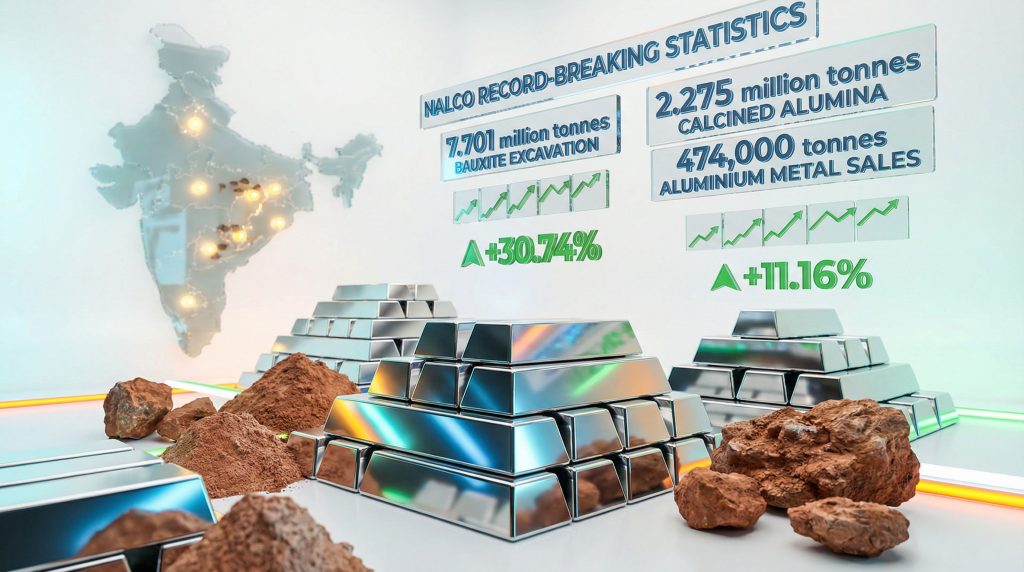
The mining segment achieved unprecedented performance levels during FY26, with excavation volumes reaching 7.701 million tonnes of bauxite extracted from active mining operations. This represents the company's highest-ever achievement in raw material extraction.
Transportation efficiency demonstrated equally impressive results, with 7.707 million tonnes moved, achieving a 6.13% year-on-year increase. The minimal variance between excavation and transportation volumes indicates highly efficient logistics coordination and operational planning.
Key mining performance indicators include:
• Consistent production scheduling that eliminates stockpiling inefficiencies
• Transportation logistics that maintain production flow continuity
• Equipment utilisation optimisation across extraction and movement operations
• Workforce productivity improvements that support volume growth
Alumina Production Excellence: 11.16% Growth Breakthrough
The refining segment delivered exceptional performance with calcined alumina output reaching 2.275 million tonnes, representing an 11.16% year-on-year increase. This growth rate significantly outpaced industry averages and demonstrates operational optimisation across refinery operations.
Alumina hydrate production maintained steady output at 2.3 million tonnes, providing the feedstock foundation for calcined alumina processing. The relationship between hydrate production and calcined output indicates processing yield rates approaching 98.9%, suggesting highly efficient refinery operations.
| Production Metric | FY26 Achievement | Growth Rate | Operational Significance |
|---|---|---|---|
| Calcined Alumina | 2.275 million tonnes | +11.16% YoY | Highest growth segment |
| Alumina Hydrate | 2.3 million tonnes | Baseline reference | Processing feedstock |
| Yield Efficiency | ~98.9% | Operational excellence | Minimal processing loss |
Power Generation and Energy Integration Success
Energy self-sufficiency represents a critical competitive advantage in aluminium production, where power costs constitute significant operational expenses. The company achieved net power generation of 6,953 million units (MU), establishing another highest-ever performance record.
Supporting this power generation capability, coal production reached 4 million tonnes, ensuring fuel security for thermal power operations. This integrated energy approach provides substantial cost advantages compared to market power procurement. Consequently, this aligns with the sector's sustainability transformation initiatives.
"The integration of power generation with aluminium production creates cost optimisation opportunities across the entire value chain, from raw material processing through finished metal production."
The energy integration model offers several strategic advantages:
• Cost predictability through internal power generation pricing
• Supply security that eliminates grid dependency risks
• Operational flexibility to adjust power allocation based on production requirements
• Environmental control over emissions and efficiency standards
Sales Performance Transformation and Market Leadership
Alumina Sales Excellence: 30.74% Growth Analysis
The sales segment delivered the most remarkable performance improvement, with total alumina sales reaching 1.446 million tonnes and achieving a 30.74% year-on-year growth rate. This growth significantly exceeded production increases, indicating either strategic inventory management or enhanced market penetration effectiveness. As reported by NALCO's official press release, the company has achieved unprecedented milestones across all operational segments.
Domestic alumina sales contributed 138,000 tonnes (1.38 lakh tonnes) to total volumes, representing what industry analysts describe as a significant increase in local market penetration. The remaining volume, approximately 1.308 million tonnes, reached international markets through export operations.
The divergence between production growth (11.16%) and sales growth (30.74%) suggests several possible strategic factors:
• Inventory optimisation through strategic stockpile management
• Market timing that capitalised on favourable pricing conditions
• Customer relationship enhancement that increased order volumes
• Geographic market expansion into new export destinations
Aluminium Metal Sales Strategy and Market Positioning
Metal sales performance demonstrated steady growth with total sales reaching 474,000 tonnes, achieving a 2.82% year-on-year increase. The strategic focus on domestic market penetration became evident through record domestic sales of 461,000 tonnes.
This domestic concentration represents approximately 97.3% of total metal sales, indicating a deliberate strategy to capitalise on India's growing industrial demand. Export sales of approximately 13,000 tonnes represent only 2.7% of total volume, suggesting either domestic market prioritisation or competitive challenges in international markets.
Strategic Operational Methodologies Behind Record Performance
Integrated Value Chain Optimisation Techniques
The vertical integration model creates multiple operational advantages that compound throughout the production system. Raw material security through controlled bauxite mining eliminates supply chain disruptions that frequently impact non-integrated competitors.
Process optimisation occurs at each integration point:
• Mine-to-refinery coordination that eliminates transportation inefficiencies
• Refinery-to-smelter scheduling that optimises alumina utilisation
• Power-to-production allocation that minimises energy costs
• Production-to-sales planning that aligns output with market demand
Technology Implementation and Process Innovation
Modern aluminium production requires sophisticated technological systems to achieve competitive efficiency levels. Digital transformation initiatives have become essential for operational excellence, though specific implementation details remain proprietary to individual companies.
Industry-standard technological focus areas typically include:
• Automated mining equipment that improves extraction efficiency and safety
• Process control systems that optimise chemical reactions and energy consumption
• Predictive maintenance technologies that minimise equipment downtime
• Quality control automation that ensures consistent product specifications
Leadership and Workforce Development Excellence
Chairman-cum-Managing Director Brijendra Pratap Singh has emphasised that the record-breaking performance reflects sustained focus on operational efficiency and growth across the integrated aluminium value chain. This leadership approach combines strategic vision with operational execution capabilities.
Workforce development initiatives contribute significantly to operational excellence through:
• Skills enhancement programmes that improve individual productivity
• Safety protocol implementation that reduces operational disruptions
• Employee engagement strategies that maintain high performance standards
• Leadership development pipelines that ensure management continuity
Industry Benchmark Comparison and Competitive Analysis
Production Efficiency Standards Assessment
NALCO posts record performance across multiple operational segments simultaneously, indicating systematic excellence rather than isolated achievements. The company established multiple highest-ever production records across bauxite extraction, alumina production, power generation, and metal sales.
Comparative analysis requires evaluation of:
• Production volume per unit of installed capacity (capacity utilisation rates)
• Energy consumption per tonne of finished product (efficiency ratios)
• Labour productivity metrics across mining, refining, and smelting operations
• Environmental compliance achievements relative to regulatory standards
Financial Performance and Market Valuation
Market recognition of operational excellence appears in financial performance indicators. Recent quarterly results demonstrate strong profitability with Q3 FY26 net profit reaching Rs 1,601 crore and nine-month cumulative profit achieving Rs 4,098 crore.
These financial achievements reflect the operational improvements and market execution effectiveness demonstrated across all production segments. Industry observers note that such performance levels exemplify the record-breaking achievements that have characterised the company's recent trajectory.
Market Dynamics Supporting Record Sales Growth
India's Expanding Aluminium Demand Environment
Domestic aluminium consumption continues expanding driven by multiple growth sectors. Infrastructure development projects require substantial aluminium inputs for construction applications, while automotive sector growth increases demand for lightweight metal components.
Key demand drivers include:
• Infrastructure modernisation requiring aluminium construction materials
• Transportation electrification increasing automotive aluminium content
• Packaging industry growth expanding consumer goods applications
• Industrial equipment manufacturing utilising aluminium components
Global Market Positioning and Export Opportunities
International aluminium markets present both opportunities and challenges for Indian producers. Supply chain disruptions in other regions can create export opportunities, while competitive pricing pressures require operational efficiency to maintain market positions. However, effective mining consolidation strategies can help companies navigate these challenges.
Strategic considerations for export market development:
• Quality certification compliance with international standards
• Logistics cost optimisation for competitive delivered pricing
• Currency risk management in international trade transactions
• Customer relationship development in target export markets
The next major ASX story will hit our subscribers first
Future Implications and Strategic Development Pathways
Capacity Expansion and Investment Planning
Record performance levels often indicate approaching capacity constraints that require strategic expansion planning. Investment decisions must balance growth opportunities with capital efficiency requirements.
Strategic planning considerations include:
• Bottleneck identification across the integrated value chain
• Technology upgrade requirements for continued efficiency improvements
• Environmental compliance investments meeting evolving standards
• Market demand forecasting to guide capacity expansion timing
Long-Term Competitive Positioning Strategy
Sustained competitive advantage requires continuous operational improvement and strategic adaptation to evolving market conditions. The integrated model provides foundational advantages that must be continuously optimised.
Strategic focus areas for continued excellence:
• Cost leadership maintenance through operational efficiency
• Quality differentiation in product specifications and service
• Market diversification across customer segments and geographic regions
• Sustainability leadership in environmental and social responsibility
Key Success Factors and Industry Insights
Critical Operational Excellence Components
The achievement of record performance across multiple segments simultaneously indicates systematic operational excellence rather than isolated successes. Key factors contributing to this comprehensive achievement include:
• Integrated planning that optimises resource allocation across all operations
• Performance measurement systems that identify improvement opportunities
• Continuous improvement processes that enhance efficiency over time
• Strategic market timing that maximises revenue opportunities
Competitive Landscape Implications
NALCO posts record performance during a period of significant industry evolution, setting new benchmarks for integrated aluminium operations in India. This achievement validates the effectiveness of vertical integration strategies whilst challenging competitors to enhance their operational capabilities.
The performance establishes new industry standards for:
• Production efficiency across mining, refining, and smelting operations
• Sales execution in both domestic and international markets
• Financial performance through operational excellence
• Strategic positioning within India's industrial growth trajectory
In addition, these achievements reflect the broader transformation occurring throughout the global aluminium sector. Furthermore, NALCO posts record performance at a time when industry consolidation and technological advancement are reshaping competitive dynamics across the entire value chain.
Disclaimer: This analysis is based on publicly available information and industry research. Investment decisions should consider multiple factors including market risks, operational challenges, and financial performance trends. Past performance does not guarantee future results.
Ready to Capitalise on the Next Major Mineral Discovery?
Discovery Alert instantly alerts investors to significant ASX mineral discoveries using its proprietary Discovery IQ model, turning complex mineral data into actionable insights. Understand why historic discoveries can generate substantial returns by visiting Discovery Alert's dedicated discoveries page showcasing exceptional market outcomes.