May 21, 2026
The global aluminum market has entered a transformative phase where supply chain vulnerabilities intersect with accelerating demand from emerging technologies. Beyond traditional construction and automotive applications, aluminum now serves as a cornerstone material for renewable energy infrastructure, electric vehicle components, and advanced electronics manufacturing. This structural shift occurs precisely as geopolitical tensions expose the fragility of international commodity supply networks, creating unprecedented market dynamics that challenge conventional pricing models. The current aluminum price surge demonstrates how these factors converge to reshape global commodity markets.
Understanding the Current Aluminum Price Surge
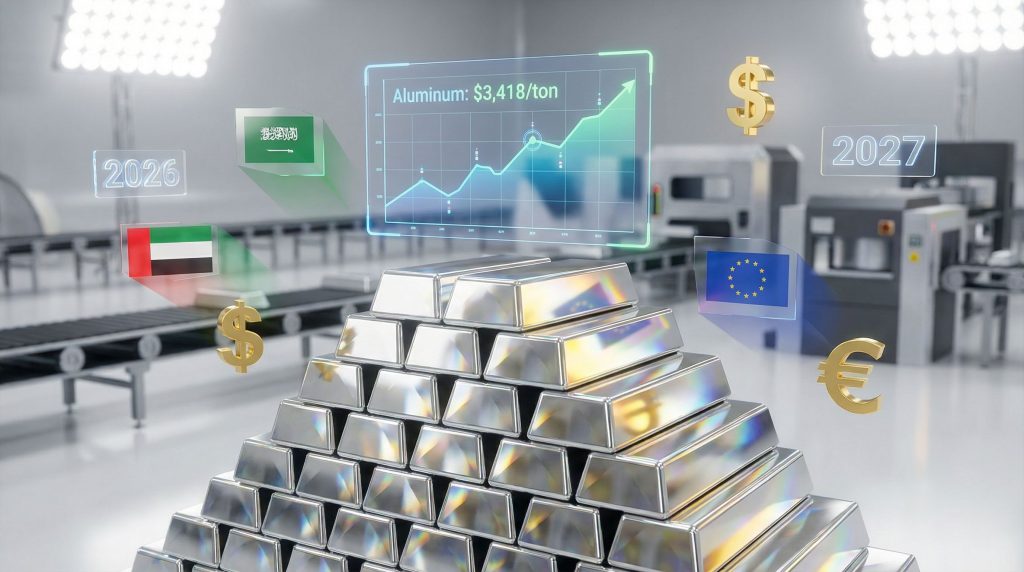
The aluminum price surge represents more than cyclical commodity volatility. Multiple structural factors converge to create sustained upward pressure on prices, with current spot levels reaching $3,362 per ton, representing gains exceeding 25% within the past year. This price appreciation reflects fundamental supply-demand imbalances rather than speculative trading patterns.
Geopolitical supply disruptions have emerged as the primary catalyst for recent price movements. Middle Eastern aluminum smelting operations, representing approximately 9% of global primary aluminum supply, face operational challenges due to regional conflicts. The effective halt of shipments through the Strait of Hormuz has created logistical bottlenecks that ripple throughout international aluminum trade networks, similar to broader tariffs and supply chains disruptions affecting global commerce.
These disruptions occur against a backdrop of structural market transformation. Global aluminum production reached nearly 73 million tons in 2024, yet emerging supply deficits suggest demand growth is outpacing production capacity expansion. Unlike previous commodity cycles where oversupply eventually corrected price imbalances, current market conditions indicate persistent tightness through 2026-2027.
Energy infrastructure constraints represent perhaps the most significant long-term supply limitation. Aluminum smelting requires substantial electricity inputs, making production economics heavily dependent on power costs and availability. Many jurisdictions face energy transition challenges that limit their ability to support meaningful production expansion, regardless of price incentives.
The Chinese market dynamic adds complexity to global supply patterns. While China maintains significant production capacity, domestic demand from technology companies including major electronics manufacturers and electric vehicle producers creates internal consumption pressure that limits export availability.
When big ASX news breaks, our subscribers know first
Market Structure and Price Discovery Mechanisms
The aluminum market operates through complex interaction between physical supply chains and financial derivatives trading. Current price formation reflects supply anxiety rather than demand destruction, indicating market participants expect sustained tightness rather than cyclical correction.
Regional premium structures have emerged as key indicators of localised supply constraints. These premiums, representing the additional cost above base commodity prices for physical delivery in specific markets, have expanded significantly across major consuming regions. Furthermore, the impact of trade policies mirrors broader US steel–aluminum tariff rules that create regional market fragmentation.
Financial markets demonstrate strong confidence in sustained price elevation through options market positioning and futures curve structures. The aluminum futures market trades at premiums to historical averages, suggesting institutional investors expect continued supply constraints.
Industrial demand patterns show resilience across multiple sectors:
- Electric vehicle manufacturing requires lightweight aluminum components for battery housings and structural elements
- Solar panel frameworks utilise aluminum for mounting systems and electrical components
- Wind turbine construction incorporates aluminum in nacelle housings and electrical systems
- Electronics manufacturing depends on aluminum for heat dissipation and device casings
- Aerospace applications maintain steady demand for high-specification aluminum alloys
Strategic Supply Chain Responses and Vertical Integration
Major aluminum producers have implemented sophisticated supply chain strategies to navigate market volatility and secure competitive positioning. The most successful approaches involve vertical integration across the aluminum value chain, from bauxite mining through primary smelting.
China Hongqiao Group exemplifies this integrated approach, operating power plants domestically, bauxite mines in Guinea, and alumina processing facilities in Indonesia. This vertical integration model provides several strategic advantages that become particularly valuable during periods of market disruption.
Upstream Resource Security
Direct control over bauxite mining operations in Guinea, which began around 2014, provides superior raw material access compared to competitors dependent on spot market purchases or long-term contracts with third-party miners. This approach offers protection against supply chain disruptions that have historically affected the industry.
Power cost optimisation through strategic relocation of aluminum smelting capacity to China's Yunnan province allows access to low-cost hydroelectric power, reducing one of the most significant operational expenses in aluminum production. This cost advantage becomes particularly valuable during periods of elevated energy prices.
Processing control through Indonesian alumina plants provides intermediate processing capabilities that reduce dependence on external suppliers and optimise logistics between mining and smelting operations. This integration has proven particularly valuable as bauxite supply chains faced historical disruptions from political instability in Guinea and export restrictions in Indonesia.
Geographic diversification represents another critical supply chain response. Producers seek to establish operations across multiple jurisdictions to reduce concentration risk from geopolitical events, regulatory changes, or infrastructure limitations in any single region.
Long-term offtake agreements between producers and major consumers provide supply security for both parties. Technology companies and automotive manufacturers increasingly enter multi-year contracts to secure aluminum supply at predetermined pricing structures.
Producer Equity Performance and Market Dynamics
The aluminum price surge has generated substantial equity value creation for primary producers, with share price appreciation significantly exceeding broader market performance. This demonstrates the operational leverage inherent in commodity production businesses during price appreciation cycles.
China Hongqiao Group exemplifies producer equity performance during the current price rally. The company's stock has appreciated 585% since Zhang Bo assumed leadership in 2019, creating substantial wealth for controlling shareholders. Zhang Bo's personal fortune has reached approximately $48 billion, with family wealth increasing 110% in the past year alone.
This equity performance reflects several underlying business dynamics. Fixed cost structure benefits mean aluminum smelters with existing capacity and secured power contracts capture maximum benefit from price increases, as most operational costs remain fixed while revenue scales with commodity prices.
Market share influence allows large producers controlling significant portions of global output to influence supply decisions that affect international pricing. China Hongqiao's decisions regarding capacity utilisation and expansion are closely monitored by market participants.
Financial market sentiment regarding producer refinancing activities and share placements significantly impacts investor sentiment for aluminum-related equities across regional markets. The competitive landscape includes multiple family-controlled industrial groups with substantial aluminum interests. Zhang Xuexin of rival Xinfa Group maintains a personal fortune exceeding $35 billion, demonstrating the wealth creation potential in aluminum production during favourable market conditions.
Downstream Industry Impact Assessment
Rising aluminum costs create significant challenges across manufacturing industries with high aluminum content in their products. The impact varies by sector based on aluminum intensity, cost pass-through capabilities, and availability of substitute materials.
Automotive sector exposure is particularly significant as manufacturers pursue vehicle lightweighting objectives to improve fuel efficiency and electric vehicle range. Aluminum components include engine blocks and cylinder heads, body panels and structural components, battery enclosures for electric vehicles, heat exchangers and cooling systems, and suspension components and wheels.
Electric vehicle manufacturers face dual pressures from aluminum cost increases and growing demand for lightweight battery solutions. Companies like BYD, which sources aluminum from major Chinese producers, must balance material costs against performance requirements.
Electronics Manufacturing Applications
Electronics manufacturing utilises aluminum extensively for thermal management and structural applications. These include smartphone and tablet casings, computer heat sinks and chassis components, server and data centre cooling solutions, LED lighting fixtures and heat dissipation systems, and consumer appliance housings.
Construction industry applications range from structural components to architectural elements. These encompass window and door frames, building facades and curtain wall systems, roofing materials and gutters, structural beams and supports, and HVAC system components.
Packaging sector impacts affect beverage container costs and food packaging applications. Aluminum's recyclability advantages support continued use despite price increases, though cost pressures may accelerate alternative material adoption in some applications.
Trade Policy and Regional Market Fragmentation
International trade policies significantly influence aluminum pricing and market structure, creating regional price differentials and affecting global supply chain patterns. These policies often reflect strategic considerations beyond pure economic optimisation, particularly in light of ongoing Trump tariffs implications for global trade relationships.
Tariff structures create substantial regional price premiums. Import duties and trade restrictions fragment global aluminum markets, preventing efficient price arbitrage between regions with surplus production and those facing supply constraints. These trade barriers often mirror broader US–China trade strategies that reshape global commodity flows.
Strategic material classifications influence government policies regarding domestic production capabilities and import dependencies. Many jurisdictions view aluminum as strategically important due to its defence industry applications and role in renewable energy infrastructure.
Export restrictions by producing countries can disrupt traditional trade flows. Indonesia's requirements for domestic aluminum processing rather than raw bauxite exports exemplify how policy changes affect global supply chains. These trade policy considerations create additional complexity for multinational corporations managing aluminum supply chains across multiple jurisdictions with different regulatory frameworks and trade relationships.
The next major ASX story will hit our subscribers first
Long-Term Market Evolution and Strategic Implications
The aluminum market faces fundamental structural changes that extend beyond current price volatility. These long-term trends will reshape industry competitive dynamics and influence strategic decision-making across the value chain.
Capacity investment cycles typically require 3-5 years from initial planning to production startup for new aluminum smelting facilities. Current price levels justify new capacity investments, though energy availability and environmental regulations limit potential expansion locations.
What Drives Future Aluminum Demand Growth?
Demand evolution patterns reflect the global transition toward renewable energy and electric mobility. Solar panel installations require aluminum mounting systems, while wind turbine construction utilises aluminum components. Electric vehicle adoption drives aluminum demand for battery systems and lightweight construction, and data centre expansion increases aluminum demand for cooling and infrastructure.
Recycling technology advancement offers potential supply augmentation through improved secondary aluminum production. Advanced sorting and processing technologies can increase recycling efficiency and expand the range of aluminum scrap suitable for high-quality applications.
Market concentration trends may accelerate as supply disruptions create operational challenges for smaller producers. Integrated companies with diversified geographic footprints and secured raw material access demonstrate superior resilience during market stress periods.
Investment and Risk Management Considerations
The aluminum market presents complex investment opportunities and risk factors that require sophisticated analysis across multiple time horizons and market scenarios. The current aluminum price surge creates both opportunities and risks that investors must carefully evaluate.
Producer equity opportunities offer leveraged exposure to aluminum price movements through operational leverage, though this cuts both directions during price declines. Investors must evaluate production cost structures and competitive positioning, power supply security and long-term electricity costs, raw material access and vertical integration levels, geographic diversification and geopolitical risk exposure, and environmental compliance and sustainability initiatives.
Consumer industry impacts create investment implications across downstream sectors. Companies with high aluminum content face margin pressure unless they can successfully pass through cost increases to end consumers. However, supply chain resilience becomes increasingly valuable as geopolitical tensions and climate-related disruptions affect global commodity flows.
Currency and macroeconomic factors influence aluminum pricing through dollar strength, inflation expectations, and global economic growth patterns. These factors require consideration alongside fundamental supply-demand analysis. Companies with diversified supplier networks and strategic inventory management demonstrate superior operational stability during periods of market volatility.
In conclusion, the aluminum price surge reflects a convergence of structural market changes, geopolitical disruptions, and technological demand shifts that extend far beyond traditional commodity cycles. Market participants must adapt strategic approaches to navigate this transformed landscape while positioning for continued evolution in global aluminum supply chains and demand patterns.
Investment decisions should be based on comprehensive analysis of individual circumstances and risk tolerance. Commodity markets involve substantial volatility and potential for significant losses. This analysis is for educational purposes and does not constitute investment advice.
Ready to Capitalise on the Next Major Resource Discovery?
Discovery Alert's proprietary Discovery IQ model delivers instant notifications on significant ASX mineral discoveries, including aluminium and bauxite opportunities that could benefit from the current aluminum price surge. Subscribers gain immediate access to actionable trading insights and investment opportunities, positioning themselves ahead of broader market awareness. Start your 14-day free trial at Discovery Alert today to secure your competitive advantage in resource investing.