
August 22, 2026
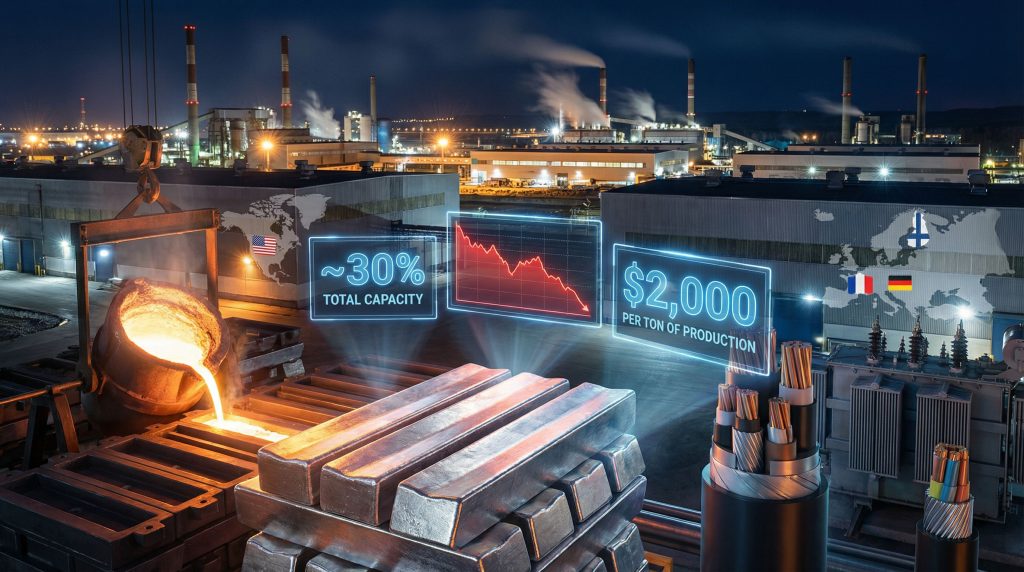
What Drives Modern Aluminum Smelter Closures?
The industrial landscape for aluminum production faces unprecedented challenges as global energy markets reshape manufacturing economics. Rising electricity costs, fierce competition for power resources, and structural shifts toward digital infrastructure are fundamentally altering the viability of traditional smelting operations worldwide. Furthermore, these aluminum smelter shutdowns represent a critical transformation affecting strategic industrial capacity across multiple regions.
Energy Cost Crisis as the Primary Factor
Modern aluminum smelter shutdowns stem primarily from unsustainable electricity expenses that have reached crisis levels across multiple regions. These facilities consume extraordinary amounts of power, with individual plants drawing electricity equivalent to entire metropolitan areas. The power consumption patterns create direct competition with emerging sectors willing to pay premium rates for long-term energy contracts.
Energy Consumption Comparison Table:
| Facility Type | Power Consumption | Equivalent Usage |
|---|---|---|
| Modern Aluminum Smelter | 15,000+ MWh/day | Boston metropolitan area |
| Large Data Center | 3,000-8,000 MWh/day | Medium-sized city |
| Steel Mill | 2,000-5,000 MWh/day | Small industrial city |
The fundamental economics of aluminum production require stable, predictable electricity pricing over multi-decade timeframes. However, energy price volatility following geopolitical events has created unsustainable operating conditions for facilities designed around historical power cost assumptions. In addition, the tariff economic implications continue to reshape global trade dynamics affecting these energy-intensive operations.
Competition from Digital Infrastructure Sector
Digital infrastructure companies demonstrate willingness to pay significantly higher electricity rates than traditional manufacturing operations can economically justify. This competitive disadvantage has become particularly acute as artificial intelligence and cloud computing demand exponential increases in data processing capacity.
The shift represents a fundamental reallocation of electrical grid capacity toward higher-value economic activities. Data centers can generate substantially more economic value per megawatt-hour consumed compared to commodity aluminum production, creating market forces that systematically disadvantage traditional heavy industry.
Key factors driving digital infrastructure advantage:
• Higher revenue per megawatt-hour consumed
• Shorter-term contract flexibility
• Rapid scalability and deployment capabilities
• Premium pricing tolerance for reliable power supply
When big ASX news breaks, our subscribers know first
Which Regions Face the Highest Smelter Shutdown Risks?
Geographic analysis reveals significant disparities in aluminum smelter shutdown vulnerability based on regional energy policies, electricity pricing structures, and industrial policy frameworks. Certain regions demonstrate structural advantages that may preserve smelting capacity while others face systematic facility closures.
European Market Disruption Analysis
European aluminum smelting operations experience acute vulnerability due to energy market disruptions following geopolitical events. The region's transition toward renewable energy sources creates intermittency challenges for power-intensive industrial processes requiring consistent electricity supply.
Spain's industrial facilities exemplify broader European challenges, where electricity prices have soared, forcing temporary suspensions that often become permanent closures. The regulatory environment prioritises residential and commercial consumers over industrial users during supply constraints.
North American Capacity Reduction Trends
North American aluminum production capacity has contracted dramatically, with the United States retaining only five operational primary metal production facilities as of 2026. This represents a significant reduction from historical capacity levels and creates strategic supply chain vulnerabilities.
US Import Dependency Metrics:
• 60% of aluminum consumption sourced from imports (US Geological Survey)
• Remaining domestic capacity insufficient for strategic needs
• Long-term dependency unlikely to change until 2030
Specific facility analysis reveals the scope of capacity loss. Furthermore, Tomago aluminium smelter faces potential closure due to similar energy price pressures affecting the Australian market.
Recently Closed or Idled US Facilities:
| Facility | Location | Capacity (tons/year) | Status | Primary Closure Factor |
|---|---|---|---|---|
| Hawesville | Kentucky | 252,000 | Permanently closed | Power cost competition |
| New Madrid | Missouri | 263,000 | Closed 2024 | Economic unviability |
| Warrick (partial) | Indiana | 54,000 | Idled | Restart costs prohibitive |
Oklahoma emerges as a potential exception due to favourable energy production characteristics. The state generates three times more electricity than it consumes, creating structural advantages for power-intensive manufacturing operations. This surplus capacity positions Oklahoma as the likely location for future domestic smelting investments.
How Do Trade Policies Affect Smelter Viability?
Trade protection mechanisms demonstrate limited effectiveness in preserving domestic aluminum production capacity when fundamental operational economics remain unfavourable. Recent policy implementations reveal the constraints of tariff-based industrial protection strategies.
Tariff Protection vs. Operational Economics
The Trump administration's implementation of 50% aluminum import tariffs in 2025 aimed to halt capacity decline but achieved mixed results. While tariff protection creates price floors for domestic producers, electricity cost disadvantages can overwhelm protective benefits. However, these measures have contributed to an oil price rally as energy markets respond to shifting trade dynamics.
Market Premium Analysis:
• Midwest aluminum premium: $2,290 per ton over London Metal Exchange prices
• All-in delivered price: approximately $5,300 per ton
• Premium insufficient to justify continued operations at uneconomical facilities
The Hawesville facility closure despite substantial market premiums demonstrates that protective tariffs cannot overcome structural cost disadvantages in energy-intensive manufacturing. Additionally, the tariffs impact on investment markets continues to create uncertainty for industry planning.
Strategic Industry Protection Measures
Government officials maintain commitment to domestic aluminum production for national security considerations. However, policy effectiveness depends on addressing underlying cost structures rather than relying solely on import protection.
The administration's position emphasises never compromising on reinvigorating domestic manufacturing critical to national and economic security, particularly steel and aluminum production.
Policy sustainability challenges include:
• Consumer price impacts from sustained high tariffs
• International trade relationship strain
• Limited effectiveness against fundamental cost disadvantages
• Potential for retaliatory measures from trading partners
What Are the Financial Implications of Smelter Shutdowns?
Aluminum smelter shutdowns create substantial financial consequences across multiple stakeholder categories, from facility owners to downstream consumers and regional economies. Understanding these implications provides insight into industry transformation dynamics.
Restart Cost Analysis
Reactivating idled aluminum smelting capacity requires substantial capital investment and extended timelines that often prove prohibitive under current market conditions. Industry executives consistently cite restart economics as primary barriers to capacity recovery.
Alcoa's Warrick Facility Restart Assessment:
• Capital requirement: $100 million
• Timeline: 2+ years
• Management conclusion: restart "unlikely" under current conditions
These restart parameters create significant barriers to capacity flexibility during market recovery periods. The combination of high capital requirements and extended development timelines means that temporary market improvements rarely justify reactivation investments.
Market Premium Structures
Regional pricing premiums reflect supply-demand imbalances but demonstrate insufficient magnitude to support marginal production capacity. The disconnect between market premiums and operational viability indicates structural industry transformation.
Current Premium Structure Breakdown:
• London Metal Exchange base price: ~$3,010 per ton
• Midwest regional premium: $2,290 per ton
• Total delivered cost: $5,300 per ton
Despite significant premiums over global benchmark prices, domestic facilities continue closing due to electricity cost pressures that exceed premium benefits.
How Does Aluminum Production Capacity Loss Impact Global Markets?
Global aluminum smelter shutdowns create cascading effects throughout supply chains, affecting everything from aerospace manufacturing to consumer goods production. These capacity reductions fundamentally alter market dynamics and strategic resource planning.
Supply Chain Vulnerability Assessment
Domestic production capacity loss increases strategic vulnerability through import dependency that extends beyond simple commodity procurement. High-purity aluminum used in aerospace and defence applications creates particular concerns for supply chain security.
The Hawesville facility closure eliminated not only 252,000 tons of annual capacity but also specialised high-purity aluminum production capabilities essential for strategic applications. This dual impact affects both quantity and quality dimensions of domestic supply security.
Strategic Implications:
• Reduced domestic production flexibility during supply disruptions
• Increased vulnerability to trade disputes affecting imports
• Loss of specialised product capabilities
• Extended timelines for capacity restoration if needed
Secondary Market Growth Opportunities
Capacity reductions in primary aluminum production create expansion opportunities for recycling and secondary processing operations. These alternatives require substantially less energy per ton produced and demonstrate greater operational flexibility.
Secondary Processing Advantages:
• 90% lower energy consumption compared to primary smelting
• Reduced exposure to electricity price volatility
• Shorter facility development timelines
• Lower capital investment requirements
Which Technologies Could Prevent Future Shutdowns?
Technological innovation represents the primary pathway for maintaining aluminum production capacity in regions with challenging energy economics. Multiple development tracks show promise for reducing operational vulnerabilities.
Energy Efficiency Innovation Pathways
Next-generation smelting technologies focus on reducing power consumption per ton of aluminum produced. These innovations could partially offset electricity cost disadvantages that drive current facility closures. Moreover, industry innovation trends continue to drive technological advancement across the sector.
Inert anode technology development shows particular promise for revolutionising smelting energy requirements. This technology eliminates carbon consumption in the smelting process while significantly reducing overall energy requirements.
Innovation Focus Areas:
• Hall-Héroult process optimisation
• Renewable energy integration systems
• Smart grid demand response capabilities
• Waste heat recovery implementation
Alternative Production Methods Research
Research into alternative aluminum production methods seeks to fundamentally reduce energy intensity through process innovation. While still in development phases, these technologies could reshape industry economics. Furthermore, renewable energy solutions are increasingly integrated into modern production facilities.
Breakthrough Technology Potential:
• 50%+ energy reduction through process optimisation
• Elimination of carbon-based inputs
• Reduced environmental footprint
• Improved operational flexibility
The next major ASX story will hit our subscribers first
What Does the Future Hold for Aluminum Smelting?
Industry transformation continues through a combination of capacity rationalisation and strategic reinvestment in favourable locations. Future development patterns will likely concentrate in regions with sustainable competitive advantages.
Greenfield Development Projects
The proposed Oklahoma aluminum smelter represents the first new US facility in 46 years and demonstrates industry confidence in specific geographic advantages. This 750,000 tons annual capacity project reflects strategic positioning for long-term viability.
Oklahoma Project Advantages:
• State produces 3x more energy than consumed
• Abundant natural gas resources
• Favourable regulatory environment
• Strategic transportation access
Construction timeline expectations indicate first metal production in 2030, creating a four-year gap between current capacity loss and replacement availability.
Industry Consolidation Predictions
Market concentration will likely accelerate as marginal facilities close and investment flows toward optimal locations. This consolidation creates both risks and opportunities for market participants.
Consolidation Drivers:
• Energy cost pressures eliminating marginal producers
• Capital requirements favouring large-scale operations
• Technology development concentrating among major players
• Strategic resource access becoming increasingly important
How Should Investors Approach Aluminum Smelter Exposure?
Investment strategy development requires understanding both the risks of facility closures and opportunities created by supply constraint dynamics. Aluminum smelter shutdowns create complex risk-reward profiles across the investment spectrum.
Risk Assessment Framework
Energy Cost Volatility Modelling:
Investors must evaluate electricity price trends and regulatory frameworks affecting long-term power contracts. Facilities with unfavourable power arrangements face elevated closure risks regardless of aluminum market conditions.
Geographic Risk Factors:
• Regulatory environment stability
• Energy production surplus/deficit ratios
• Grid infrastructure reliability
• Political support for heavy industry
Opportunity Identification Methods
Supply constraint dynamics create investment opportunities across the aluminum value chain, from primary production to downstream processing and recycling operations.
Investment Opportunity Categories:
• Facilities with secured long-term power contracts
• Companies with technology advantages reducing energy intensity
• Secondary processing operations with flexible feedstock sources
• Infrastructure supporting alternative aluminum supply chains
Distressed Asset Evaluation:
Closed facilities may present acquisition opportunities for investors with patient capital and favourable power access. However, restart economics require careful analysis of both capital requirements and ongoing operational costs.
Frequently Asked Questions About Aluminum Smelter Shutdowns
Why can't tariffs save struggling smelters?
Import tariffs create price protection but cannot overcome fundamental operational cost disadvantages. When electricity costs exceed tariff benefits, facilities remain uneconomical despite trade protection. The Hawesville closure despite 50% import tariffs demonstrates this limitation.
How long does it take to restart a closed smelter?
Smelter restart timelines typically require 2-3 years from decision to production, assuming favourable economic conditions. Capital requirements often exceed $100 million for full facility reactivation, making restart decisions dependent on long-term market confidence.
What happens to workers when smelters shut down?
Smelter closures eliminate hundreds of high-paying manufacturing jobs that often represent significant portions of local employment. Economic transition programmes and facility repurposing for alternative industries provide some employment continuity, though typically at different skill requirements and wage levels.
Are there environmental benefits to smelter closures?
Aluminum smelter operations typically generate substantial carbon emissions and require significant electricity consumption. Closures reduce regional environmental impacts, though increased import dependency may shift rather than eliminate overall environmental effects depending on production location and transportation requirements.
Disclaimer: This analysis contains forward-looking statements and projections based on current market conditions and industry trends. Actual outcomes may differ significantly due to changes in energy costs, regulatory policies, technological developments, and other factors affecting aluminum production economics. Investment decisions should not be based solely on this analysis without independent verification and professional consultation.
Looking to Capitalise on Shifting Commodity Markets?
Discovery Alert's proprietary Discovery IQ model delivers real-time alerts on significant ASX mineral discoveries, helping subscribers identify actionable opportunities as market dynamics reshape entire industries like aluminum production. With aluminum smelter closures creating supply constraints and investment opportunities across the commodities sector, begin your 14-day free trial today to position yourself ahead of evolving market conditions.