
August 12, 2026
The Hidden Vulnerability Inside the World's Alumina Supply Chain
The global aluminium industry often appears stable on the surface, underpinned by long-term contracts, integrated supply chains, and a handful of dominant producers. But beneath that stability lies a network of interdependencies that, when disrupted, can transmit shock waves across continents within days. Energy supply, particularly natural gas, is one of the most underappreciated pressure points in this system. When gas flows are interrupted at a facility of sufficient scale, the consequences cascade from refinery gate to metal exchange floor with remarkable speed.
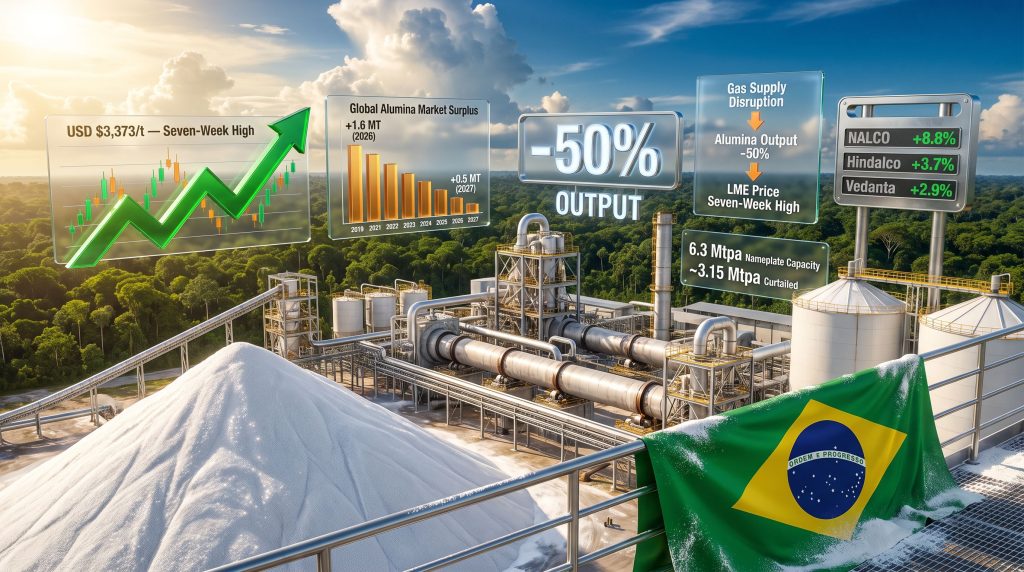
That reality came into sharp focus when Norsk Hydro ASA confirmed that the Alunorte refinery cuts alumina output by 50%, reducing production at its Brazilian state of Pará facility to 50% of nameplate capacity following disruptions to contracted natural gas supply. For a facility capable of producing 6.3 million tonnes of alumina per year, a half-capacity operating mode is not a minor operational footnote. It is a globally material supply event with direct pricing consequences across the aluminium value chain.
When big ASX news breaks, our subscribers know first
Understanding Why Alunorte's Scale Makes This Cut Significant
Alunorte holds a unique position in global aluminium economics. Operated by Norsk Hydro ASA, the refinery sits at the critical midpoint between bauxite mining and primary aluminium smelting, processing raw bauxite ore through the Bayer process to produce alumina, the intermediate feedstock that smelters convert into metal. The top aluminium producers worldwide rely heavily on the stability of such refineries to maintain consistent output.
The fundamental chemistry of aluminium production creates a structural multiplier effect. Producing one tonne of primary aluminium metal requires approximately two tonnes of alumina, meaning any significant disruption at a large refinery immediately tightens the feedstock available to downstream smelters. At 6.3 Mtpa of capacity, Alunorte is not simply one refinery among many. It is a cornerstone supplier whose output variations carry disproportionate weight in global supply calculations.
A 50% reduction at Alunorte effectively removes approximately 3.15 million tonnes of annualised alumina output from global availability. Even if temporary, a withdrawal of that magnitude from a single production point introduces immediate tension into spot markets, particularly in Asia-Pacific regions that depend heavily on seaborne alumina supply from Atlantic Basin producers.
What Triggered the Alunorte Refinery Production Cut
The disruption traces directly to a failure in contracted energy supply. Hydro's gas supplier, CELBA, which is affiliated with New Fortress Group, notified the company that it could not fulfil contracted gas volumes. Natural gas is not a peripheral input in alumina refining. It is foundational to the calcination stage of the Bayer process, where aluminium hydroxide is heated to extremely high temperatures to drive off water and produce the anhydrous alumina powder that smelters require.
Without sufficient gas throughput, maintaining full refinery operations becomes both technically constrained and economically unviable. Furthermore, understanding the broader natural gas price trends helps contextualise why spot procurement during such disruptions carries such a significant cost penalty. Hydro responded with a structured contingency framework rather than an immediate full shutdown:
| Contingency Measure | Description |
|---|---|
| Spot Gas Procurement | Purchasing available gas volumes on open markets at above-contract pricing |
| LNG Terminal Access | Seeking direct access to the Barcarena LNG receiving and regasification terminal |
| Production Curtailment | Reducing alumina output to 50% of nameplate capacity on a temporary basis |
The company confirmed that Alunorte will begin ramping back toward full capacity as soon as gas availability returns to normal levels. No specific restoration timeline has been publicly confirmed, which means the market is operating with duration uncertainty layered on top of volume uncertainty.
The Financial Cost of the Disruption
Norsk Hydro has quantified the expected financial damage to its Bauxite and Alumina segment. The combined impact of reduced production volumes and the premium paid on spot gas purchases relative to contracted rates is estimated to reach USD $75 million to USD $100 million in Q3 2026, according to reporting by Kitco Metals citing Hydro's own estimates.
This figure illustrates both the operational leverage inherent in large-scale refining and the cost differential that can emerge when spot energy markets must substitute for contracted supply. The gap between contract gas pricing and open-market procurement costs represents a direct margin erosion event for Hydro's upstream segment.
How Alumina Market Fundamentals Amplify the Supply Shock
Context matters when assessing the market impact of a supply disruption. Heading into this event, the global alumina market carried a structural surplus position:
| Year | Estimated Global Alumina Market Balance |
|---|---|
| 2026 | +1.6 million tonne surplus |
| 2027 | +0.5 million tonne surplus |
At first glance, a surplus market should absorb a temporary supply disruption without significant price dislocation. However, the Alunorte refinery cuts alumina output by 50% — and this is not a marginal reduction. Removing approximately 3.15 Mtpa of effective output, even temporarily, is capable of compressing what was a comfortable surplus into a much tighter near-term balance, particularly in specific regional trade lanes where Alunorte's tonnes are not easily replaceable on short notice.
Equally important is the current pricing backdrop. Alumina is trading at approximately 10% of LME aluminium prices, meaningfully below the historical benchmark range of 14% to 16%. This compression suggests alumina has been undervalued relative to aluminium for some time, and a tightening supply event provides a potential catalyst for price normalisation toward the upper end of its historical ratio. In addition, the broader aluminum and alumina markets have already been navigating a period of heightened volatility heading into this disruption.
The convergence of a shrinking surplus trajectory toward 2027 and a supply shock of this magnitude creates conditions where alumina price recovery could accelerate faster than market consensus currently anticipates, particularly if the gas supply restoration takes longer than expected.
LME Aluminium Price Response and the Supply Chain Logic
The market's response to the Alunorte announcement was immediate. LME spot aluminium prices climbed to approximately USD $3,373 per tonne, reaching a seven-week high. For reference, the average LME aluminium price in Q1 FY2027 was approximately USD $3,565 per tonne, indicating the market is still trading below recent quarterly averages despite the supply-driven rally.
The transmission mechanism from refinery disruption to metal exchange pricing follows a clear logical sequence:
- Gas supply disruption forces Alunorte to halve operational output
- Effective alumina supply available to global markets shrinks by approximately 3.15 Mtpa on an annualised basis
- Spot alumina availability tightens, increasing competition among buyers for available tonnes
- Alumina price pressure builds, raising input costs for primary aluminium smelters globally
- Higher smelter input costs translate into upward pressure on LME aluminium benchmarks
- LME aluminium spot price moves to a seven-week high near USD $3,373 per tonne
This chain illustrates why energy security at large refining facilities is not merely an operational concern but a systemic market risk variable that investors in aluminium equities must incorporate into their analysis frameworks.
Indian Aluminium Producers: Who Benefits and Why
When global alumina supply contracts and aluminium benchmarks rise, integrated Indian producers with domestic refining capacity occupy a structurally advantaged position. They can capture margin expansion simultaneously on the upstream alumina side through higher export realisations and on the downstream aluminium side through stronger metal pricing. This dynamic mirrors patterns observed when reviewing the industrial metals demand outlook more broadly across commodity markets.
The market registered this logic immediately on 12 August 2026:
| Company | Share Price Movement | Key Exposure |
|---|---|---|
| NALCO | +8.8% to INR 422.20 | Alumina exports; alumina contributed ~27% of FY2026 EBIT |
| Hindalco Industries | +3.7% to INR 1,087.95 | Integrated producer with upstream bauxite and alumina assets |
| Vedanta Aluminium Metal | +2.9% to INR 476.95 | Primary aluminium production with input cost sensitivity |
NALCO's Structural Leverage to Alumina Pricing
NALCO's earnings sensitivity to alumina is particularly pronounced. Alumina contributed 27% of NALCO's EBIT in FY2026, having accounted for an even larger 44% in FY2025. This year-on-year variation reflects the extent to which alumina pricing cycles drive earnings volatility for producers with significant upstream refining exposure.
Brokerage house Antique has maintained a Buy recommendation on NALCO with a price target of INR 463, citing firm aluminium prices and incremental alumina export volume growth as the primary revenue support factors. A sustained period of elevated alumina pricing driven by the Alunorte disruption would add a third positive variable to this thesis.
It is worth noting that NALCO's alumina earnings sensitivity operates in both directions. The same upstream exposure that amplifies gains in a tight market can compress margins when alumina prices retreat. Investors tracking this thesis should monitor both the pace of Alunorte's production restoration and broader alumina spot price movements as leading indicators.
The next major ASX story will hit our subscribers first
Energy Supply as a Structural Risk in Alumina Refining
The Alunorte disruption surfaces a risk dimension that rarely receives adequate attention in standard commodity market analysis: the energy dependency profile of alumina refining operations.
The Bayer process is extraordinarily energy-intensive. Calcination alone requires sustained high-temperature heating, making natural gas not just a preferred fuel source but often the operationally critical one. Refineries typically negotiate long-term supply contracts to manage cost predictability, but those contracts create concentrated counterparty exposure. When a single gas supplier encounters operational difficulties, the downstream production consequences can be immediate and severe. For context on how the bauxite production leaders manage upstream dependencies, similar energy risk considerations apply throughout the value chain.
Several structural dimensions of this risk are worth understanding:
- Single-source dependency creates binary outcomes: either the gas flows and the refinery operates at capacity, or it does not and curtailment becomes the only viable response
- LNG infrastructure as a backstop is growing in strategic importance. Hydro's move to seek access to the Barcarena LNG terminal reflects a broader industry recognition that flexible, multi-modal energy sourcing is a necessary hedge against point-source supply failure
- Spot market alternatives carry cost penalties, as demonstrated by Hydro's estimated USD $75 million to $100 million Q3 charge, which reflects both lost production revenue and the premium embedded in open-market gas procurement
- Refinery restarts are not instantaneous. Calcination kilns and associated process equipment require controlled ramp-up procedures, meaning even a resolved gas supply situation does not translate immediately into full production restoration
The Alunorte event is a case study in how concentrated energy supply contracts, without adequate diversification or backup infrastructure access, can convert an external supplier's operational failure into a globally material supply-side shock within days.
Distinguishing Temporary Disruptions from Structural Supply Shifts
For investors and commodity analysts, one of the most consequential questions following any supply disruption is whether it represents a temporary operational setback or a structural change in market availability. The answer drives very different positioning frameworks.
The Alunorte curtailment presents as a temporary disruption based on available information: the cause is an external gas supply interruption rather than a refinery technical failure or infrastructure damage, and Hydro has confirmed its intent to restore full production capacity. However, several variables introduce meaningful uncertainty:
- The timeline for CELBA and New Fortress Group to normalise gas supply has not been publicly confirmed
- Extended negotiations over LNG terminal access could delay restoration
- Any secondary technical complications arising from the partial-capacity operating mode could extend the curtailment period
- Market participants pricing a rapid resolution may be underestimating duration risk
The degree to which the current aluminium price rally is sustained will depend heavily on how quickly production ramp-up materialises. If restoration stretches across multiple weeks, the market balance implications become progressively more significant given the 2027 surplus trajectory already narrowing to just 0.5 million tonnes.
Key Takeaways for Investors Monitoring This Development
- The Alunorte refinery cuts alumina output by 50%, representing a material upstream supply event capable of temporarily tightening a global alumina market already trending toward a tighter balance in 2027
- Alumina's current pricing at approximately 10% of LME aluminium sits well below its historical 14% to 16% benchmark range, creating the conditions for price normalisation if supply tightness persists
- NALCO carries the highest direct earnings leverage to alumina price movements among the Indian producers that reacted on 12 August 2026, given alumina's 27% contribution to FY2026 EBIT
- Energy supply concentration risk is an underappreciated variable in alumina refining economics, and the Alunorte event provides a live case study in how quickly single-source dependency can translate into production curtailment
- The LME aluminium price response to approximately USD $3,373 per tonne reflects upstream supply chain sensitivity, though the sustainability of that level depends on how swiftly Hydro restores full refinery output
- Investors should treat production ramp-up announcements from Norsk Hydro as the primary catalyst signal for whether current price support fades or consolidates into a more durable alumina and aluminium price recovery
This article is intended for informational purposes only and does not constitute financial advice. All price figures, market estimates, and financial projections referenced reflect information available at the time of writing and are subject to change. Investors should conduct their own due diligence before making investment decisions.
Want to Spot the Next Major ASX Mineral Discovery Before the Broader Market Does?
Supply chain disruptions like the Alunorte curtailment demonstrate how quickly commodity markets can reprice — and Discovery Alert's proprietary Discovery IQ model delivers real-time alerts on significant ASX mineral discoveries, translating complex resource data into actionable insights the moment they are announced. Explore historic examples of major discoveries and their extraordinary market returns, then begin your 14-day free trial to position yourself ahead of the next significant market-moving event.