May 21, 2026
Understanding the Strategic Value of India's Andaman Basin Oil Exploration
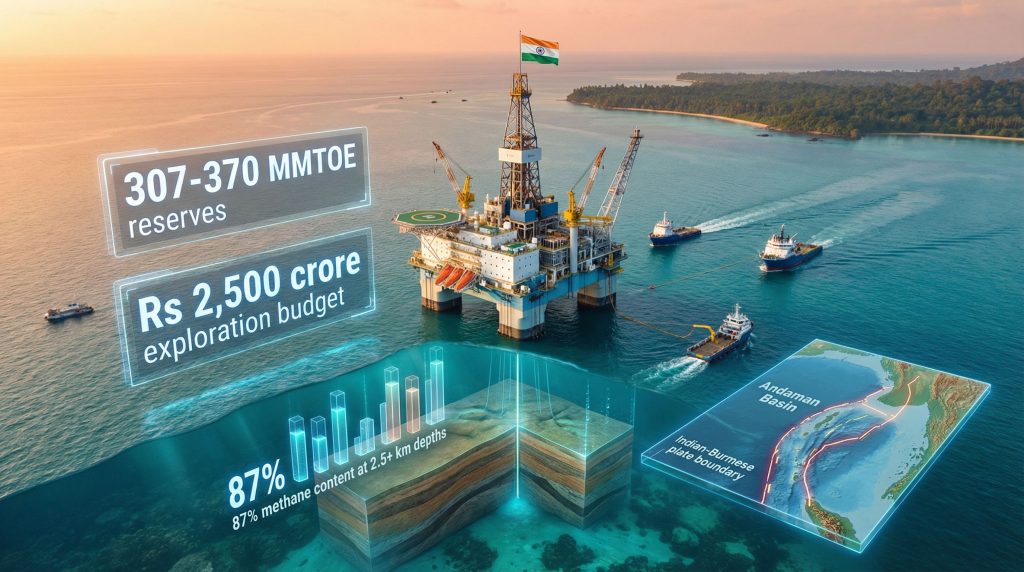
The andaman basin oil exploration initiative represents a transformative opportunity within India's energy landscape, where deepwater hydrocarbon exploration converges with technological advancement and geopolitical strategy. This geological formation, positioned within the Indo-Pacific region's complex tectonic environment, exemplifies how emerging basins with unproven reserves can reshape national energy security paradigms. Furthermore, the basin's development occurs against a backdrop of global oil price volatility and shifting trade war impacts that influence investment decisions.
Geological Foundation and Resource Assessment Framework
The basin's positioning at the intersection of major tectonic plates creates unique geological conditions that can trap hydrocarbons effectively. These structural characteristics mirror successful petroleum systems found throughout Southeast Asia, where similar geological formations have yielded substantial commercial discoveries.
Key Geological Advantages:
- Complex fault systems creating multiple trap configurations
- Deepwater environments with reduced surface interference
- Proximity to proven petroleum systems in neighbouring regions
- Sedimentary sequences indicating favourable hydrocarbon migration pathways
Current assessment methodologies suggest the basin contains substantial hydrocarbon potential. However, specific volume estimates require careful verification through extensive seismic surveys and exploratory drilling programmes. The comparison to Guyana's Stabroek Block discoveries indicates industry recognition of the basin's commercial viability potential.
Strategic Location Within Indo-Pacific Energy Corridors
The Andaman Basin's geographic positioning offers multiple advantages for India's broader energy security strategy. Located along major shipping routes connecting the Indian and Pacific Oceans, the region provides strategic access to both domestic and international energy markets.
Geographic Advantages Include:
- Direct access to deepwater shipping lanes
- Proximity to major Asian energy consumption centres
- Reduced transportation costs compared to Middle Eastern imports
- Enhanced energy supply diversification opportunities
This positioning aligns with India's objective of reducing dependence on traditional energy import sources whilst developing domestic production capabilities. In addition, the basin's location supports broader infrastructure development initiatives across the Andaman and Nicobar Islands.
When big ASX news breaks, our subscribers know first
Analysing Recent Exploration Developments and Commercial Indicators
The progression from initial geological assessment to active exploration represents a critical phase in offshore basin development. Current activities within the andaman basin oil exploration sector indicate advancing confidence in commercial viability, though significant technical challenges remain.
Technical Progress and Exploration Milestones
Recent exploration activities demonstrate industry commitment to understanding the basin's hydrocarbon potential through systematic geological and geophysical studies. These investigations employ advanced seismic technologies and sophisticated drilling techniques adapted for deepwater environments.
Current Technical Achievements:
- Comprehensive seismic mapping across multiple basin segments
- Advanced drilling techniques adapted for complex geological conditions
- Enhanced data collection through modern logging and sampling methods
- Geological modelling incorporating regional petroleum system analysis
The technical complexity of deepwater operations requires specialised equipment and expertise. Consequently, these operations often necessitate partnerships with international operators possessing proven deepwater development capabilities. These collaborations bring essential technical knowledge whilst sharing the substantial financial risks associated with offshore exploration.
Investment Framework and Capital Requirements
Offshore hydrocarbon development demands significant upfront investment before any revenue generation occurs. The capital requirements span exploration, development, and production phases, each carrying distinct risk profiles and return expectations.
| Development Phase | Capital Requirements | Timeline | Key Risks |
|---|---|---|---|
| Exploration | High initial outlay | 2-4 years | Geological uncertainty |
| Appraisal | Moderate investment | 1-3 years | Resource quantification |
| Development | Substantial commitment | 3-7 years | Technical execution |
| Production | Ongoing operational costs | 15-30 years | Market volatility |
The Indian government's licensing framework aims to attract international investment whilst ensuring domestic capability development. This approach balances foreign expertise requirements with national energy security objectives, particularly considering global exploration licensing impact trends.
Economic Impact Projections and Development Scenarios
The potential economic contributions from Andaman Basin development extend beyond direct hydrocarbon revenues to encompass broader infrastructure development and regional economic transformation. According to Admiral DK Joshi's economic projections, Lieutenant Governor of Andaman and Nicobar Islands, oil exploration in the region could strengthen India's long-term economic growth and support the nation's ambition of transitioning from a $4 trillion to a $20 trillion economy.
Macroeconomic Growth Pathways and GDP Contribution
Large-scale hydrocarbon development creates multiple economic multiplier effects through direct employment, supply chain development, and infrastructure investment. The andaman basin oil exploration could contribute to India's broader economic expansion through several mechanisms:
Direct Economic Contributions:
- Hydrocarbon production revenues and export potential
- Employment generation across technical and operational roles
- Technology transfer and capability development
- Supply chain localisation and industrial growth
Indirect Economic Effects:
- Infrastructure development spurring regional economic activity
- Enhanced connectivity supporting tourism and trade
- Strategic positioning for broader Indo-Pacific economic integration
- Energy security improvements reducing import dependency
The transformation potential extends beyond energy production to encompass comprehensive regional development initiatives. These could fundamentally alter the economic profile of the Andaman and Nicobar Islands.
Infrastructure Development and Regional Transformation
Admiral DK Joshi highlighted that projects worth ₹82,450 crore are planned for Great Nicobar Island. These include a transhipment terminal, power plant, and proposed township. These initiatives would strengthen maritime trade, connectivity, and national security whilst advancing India's geo-strategic and economic interests.
Major Infrastructure Components:
- Galathea Bay Port Development: Notified as India's 13th major port, featuring an International Container Transhipment Terminal developed under Public-Private Partnership models
- Integrated Township Development: Supporting workforce accommodation and regional service provision
- Power Generation Facilities: Ensuring reliable energy supply for industrial and residential requirements
- Transportation Networks: Connecting production facilities with processing and export infrastructure
These infrastructure investments create foundation conditions for broader economic development. Furthermore, they support the technical requirements of offshore hydrocarbon operations.
Regulatory Framework Evolution and Market Access
India's approach to offshore hydrocarbon development has undergone significant regulatory transformation. This evolution moves from restrictive policies toward more open and competitive licensing frameworks. Consequently, it reflects recognition of the substantial technical and financial requirements for successful offshore development.
Policy Transformation and Access Enhancement
The most significant regulatory development involves the liberation of previously restricted exploration areas. Admiral DK Joshi noted that 63.5 percent of the 6 lakh square kilometre 'No-Go Zone' has been freed for oil exploration. This represents approximately 381,000 square kilometres of newly accessible exploration territory.
Regulatory Evolution Timeline:
- Historical Restrictions: Large offshore areas previously designated as no-exploration zones
- Policy Review: Systematic assessment of restriction rationales and commercial potential
- Gradual Liberation: Phased opening of previously restricted areas for commercial exploration
- Enhanced Access: Current framework enabling comprehensive basin evaluation
This regulatory transformation aligns with broader government initiatives promoting energy security and economic development through domestic resource utilisation.
Licensing Mechanisms and Operator Selection
Modern licensing frameworks emphasise competitive bidding, technical capability assessment, and performance-based contract structures. These mechanisms aim to attract qualified operators whilst ensuring optimal resource development for national benefit.
Key Licensing Framework Elements:
- Open Acreage Licensing Policy (OALP): Enabling continuous bidding and block allocation
- Hydrocarbon Exploration and Licensing Policy (HELP): Streamlining approval processes and contract terms
- Technical Evaluation Criteria: Assessing operator capabilities and development plans
- Revenue Sharing Models: Balancing investor returns with government revenues
The framework emphasises transparency, competitive processes, and technical excellence. In addition, it provides sufficient commercial incentives for substantial investment commitments.
Technical Challenges and Development Timelines
Offshore hydrocarbon development presents unique technical challenges that can significantly impact project timelines and commercial viability. The andaman basin oil exploration deepwater environment compounds these challenges whilst requiring specialised technical solutions.
Operational Complexity in Deepwater Environments
Deepwater operations demand sophisticated equipment, specialised vessels, and advanced technical expertise. These requirements create both cost pressures and timeline extensions that must be carefully managed throughout project development.
Major Technical Challenges:
- Water Depth Management: Requiring specialised drilling and production equipment
- Geological Complexity: Demanding advanced seismic interpretation and drilling techniques
- Weather Conditions: Managing monsoon impacts and sea state limitations
- Logistical Coordination: Supporting remote operations with mainland supply chains
"The technical demands of deepwater development require sustained investment in specialised equipment and workforce development over extended timeframes."
Development Timeline Considerations
Offshore projects typically require extensive development periods from initial exploration through commercial production. These timelines reflect the complexity of technical operations, regulatory approvals, and infrastructure development requirements.
Typical Development Phases:
- Initial Exploration: 2-4 years for geological assessment and resource confirmation
- Appraisal Activities: 1-3 years for detailed reservoir characterisation
- Development Planning: 2-3 years for engineering design and regulatory approvals
- Construction and Installation: 3-5 years for infrastructure development
- Production Ramp-up: 1-2 years to achieve optimal production rates
These extended timelines require sustained financial commitment and technical focus. Moreover, they involve managing various commercial and operational risks throughout the development process.
Global Benchmarking and Comparative Analysis
Understanding the Andaman Basin's potential requires comparison with successful offshore developments worldwide. These benchmarking exercises provide insights into development strategies, technical approaches, and commercial outcomes. However, global market conditions, including OPEC production impact and energy exports challenges, influence development decisions.
Guyana Model Analysis and Applicability
The comparison to Guyana's offshore success offers valuable insights into potential development pathways for the andaman basin oil exploration. ExxonMobil's Stabroek Block discoveries demonstrate how systematic exploration and advanced technology can unlock significant deepwater resources.
Guyana Success Factors:
- Systematic Exploration Approach: Comprehensive geological and geophysical studies
- Advanced Technology Deployment: Cutting-edge drilling and production technologies
- Integrated Development Strategy: Coordinated infrastructure and production planning
- Strong Operator Capabilities: Proven technical expertise and financial resources
The Guyana model emphasises the importance of sustained technical excellence and substantial financial commitment throughout the development process.
Regional Comparative Framework
Southeast Asian offshore developments provide additional benchmarking opportunities for Andaman Basin development strategies. Countries like Malaysia, Indonesia, and Thailand have successfully developed deepwater resources through various technical and commercial approaches.
Regional Development Patterns:
- Malaysia's Deepwater Success: Leveraging Petronas capabilities and international partnerships
- Indonesia's Basin Development: Coordinating multiple operators across diverse geological settings
- Thailand's Gulf Exploration: Demonstrating systematic resource development and infrastructure integration
These regional examples highlight various approaches to offshore development. Furthermore, they emphasise the importance of sustained technical and financial commitment.
The next major ASX story will hit our subscribers first
Investment Opportunities and Market Dynamics
The Andaman Basin's development creates diverse investment opportunities across the hydrocarbon value chain. These opportunities span exploration and production activities, supporting services, and infrastructure development.
Upstream Sector Investment Landscape
Direct participation in exploration and production activities represents the primary investment opportunity. However, these positions require substantial technical expertise and financial resources.
Investment Categories Include:
- Primary Operators: Companies holding exploration and production licences
- Joint Venture Partners: Entities sharing technical and financial risks
- Service Providers: Specialised companies supporting exploration and development activities
- Equipment Suppliers: Manufacturers and suppliers of specialised offshore equipment
Supporting Infrastructure Investment Opportunities
The infrastructure requirements for offshore development create substantial investment opportunities in supporting industries and services.
Infrastructure Investment Areas:
- Port and Terminal Development: Supporting offshore operations and product handling
- Pipeline and Transportation: Connecting offshore production with onshore processing
- Processing Facilities: Refining and petrochemical operations
- Power Generation: Supporting industrial and regional energy requirements
These supporting investments often provide more predictable returns. For instance, they benefit from the broader development of offshore resources.
Future Outlook and Strategic Implications
The Andaman Basin's development represents a significant component of India's broader energy strategy. Consequently, it balances domestic resource development with energy transition objectives. This balance requires careful consideration of long-term energy requirements and environmental commitments.
Energy Transition Integration
Hydrocarbon development must align with India's broader energy transition goals whilst providing essential energy security during the transition period.
Strategic Balance Considerations:
- Domestic Production Benefits: Reducing import dependence and enhancing energy security
- Natural Gas Utilisation: Supporting cleaner energy applications and industrial processes
- Technology Development: Building technical capabilities for broader energy sector applications
- Economic Growth Support: Contributing to economic development during energy transition
Regional Development Vision
Admiral DK Joshi emphasised the archipelago's potential to play a significant role in advancing Prime Minister Narendra Modi's vision of self-reliance, innovation, and citizen empowerment. The proposed transformation includes developing the islands into a ship repair and shipbuilding hub within the Indo-Pacific region. Furthermore, this leverages their strategic maritime location.
Long-term Regional Vision:
- Maritime Industry Hub: Shipbuilding and repair facilities supporting regional maritime activities
- Energy Processing Centre: Hydrocarbon processing and petrochemical development
- Strategic Logistics Platform: Supporting Indo-Pacific trade and security objectives
- Technology Innovation Centre: Advancing offshore and maritime technology capabilities
The integration of hydrocarbon development with broader regional development objectives creates synergistic opportunities for sustained economic growth and strategic positioning. However, according to recent deepwater exploration insights, the technical challenges require careful management throughout development phases.
This analysis is based on publicly available information and should not be considered investment advice. Offshore hydrocarbon development involves substantial technical and financial risks, and potential investors should conduct thorough due diligence and consult with qualified professionals before making investment decisions.
Could India's Oil Boom Transform Your Investment Portfolio?
India's Andaman Basin oil exploration represents the type of transformational resource development opportunity that can create substantial investor returns when identified early. Discovery Alert's proprietary Discovery IQ model delivers real-time notifications of significant ASX mineral and energy discoveries, helping investors capitalise on similar breakthrough announcements before broader market recognition occurs. Begin your 14-day free trial today and position yourself ahead of the market with instant access to actionable discovery insights.