June 18, 2026
The Quiet Shift Reshaping Global Mining Portfolios
For much of the past decade, the world's largest diversified mining companies have been engaged in a slow but decisive process of shedding their coal exposure. This is not simply a story about environmental pressure or investor activism, though both have played a meaningful role. It is fundamentally a story about where long-term capital allocation logic points when the energy transition accelerates, and how cyclical, carbon-intensive assets are increasingly migrating from public balance sheets to private ownership structures built for a different kind of patience.
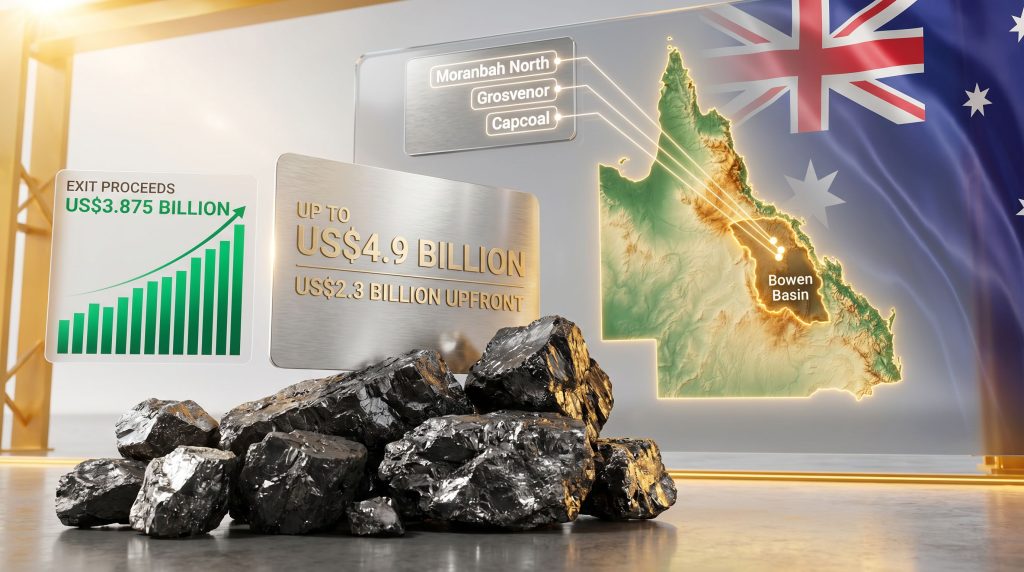
The Anglo American sale of steelmaking coal business to Dhilmar, announced in May 2026, represents one of the most consequential chapters in this ongoing restructuring. At up to US$3.875 billion, the transaction is not merely a divestment. It is the final act of a deliberate, multi-year transformation that converts a portfolio of world-class Queensland metallurgical coal assets into balance sheet liquidity, strategic focus, and merger readiness.
Understanding why this deal matters requires looking well beyond the headline numbers.
When big ASX news breaks, our subscribers know first
Deal Structure: How the Anglo American–Dhilmar Transaction Is Constructed
The architecture of the Anglo American–Dhilmar agreement reflects a sophisticated approach to pricing a long-lived, cyclical asset in a volatile commodity environment. Rather than settling on a single fixed price, both parties agreed to a two-component cash consideration structure that distributes commodity risk across time.
The total consideration of up to US$3.875 billion breaks down as follows:
| Component | Value | Share of Total |
|---|---|---|
| Upfront cash payment (at completion) | US$2.3 billion | ~59.4% |
| Price-linked earnout | Up to US$1.575 billion | ~40.6% |
| Total maximum consideration | US$3.875 billion | 100% |
| Aggregate coal exit proceeds (incl. Jellinbah) | Up to US$4.9 billion | N/A |
The upfront payment of US$2.3 billion provides Anglo American with immediate, tangible balance sheet relief upon completion, which is targeted for the first quarter of 2027. Completion remains subject to customary competition and regulatory clearances, along with pre-emption arrangements.
The earnout mechanism is the more structurally interesting element. By linking up to US$1.575 billion in additional consideration to future steelmaking coal prices, both parties avoid the fundamental problem of pinning a single valuation on an asset whose intrinsic worth fluctuates significantly with global steel demand cycles, Chinese infrastructure spending, and Australian export pricing. Furthermore, this structure reflects broader mining sector consolidation trends, where deal architects increasingly prefer flexible pricing mechanisms over rigid fixed-price frameworks.
"This structure effectively means Dhilmar pays more if coal markets perform strongly after completion, and less if prices remain subdued. It is a mechanism that shares commodity risk rather than one party bearing it entirely."
When combined with approximately US$1 billion received from the earlier sale of Anglo American's interest in the Jellinbah mine, total aggregate proceeds from the company's complete exit from steelmaking coal reach up to US$4.9 billion, representing a substantial capital recycling event ahead of the planned Teck Resources merger.
Why Anglo American Is Walking Away From Steelmaking Coal
The Strategic Logic of Portfolio Simplification
The decision to sell the Australian steelmaking coal portfolio did not emerge in isolation. It is the culmination of a deliberate, years-long strategic realignment in which Anglo American has been systematically repositioning itself toward metals that carry strong alignment with the global energy transition, particularly copper, platinum group metals, and iron ore.
Several forces have converged to make this exit both logical and timely:
- Institutional investors managing large pools of capital have applied increasing pressure on publicly listed mining majors to reduce coal exposure, with a growing number of sovereign wealth funds, pension managers, and ESG-focused asset managers restricting or prohibiting investment in coal-producing companies.
- Anglo American's planned merger with Teck Resources, which is itself copper-focused, creates a strategic imperative to streamline the existing portfolio, reduce debt, and eliminate business segments that complicate the combined entity's narrative for investors.
- Carbon-intensive mining operations have become progressively more difficult to align with long-term sustainability commitments, particularly as regulators in Europe and Australia continue developing stricter emissions reporting frameworks.
- The proceeds deployment target of net debt reduction directly addresses balance sheet priorities ahead of the Teck integration, where a stronger credit profile reduces refinancing risk and improves borrowing costs.
From Diversified Miner to Focused Operator
The Dhilmar transaction completes a transformation that has been underway for several years. By exiting steelmaking coal entirely, Anglo American removes a business segment that, despite its high asset quality, has become increasingly misaligned with the company's forward-looking capital allocation framework.
Importantly, this is not a transaction born of operational failure. Anglo American CEO Duncan Wanblad described the agreement as a reflection of the high quality of the assets and workforce being transferred, positioning the sale as a strategic choice rather than a response to deteriorating fundamentals. In addition, the broader shift in critical minerals demand has reinforced Anglo American's conviction that capital is better deployed in copper and platinum group metals than retained in metallurgical coal.
The Assets: Inside Anglo American's Australian Steelmaking Coal Portfolio
Queensland's Bowen Basin: Why These Mines Matter
The portfolio transferred to Dhilmar is concentrated in Queensland's Bowen Basin, one of the world's premier hard coking coal provinces. These are not marginal assets. They supply blast-furnace steel producers across Japan, South Korea, India, and Europe with premium-grade metallurgical coal that commands meaningful price premiums over thermal coal benchmarks.
The full breakdown of Anglo American's interests being divested is as follows:
| Asset | Anglo American's Interest |
|---|---|
| Moranbah North Joint Venture | 88.0% |
| Grosvenor Joint Venture | 88.0% |
| Capcoal Joint Venture | 70.0% |
| Roper Creek Joint Venture | 86.36% |
| Dawson Joint Venture | 51.0% |
| Dawson South Joint Venture | 51.0% |
| Dawson South Exploration JV | 51.0% |
| Theodore South Joint Venture | 51.0% |
| Moranbah South Joint Venture | 50.0% |
Asset Quality and Geological Significance
Moranbah North stands as one of the highest-quality underground metallurgical coal operations in Australia. Its low-volatile hard coking coal product sits at the premium end of the global metallurgical coal quality spectrum, with low-volatile hard coking coal (LVHCC) typically attracting prices well above the benchmark Prime Hard Coking Coal index. These properties make Moranbah North coal particularly prized by integrated steelmakers who depend on coke strength parameters that lower-rank coals cannot reliably deliver.
Hard coking coal quality is assessed through a series of technical parameters that are not widely understood outside the industry:
- Vitrinite reflectance (Ro%): A measure of coal rank. Higher Ro% values indicate lower volatile matter content, which correlates with superior coke strength. Premium low-volatile hard coking coals typically display Ro% values in the range of 1.4 to 1.8%.
- Coke Strength after Reaction (CSR): A critical parameter for blast furnace operators measuring how well coke maintains its structural integrity after reacting with carbon dioxide at high temperatures. Premium coals consistently deliver high CSR values.
- Volatile matter content: Lower volatile coals burn more predictably in coke ovens, producing denser, stronger coke that can support the weight burden within a blast furnace.
Grosvenor represents a long-life underground asset with substantial reserve depth, though it has faced operational challenges in recent years that have affected production continuity. The pace of its operational ramp-up will be a significant determinant of Dhilmar's ability to service existing customer contracts and, critically, to realise the full earnout component of the purchase price. This creates a direct alignment of interest between Dhilmar's ownership economics and the operational recovery of the asset.
Capcoal and the Dawson-related joint ventures represent a diversified mix of longwall underground and open-cut operations, providing portfolio balance across different production methods and geological settings within the Bowen Basin.
"The geographic concentration of all portfolio assets within Queensland's Bowen Basin creates significant operational synergies that a focused private operator can exploit more efficiently than a diversified multinational managing global priorities simultaneously."
Who Is Dhilmar, and What Does the Buyer Profile Reveal?
Understanding the Acquirer
Dhilmar Limited is a privately held, UK-registered mining company whose leadership carries demonstrated operational experience across major mining assets in Southeast Asia and Canada, including prior exposure to steelmaking coal operations. This background is material to the transaction's credibility.
Unlike publicly listed mining companies that face quarterly earnings scrutiny, mandatory ESG disclosures, and investor mandate pressures that constrain their ability to maintain coal exposure, Dhilmar operates within a private capital structure that enables a genuinely long-duration view of commodity cycles. This structural distinction is increasingly important in understanding why coal assets are finding natural homes in private ownership. Reuters reported the deal as a landmark transaction in the ongoing repositioning of major mining portfolios.
The Public-to-Private Migration of Coal Assets
The Dhilmar acquisition reflects a structural pattern that has been building across global coal markets for the better part of a decade:
- A publicly listed mining major faces increasing investor pressure to divest coal assets on ESG or strategic grounds.
- A privately held operator, unconstrained by public market sentiment, identifies the fundamental asset quality as sound and acquires the portfolio at terms that reflect a patient capital perspective.
- The private owner manages the assets through commodity cycles, extracting value over a time horizon that public company earnings models cannot easily accommodate.
This dynamic has already played out across Australian, Colombian, and South African coal markets over the past several years. The Dhilmar acquisition represents its latest and largest iteration in the Australian metallurgical coal sector.
The Southeast Asian and Canadian operational experience within Dhilmar's leadership team signals genuine familiarity with the regulatory complexity, workforce dynamics, and logistical infrastructure requirements of managing large-scale underground coal operations — factors that go well beyond financial structuring capabilities.
The Peabody Arbitration: A Parallel Legal Process With Financial Implications
How the Previous Sale Agreement Unravelled
A dimension of this transaction that introduces meaningful complexity is the concurrent arbitration proceeding between Anglo American and Peabody Energy. In November 2024, Anglo American had agreed to sell the identical steelmaking coal portfolio to Peabody. That agreement was subsequently terminated by Peabody, which cited an incident at the Moranbah North mine as constituting a Material Adverse Change (MAC) under the terms of the original sale agreement. Peabody's coal bid had been closely watched by the sector before its unexpected collapse following the disputed MAC invocation.
MAC clauses in mining acquisition agreements are legally complex instruments. They are designed to protect buyers from fundamental deteriorations in asset value between signing and completion. However, determining whether a specific operational incident qualifies as a MAC typically involves highly contested factual and legal analysis, with courts and arbitrators generally applying a high evidentiary threshold before finding in favour of a buyer seeking to invoke one.
Anglo American's Legal Position
Anglo American has stated clearly that it disputes Peabody's characterisation of the Moranbah North incident as constituting a MAC event under the original agreement. The company continues to pursue arbitration proceedings against Peabody in parallel with the Dhilmar transaction, maintaining confidence in its legal position.
Several implications flow from this parallel process:
- A successful arbitration outcome would deliver additional financial recovery to Anglo American beyond the proceeds generated through the Dhilmar transaction.
- The arbitration timeline may extend beyond the Q1 2027 target completion date for the Dhilmar transaction, meaning Anglo American could be simultaneously completing the Dhilmar sale and prosecuting the Peabody claim.
- The fact that Dhilmar proceeded to sign a binding agreement for the same assets that Peabody terminated effectively undermines the commercial logic of any MAC argument, since a credible private buyer was willing to acquire the portfolio at substantial value following the disputed incident.
The next major ASX story will hit our subscribers first
Global Steel Supply Chains: What Changes Under New Ownership?
The Metallurgical Coal Market Context
Australian hard coking coal remains the globally recognised benchmark product for blast-furnace steelmaking. The Bowen Basin operations included in this portfolio supply integrated steel mills across Northeast and Southeast Asia and Europe, markets where blast-furnace steelmaking continues to account for the dominant share of production despite growing investment in electric arc furnace technology. Consequently, the China steel outlook remains a critical variable in assessing the long-term earnings potential of the assets now transferring to Dhilmar.
The long-term trajectory of steelmaking coal demand involves competing forces:
| Factor | Short-Term Outlook | Long-Term Outlook |
|---|---|---|
| Asian infrastructure demand | Robust, particularly India and Southeast Asia | Gradually moderating as economies mature |
| Chinese steel production | Transitioning toward capacity rationalisation | Structural decline in coal-based intensity |
| Electric arc furnace adoption | Growing market share in developed markets | Significant headwind for metallurgical coal demand in OECD |
| Indian blast furnace expansion | Strong pipeline of new capacity | Key demand growth driver through the 2030s |
| Grosvenor operational recovery | Ramp-up ongoing | Material production upside if fully restored |
| Ownership transition impact | Minimal disruption expected | Private operator may pursue volume optimisation |
Supply Continuity Under Dhilmar
Anglo American CEO Duncan Wanblad confirmed that both companies will collaborate to ensure a successful transition across all stakeholder groups, including the workforce, local communities, government bodies, customers, and commercial partners. Long-term offtake relationships with major Asian steel producers are widely expected to remain intact through the ownership change, as these are commercial arrangements tied to the mine assets rather than the corporate parent.
The Grosvenor mine's production recovery trajectory represents the most significant operational variable post-completion. Full restoration of its production capacity would meaningfully strengthen Dhilmar's financial position, enhance its ability to service existing contracts, and potentially unlock the upper range of the earnout mechanism, creating a direct link between operational performance and the final consideration paid to Anglo American. ABC News noted the significance of the transaction for Queensland's resource communities and the broader regional economy.
The Sector Restructuring Context: A Mining Industry in Transition
How the Major Miners Have Repositioned
The Anglo American sale of steelmaking coal assets to Dhilmar does not occur in a vacuum. It is the latest chapter in a sector-wide reshaping of mining portfolios that has accelerated considerably over the past decade:
- BHP completed its thermal coal exit through the South32 demerger in 2015, subsequently divesting further coal interests over the following years as part of ongoing portfolio simplification.
- Rio Tinto completed a full exit from coal over the preceding decade, systematically eliminating the commodity from its portfolio in favour of iron ore, copper, and aluminium.
- Glencore remains the notable exception among diversified majors, retaining both metallurgical and thermal coal as core earnings contributors while managing a separate transition commitment, representing a fundamentally different strategic philosophy from its peers.
- Anglo American's complete coal exit now leaves Glencore as the primary listed global mining major with meaningful steelmaking coal exposure, creating a significant structural distinction between the two companies' investor propositions.
The Capital Reallocation Thesis
The proceeds from coal divestments across the mining sector are being systematically redirected toward copper, lithium, and critical minerals projects, reflecting two converging forces: institutional investor mandate pressure and genuine strategic conviction that energy transition metals offer superior long-run return profiles relative to commodities facing structural demand headwinds.
The Anglo American–Teck Resources merger is itself copper-centric by design, reinforcing the directional logic of the steelmaking coal exit. Furthermore, proceeds deployed toward net debt reduction directly improve the credit metrics of the combined entity, reducing refinancing costs and enhancing financial flexibility for the capital-intensive copper development pipeline that lies at the heart of the merged company's growth strategy.
Key Takeaways: What the Anglo American–Dhilmar Deal Means
The transaction carries implications that extend well beyond Anglo American's own balance sheet:
- The US$2.3 billion upfront payment delivers immediate balance sheet relief while the price-linked earnout of up to US$1.575 billion preserves Anglo American's participation in potential coal price upside without retaining operational exposure.
- Aggregate proceeds of up to US$4.9 billion from the complete coal exit represent a substantial capital recycling event that fundamentally reshapes Anglo American's commodity exposure profile.
- Dhilmar's private capital structure positions it as a natural long-term steward of assets that are operationally excellent but no longer compatible with the ESG and strategic frameworks of listed mining majors.
- The concurrent Peabody arbitration represents a potential source of additional financial recovery for Anglo American that is entirely separate from the Dhilmar transaction proceeds.
- The migration of premium metallurgical coal assets from public to private ownership is a structural sector trend, not a one-time event, with significant implications for how global steel supply chains are owned and managed through the remainder of this decade.
- Global steel supply chains should experience minimal disruption from the ownership transition, with both parties committed to operational continuity across all stakeholder groups.
Disclaimer: This article is intended for informational and educational purposes only. It does not constitute financial advice, investment guidance, or a recommendation to buy or sell any securities. Commodity price forecasts, earnout projections, and merger timelines discussed in this article are subject to material uncertainty and should not be relied upon as predictions of future outcomes. Readers should conduct independent due diligence and consult qualified financial advisors before making investment decisions.
Want to Capitalise on the Next Major ASX Mineral Discovery Before the Market Moves?
While major mining portfolios continue to reshape around critical minerals and copper, the real opportunity for investors lies in identifying significant new discoveries the moment they are announced. Discovery Alert's proprietary Discovery IQ model scans ASX announcements in real time, delivering actionable alerts across more than 30 commodities — explore historic discoveries and their returns to understand what early positioning can mean, then begin a 14-day free trial at Discovery Alert to ensure you are never late to the next transformative find.