June 4, 2026
Strategic energy dynamics across Africa are experiencing unprecedented shifts as deepwater exploration technologies unlock previously inaccessible reserves, creating new competitive landscapes among continental producers. The intersection of technological advancement, infrastructure development, and geopolitical positioning has established conditions where single discoveries can reshape national economic trajectories and regional market hierarchies. Understanding these developments requires analysis of multiple interconnected factors: reservoir engineering capabilities, existing infrastructure leverage, fiscal policy frameworks, and global crude market positioning.
The emergence of satellite development strategies, where new discoveries utilise existing production facilities, has fundamentally altered the economics of offshore oil development. This approach reduces capital intensity while accelerating time-to-market, creating strategic advantages for nations with established deepwater infrastructure. Simultaneously, the evolving global energy landscape has intensified competition among African producers as traditional production centres face natural decline challenges and infrastructure limitations.
Strategic Economic Implications of Angola's Latest Deepwater Discovery
Revenue Generation Potential Across Price Scenarios
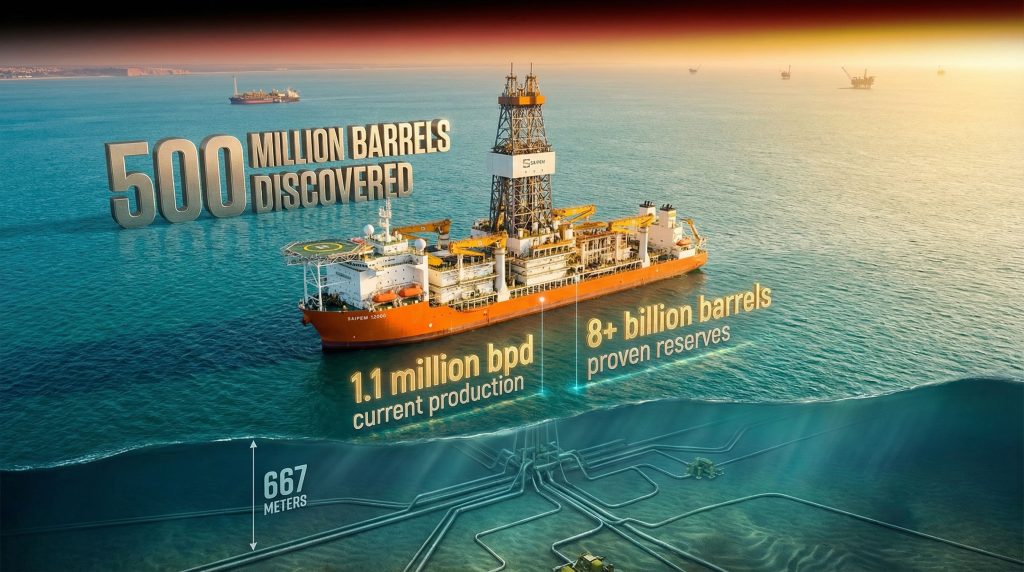
The recent 500 million-barrel oil discovery in Angola at the Algaita-01 well represents a significant addition to the nation's petroleum reserves, with preliminary estimates suggesting substantial economic impact potential across various oil price environments. At current market conditions, the gross revenue potential ranges from $35 billion at $70 per barrel to $45 billion at $90 per barrel, though actual recovery factors typically achieve 25-40% of oil in place for deepwater developments.
Angola's economic structure amplifies the importance of this discovery, given that oil accounts for more than 90% of export revenues and approximately one-third of GDP. This petroleum dependency creates both opportunity and vulnerability, making production stabilisation critical for fiscal planning and economic diversification efforts.
The revenue modelling becomes particularly relevant when considering Angola's budget dynamics. Historical analysis indicates the nation requires oil prices above $60 per barrel to achieve fiscal balance, though this threshold varies with production levels and global economic conditions. Furthermore, understanding oil price rally trends becomes crucial for accurate revenue forecasting across different market scenarios.
Infrastructure Leverage Creates Development Acceleration
The strategic positioning of the Algaita-01 well 18 kilometres from the existing Olombendo FPSO vessel creates exceptional development economics rarely available in frontier exploration. This proximity eliminates the need for standalone facility construction, potentially saving $500 million to $1.2 billion in capital expenditure compared to greenfield FPSO installations.
Satellite development timelines typically range 24-36 months from final investment decision to first oil, significantly faster than the 4-6 year development cycles required for standalone deepwater projects. This acceleration has profound implications for Angola's production profile and government revenue timing, particularly as the nation seeks to counter natural decline from aging fields.
The technical specifications support this optimistic timeline. Drilled in 667 metres of water using the Saipem 12000 drillship, the well encountered oil-bearing sandstone formations across multiple Upper Miocene intervals, indicating potential for stacked reservoir development that could enhance per-well productivity and overall field economics.
When big ASX news breaks, our subscribers know first
Continental Production Hierarchy Reshaping
Competitive Positioning Among African Producers
Angola's position within Africa's oil production landscape reflects both opportunity and challenge. Current production of 1.1 million barrels per day represents a significant decline from the 1.8+ million barrel peak achieved in the late 2000s, primarily due to natural field depletion and infrastructure maintenance challenges.
The continental production hierarchy reveals strategic vulnerabilities among leading producers:
| Producer | Current Output (mbpd) | Strategic Challenges | Reserve Base |
|---|---|---|---|
| Nigeria | 1.3-1.4 | Pipeline security, theft, underinvestment | 37 billion barrels |
| Angola | 1.1 | Natural decline, aging infrastructure | 8+ billion barrels |
| Libya | 1.0-1.2 | Political instability, sanctions exposure | 48 billion barrels |
| Algeria | 1.0 | Gas focus, limited crude expansion | 12 billion barrels |
Nigeria's production leadership faces persistent constraints from pipeline theft and security challenges, creating market share opportunities for producers capable of stable, secure output. Libya's substantial reserve base remains vulnerable to political instability, while Algeria's strategic focus on gas exports limits crude production expansion potential.
Market Share Dynamics and Export Relationships
Angola's crude export portfolio demonstrates sophisticated market positioning, with China absorbing 40-50% of total shipments and India emerging as a significant secondary market seeking supply diversification. This customer base alignment proves strategically advantageous as Asian refiners increasingly configure processing units for medium-heavy crude grades like Angola's Girassol, Dalia, and Cabinda varieties.
The competitive landscape favours Angolan crude characteristics in specific refinery configurations. Nigerian Bonny Light commands premium pricing as a light sweet crude but faces supply constraints from infrastructure challenges. In addition, monitoring oil price trade dynamics reveals how global trading patterns influence regional crude marketing strategies.
Angola's medium-heavy crude blends align with refinery demand for diesel, gasoline, and petrochemical feedstock production, particularly in Chinese and Indian processing facilities. This demand-supply alignment creates strategic value beyond simple pricing considerations, establishing Angola as a reliable supplier for specific refinery configurations.
Technical Innovation and Operational Excellence
Advanced Reservoir Engineering Capabilities
The Algaita-01 discovery showcases sophisticated petroleum system validation through comprehensive data acquisition campaigns including fluid sampling that confirmed superior reservoir quality and favourable fluid characteristics. The presence of oil-bearing sandstones across multiple Upper Miocene intervals indicates potential for multi-zone development that could optimise drilling economics and enhance ultimate recovery.
Reservoir engineering analysis reveals several technical advantages:
- Stacked reservoir potential across multiple geological intervals
- Favourable permeability characteristics typical of Lower Congo Basin sandstones
- Efficient fluid mobility enabling sustained production rates
- Proven petroleum system validation reducing exploration risk for adjacent prospects
However, recent developments in offshore exploration demonstrate how exploration licenses impact can influence regional development strategies and investment flows.
Drilling Technology Integration and Operational Efficiency
The deployment of the Saipem 12000 drillship demonstrates technological capabilities essential for complex deepwater operations. With operational capacity exceeding the 667-metre water depth at Algaita-01, this vessel represents the technological sophistication required for Lower Congo Basin petroleum system development.
Drilling efficiency metrics, while not publicly disclosed for this specific well, typically demonstrate significant improvements in deepwater operations through:
- Real-time formation evaluation capabilities
- Advanced mudlogging systems for immediate geological assessment
- Integrated wireline operations for comprehensive reservoir characterisation
- Formation testing capabilities for fluid property determination
The successful completion of Algaita-01, spudded January 10, 2026, validates both the geological prospect model and the operational execution capabilities required for commercial development.
Post-OPEC Strategic Independence Framework
Production Decline Reversal Scenarios
Angola's 2023 OPEC exit represents a strategic pivot towards production optimisation unconstrained by quota limitations. This decision, following disagreements over output ceilings, indicates governmental assessment that quota restrictions conflicted with national production stabilisation objectives.
Critical Insight: Angola's production trajectory from 1.8+ million barrels per day in the late 2000s to current levels of 1.1 million barrels per day represents a 38% decline over approximately 15 years, driven primarily by natural field depletion and infrastructure maintenance challenges.
The Algaita discovery creates multiple production recovery scenarios:
Conservative Development Path:
- Additional 50,000-100,000 barrels per day within 24-36 months
- National production reaching 1.15-1.2 million barrels per day by 2027-2028
- Partial offset to continued decline in mature fields
Accelerated Development Scenario:
- Enhanced drilling campaigns adding 120,000-150,000 barrels per day
- Potential for 1.25+ million barrels per day national production
- Strategic positioning for additional Lower Congo Basin developments
Investment Attraction Without Quota Constraints
The elimination of OPEC quota restrictions creates strategic flexibility for international oil companies considering Angolan investments. Without production ceiling limitations, operators can optimise development plans based on reservoir performance and market conditions rather than artificial constraints.
This policy framework particularly benefits tie-back developments like Algaita, where infrastructure sharing economics improve with higher throughput volumes. Consequently, understanding broader geopolitical trade strategies becomes essential for international energy companies planning long-term African investments.
Joint Venture Structure and International Partnership Dynamics
Azule Energy Strategic Positioning
The partnership structure governing Block 15/06 reflects sophisticated risk-sharing and capability integration:
| Partner | Ownership | Strategic Contribution |
|---|---|---|
| Azule Energy (Eni-BP JV) | 36.84% | Operator expertise, technology, capital |
| Sonangol E&P | 36.84% | National oil company participation, local content |
| SSI Fifteen Limited | 26.32% | Financial partnership, risk sharing |
Azule Energy represents a 50/50 joint venture between Eni and BP, combining Italian deepwater expertise with British technical capabilities and global market access. This partnership structure provides operational redundancy and technological depth essential for complex offshore developments.
International Energy Company Strategic Objectives
The involvement of Eni and BP through Azule Energy reflects broader strategic positioning within African energy markets. Eni's extensive African portfolio includes significant positions across multiple countries, creating operational synergies and geological expertise transfer opportunities.
BP's participation balances energy transition commitments with conventional asset optimisation, demonstrating how major international oil companies maintain productive conventional assets while developing renewable energy capabilities. This dual approach provides financial stability for transition investments while meeting current energy demand requirements.
According to Azule Energy Chief Executive Officer Joe Murphy, the discovery results confirm the exceptional effectiveness of the petroleum system in Block 15/06, with infrastructure proximity strengthening development potential significantly.
Global Energy Transition Context and Market Positioning
Medium-Term Crude Demand Projections
Despite global energy transition momentum, medium-term oil demand projections through the 2030s indicate continued growth in Asian markets, particularly for transportation fuels and petrochemical feedstocks. Angola's crude quality characteristics align strategically with this demand profile, especially for diesel and petrochemical production applications.
The timing of the Algaita discovery proves advantageous amid constrained global upstream investment following years of capital discipline and energy transition focus. Reduced industry-wide exploration spending has created supply-side tightness that enhances the strategic value of new discoveries with favourable development economics.
Export Market Diversification Strategies
Angola's customer base diversification reflects sophisticated market risk management. Chinese refiners provide stable, high-volume demand for Angolan crude grades, while Indian market expansion creates competitive dynamics that can optimise pricing and contract terms.
The strategic importance extends beyond simple volume considerations. Chinese processing facilities configured for Angolan crude grades represent significant sunk costs that create switching barriers and customer loyalty. Similarly, Indian refiner investments in Angolan crude processing capabilities establish long-term relationship foundations that transcend short-term pricing fluctuations.
European destinations including Spain and the Netherlands provide geographic diversification and access to sophisticated refining infrastructure optimised for transportation fuel production. This market spread reduces dependence on any single geographic region while maximising crude quality premium capture.
The next major ASX story will hit our subscribers first
Development Timeline and Capital Requirements Analysis
Fast-Track Development Economics
The infrastructure tie-back development model creates exceptional project economics rarely available in frontier exploration. Capital expenditure requirements for 500 million barrel oil discovery in Angola satellite developments typically range $1.5-3 billion versus $3-5 billion for standalone facility construction.
Development timeline acceleration provides additional economic benefits through:
- Reduced pre-production carrying costs and financing expenses
- Earlier cash flow generation improving project net present value
- Lower technical risk through proven infrastructure utilisation
- Operational synergies with existing field management systems
Furthermore, understanding tariff investment impacts becomes crucial for international oil companies evaluating capital allocation across global portfolios.
Production Ramp-up and Plateau Maintenance
Industry benchmarking suggests satellite developments achieve production plateau within 6-18 months of first oil, significantly faster than standalone projects requiring 2-4 years for facility optimisation and production ramp-up completion.
The multi-interval reservoir architecture discovered at Algaita-01 supports sustained production plateau maintenance through:
- Sequential zone development extending productive life
- Infill drilling opportunities optimising reservoir drainage
- Enhanced recovery techniques maximising ultimate recovery factors
- Facility expansion potential accommodating additional satellite tie-backs
Local Content Integration and Technology Transfer
Regulatory Framework and National Content Requirements
The Angolan National Agency of Petroleum, Gas and Biofuels (ANPG) maintains sophisticated local content requirements designed to maximise domestic economic participation in petroleum developments. These mandates create opportunities for:
- Skills development programmes enhancing local technical capabilities
- Technology transfer initiatives building domestic expertise
- Supply chain localisation supporting indigenous business development
- Infrastructure development benefiting broader economic sectors
Paulino Jerónimo, Chairman and Chief Executive Officer of ANPG, emphasised that the discovery reaffirms the high potential of the Lower Congo Basin and the consistency of ongoing exploration strategy, creating favourable conditions for swift monetisation and positive impacts on national production and state revenues.
Strategic Workforce Development
The technical complexity of deepwater operations creates substantial workforce development opportunities across multiple skill categories:
- Petroleum engineering capabilities for reservoir management
- Marine operations expertise for offshore logistics
- Process engineering skills for facility operations
- Project management capabilities for development execution
These capability development programmes create long-term economic benefits extending beyond individual project lifecycles, establishing foundational expertise for future petroleum sector growth.
African Energy Security and Regional Integration
Continental Energy Independence Considerations
The Algaita discovery contributes to broader African energy security objectives by enhancing domestic production capabilities and reducing dependence on external crude imports for regional refining operations. This strategic positioning supports continental energy independence goals outlined in various African Union energy framework agreements.
Regional integration opportunities include:
- Intra-African crude trading relationships reducing external dependencies
- Refining capacity optimisation across continental facilities
- Infrastructure sharing agreements maximising facility utilisation
- Technical expertise exchange enhancing operational capabilities
Economic Diversification Through Petroleum Revenue Optimisation
Angola's petroleum-dependent fiscal structure requires strategic revenue management for economic diversification investments. The potential revenue streams from Algaita development could support:
- Sovereign wealth fund contributions for long-term fiscal stability
- Infrastructure development supporting non-petroleum economic sectors
- Education and training investments enhancing human capital development
- Technology sector initiatives reducing economic dependency on petroleum exports
The timing proves particularly strategic as global energy transition pressures create urgency for resource-dependent economies to diversify revenue sources while petroleum markets remain robust.
Risk Assessment and Development Uncertainties
Technical and Operational Risk Factors
Despite favourable development economics, the Algaita project faces several technical uncertainties requiring careful risk management:
- Reservoir performance validation through extended testing programmes
- Infrastructure integration challenges with existing FPSO operations
- Environmental compliance requirements for deepwater operations
- Operational weather constraints in Lower Congo Basin conditions
Market and Regulatory Considerations
Global energy market dynamics create both opportunities and challenges for new petroleum developments:
- Price volatility affecting project economics and investment timing
- Environmental regulations potentially constraining operational flexibility
- Geopolitical factors influencing market access and customer relationships
- Technology evolution impacting operational efficiency and cost structures
Frequently Asked Questions About Angola's Strategic Discovery
How quickly can this discovery begin producing oil?
Development timeline projections suggest 24-36 months from final investment decision to first oil production, assuming regulatory approvals proceed smoothly and infrastructure tie-back engineering proceeds without major complications. The proximity to existing Olombendo FPSO facilities significantly accelerates this timeline compared to standalone developments requiring new facility construction.
What makes this discovery different from previous Angolan finds?
The strategic advantage lies in infrastructure proximity and proven petroleum system validation. Unlike remote discoveries requiring extensive new infrastructure, Algaita-01's location 18 kilometres from existing facilities creates exceptional development economics. Additionally, detailed analysis from Bloomberg's coverage highlights how the multi-interval reservoir architecture across Upper Miocene formations suggests enhanced productivity potential compared to single-zone discoveries.
How will this affect global oil prices and supply chains?
While 500 million barrel oil discovery in Angola represents a significant find, the global oil market processes approximately 100 million barrels per day, meaning this addition provides marginal supply impact over its productive life. However, the strategic timing amid constrained global exploration spending enhances its relative importance for supply security, particularly for Asian markets seeking reliable crude supply diversification.
The development's success could influence broader Lower Congo Basin exploration activity, potentially leading to additional discoveries that collectively impact regional supply dynamics and African producer market positioning.
Disclaimer: This analysis contains forward-looking projections and market assessments based on current industry conditions. Actual development timelines, production rates, and economic outcomes may vary significantly due to technical, regulatory, and market factors beyond current control or prediction. Investment decisions should incorporate comprehensive due diligence and professional advisory consultation.
Ready to capitalise on the next major energy discovery?
Discovery Alert's proprietary Discovery IQ model delivers real-time notifications on significant ASX mineral and energy discoveries, transforming complex geological data into actionable investment insights that could position you ahead of major market movements. Explore how historic discoveries have generated substantial returns for early investors, then begin your 14-day free trial today to secure your market-leading advantage.