
May 19, 2026
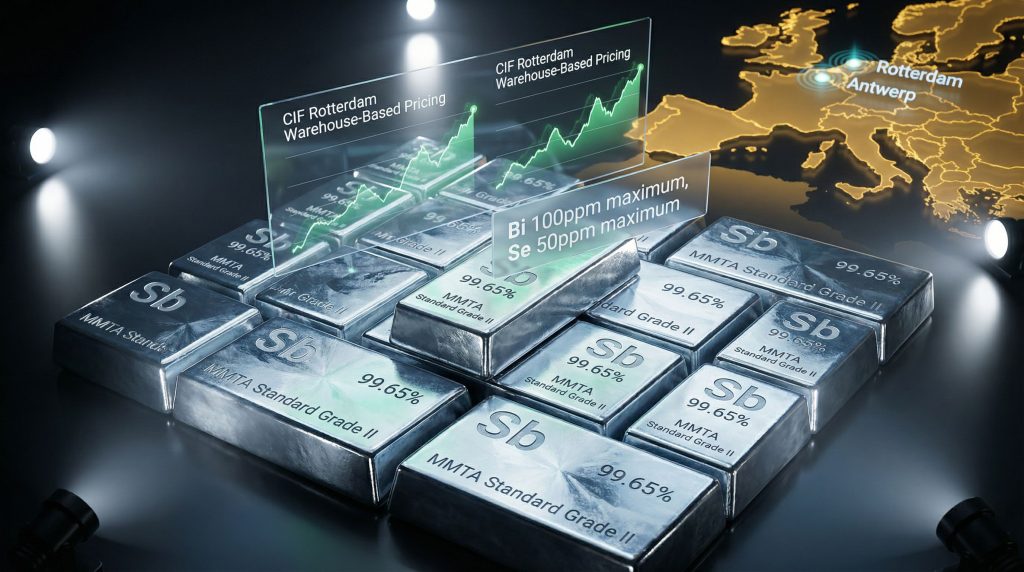
Global metal markets are experiencing unprecedented structural shifts as traditional pricing mechanisms struggle to capture the true cost dynamics of increasingly complex supply chains. The antimony sector exemplifies this challenge, where geographic production diversification and evolving logistics patterns have created significant disconnects between established benchmark prices and actual transaction values. Understanding these market forces provides crucial insight into why the proposal to launch antimony price assessments reflects broader mining industry evolution.
Market Forces Behind Antimony Pricing Reform Demands
Southeast Asian smelter expansion has fundamentally altered antimony market dynamics over the past several years. New production facilities in this region have adopted aggressive market penetration strategies, offering cost-and-freight (CIF) pricing structures substantially below European warehouse-held material to establish buyer relationships and secure market share.
The pricing divergence reflects more than simple competitive positioning. European warehouse operators maintain inventory carrying costs, storage fees, and handling charges that create structural cost floors. Meanwhile, Southeast Asian producers can absorb ocean freight and insurance expenses as customer acquisition costs, creating pricing gaps of 10-20% or more between comparable material qualities.
Regional Price Fragmentation Driving Assessment Gaps
This fragmentation has created multiple pricing tiers within what was historically treated as a unified European market. Industrial buyers now face complex total cost calculations when comparing immediate warehouse availability against forward delivery from producing regions. Furthermore, the development of sophisticated CIF price assessments has become essential for accurate market evaluation.
| Pricing Component | European Warehouse | Southeast Asian CIF |
|---|---|---|
| Storage Costs | €15-25 per tonne monthly | Absorbed by producer |
| Handling Fees | €8-12 per tonne | Included in freight |
| Insurance Premium | Buyer responsibility | Seller responsibility |
| Delivery Timeline | Immediate availability | 60-90 day shipping window |
| Payment Terms | Prompt settlement | Extended credit terms |
Supply Chain Disruption Impact on Price Discovery
The antimony market has experienced what industry participants describe as a prolonged period of weak demand and ample supply, creating conditions where traditional pricing mechanisms fail to reflect actual trading activity. This oversupply environment has empowered producers to experiment with pricing strategies that would be unsustainable during balanced market conditions.
Key factors contributing to pricing disruption include:
- Excess global production capacity creating downward pressure on all pricing structures
- Inventory accumulation in European warehouses reducing turnover velocity
- New market participant entry from Southeast Asian facilities seeking volume growth over margin optimisation
- Extended payment terms becoming competitive differentiators rather than purely financial considerations
- Quality specification convergence reducing product differentiation between regional suppliers
Consequently, strategic antimony financing initiatives have emerged to address supply chain vulnerabilities. However, the impact of broader economic factors, including US–China trade impacts, continues to influence pricing dynamics.
Market participants increasingly recognise that single-location price assessment methodology inadequately represents the complexity of modern antimony supply chains, where geographic arbitrage opportunities create persistent pricing disparities.
The consultation period from January 26 through February 27, 2026 represents industry recognition that existing assessment frameworks require expansion to capture actual market transaction patterns. The proposed March 3, 2026 implementation date reflects urgency in addressing pricing transparency gaps that have developed over recent quarters.
When big ASX news breaks, our subscribers know first
Technical Specifications Defining Modern Trading Standards
Industrial antimony applications require precise chemical composition controls that vary significantly across end-use sectors. The proposal to launch antimony price assessments addresses this complexity by establishing two distinct grade classifications, each targeting specific industrial applications with tailored impurity limitations and physical form requirements.
Antimony Metal Trioxide Grade Requirements
The trioxide grade specification establishes a comprehensive trace element control framework designed for applications requiring broad impurity tolerance while maintaining optical and chemical performance characteristics. This grade targets flame retardant manufacturing, polymer additive production, and industrial catalyst applications where multiple trace elements must be controlled simultaneously.
| Parameter | Specification | Application Impact |
|---|---|---|
| Antimony (Sb) | 99.65% minimum | Base metal purity threshold |
| Bismuth (Bi) | 100 ppm maximum | Optical clarity in polymer applications |
| Selenium (Se) | 50 ppm maximum | Chemical reactivity control |
| Copper (Cu) | 200 ppm maximum | Electrical conductivity considerations |
| Iron (Fe) | 200 ppm maximum | Colour stability in end products |
| Lead (Pb) | 0.2% maximum | Regulatory compliance threshold |
The 99.65% minimum antimony content represents industry consensus on the quality floor separating high-purity industrial material from recycled or degraded feedstock. This threshold enables consistent performance across diverse manufacturing applications while providing cost advantages over ultra-high-purity grades.
Physical form requirements specify ingot configuration with original producer packaging on pallets or in wooden cases. This standardisation reduces contamination risk during international transport while ensuring compatibility with downstream processing equipment across different manufacturing facilities.
MMTA Standard Grade II Classification Framework
The MMTA Standard Grade II specification prioritises arsenic limitation (0.15% maximum) alongside selenium controls, reflecting regulatory compliance requirements in pharmaceutical intermediate production and chemical catalyst manufacturing where arsenic exposure creates liability concerns.
This grade classification serves industries where:
- Pharmaceutical applications require documented arsenic content below regulatory disclosure thresholds
- Food-grade chemical production demands compliance with contamination monitoring protocols
- Catalyst manufacturing benefits from reduced arsenic interference in chemical reaction processes
- High-value specialty applications justify premium pricing for enhanced purity specifications
The 0.15% arsenic maximum reflects international regulatory standards for materials used in consumer-facing applications. European pharmaceutical regulations and US FDA guidelines establish this threshold as the boundary between industrial-grade and consumer-safe material classifications.
Minimum quantity requirements of 25 tonnes (+/-2% tolerance) within 90-day delivery windows create standardised contract parameters that facilitate bulk trading while accommodating production scheduling flexibility for both buyers and sellers.
CIF Rotterdam/Antwerp Assessment Methodology Comparison
The introduction of cost, insurance, and freight (CIF) Rotterdam/Antwerp assessments addresses fundamental limitations in existing warehouse-based pricing that fails to capture international supply chain economics. This methodological expansion provides market participants with parallel pricing references that reflect different operational approaches to antimony procurement and distribution.
Delivery Timeline and Cost Structure Analysis
CIF pricing methodology incorporates comprehensive logistics costs absent from warehouse-based assessments, creating materially different economic frameworks for buyer evaluation. The 90-day delivery window embedded in CIF assessments introduces time-value considerations that immediate warehouse availability eliminates.
| Assessment Type | In-Warehouse Rotterdam | CIF Rotterdam/Antwerp |
|---|---|---|
| Delivery Timeframe | Immediate to 7 days | Within 90 days |
| Ocean Freight | Not applicable | $45-65 per tonne (Southeast Asia) |
| Marine Insurance | Buyer arrangement | Seller responsibility (0.1-0.2% of cargo value) |
| Port Handling | Warehouse retrieval only | Origin and destination charges |
| Currency Exposure | Minimal (prompt settlement) | Extended (90-day payment terms) |
| Inventory Risk | Transferred to buyer immediately | Seller retains until delivery |
The twice-weekly publication schedule (Wednesday and Friday, 2-3pm London time) provides enhanced price discovery frequency compared to many existing minor metal assessments. This cadence reflects antimony market volatility and the need for current pricing references in contract negotiations and risk management applications.
Price Discovery Mechanism Differentiation
CIF assessments capture global production cost dynamics rather than European inventory positioning premiums. This fundamental shift enables buyers to evaluate total cost of ownership across different supply chain configurations:
- Direct producer relationships utilising CIF pricing for long-term supply agreements
- Regional distributor partnerships leveraging warehouse inventory for immediate requirements
- Hybrid procurement strategies combining both approaches for inventory optimisation
- Risk management applications using price spreads for hedging geographic supply exposure
Market participants operating on CIF basis gain pricing transparency previously unavailable through warehouse-only assessments. This enhancement supports more informed trading decisions and reduces reliance on proprietary pricing data that may not reflect broader market conditions. In addition, these developments align with broader trends in iron ore price trends where multiple pricing mechanisms serve different market segments.
The proposed assessments acknowledge that modern antimony markets require multiple pricing references to accommodate diverse operational strategies and geographic supply chain configurations.
Strategic Market Development Implications
The proposal to launch antimony price assessments represents recognition that minor metal markets have evolved beyond single-location pricing paradigms. Strategic implications extend across multiple market participant categories, each gaining distinct advantages from enhanced price transparency and standardised quality specifications.
Industrial End-User Benefits and Applications
Manufacturing companies utilising antimony in production processes gain significant strategic advantages through improved cost visibility and supply chain risk assessment capabilities. The dual-grade assessment framework enables precise material specification matching to application requirements while maintaining pricing competitiveness.
Technology sector applications benefit substantially from enhanced quality controls:
- Semiconductor manufacturing requires consistent bismuth limitations (100 ppm maximum) to prevent carrier mobility degradation in silicon compounds
- Battery technology applications utilise MMTA Grade II specifications where arsenic content affects electrochemical performance
- Optical component production relies on trace element controls for maintaining transparency in polymer matrix materials
- Aerospace applications demand documented quality parameters for regulatory compliance and performance reliability
Chemical processing industries leverage the assessment framework for cost optimisation:
- Flame retardant production utilises trioxide grade specifications where multiple trace elements must be controlled simultaneously
- Catalyst manufacturing benefits from arsenic limitations in MMTA Grade II for reaction pathway optimisation
- Pharmaceutical intermediate production requires documented purity specifications for regulatory approval processes
- Polymer additive manufacturing relies on consistent quality parameters for end-product performance predictability
Trading and Risk Management Enhancement
Financial market participants and trading companies gain sophisticated tools for position management and arbitrage opportunity identification through parallel pricing assessment availability. The CIF/warehouse price spread creates measurable basis trading opportunities while providing risk management mechanisms for geographic supply exposure.
Enhanced price discovery supports:
- Inventory optimisation strategies using spread relationships between immediate and forward pricing
- Supply chain diversification through improved visibility into regional production cost advantages
- Contract negotiation leverage utilising multiple pricing references for competitive benchmarking
- Risk hedging applications where CIF/warehouse spreads provide geographic arbitrage protection
The 32-day consultation period (January 26 – February 27, 2026) enables comprehensive stakeholder input while maintaining implementation momentum toward the March 3, 2026 launch date. This timeline reflects urgency in addressing pricing transparency gaps that have developed during recent market volatility.
Industry Participation and Market Access Considerations
The consultation process for the proposal to launch antimony price assessments creates opportunities for direct market participant engagement in benchmark development while establishing data submission protocols that enhance assessment accuracy and market representation.
Stakeholder Engagement Framework
Market participants seeking to influence assessment methodology or provide pricing data face streamlined engagement processes designed to maximise industry input while maintaining assessment integrity. The consultation framework accommodates diverse participant types:
- Antimony producers seeking pricing transparency for production planning and market positioning strategies
- International trading companies requiring standardised benchmarks for contract negotiation and risk management
- Industrial end-users needing reliable cost forecasting tools for procurement budget development
- Financial market participants utilising pricing data for investment analysis and portfolio risk assessment
Data submission opportunities enable qualified market participants to contribute directly to price discovery processes. Requirements for data submitter status include:
- Demonstrated market activity through regular antimony trading or consumption
- Quality documentation capabilities for specification compliance verification
- Geographic market coverage representing diverse supply chain configurations
- Commitment to regular data provision supporting consistent assessment publication
Integration Within Fastmarkets Platform Ecosystem
The proposed assessments integrate within the Fastmarkets minor metals package, providing subscribers with comprehensive coverage across related specialty metal markets. This integration creates analytical advantages through cross-commodity relationship analysis and portfolio risk management applications.
Platform integration features include:
- Excel Add-in compatibility for direct data integration into analytical workflows
- API connectivity supporting automated data feeds for trading system integration
- Mobile application access enabling real-time price monitoring and alert functionality
- Historical data archives facilitating trend analysis and volatility modelling applications
Furthermore, Fastmarkets' proposal to launch antimony metal pricing demonstrates comprehensive market coverage expansion, while their antimony warehouse pricing initiative addresses regional trading requirements.
Industry feedback during the consultation period will determine final specification parameters and may influence implementation timing, reflecting Fastmarkets' commitment to market-driven assessment development.
The twice-weekly publication schedule aligns with market participant requirements for current pricing while recognising antimony market liquidity constraints that make daily assessment challenging to support with sufficient transaction data.
The next major ASX story will hit our subscribers first
Future Market Evolution and Assessment Framework Expansion
The introduction of CIF Rotterdam/Antwerp assessments establishes precedent for geographic pricing expansion that could extend to other regional trading hubs as antimony market development continues. This framework creates foundation for potential assessment multiplication addressing diverse regional supply chain configurations.
Potential Geographic Extension Scenarios
Market development patterns suggest possible expansion opportunities:
- Asian regional assessments reflecting growing consumption in electronics manufacturing hubs
- North American CIF pricing addressing transatlantic trade flow requirements
- Alternative European ports accommodating diverse logistics preferences and cost optimisation strategies
- Producer country FOB assessments providing upstream pricing visibility for mine-to-market cost analysis
Each geographic extension would require demonstrated market liquidity and participant engagement to ensure assessment reliability and industry acceptance. The consultation framework established for Rotterdam/Antwerp assessments provides tested methodology for evaluating expansion opportunities.
Technology Integration and Digital Enhancement
Digital transformation trends within commodity price discovery create opportunities for enhanced data collection and validation processes. Technology integration possibilities include:
- Blockchain-based trade verification for transaction authenticity confirmation
- IoT integration for quality specification validation during transport and delivery
- Machine learning applications for price pattern recognition and anomaly detection
- Real-time data feeds from automated trading platforms and electronic marketplaces
These technological capabilities could enhance assessment accuracy while reducing manual data collection requirements, potentially supporting higher publication frequencies or additional specification categories as market demand develops.
Market Maturation and Assessment Evolution
Minor metal markets typically experience assessment framework evolution as trading volumes and participant diversity increase. The antimony sector may follow similar development patterns observed in other specialty metals:
- Contract standardisation leading to futures market development potential
- Derivative instrument creation using assessments as underlying reference prices
- Clearing and settlement integration reducing counterparty risk through centralised mechanisms
- Regulatory oversight expansion as market significance increases within broader commodity ecosystems
This article contains forward-looking statements and market projections that involve inherent uncertainties. Actual market developments may differ materially from scenarios discussed. Readers should conduct independent analysis before making investment or trading decisions based on information presented.
The proposal to launch antimony price assessments represents a significant step toward enhanced market transparency in minor metals trading, with implications extending beyond immediate pricing improvements to encompass broader market development and standardisation trends that will shape antimony trading for years to come.
Searching for Your Next Strategic Metal Investment?
Discovery Alert's proprietary Discovery IQ model delivers instant notifications on significant ASX mineral discoveries, including strategic metals like antimony that are reshaping global supply chains. Explore why major mineral discoveries can generate substantial returns and begin your 30-day free trial today to position yourself ahead of market-moving announcements.