
June 17, 2026
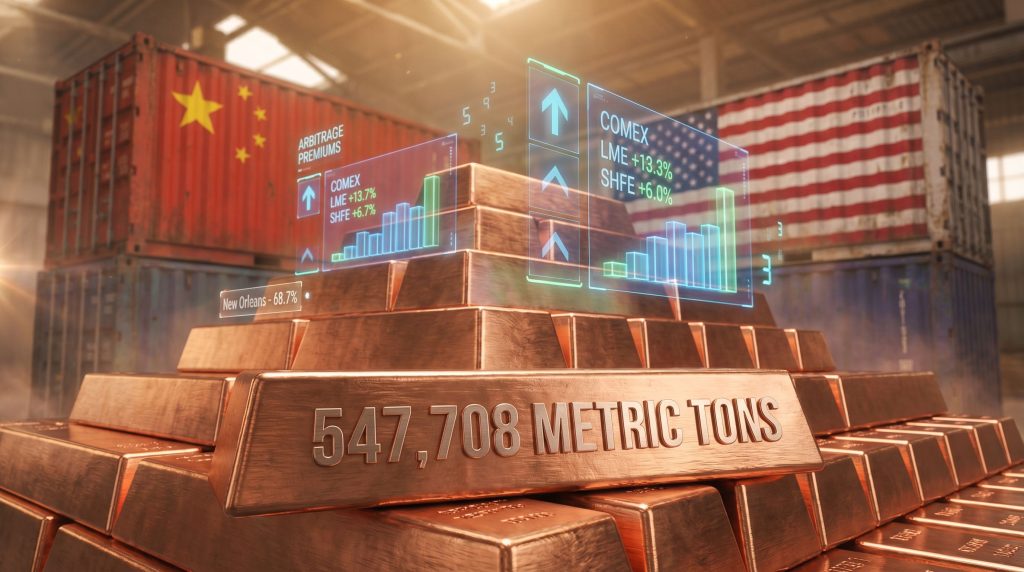
The global commodity trading landscape reveals intricate dynamics where macroeconomic forces create substantial arbitrage windows across international exchanges. These opportunities emerge when price differentials between major trading centers exceed the combined costs of transportation, storage, and financing, enabling sophisticated market participants to capitalise on temporary market inefficiencies. Understanding these mechanisms becomes crucial as geopolitical tensions and trade policy uncertainties reshape traditional commodity flows.
What Creates Arbitrage Opportunities in Global Copper Markets?
Understanding Price Differentials Between Major Exchanges
Arbitrage in commodity markets represents the simultaneous buying and selling of identical assets in different markets to profit from price discrepancies. For copper trading, these opportunities primarily occur between three major exchanges: the Commodity Exchange (COMEX) in New York, the London Metal Exchange (LME), and the Shanghai Futures Exchange (SHFE). When price gaps exceed the total cost of moving physical metal between locations, traders can execute profitable arbitrage strategies.
Key factors driving these price differentials include:
- Regional supply and demand imbalances affecting local pricing dynamics
- Currency fluctuation impacts on dollar-denominated versus local currency contracts
- Storage capacity constraints in specific geographic locations
- Transportation bottlenecks affecting delivery timing and costs
- Regulatory policy uncertainties creating risk premiums in certain markets
The recent surge in Comex copper stocks record high US arbitrage demonstrates how these arbitrage windows function in practice. This record inventory level of 603,745 short tons represents 547,708 metric tons and occurred when COMEX prices began trading higher than LME prices in April 2026, creating immediate profit opportunities for traders willing to ship physical copper to US warehouses.
The Economics of Cross-Border Metal Flows
Physical copper arbitrage requires careful calculation of multiple cost components that determine profitability thresholds. Transportation expenses typically include ocean freight rates, port handling fees, insurance costs, and inland delivery charges. These logistics costs fluctuate based on fuel prices, vessel availability, and seasonal shipping demand patterns.
Storage economics play an equally critical role:
- Warehouse rental fees varying by location and capacity utilisation
- Handling and inspection charges for physical metal movements
- Insurance premiums covering inventory during storage periods
- Financing costs for capital tied up in physical inventory positions
The concentration of 414,984 short tons (68.7% of total COMEX stocks) in New Orleans warehouses illustrates how storage location premiums influence trading decisions. This geographic clustering reduces inland transportation costs for market participants but creates potential bottlenecks during periods of high activity.
Furthermore, time value considerations become particularly important when arbitrage windows may close before physical delivery completion. Traders must evaluate whether price differentials will persist long enough to complete the full logistics cycle, typically requiring 30-45 days for transpacific copper shipments.
When big ASX news breaks, our subscribers know first
Why Are US Copper Inventories Reaching Historic Levels?
Trade Policy Uncertainty as a Market Driver
The current inventory accumulation pattern reflects sophisticated risk management responses to Section 232 tariff review processes. Refined copper received an exemption from tariffs during 2025, but this status remains under review with a decision expected in July 2026. This regulatory uncertainty creates powerful incentives for inventory hoarding behaviour among trading firms.
Market participants demonstrate strategic positioning through:
| Period | Inventory Response | Policy Driver |
|---|---|---|
| 2025 | Hundreds of thousands of tons imported | Tariff threat expectations |
| Early 2026 | Slight March decline | Temporary price normalisation |
| April 2026 | New record highs (603,745 short tons) | July decision uncertainty |
The 2025 precedent established behavioural patterns where market expectations of potential tariff implementation drove massive inventory accumulation, despite ultimate exemption. This demonstrates how policy uncertainty itself becomes a market-moving force independent of final regulatory outcomes. Moreover, considerations around tariff impact on markets continue to shape trading strategies.
Trading house risk management strategies recognise that defensive positioning costs less than potential tariff exposure. Even modest probability scenarios for tariff implementation justify significant storage expenses when considering the scale of copper trading operations.
Strategic Positioning by Global Trading Houses
Major commodity trading firms employ sophisticated inventory management frameworks during periods of regulatory uncertainty. These strategies combine traditional arbitrage mechanics with policy risk hedging to optimise portfolio positioning across multiple scenarios.
Advanced positioning techniques include:
- Scenario-based inventory targets accounting for various tariff implementation probabilities
- Geographic diversification across multiple warehouse locations to optimise logistics flexibility
- Financing optimisation through commodity-backed credit facilities and warehouse receipt programs
- Timeline management aligning physical positioning with anticipated regulatory decision dates
According to Mercuria's global head of metals, copper flows to US warehouses will continue at least until July when tariff decisions are expected. This timeline provides strategic clarity for inventory planning while maintaining positioning flexibility based on policy outcomes.
In addition, the New Orleans concentration pattern suggests coordinated logistics strategies among major traders, optimising both storage costs and distribution capabilities for North American markets. This geographic clustering enables efficient inventory management while maintaining rapid deployment capabilities.
How Do Geopolitical Tensions Reshape Copper Supply Chains?
Regional Premium Structures and Their Evolution
Geopolitical developments fundamentally alter regional premium structures across global copper markets. These premiums represent the additional costs above exchange prices that consumers pay for physical metal delivery in specific locations. Recent tensions between major economies have created increasingly fragmented pricing structures.
Traditional supply chain patterns face disruption through:
- South American export route diversification as producers seek market alternatives
- Asian integration challenges affecting China's copper import patterns
- European supply security initiatives reducing dependence on single-source suppliers
- North American reshoring trends prioritising domestic and allied-nation sourcing
These structural changes create persistent arbitrage opportunities as regional pricing becomes disconnected from historical correlation patterns. Market participants must navigate increasingly complex logistics networks while managing elevated country-specific risks. Consequently, copper stocks tariff impact analysis becomes essential for strategic planning.
Critical Minerals Classification Impact
Government designation of copper as a critical mineral across multiple economies fundamentally alters private market dynamics. This classification triggers strategic stockpiling initiatives, supply chain resilience requirements, and preferential trade policies that reshape traditional commodity flows.
Strategic importance designation creates:
- Government stockpiling programmes competing with private inventory accumulation
- Supply chain security mandates requiring source diversification
- Investment incentives for domestic production capacity expansion
- Trade policy preferences favouring allied-nation suppliers
Private sector responses to supply security concerns include vertical integration strategies, long-term supply agreements, and strategic partnership development with politically stable mining jurisdictions. These adaptations create new cost structures and pricing dynamics across regional markets.
What Economic Indicators Signal Arbitrage Window Closures?
Exchange Rate Fluctuations and Commodity Flows
Dollar strength significantly impacts US copper import economics by affecting the relative attractiveness of dollar-denominated COMEX pricing versus other currencies. When the US Dollar Index rises substantially, foreign suppliers face reduced purchasing power, potentially narrowing arbitrage opportunities.
Currency hedging strategies become crucial during volatile periods:
- Forward contract positioning to lock in favourable exchange rates
- Options structures providing downside protection while maintaining upside participation
- Cross-currency basis swaps optimising financing costs across different markets
- Regional currency exposure management balancing portfolio risks
The July 2026 tariff decision timeline creates a defined event horizon for currency hedging strategies. Market participants must evaluate whether current exchange rate levels support profitable arbitrage through this decision point.
Interest Rate Environment Effects on Storage Economics
Warehouse financing costs directly correlate with interest rate environments, making storage economics highly sensitive to central bank policy divergence. Higher rates increase the cost of carry for physical inventory positions, potentially closing arbitrage windows even when price differentials persist.
Cost of carry calculations must incorporate:
| Component | Rate Sensitivity | Impact on Arbitrage |
|---|---|---|
| Storage Fees | Low | Fixed costs regardless of rates |
| Insurance | Moderate | Some correlation with economic conditions |
| Financing | High | Direct correlation with policy rates |
| Opportunity Cost | High | Alternative investment returns |
Central bank policy divergence between the Federal Reserve, European Central Bank, and Bank of England creates complex financing arbitrage opportunities that interact with physical copper arbitrage mechanics. Sophisticated traders optimise both commodity positioning and financing structures simultaneously.
How Do Supply Disruptions Amplify Market Dislocations?
Mine Production Volatility and Market Response
Operational disruptions at major copper mines create cascading effects across global supply chains, amplifying existing arbitrage opportunities while creating new regional pricing dislocations. These disruptions range from weather-related production delays to labour disputes and equipment failures.
Supply chain resilience testing during crisis periods reveals:
- Alternative sourcing capacity limitations when primary suppliers face disruptions
- Transportation route vulnerabilities affecting delivery reliability
- Warehouse capacity constraints during periods of elevated activity
- Financial system stress impacting trade financing availability
Market participants develop contingency sourcing strategies that prioritise supply security over cost optimisation during disruption periods. These risk management approaches create sustained premium structures that persist beyond initial disruption timeframes. For instance, understanding global copper production patterns helps traders anticipate potential disruptions.
Infrastructure Bottlenecks in Global Copper Trade
Port capacity constraints significantly affect arbitrage execution timing, particularly during periods of elevated commodity flows. Major copper trading hubs face periodic congestion that delays shipments and increases demurrage costs for traders.
Critical infrastructure limitations include:
- Berth availability at specialised commodity terminals
- Warehouse handling capacity during peak activity periods
- Inland transportation networks connecting ports to storage facilities
- Customs processing efficiency affecting clearance timelines
The New Orleans concentration of 68.7% of COMEX copper stocks demonstrates both the efficiency and vulnerability of centralised storage strategies. While this concentration optimises logistics costs, it creates potential bottlenecks during periods of rapid inventory changes.
What Investment Implications Emerge from Inventory Accumulation?
Copper Market Structure Evolution
Record inventory levels fundamentally alter market structure dynamics, shifting copper futures from backwardation patterns (where near-term prices exceed long-term prices) toward contango structures (where long-term prices exceed near-term prices). This transition affects investment strategies across the copper value chain.
Structural changes impact various market participants:
- Long-term investors benefit from contango structures through positive roll yields
- Industrial consumers face elevated near-term supply costs despite long-term price stability
- Mining companies experience margin compression from inverted price curves
- Financial investors encounter modified risk-return profiles in copper exposure
Volatility implications for derivatives markets become particularly significant as 603,745 short tons of COMEX inventory represents substantial physical backing for futures positions. This inventory cushion typically reduces price volatility but creates potential for sharp movements when inventory levels change rapidly. However, copper investment strategies must account for these evolving market dynamics.
Macroeconomic Signals from Metal Positioning
Copper inventory accumulation patterns serve as leading economic indicators, often anticipating changes in industrial production and manufacturing activity. The current record inventory levels suggest market participants expect either reduced demand growth or continued supply uncertainty.
Key economic relationships include:
| Indicator | Correlation with Copper Stocks | Predictive Value |
|---|---|---|
| Manufacturing PMI | Inverse (high stocks = low PMI) | 3-6 months leading |
| Industrial Production | Inverse | 2-4 months leading |
| Construction Activity | Inverse | 6-12 months leading |
| Infrastructure Spending | Inverse | 12-18 months leading |
Central bank policy implications of commodity hoarding extend beyond direct monetary policy to financial stability considerations. Elevated inventory financing requirements can strain commodity trading firm balance sheets, potentially requiring regulatory attention during stress periods.
The next major ASX story will hit our subscribers first
How Will Regulatory Changes Reshape Future Arbitrage Dynamics?
Trade Agreement Modifications and Market Access
USMCA provisions affecting North American copper trade create preferential treatment structures that alter traditional arbitrage calculations. These agreements establish reduced tariff rates, streamlined customs procedures, and enhanced trade finance mechanisms for qualifying transactions between member countries.
Bilateral trade relationships increasingly influence commodity flows through:
- Preferential tariff structures favouring specific trade partners
- Expedited customs clearance reducing logistics timelines and costs
- Enhanced trade finance availability improving working capital access
- Dispute resolution mechanisms providing greater commercial certainty
WTO dispute resolution processes affecting commodity tariff structures create additional uncertainty layers that sophisticated traders must navigate. These multilateral trade conflicts can persist for years, creating sustained arbitrage opportunities during resolution periods.
Environmental Regulations and Supply Chain Costs
Carbon border adjustment mechanisms represent emerging regulatory frameworks that will significantly impact copper trade economics. These environmental policies impose costs on imports from high-carbon-intensity production sources, creating new arbitrage dynamics based on production method sustainability metrics.
Green premium development in industrial metals includes:
- Carbon footprint certification requirements adding compliance costs
- Sustainability sourcing mandates limiting supplier options
- Environmental impact disclosure creating transparency obligations
- Renewable energy utilisation in production and transportation
Market participants must develop sustainability-integrated trading strategies that incorporate environmental compliance costs into arbitrage calculations. These considerations become increasingly important as major industrial consumers implement net-zero procurement policies.
What Strategic Positioning Opportunities Exist for Market Participants?
Hedging Strategies During Policy Uncertainty
Options structures for tariff risk management provide sophisticated approaches to navigate regulatory uncertainty while maintaining arbitrage positioning flexibility. These derivatives strategies enable traders to hedge against adverse policy outcomes while preserving profit potential from favourable decisions.
Advanced hedging techniques include:
- Barrier options activating only when specific tariff thresholds are reached
- Calendar spreads capitalising on time decay during decision periods
- Volatility trading exploiting elevated option premiums during uncertain periods
- Cross-commodity spreads diversifying policy risk across multiple metals
Currency exposure management becomes crucial when arbitrage positions involve multi-currency cash flows over extended periods. The July 2026 decision timeline provides specific risk horizons for currency hedging optimisation. Additionally, insights into copper & uranium investment trends can inform broader commodity hedging strategies.
Long-term Infrastructure Investment Considerations
Warehouse capacity expansion in strategic locations represents fundamental infrastructure investments that capitalise on sustained arbitrage opportunities. These projects require substantial capital commitments but provide competitive advantages during periods of elevated commodity flows.
Infrastructure optimisation strategies focus on:
| Investment Area | Strategic Benefit | Capital Requirement |
|---|---|---|
| Port Terminal Capacity | Reduced congestion delays | High ($50M-$200M) |
| Inland Warehouse Networks | Geographic diversification | Moderate ($10M-$50M) |
| Transportation Integration | Logistics cost optimisation | Moderate ($20M-$100M) |
| Technology Systems | Operational efficiency | Low ($1M-$10M) |
Technology integration for supply chain transparency enables real-time inventory tracking, automated compliance monitoring, and predictive logistics optimisation. These technological capabilities provide competitive advantages in rapidly changing regulatory environments.
The current Comex copper stocks record high US arbitrage situation of 603,745 short tons demonstrates both the opportunities and risks inherent in commodity arbitrage strategies. Market participants who successfully navigate these complex dynamics through sophisticated risk management, strategic positioning, and infrastructure investment will capture substantial value from ongoing market dislocations. Furthermore, copper futures stockpile data provides additional context for understanding current market conditions.
Disclaimer: This analysis is for informational purposes only and should not be considered investment advice. Commodity trading involves substantial risk and may not be suitable for all investors. Past performance does not guarantee future results. Readers should consult qualified financial professionals before making investment decisions.
Looking to Capitalise on Commodity Market Inefficiencies?
Discovery Alert's proprietary Discovery IQ model delivers real-time alerts on significant ASX mineral discoveries, instantly empowering subscribers to identify actionable opportunities ahead of the broader market. Understand why major mineral discoveries can lead to significant market returns by exploring Discovery Alert's dedicated discoveries page, showcasing historic examples of exceptional outcomes, and begin your 14-day free trial today to position yourself ahead of the market.