
June 13, 2026
The Architecture of Economic Statecraft in Critical Minerals
The global economy increasingly depends on a narrow set of critical materials that power everything from electric vehicles to quantum computers. When a single nation controls both production and pricing mechanisms for these essential inputs, the implications extend far beyond traditional commodity markets. The establishment of formalized pricing systems for rare earth elements represents a fundamental shift in how strategic resources are valued, traded, and allocated across international supply chains, particularly affecting the china rare earth price index.
This transformation reflects broader patterns in economic governance where state-directed approaches challenge market-based price discovery. The intersection of resource scarcity, technological dependency, and geopolitical strategy creates conditions where pricing mechanisms become tools of influence rather than simple market signals.
When big ASX news breaks, our subscribers know first
Understanding China's Rare Earth Price Index Framework
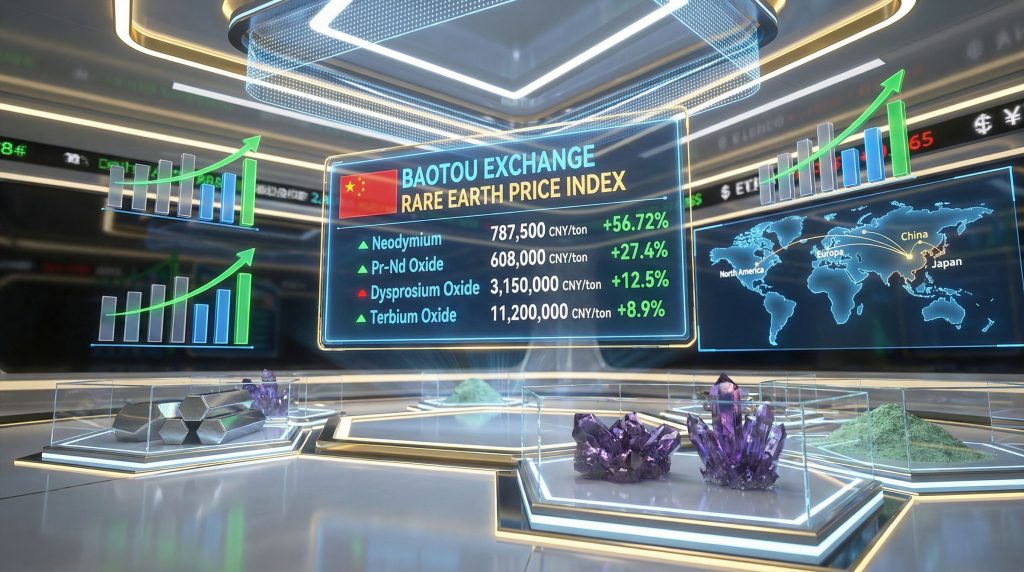
The china rare earth price index operates through the Baotou Rare Earth Exchange, creating an institutional framework that connects state-administered production quotas directly to price formation mechanisms. This system fundamentally differs from traditional commodity exchanges like the London Metal Exchange or Shanghai Futures Exchange, where prices emerge from decentralized trading activity among multiple market participants.
Institutional Structure and Market Participants
The Baotou Exchange operates with approximately 1,000 state-linked members who participate in price formation processes. These participants include state-owned enterprises, licensed processors, and approved trading entities, all operating within China's rare earth industrial ecosystem. The exchange integrates with Xinhua financial data distribution networks, ensuring rapid dissemination of pricing information across domestic and international markets.
Key structural elements include:
- Quota Integration: Production limits directly influence available supply for price discovery
- State Oversight: China Rare Earth Industry Association provides regulatory guidance
- Member Qualification: Strict criteria for exchange participation based on processing capabilities
- Data Distribution: Real-time pricing feeds through established financial information systems
Comparison with Traditional Commodity Pricing
Traditional commodity exchanges rely on supply and demand dynamics among diverse market participants to establish prices. The London Metal Exchange, for example, operates through open outcry and electronic trading systems where producers, consumers, traders, and financial participants interact freely. Price discovery emerges from the collective assessment of market conditions by these varied stakeholders.
China's approach centralises this process through state-coordinated mechanisms. Production quotas set by government agencies determine available supply, while approved exchange members participate in pricing within predetermined parameters. This creates a hybrid system where market mechanisms operate within state-defined boundaries.
Current Market Performance and Pricing Dynamics
Recent pricing data reveals significant volatility and growth patterns across different rare earth oxides, reflecting both underlying demand pressures and the impact of centralised pricing coordination. Furthermore, the china rare earth price index demonstrates how state-administered systems can amplify or dampen market signals.
Table: Rare Earth Oxide Price Performance Analysis
| Material | Current Price (CNY/ton) | Monthly Change | Annual Performance | Strategic Applications |
|---|---|---|---|---|
| Neodymium Oxide | 787,500 | +9.0% | +56.72% | Permanent magnets, EV motors |
| Pr-Nd Oxide Blend | 608,000 | -0.11% | +27.4% | Wind turbine generators |
| Dysprosium Oxide | 1,354,300 | +0.72% | N/A | High-temperature magnetic applications |
| Terbium Oxide | 6,006,400 | +0.42% | N/A | Phosphor compounds, lighting |
Seasonal Demand Patterns and Industrial Cycles
Post-holiday demand recovery in Chinese manufacturing sectors typically drives increased rare earth consumption during the first quarter. Industrial production cycles, particularly in electronics and automotive manufacturing, create predictable demand patterns that the centralised pricing system can anticipate and respond to more rapidly than traditional market mechanisms.
Export quota timing also influences quarterly price volatility. When export licences are issued, international buyers adjust procurement strategies, creating demand surges that the exchange pricing system captures in real-time. This coordination between export policy and price signals represents a sophisticated approach to managing international market access.
Geopolitical Implications and Strategic Considerations
The establishment of the china rare earth price index carries significant implications for international economic relationships and national security planning. Historical precedents, particularly the 2010 export restrictions that caused global rare earth prices to spike dramatically, demonstrate how supply control can translate into geopolitical leverage. Additionally, the US Critical Minerals Order reflects growing concerns about strategic resource dependencies.
National Security Dimensions of Pricing Control
Centralised pricing mechanisms enable coordination between economic policy and broader strategic objectives. Unlike market-driven price discovery, which responds primarily to commercial considerations, state-administered systems can incorporate geopolitical factors into pricing decisions.
This capability extends beyond direct price manipulation to include:
- Selective market access through differentiated pricing for different buyer categories
- Strategic stockpile management coordinated with price signals
- Export licensing integration that aligns trade policy with pricing strategy
- Technology transfer incentives embedded in long-term supply agreements
Allied Nation Response Strategies
Western governments increasingly recognise the strategic implications of Chinese pricing dominance in critical minerals. Response strategies focus on several key areas, particularly in light of broader US‑China Trade Impact concerns.
Supply Chain Diversification Initiatives:
- Public-private partnerships for alternative rare earth development
- Strategic reserve establishment programmes
- Research funding for recycling and urban mining technologies
- International coordination mechanisms for critical minerals security
Investment in Alternative Technologies:
- Rare-earth-free magnet development programmes
- Substitution research across multiple applications
- Efficiency improvements to reduce consumption requirements
- Next-generation recycling capabilities
Industry-Specific Impact Assessment
Different industrial sectors face varying degrees of exposure to Chinese pricing control based on their rare earth intensity and availability of alternative materials or suppliers. However, the Energy Transition in Minerals highlights the growing importance of secure supply chains.
Electric Vehicle Manufacturing Vulnerabilities
Electric vehicle production depends heavily on neodymium and dysprosium for permanent magnet motors. With neodymium prices showing 56.72% annual growth, EV manufacturers face increasing input costs that centralised pricing can amplify during periods of supply constraint.
Major automotive manufacturers are responding through:
- Long-term contract negotiations to secure price stability
- Motor technology diversification including induction motor alternatives
- Vertical integration considerations for magnet production capabilities
- Strategic partnerships with non-Chinese rare earth suppliers
Wind Energy Sector Dependencies
Wind turbine generators utilising permanent magnet technology rely heavily on Pr-Nd oxide blends. While current pricing shows relative stability with only a 0.11% monthly decline, the 27.4% annual increase demonstrates the underlying inflationary pressures in this market segment.
Wind energy developers are adapting through:
- Technology mix strategies balancing permanent magnet and gear-driven turbines
- Supply chain risk assessments incorporating geopolitical factors
- Procurement timing optimisation based on price index signals
- Financial hedging strategies for rare earth input costs
Investment Market Transformation
The establishment of centralised rare earth pricing creates new dynamics in both public and private investment markets, particularly affecting companies with exposure to alternative supply sources or downstream applications. Moreover, initiatives like the European Critical Materials Supply programme aim to reduce strategic dependencies.
Valuation Impact on Western Rare Earth Companies
Non-Chinese rare earth producers benefit from reduced price uncertainty and potential premium valuations as strategic alternatives to Chinese supply. Companies like Lynas Rare Earths and MP Materials experience enhanced investor interest due to their strategic positioning outside Chinese control.
Key valuation factors include:
- Supply security premiums for non-Chinese sources
- Processing capability valuations for downstream integration
- Strategic partnership potential with government and defence contractors
- Technology development assets for advanced separation and purification
Capital Allocation Shifts
Investment flows increasingly favour projects and companies that reduce dependence on Chinese rare earth supplies. This includes not only alternative mining and processing ventures but also recycling technologies, substitution research, and efficiency improvements.
Priority Investment Areas:
- Urban mining and recycling infrastructure development
- Alternative processing technologies outside China
- Rare-earth-free technology development
- Strategic stockpiling and inventory management systems
The next major ASX story will hit our subscribers first
Risk Management Framework for Global Stakeholders
Organisations dependent on rare earth inputs must develop comprehensive risk management approaches that address both price volatility and supply security concerns. Furthermore, understanding the Critical Minerals Strategy becomes essential for long-term planning.
Financial Hedging Strategies
Traditional commodity hedging mechanisms prove less effective when dealing with centralised pricing systems. Financial instruments must account for the possibility of non-market factors influencing price movements.
Effective hedging approaches include:
- Long-term supply agreements with price escalation clauses
- Strategic inventory positioning to buffer short-term disruptions
- Diversified supplier networks across multiple geographic regions
- Currency hedging for CNY-denominated transactions
Operational Risk Mitigation
Beyond financial hedging, companies must build operational resilience through supply chain design and technology choices that reduce rare earth dependencies.
Operational Strategies:
- Multi-sourcing requirements for critical rare earth inputs
- Alternative material qualification programmes
- Technology roadmaps prioritising efficiency improvements
- Collaborative industry initiatives for supply chain security
Future Market Evolution and Strategic Scenarios
The long-term implications of centralised rare earth pricing depend on technological developments, geopolitical relationships, and the pace of alternative supply source development. Consequently, the china rare earth price index will continue to evolve as market conditions change.
Technology Disruption Potential
Technological advancement in both recycling and substitution could significantly alter the strategic value of Chinese pricing control. Urban mining technologies that efficiently recover rare earths from electronic waste could create alternative supply sources outside traditional mining operations.
Research priorities include:
- Advanced separation technologies for recycled materials
- Rare-earth-free magnet alternatives for various applications
- Efficiency improvements reducing overall consumption requirements
- Synthetic biology applications for rare earth production and processing
International Coordination Mechanisms
Allied nations increasingly recognise the need for coordinated responses to Chinese rare earth dominance. This coordination extends beyond traditional trade policy to include research collaboration, strategic reserve coordination, and investment policy alignment.
Coordination Areas:
- Joint strategic reserve management among allied nations
- Coordinated research and development funding priorities
- Investment policy alignment for critical minerals projects
- Trade policy coordination regarding Chinese rare earth dependence
Building Resilient Critical Minerals Systems
Success in the transformed rare earth market requires understanding that traditional commodity market approaches no longer apply. The integration of state policy with pricing mechanisms creates new categories of risk and opportunity that stakeholders must navigate carefully.
Strategic Success Factors:
- Diversified supply networks reducing single-point-of-failure risks
- Technology flexibility enabling adaptation to material availability changes
- Financial resilience through appropriate hedging and inventory strategies
- Collaborative approaches leveraging industry and government partnerships
The establishment of China's rare earth price index represents more than a technical change in pricing methodology. It signals a fundamental shift toward state-coordinated approaches to critical materials management that challenge traditional market-based systems.
Organisations that recognise this transformation and adapt their strategies accordingly will be better positioned to navigate the evolving landscape of critical minerals markets. Those that continue to operate under traditional commodity market assumptions may find themselves increasingly vulnerable to supply disruptions and price volatility that extends beyond normal commercial considerations.
This analysis is based on publicly available information and market observations. Readers should conduct their own research and consult with qualified professionals before making investment or strategic decisions related to rare earth markets.
Looking to Capitalise on Critical Minerals Investment Opportunities?
Discovery Alert's proprietary Discovery IQ model delivers real-time alerts on significant ASX mineral discoveries, instantly empowering subscribers to identify actionable opportunities ahead of the broader market. Understand why historic discoveries can generate substantial returns by visiting Discovery Alert's dedicated discoveries page, showcasing exceptional outcomes from major mineral finds.