May 13, 2026
The Hidden Fragility Beneath Europe's Industrial Foundation
For decades, the economics of global aluminum trade made domestic production capacity seem almost irrelevant to European policymakers and industrial planners. Cheap imports from the Gulf, stable logistics networks, and low physical premiums created an environment where the question of where primary aluminum actually came from attracted little serious scrutiny. The continent's manufacturing base quietly became structurally dependent on supply chains it could not control, and no one was particularly alarmed.
That complacency has now been shattered. The disruption to bulk shipping through the Strait of Hormuz, triggered by the Iran conflict that began in late February 2026, has functioned as a live stress test for European aluminum supply chains. The results have been brutal, and they have forced a long-overdue reckoning with the continent's industrial vulnerability. Into this charged environment steps the Arctial aluminum plant in Finland, a greenfield primary smelter project that carries an extraordinary amount of strategic weight for a facility that has not yet broken ground.
Understanding why this project matters requires understanding how deeply compromised European aluminum supply has become, and why the region's industrial planners are now treating primary metal production as a strategic imperative rather than a commodity footnote.
When big ASX news breaks, our subscribers know first
Europe's Aluminum Supply Chain: Three Decades of Structural Erosion
The Numbers Behind the Dependency
Europe's primary aluminum output in 2025 reached 7.1 million metric tons, according to the International Aluminium Institute. That figure sounds substantial until it is disaggregated. Russia's Rusal alone contributed approximately 3.9 million tons of that total, meaning non-Russian European production stood at roughly 3.2 million tons. For a continent of Europe's industrial scale, this is a remarkably thin domestic base.
The gap between what Europe produces and what it consumes is bridged by imports, and that import structure has its own vulnerabilities. Approximately 1.2 million metric tons, representing around 20% of Europe's total primary and alloyed aluminum imports, were sourced from the Middle East and Egypt in the year prior to the current conflict, according to data from Trade Data Monitor. This concentration of supply in a geopolitically exposed region was a known risk that markets had simply chosen to price away during years of stable premiums.
What is particularly striking from a structural standpoint is the timeline of this vulnerability's construction. No new primary aluminum smelter has been commissioned in continental Europe since the early 1990s. Three decades of capacity stagnation, driven by a combination of high energy costs, environmental regulatory complexity, and the economic logic of importing cheaper metal from energy-abundant Gulf producers, has left Europe without meaningful domestic surge capacity. There is no reserve of idle domestic production that can be reactivated when import routes close.
Why This Dependency Is More Dangerous Than It Appears
The Gulf region's aluminum production capacity sits at approximately 7 million metric tons annually, representing roughly 9% of total global output, as reported by Reuters. For European buyers specifically, this supply is not merely significant — it is often price-setting for physical premiums. When Gulf supply flows uninterrupted, European premiums remain manageable. When it stops, as it effectively has since late February 2026, the European market has no ready substitute.
This dynamic distinguishes Europe from other major industrial regions. North American aluminum consumption is anchored by substantial domestic production capacity in energy-rich provinces, particularly Quebec's hydropower-fed smelters. Asian markets, while also reliant on trade flows, benefit from geographic proximity to Middle Eastern and Southeast Asian supply, as well as China's dominant domestic production base. Europe's combination of inadequate domestic capacity, high import dependency, and geographic exposure to the Strait of Hormuz represents a structurally unique vulnerability.
Furthermore, aluminium tariff impacts have compounded existing pressures on European buyers, adding yet another layer of cost and complexity to an already strained supply environment.
The Iran conflict has not created Europe's aluminum supply problem. It has simply made visible what decades of low premiums had obscured: the continent's industrial base rests on a supply chain architecture that was never designed to withstand serious geopolitical disruption.
The Premium Shock: What the Market Is Actually Saying
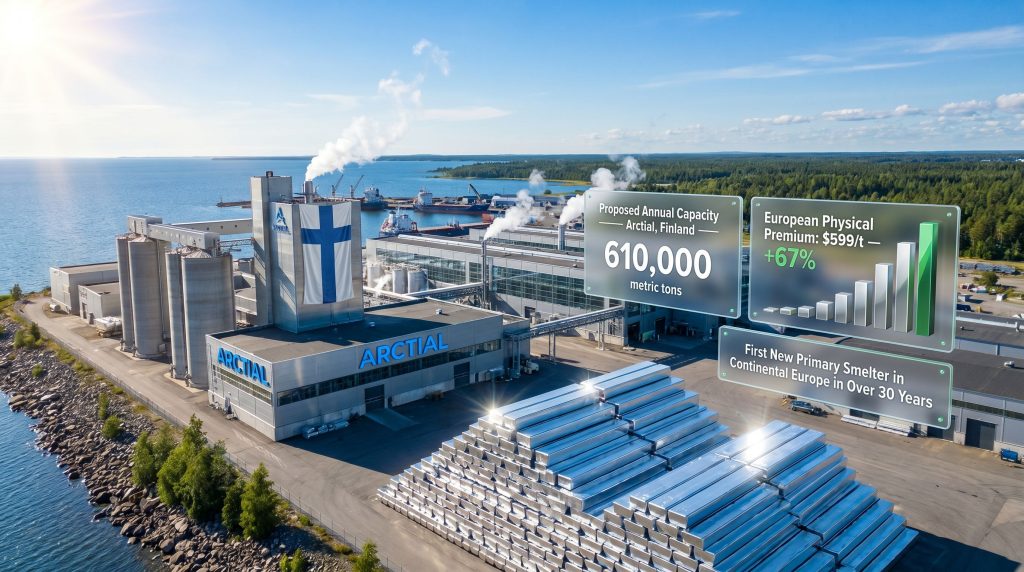
The speed and scale of the premium repricing since February 2026 has been extraordinary. European physical aluminum premiums — the amount buyers pay above the London Metal Exchange benchmark price to cover freight, taxes, and handling — reached $599 per metric ton by early May 2026. That represents a 67% increase from pre-conflict levels, according to Reuters reporting citing Fastmarkets data.
The Rotterdam market for aluminum extrusion billet, a critical product for the construction, automotive, and industrial sectors, has experienced an even more dramatic repricing. Premiums climbed from $530 per metric ton before the conflict to $1,152.50 per metric ton within weeks, according to Fastmarkets. This is not a modest adjustment. It is a near-doubling of the cost of securing physical supply in one of Europe's most important aluminum trading hubs.
These figures carry significant implications beyond immediate procurement costs:
- Downstream manufacturers in automotive, construction, and packaging sectors are absorbing substantially higher input costs with limited ability to pass them through quickly
- The premium spike is creating powerful economic signals about the value of domestic production capacity that did not exist in the pre-conflict pricing environment
- Every $100 per metric ton sustained increase in European aluminum premiums materially improves the long-run economics of new domestic smelting projects, potentially adding hundreds of millions of dollars in annual revenue uplift relative to pre-conflict baseline assumptions for a facility of Arctial's proposed scale
- The duration of elevated premiums will be a critical variable in determining whether the current investment case for new European smelting capacity survives a potential geopolitical resolution
Consequently, green metals pricing dynamics are increasingly shaping how buyers and producers alike assess long-term supply contracts and capital allocation decisions across the sector.
It is worth noting that a resolution of the Iran conflict and resumption of Strait of Hormuz shipping could reduce these premiums significantly. Investors and analysts monitoring the Arctial project should treat current premium levels as cyclically elevated rather than structurally permanent, even if the underlying supply chain vulnerabilities they have revealed are structural in nature.
The Arctial Aluminum Plant in Finland: Project Architecture and Industrial Significance
Scale, Location, and Historical Context
The Arctial aluminum plant in Finland is a proposed greenfield primary smelter development situated in Kokkola and Kronoby on Finland's west coast. The project is targeting annual production of 610,000 metric tons, a figure cited by Arctial's Chief Commercial Officer Maxime Vandersmissen at the CRU World Aluminium Conference in London in May 2026.
The headline statistic that positions this project within the European supply narrative is straightforward: Arctial's proposed output would represent a 20% increase in European aluminum production capacity, excluding Russia. In the context of a continent that has not built a new primary smelter in over 30 years, this is an extraordinary scale of capacity addition from a single project.
The project is targeting first hot metal production in the second half of 2029, subject to a Final Investment Decision (FID) currently expected in 2026 to 2027. The feasibility study commenced in the first quarter of 2025 and includes ongoing environmental impact assessments.
It should be noted clearly: even at full capacity, the Arctial aluminum plant in Finland would not fully close Europe's import gap. Europe's Middle Eastern and Egyptian import dependency alone ran to approximately 1.2 million tons annually prior to the conflict. Arctial's 610,000 tons would address roughly half of that specific exposure, leaving the remainder dependent on sourcing diversification, demand adjustment, or future capacity additions elsewhere.
Rio Tinto's AP60 Technology: A Global First Outside Canada
A dimension of the Arctial project that has received less attention than its scale is the technological specificity of its proposed production process. The facility will deploy Rio Tinto's AP60 smelting technology, an advanced electrolysis-based process for primary aluminum production. Critically, this would mark the first deployment of AP60 technology outside the Canadian province of Quebec. Rio Tinto aluminium operations have demonstrated the reliability of this technology platform across demanding industrial environments, lending further credibility to its proposed deployment at Arctial.
AP60 is a high-efficiency, low-emission smelting platform that offers meaningful advantages over legacy technologies in two areas that are particularly relevant to the European industrial context:
- Energy efficiency: AP60 consumes less electricity per ton of aluminum produced compared to older electrolytic cell designs, a critical consideration for a smelter whose economics are directly tied to its power costs
- Carbon intensity: Arctial's projected carbon footprint is approximately 40% below the European average for primary aluminum production and potentially 75% below the global average, a differentiation that carries direct commercial value in the current regulatory environment
This carbon performance is not purely a compliance consideration. It represents a genuine product differentiation opportunity. As Europe's Carbon Border Adjustment Mechanism (CBAM) increasingly penalises high-carbon aluminum imports, domestically produced low-carbon metal commands a structural premium from buyers seeking to manage their Scope 3 emissions profiles. Arctial's technology stack positions it to serve precisely this emerging market segment. In addition, the broader shift towards a low-carbon aluminium venture model is gaining traction across the industry, further validating Arctial's strategic direction.
Finland's Energy Advantage: The Foundation of the Carbon Story
The AP60 technology's efficiency gains are amplified by Finland's electricity generation profile. The country's grid draws from a combination of hydropower, nuclear, and wind generation, providing access to large-scale CO₂-free electricity supply at competitive industrial pricing. For a facility estimated to require approximately 7 TWh of electricity annually, securing genuinely low-carbon power at economically viable prices is foundational to the entire investment case.
This energy architecture creates a verifiable, certifiable low-carbon product suited to premium industrial supply chains in automotive, aerospace, electronics, and high-specification construction applications. The combination of AP60 technology with fossil-free Finnish electricity is what enables Arctial to credibly target the green aluminum premium segment rather than competing purely on cost. Fortum's energy partnership with Arctial further underscores this commitment, with the energy company serving as both equity investor and dedicated power supply partner.
The Partnership Consortium: Who Is Betting on Arctial
The Arctial project is not a single-sponsor development. It has attracted a multi-stakeholder industrial consortium, with Rio Tinto serving as the technology provider and lending its brand and credibility to the project as a core backer. The consortium structure reflects the scale of capital required and the diversity of expertise needed to execute a greenfield primary smelter of this complexity.
| Partner | Strategic Role |
|---|---|
| Rio Tinto | AP60 smelting technology provider |
| ABB | Electrification and advanced automation |
| Fortum | Renewable energy supply and investment |
| Siemens Financial Services | Project finance structuring |
| Mitsubishi Corporation | Feasibility study investor |
| Vargas | Equity investor |
| TESI (Finnish Industry Investment) | Finnish state-linked equity investor |
| Fingrid | National grid connection partner |
The involvement of Fingrid, Finland's national electricity transmission system operator, with a Letter of Intent for grid connection, resolves one of the most critical infrastructure questions for any large-scale industrial project: whether the national grid can physically accommodate the facility's power demand. At approximately 7 TWh per year, Arctial's electricity consumption is substantial but manageable within Finland's grid architecture.
Fortum's dual role as both equity investor and energy supply partner is particularly noteworthy. This structure aligns the energy provider's interests directly with the project's long-term economics, reducing the risk of energy cost escalation that has historically undermined European smelter competitiveness.
Why Kokkola and Kronoby? The Location Logic
Finland's west coast was not selected arbitrarily. The Kokkola and Kronoby region offers a convergence of industrial prerequisites that are difficult to replicate elsewhere in northern Europe:
- Port infrastructure: Kokkola hosts major industrial port facilities capable of handling the bulk raw material imports (alumina and bauxite) and finished aluminum product exports that a 610,000 ton per year smelter requires
- Energy grid proximity: Location within reach of Finland's high-capacity transmission network enables the facility's substantial electricity demand to be met without requiring entirely new grid infrastructure
- Industrial labour base: The region has an established heavy industrial workforce and technical expertise relevant to large-scale metal processing operations
- Environmental assessment suitability: The site's characteristics support the environmental permitting process under Finland's regulatory framework
- Socioeconomic context: The project is projected to generate significant direct and indirect employment, export revenues, and long-term fiscal contributions to the regional and national economy
Demand Drivers: Why the Market Timing May Be Right
Sectoral Tailwinds Through 2030
The premium environment created by the Iran conflict has improved the immediate investment case for Arctial, however the project's 2029 production target means its long-run economics depend on structural demand trends rather than cyclical crisis conditions. Several of those structural drivers are genuinely compelling:
- Electric vehicle manufacturing: EVs require significantly more aluminum per unit than internal combustion engine vehicles, driven by battery housings, lightweight structural components, and thermal management systems. As European automotive electrification accelerates, per-unit aluminum intensity of vehicle production rises
- Renewable energy infrastructure: Wind turbine nacelles, solar mounting structures, transmission components, and grid infrastructure are major consumers of primary and secondary aluminum
- Defence sector expansion: European defence expenditure is increasing substantially, driving demand for high-specification aluminum alloys in aerospace, vehicle, and systems applications
- Packaging and construction: Ongoing demand from circular economy packaging initiatives and Europe's built environment provides a stable baseload consumption floor
The Green Premium Opportunity
A less commonly discussed but potentially significant revenue dimension for Arctial is the green aluminum premium. Major European industrial buyers in the automotive and aerospace sectors are increasingly required to document and reduce Scope 3 emissions, meaning the carbon intensity of their input materials directly affects their own sustainability reporting and regulatory compliance.
Aluminum produced at 40% below the European average carbon intensity is not simply a compliance achievement for the producer. It is a product that buyers in regulated or sustainability-committed supply chains will pay above the standard LME-linked price to secure. As CBAM's implementation progressively disadvantages high-carbon aluminum imports, domestically produced low-carbon metal benefits from an effective structural price advantage. Notably, aluminium industry leaders are already repositioning their portfolios to capture this emerging green premium, signalling a broader market shift that Arctial is well-placed to benefit from.
The next major ASX story will hit our subscribers first
Project Timeline and Key Risk Considerations
Development Roadmap
| Milestone | Target Date |
|---|---|
| Feasibility study commenced | Q1 2025 |
| Environmental Impact Assessment | Ongoing (2025-2026) |
| Final Investment Decision (FID) | 2026-2027 |
| Construction commencement | Post-FID |
| First hot metal production | H2 2029 |
Critical Risk Factors
Investors and analysts evaluating the Arctial aluminum plant in Finland should weigh several material risk factors before drawing conclusions about project certainty:
Energy cost volatility remains the single most significant operational risk for any primary aluminum smelter. The facility's economics are directly sensitive to electricity pricing, and any deterioration in Finland's renewable energy cost competitiveness or grid stability could materially affect long-run profitability projections.
Capital cost escalation in Europe's current construction environment presents a real risk. Greenfield industrial facilities of this scale are exposed to labour cost inflation, materials pricing, and supply chain constraints that are difficult to fully model at the feasibility stage.
Geopolitical resolution risk is perhaps the most unusual risk factor in this particular case. A diplomatic resolution to the Iran conflict and resumption of Strait of Hormuz shipping would likely reduce European aluminum premiums substantially, softening the urgency of the investment case and potentially affecting consortium confidence in the FID.
Permitting and regulatory timelines can introduce delays even in well-structured regulatory environments. The environmental impact assessment process and any community consultation requirements could extend the timeline beyond current projections.
Alumina supply chain security is a less visible but critical consideration. As a primary smelter, Arctial requires a continuous, large-scale supply of alumina, the intermediate product refined from bauxite before electrolytic reduction. Establishing long-term, cost-competitive alumina supply contracts will be a material feasibility consideration that the public record does not yet fully address. For further detail on Arctial's project fundamentals, including its targeted production launch timeline and technical specifications, independent industry reporting provides additional context.
Disclaimer: This article contains forward-looking statements, projections, and analysis based on publicly available information as of the date of publication. Nothing in this article constitutes financial or investment advice. Project timelines, production figures, and market conditions are subject to change. Readers should conduct independent research and seek professional advice before making any investment decisions.
Frequently Asked Questions: Arctial Aluminum Plant in Finland
What is the Arctial aluminum plant in Finland?
The Arctial aluminum plant in Finland is a proposed greenfield primary aluminum smelter under development in Kokkola and Kronoby on Finland's west coast. Backed by a multi-partner consortium including Rio Tinto as technology provider, it would be the first new primary aluminum smelter built in continental Europe in more than 30 years, targeting annual production of approximately 610,000 metric tons using Rio Tinto's AP60 low-emission smelting technology.
When Will the Arctial Aluminum Plant Begin Production?
The project targets first hot metal production in the second half of 2029, subject to a Final Investment Decision expected between 2026 and 2027. The feasibility study, including environmental impact assessments, commenced in Q1 2025 and remains ongoing at the time of this publication.
Why Is Arctial Strategically Important for Europe?
Europe's primary aluminum production capacity has not seen a new facility commissioned in over 30 years, creating significant structural import dependency. The disruption to Gulf aluminum exports following the Iran conflict beginning in late February 2026 caused European physical premiums to surge by 67% and Rotterdam billet premiums to more than double. Arctial would increase European production capacity by approximately 20%, reducing but not eliminating reliance on geopolitically exposed import routes.
Who Are the Key Partners in the Arctial Project?
The consortium includes Rio Tinto as technology provider, ABB for electrification and automation, Fortum for energy supply and investment, Siemens Financial Services for project finance, Mitsubishi Corporation as a feasibility investor, equity investors Vargas and TESI (Finnish Industry Investment), and Fingrid for national grid connection.
How Does Arctial's Environmental Performance Compare to Other Producers?
Arctial's projected carbon intensity is approximately 40% below the European average and up to 75% below the global average for primary aluminum production, achieved through the combination of Rio Tinto's energy-efficient AP60 electrolysis technology and Finland's fossil-free electricity supply.
Want to Invest in the Metals Driving Europe's Industrial Transformation?
Discovery Alert's proprietary Discovery IQ model delivers real-time alerts on significant ASX mineral discoveries — including the bauxite, alumina, and base metal plays underpinning the global aluminium supply chain — instantly translating complex geological data into actionable investment insights. Explore how historic mineral discoveries have generated substantial returns and begin your 14-day free trial today to position yourself ahead of the market.