August 14, 2026
Strategic Implications of Arctic Critical Mineral Development
The global critical minerals landscape faces unprecedented transformation as geopolitical tensions reshape established supply chains. While conventional analysis focuses on immediate production metrics, a deeper examination reveals that Arctic resource development represents a fundamental shift in how industrial nations approach raw material security. This transformation extends beyond simple tonnage calculations to encompass technological sovereignty, supply chain resilience, and the intersection of environmental stewardship with strategic resource access.
Arctic territories, particularly Greenland, have emerged as focal points in discussions about Western mineral independence. However, the path from geological potential to commercial reality involves complex technical, regulatory, and economic hurdles that often receive insufficient attention in policy discussions. Understanding these challenges requires examining the unique characteristics of Arctic mineral deposits, the infrastructure requirements for remote operations, and the lengthy development timelines inherent in large-scale mining projects.
When big ASX news breaks, our subscribers know first
Understanding Greenland's Critical Mineral Landscape
Greenland rare earth potential has captured international attention as nations seek alternatives to concentrated supply chains. The territory's geological formations contain various critical elements essential for modern technology applications, though the economic viability of extraction remains subject to multiple constraining factors.
Resource Distribution and Geological Context
Southern Greenland's Gardar Province represents the primary zone of rare earth mineralisation, containing deposits formed through unique geological processes. These formations differ significantly from the higher-grade deposits found in other global mining regions, presenting distinct challenges for commercial development.
The geological setting involves complex eudialyte-bearing rocks that require specialised processing techniques. Unlike conventional rare earth deposits that may contain 8-15% rare earth oxides, Greenland's identified resources typically range from 1-6% concentrations. This lower grade necessitates processing larger volumes of ore to achieve equivalent rare earth output, directly impacting project economics and environmental footprint.
Industry analysis suggests that successful development of these deposits requires technological innovations in mineral processing. Traditional separation methods may prove economically unfeasible for such complex ores. The presence of radioactive elements in some deposits adds additional regulatory complexity to processing operations.
Mineralogical Complexity and Processing Requirements
Eudialyte ore presents unique technical challenges that distinguish it from more conventional rare earth feedstocks. The mineral structure requires acid leaching processes that generate significant waste streams, whilst the separation of individual rare earth elements demands sophisticated downstream facilities.
Current global rare earth processing infrastructure remains heavily concentrated in Asia, with limited Western separation capacity. This geographical concentration means that even successful mining operations in Greenland would likely require shipping concentrates to existing processing facilities. Consequently, this could potentially negate some strategic diversification benefits.
Key Processing Challenges:
- Complex mineral matrices requiring multi-stage extraction
- Co-occurrence of radioactive elements necessitating specialised handling
- Lower ore grades increasing processing volumes and costs
- Limited Arctic infrastructure for chemical processing operations
Deposit Analysis and Development Status
Three primary deposits have attracted commercial interest in Greenland's rare earth sector, each presenting distinct characteristics and development challenges. Furthermore, the Greenland critical minerals sector continues to evolve as global demand patterns shift.
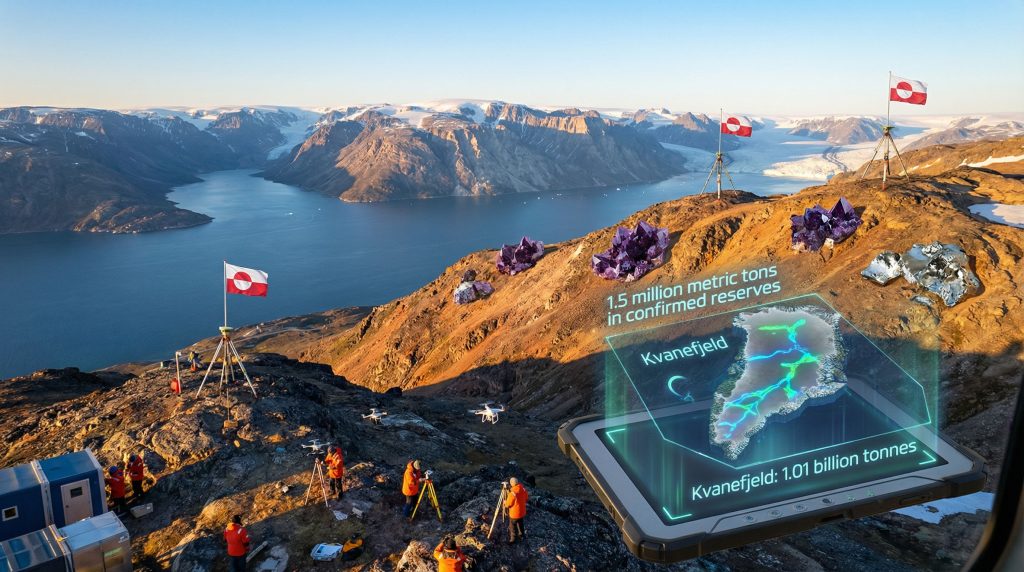
Kvanefjeld: Regulatory Complexity and Resource Scale
The Kvanefjeld deposit represents one of the larger identified rare earth resources in Greenland. However, its development faces significant regulatory hurdles. The project has encountered challenges related to uranium co-occurrence, which has complicated permitting processes under Greenland's evolving mining regulations.
Greenland implemented restrictions on uranium mining in 2021, creating uncertainty for projects where uranium occurs alongside rare earth elements. This regulatory shift reflects broader political considerations about mining development priorities and environmental protection measures.
The complexity of navigating these regulatory requirements has contributed to extended development timelines and increased project costs. Legal disputes regarding compensation for development expenditures have further complicated the project's advancement.
Tanbreez: Heavy Rare Earth Potential
Tanbreez differs from other Greenland deposits through its reported concentration of heavy rare earth elements. These command premium prices in specialised applications. Heavy rare earths such as dysprosium and terbium are essential for high-performance permanent magnets used in electric vehicles and wind turbines.
The project's development approach emphasises renewable energy integration and environmental management. This reflects Western procurement preferences for sustainable sourcing. However, the absence of nearby processing infrastructure means that concentrate would require shipping to separation facilities in other regions.
Gallium occurrence within the deposit adds potential value through co-product recovery. This is given gallium's importance in semiconductor manufacturing. The economic viability of gallium extraction depends on achieving sufficient scale and establishing appropriate metallurgical processes.
Sarfartoq: Early-Stage Exploration
The Sarfartoq project remains in preliminary exploration phases, with limited published data on resource estimates or development timelines. Canadian entities have shown interest in advancing the property through systematic exploration programmes.
Initial assessments suggest mixed rare earth profiles that may require careful evaluation. This determines optimal processing approaches and market positioning.
Infrastructure and Operational Challenges
Arctic mining operations face unique logistical constraints that significantly impact project economics and development timelines. Moreover, the automation in mining sector offers potential solutions to some operational challenges.
Climate-Dependent Access and Transportation
Greenland's Arctic location limits sea transportation to specific seasonal windows. These typically span summer months when ice conditions permit vessel access. This seasonal restriction affects both construction material delivery and product shipment, requiring substantial inventory management and storage capabilities.
Climate change trends may gradually extend operational windows. Nevertheless, current infrastructure planning must account for existing limitations. Port facilities capable of handling bulk mineral shipments require significant capital investment and long-term maintenance under harsh Arctic conditions.
Transportation Constraints:
- Limited shipping season (approximately 4-5 months annually)
- Absence of year-round port facilities for bulk materials
- Remote location requiring specialised Arctic shipping capabilities
- High transportation costs affecting project economics
Energy Infrastructure and Processing Limitations
Large-scale mining operations require substantial electricity supplies for ore processing. However, Greenland's current grid capacity remains limited. Whilst the territory possesses significant renewable energy potential through hydroelectric resources, developing this capacity requires major infrastructure investments.
No rare earth separation facilities currently operate in Greenland, necessitating partnerships with overseas processing companies. This dependency on external processing creates supply chain vulnerabilities and limits potential strategic benefits from domestic mining.
The absence of local technical expertise for rare earth processing means that projects must either import specialised personnel or provide extensive training programmes. This human capital challenge adds complexity to project development timelines.
Environmental Standards and Regulatory Framework
Greenland has modernised its mining legislation since 2015, implementing enhanced environmental assessment requirements and sustainability standards. These regulations reflect growing emphasis on responsible resource development and alignment with Western environmental expectations.
Environmental impact assessments for large-scale mining projects require comprehensive evaluation of Arctic ecosystem effects. This includes water resource management and waste disposal approaches. The unique Arctic environment demands specialised environmental management techniques.
Social licence considerations involve consultation with local communities and addressing concerns about traditional land uses. Successful project development requires ongoing stakeholder engagement and benefit-sharing arrangements.
Global Market Context and Supply Chain Integration
Understanding Greenland rare earth potential requires examining current supply chain structures and emerging diversification strategies. Additionally, the broader critical raw materials supply landscape influences project viability.
China's Structural Market Position
China's influence in rare earth markets extends beyond mining into critical downstream processing stages. Chinese facilities dominate separation, metalmaking, and magnet manufacturing, creating structural dependencies that persist regardless of mine location diversity.
This integrated supply chain control means that raw material diversification alone cannot eliminate strategic dependencies. Western efforts to develop independent processing capabilities remain in early stages, with limited commercial-scale operations outside Asia.
Chinese Supply Chain Integration:
- Mining: Significant but not dominant global market share
- Separation: Approximately 85-90% of global capacity
- Metal production: 90%+ market dominance
- Magnet manufacturing: 80%+ global production
Western Diversification Initiatives
European Union and United States policies increasingly emphasise critical mineral supply security through various strategic initiatives. These programmes combine domestic resource development, international partnerships, and technology investments to reduce import dependencies.
The EU Critical Raw Materials Act establishes targets for domestic processing capacity and supply diversification. However, specific quantitative goals vary by material and timeline. These policies may create market preferences for Western-sourced materials, particularly in defence and infrastructure applications.
U.S. strategic mineral security initiatives encompass Defense Production Act investments, research funding for processing technologies, and procurement preferences for domestic and allied sources. Nevertheless, implementation timelines extend over multiple years and require substantial private sector participation.
Element-Specific Market Dynamics
Rare earth markets segment by individual elements, each with distinct supply-demand characteristics and pricing mechanisms. Light rare earths (neodymium, praseodymium) face different market conditions than heavy rare earths (dysprosium, terbium).
Electric vehicle growth drives demand for neodymium and dysprosium in permanent magnet motors. Similarly, wind turbine installations require similar magnetic materials. These applications create specific quality and consistency requirements that new suppliers must satisfy.
Market Segmentation by Element:
- Neodymium: High-volume applications in motors and generators
- Dysprosium: Critical for high-temperature magnet performance
- Terbium: Specialised applications in phosphors and magnets
- Europium: Lighting and display technologies
Investment Framework and Risk Assessment
Arctic rare earth projects present unique investment considerations that differ from conventional mining ventures. Furthermore, the ongoing mining industry evolution shapes investment approaches.
Capital Requirements and Development Timelines
Greenland mining projects typically require development timelines spanning 7-15 years from initial resource definition to commercial production. These extended periods reflect regulatory processes, infrastructure development needs, and technical challenges specific to Arctic operations.
Capital requirements range from hundreds of millions to billions of dollars, depending on project scale and infrastructure needs. Financing structures must account for extended payback periods and commodity price volatility over development timelines.
Development Phase Timeline:
- Exploration and resource definition: 2-4 years
- Feasibility studies and permitting: 2-3 years
- Infrastructure development: 3-5 years
- Plant construction and commissioning: 2-3 years
- Ramp-up to commercial production: 1-2 years
Geopolitical Risk Factors
Arctic resource development occurs within complex geopolitical frameworks involving Greenland's relationship with Denmark, EU strategic interests, and U.S. security considerations. Recent U.S. interest in Greenland's rare earths reflects broader strategic positioning.
Political stability considerations include potential changes in mining policies, environmental regulations, and international trade relationships. Long-term project success requires sustained political support across multiple electoral cycles.
Currency exposure adds financial complexity, as projects may generate revenues in multiple currencies whilst incurring costs in local and international markets. Hedging strategies must account for extended development periods and operational phases.
Return Expectations and Market Positioning
Greenland rare earth potential projects may command premium pricing through ESG compliance certifications and allied-nation sourcing preferences. Defence procurement and high-specification industrial applications often prioritise supply chain security over lowest-cost sourcing.
However, price premiums must offset higher operating costs associated with Arctic conditions, transportation logistics, and regulatory compliance. Market acceptance of premium-priced materials depends on demonstrating consistent quality and supply reliability.
Long-term offtake agreements with Western manufacturers provide revenue stability. Nevertheless, these require negotiations during development phases when production capabilities remain theoretical.
The next major ASX story will hit our subscribers first
Production Scenarios and Market Integration
Realistic assessment of Greenland rare earth potential contribution to global supplies requires examining probable production scales and timeline constraints. The critical minerals energy transition creates additional demand pressures.
Achievable Production Targets
Initial commercial operations from Greenland projects would likely target annual production levels of 10,000-25,000 tonnes of rare earth oxides. This represents modest additions to global supplies exceeding 300,000 tonnes annually.
These production levels reflect infrastructure constraints, processing limitations, and gradual scaling approaches typical of new mining regions. Expansion beyond initial capacities would require additional capital investments and market validation of technical approaches.
Phased Development Approach:
- Phase 1: Proof-of-concept operations (5,000-10,000 tonnes annually)
- Phase 2: Commercial scale development (15,000-30,000 tonnes annually)
- Phase 3: Regional hub expansion (50,000+ tonnes annually)
Technology Innovation Requirements
Successful Arctic rare earth operations require technological advances in several areas. These include automated mining systems adapted for harsh conditions, improved ore processing efficiency for low-grade deposits, and environmental monitoring technologies for Arctic ecosystems.
Remote operation capabilities become essential given transportation limitations and skilled workforce availability constraints. Digital technologies for predictive maintenance and process optimisation offer potential operational advantages.
Cold weather adaptations for processing equipment and material handling systems require specialised engineering solutions. These involve higher maintenance requirements than conventional mining operations.
Integration with Global Supply Chains
Greenland rare earth production would integrate with existing global supply chains rather than replacing them entirely. Transportation logistics, quality specifications, and delivery schedules must align with downstream manufacturing requirements.
Processing partnerships with Western separation facilities could provide strategic value beyond economics. This contributes to supply chain resilience for critical applications. However, such partnerships require long-term commitment and coordinated investment in processing capacity expansion.
Supply Chain Integration Points:
- Concentrate production and shipping logistics
- Processing facility partnerships and capacity allocation
- Quality control and specification compliance
- Delivery scheduling and inventory management
Long-term Strategic Assessment
Greenland rare earth potential represents a strategic opportunity extending beyond immediate commercial considerations. The scramble for Greenland's rare earths intensifies as nations recognise strategic importance.
Timeline Expectations for Market Impact
Meaningful production contributions from Greenland projects remain unlikely before 2030-2035. This reflects current development stages and infrastructure requirements. This timeline assumes successful navigation of regulatory processes, adequate financing, and technical execution of complex projects.
Near-term market impacts will likely emerge through strategic partnerships, technology development, and demonstration of processing capabilities. These preliminary achievements may influence market sentiment and policy discussions rather than significant production volumes.
Medium-term transformation potential exists if multiple projects advance simultaneously and supporting infrastructure develops adequately. Integration with renewable energy systems and carbon-neutral processing could position Greenland as a premium supplier for sustainability-focused markets.
Sustainability and ESG Positioning
Arctic mining operations face intense scrutiny regarding environmental impact and social responsibility. Successful projects must demonstrate excellence in environmental stewardship, community engagement, and sustainable development practices.
Climate change considerations affect both operational planning and market positioning. Projects emphasising low-carbon operations and renewable energy integration may attract premium valuations and preferential procurement arrangements.
Indigenous rights and traditional land use considerations require ongoing consultation and benefit-sharing arrangements. These reflect contemporary standards for responsible resource development.
Strategic Value Beyond Production Volumes
Greenland's rare earth development offers strategic benefits that extend beyond tonnage contributions to global supplies. Technology development, supply chain diversification, and geopolitical positioning provide value even if production scales remain modest.
Research and development activities associated with Arctic mining could generate innovations applicable to other challenging environments and complex ore processing situations. These technological spillovers may create broader economic benefits.
Political signalling value through Western investment in Greenland resources demonstrates commitment to supply chain independence. Furthermore, this shows allied cooperation in critical materials sectors.
"Arctic rare earth development requires patient capital with extended investment horizons and tolerance for regulatory uncertainty. Success depends more on strategic positioning and long-term partnerships than short-term production metrics."
The evolution of Greenland rare earth potential reflects broader themes in global resource security, technological sovereignty, and sustainable development. Whilst immediate production impacts remain limited, the strategic foundations being established today may influence critical mineral supplies for decades to come. Stakeholders should focus on infrastructure development, regulatory clarity, and technology advancement as key indicators of long-term viability rather than expecting rapid market transformation.
Want to Stay Ahead of Critical Mineral Investment Opportunities?
Discovery Alert provides instant notifications on significant ASX mineral discoveries across all commodities, including critical minerals, powered by its proprietary Discovery IQ model. With Arctic resource development timelines spanning decades, savvy investors are positioning themselves in emerging critical mineral opportunities through Discovery Alert's morning AI trade alerts that highlight actionable short-term trading opportunities and potentially transformative discoveries as soon as they're announced.