August 14, 2026

Why Geoscience Data Has Become a Frontline Asset in the Critical Minerals Race
The global scramble for critical minerals is no longer simply a matter of who holds the largest reserves. Increasingly, it is a contest over who possesses the most reliable, standardised, and actionable geoscientific intelligence about those reserves. The critical minerals demand surge driving this competition means that nations and corporations that can accurately characterise mineral deposits, understand how target commodities are hosted within ore minerals, and benchmark their endowment against global analogues hold a structural advantage over those operating with incomplete or inconsistent data.
This dynamic has quietly elevated geological databases from niche scientific tools into instruments of genuine strategic value. In this context, the Geoscience Australia Critical Minerals Database, delivered through the Critical Minerals Mapping Initiative (CMMI) Portal, represents one of the most comprehensive public-access geoscience resources assembled to date.
When big ASX news breaks, our subscribers know first
What Is the CMMI Portal and What Does It Contain?
The CMMI Portal functions as a free, publicly accessible interactive mapping and data discovery platform, consolidating standardised, quality-checked geochemical and mineral chemistry data into a single interface. Its architecture is built around two complementary datasets that together span the analytical spectrum from bulk rock chemistry to individual mineral grain composition.
| Dataset | Primary Focus | Scale |
|---|---|---|
| Critical Minerals in Ores (CMiO) | Bulk geochemical analyses from mineral deposit samples | 7,000+ samples across 60 countries |
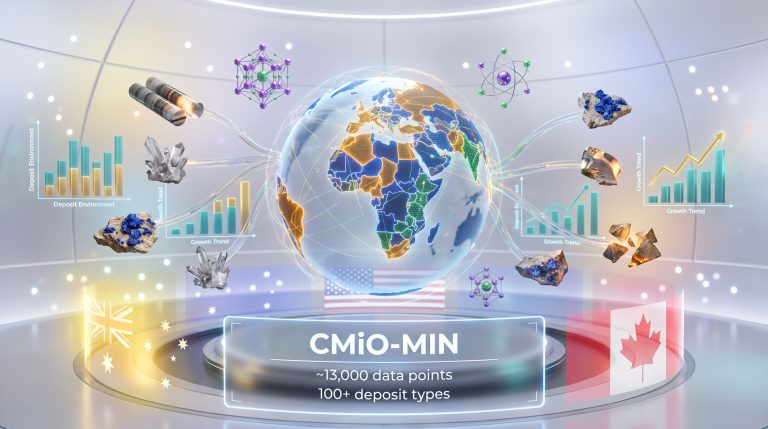
| Critical Minerals in Ores – Mineral Chemistry (CMiO-MIN) | Ore-related mineral chemistry linked to deposit classifications | ~13,000 data points |
Together, these two layers form an analytical stack rarely found within a single open-access platform anywhere in the world. The geochemical dataset provides broad coverage and statistical power, while the mineral chemistry layer delivers the microscale resolution needed for advanced metallurgical and geometallurgical work.
The Three-Nation Partnership Behind the Database
The CMMI database was developed through a formal trilateral collaboration between Geoscience Australia, the United States Geological Survey (USGS), and the Geological Survey of Canada (GSC). This partnership is significant for reasons that extend beyond data pooling.
By bringing together three sovereign geological surveys, each with its own quality assurance frameworks, the initiative creates a methodological consistency that few national datasets can replicate independently. Critically, the tri-national structure also serves a geopolitical function: it concentrates geoscience intelligence within a group of allied, resource-rich nations seeking to reduce dependence on mineral supply chains that pass through geopolitically sensitive jurisdictions.
"The inclusion of three sovereign geological surveys spanning three continents transforms this platform from a domestic exploration aid into a globally significant reference standard for critical mineral geochemistry."
How the CMiO Geochemistry Dataset Works
The Critical Minerals in Ores (CMiO) dataset draws from more than 7,000 samples collected from, or proximate to, mineral deposits distributed across 60 countries. Before any data enters the system, it undergoes rigorous standardisation and quality assurance protocols designed to ensure analytical comparability across different laboratory methodologies and national geological survey conventions.
Each sample record within CMiO typically contains:
- Sample identification and verified geographic coordinates
- Host deposit type and classification using internationally recognised deposit model frameworks
- Multi-element geochemical assay results covering critical mineral commodities
- Contextual metadata linking samples to known mineral systems and geological terranes
Access to the dataset is designed for both manual and programmatic use. Researchers and industry analysts can interact with the data through the CMMI Portal's map interface, download packaged datasets through Geoscience Australia's Data and Publications Catalogue, or query the system via web services for integration with GIS and modelling software.
Step-by-Step Access Guide for the CMMI Portal
- Navigate to the CMMI Portal through Geoscience Australia's Data Discovery Portal
- Use the interactive map interface to apply filters by geography, deposit type, or mineral commodity of interest
- Browse the Data and Publications Catalogue to identify and download relevant dataset packages
- For programmatic access, query the available web services for GIS-integrated or machine-readable data retrieval
The CMiO-MIN Mineral Chemistry Layer: A Less-Understood but Critical Advance
While the bulk geochemistry dataset attracts the most immediate attention, the CMiO-MIN database represents a more technically sophisticated contribution. This dataset contains approximately 13,000 data points derived from ore-related mineral samples, with each measurement linked not only to its parent deposit but also to specific sample characteristics including grain size, mineral associations, and textural context.
The distinction between bulk geochemistry and mineral chemistry is not merely technical. It is, furthermore, strategically meaningful.
Technical Note: Mineral chemistry data is collected at the microscale, using instruments such as electron microprobe analysers (EMPA) or laser ablation inductively coupled plasma mass spectrometry (LA-ICP-MS). These techniques measure elemental concentrations within individual mineral grains, providing an entirely different analytical perspective from whole-rock geochemistry.
Knowing the bulk concentration of a critical mineral within a deposit tells you it is there. Knowing which mineral phase hosts it tells you whether it can be recovered economically and how difficult the metallurgical process will be. This distinction directly affects the viability of a project at a fundamental level.
The mineral chemistry layer supports several high-value applications that bulk geochemistry alone cannot provide:
- Identifying whether critical minerals occur as discrete recoverable minerals or as trace substitutions within the crystal lattice of other minerals (a distinction with profound processing implications)
- Fingerprinting deposit types based on mineral chemistry signatures, which can guide drill targeting in greenfields exploration
- Building geometallurgical models that link ore mineralogy to expected metallurgical performance across a deposit
- Improving resource estimation accuracy for complex polymetallic systems where critical mineral distribution is heterogeneous
Critical Mineral Commodity Coverage Across the Energy Transition
The Geoscience Australia critical minerals database spans a broad commodity spectrum aligned with the raw material demands of the energy transition, advanced manufacturing, and defence technology sectors. Understanding critical minerals and energy security provides essential context for why this coverage matters so significantly.
Battery materials: Lithium, cobalt, nickel, manganese, graphite
Rare earth elements (REEs): Neodymium, praseodymium, dysprosium, terbium
Technology metals: Gallium, germanium, indium, tellurium
Structural transition metals: Copper, titanium, vanadium
Platinum group elements (PGEs): Platinum, palladium, rhodium
What is less commonly appreciated is the varying form in which these elements occur across different deposit types, and why that matters for recovery. Dysprosium and terbium, for instance, are often present in rare earth deposits not as dominant REEs but as minor constituents within minerals like xenotime or fergusonite. Their extractability depends entirely on the host mineralogy, making CMiO-MIN style data essential for accurate project economics, not just resource classification.
How the CMMI Compares to Other Global Critical Mineral Data Initiatives
The CMMI Portal is not the only public geoscience data platform in operation, but its combination of geographic scope, data depth, and public accessibility distinguishes it from most comparable initiatives.
| Initiative | Lead Organisation | Geographic Focus | Public Access | Mineral Chemistry Layer |
|---|---|---|---|---|
| CMMI Portal | Geoscience Australia / USGS / GSC | Global (60 countries) | Yes (free) | Yes (CMiO-MIN) |
| USGS National Geochemical Database | USGS | USA-focused | Yes | Partial |
| EU Critical Raw Materials Act Data Framework | European Commission | EU member states | Partial | No |
| OneGeology Portal | International consortium | Global | Yes | Limited |
The integration of both bulk geochemistry and mineral-scale chemistry within a single, freely accessible platform is a capability that sets the CMMI apart from each of the comparative initiatives listed above. The EU framework, while growing in ambition following the Critical Raw Materials Act, currently lacks a mineral chemistry layer of comparable depth. The USGS National Geochemical Database offers strong domestic coverage but does not match the CMMI's international breadth across 60 countries.
The next major ASX story will hit our subscribers first
Application Domains: How Industry, Government, and Research Benefit
The practical utility of the Geoscience Australia critical minerals database extends well beyond academic research. Its four primary application domains each carry distinct operational significance.
| Application Domain | How the Database Contributes |
|---|---|
| Mineral Exploration | Geochemical and mineralogical fingerprints guide targeting decisions in greenfields and brownfields settings |
| Resource Assessment | Enables national and global inventory analysis of critical mineral endowment |
| Supply Chain Analysis | Supports government and industry modelling of critical mineral availability and concentration risk |
| Geoscience Research | Provides a standardised global dataset for academic and applied scientific investigation |
The Australian Critical Minerals Map as a Complementary Layer
Alongside the CMiO and CMiO-MIN datasets, Geoscience Australia maintains a dedicated Australian Critical Minerals Map and associated data package. This tool visualises Australian mines and mineral deposits associated with critical commodities, providing a spatial intelligence overlay that complements the geochemical database's analytical depth.
Used together, the two platforms form an integrated geoscience intelligence ecosystem. The mapping layer answers where deposits are located and their development status; the geochemical database answers what those deposits contain and how those minerals are hosted at the mineralogical level. Furthermore, understanding mineral deposit tiers provides additional context for interpreting the relative significance of what these maps reveal.
Why Open-Access Geoscience Data Reshapes Exploration Economics
One dimension of this database that is underappreciated in mainstream investment commentary is its effect on exploration economics, particularly for junior companies with limited capital for early-stage data acquisition.
Historically, access to high-quality geochemical reference datasets required significant investment in proprietary studies or expensive data purchases. The CMMI Portal fundamentally disrupts this model by making globally benchmarked, quality-assured data freely available. The downstream effects include:
- Reduced barrier to entry for junior explorers operating in geologically prospective but data-sparse terranes
- Ability to benchmark Australian deposit geochemistry against international analogues drawn from 60 countries without commissioning original studies
- Earlier identification of metallurgical risk before expensive drilling and testwork programs are initiated
- More defensible resource classifications supported by globally consistent deposit model frameworks
In addition, advances in AI in mineral exploration are increasingly being applied alongside such open-access datasets, further amplifying their value for targeting and resource estimation.
"From an investor perspective, the existence of robust public geoscience data infrastructure narrows the information gap between well-capitalised majors and smaller exploration companies, which can affect how early-stage projects are valued and how quickly discovery pipelines mature."
Disclaimer: The above reflects analytical observations about data infrastructure and its potential effects on exploration economics. It does not constitute financial advice. Investors should conduct their own due diligence and seek professional guidance before making investment decisions.
Geoscience Databases as National Security Infrastructure
Perhaps the most significant long-term framing for the CMMI Portal is not scientific or commercial, but strategic. In an era of critical mineral nationalism and supply chain fragmentation, open geoscience data platforms are increasingly recognised as national security infrastructure in much the same way as transport networks or communication systems.
The 60-country sample coverage of the CMiO dataset provides governments with an independent analytical basis for assessing global supply concentration risk. For national agencies responsible for strategic materials planning and foreign investment screening, this kind of independently validated, tri-nationally quality-assured dataset offers something commercially assembled intelligence cannot easily replicate: scientific credibility backed by sovereign geological surveys. Consequently, the role of rare earth supply chains in national security planning has never been more closely linked to geoscience data infrastructure.
What Comes Next for the CMMI Framework
The current iteration of the database is best understood as a foundation rather than a finished product. Several development vectors are likely to expand its utility over the coming years:
- Ongoing expansion of the CMiO-MIN dataset as contributing geological surveys add new mineral chemistry analyses from additional deposit types and geographic regions
- Integration potential with machine learning and AI-driven mineral prospectivity modelling, where large, standardised geochemical training datasets are a critical bottleneck
- Growing alignment between open geoscience data platforms and critical mineral cooperation agreements between allied nations
- Potential for the tri-national CMMI framework to serve as a template for broader multilateral geoscience data-sharing arrangements extending beyond Australia, the US, and Canada
Frequently Asked Questions: Geoscience Australia Critical Minerals Database
Is the database free to access?
Yes. The CMMI Portal and both core datasets — the CMiO geochemistry database and the CMiO-MIN mineral chemistry database — are publicly available at no cost through Geoscience Australia's critical minerals online platforms.
How many countries are represented in the CMiO dataset?
The CMiO dataset includes geochemical analyses from samples across 60 countries, making it one of the most geographically comprehensive critical mineral geochemistry datasets available to the public anywhere in the world.
What is the practical difference between CMiO and CMiO-MIN?
CMiO provides bulk geochemical analyses across more than 7,000 deposit samples. CMiO-MIN adds approximately 13,000 mineral-scale chemistry data points, linking individual mineral grain analyses to deposit classifications and sample characteristics. This granular layer is essential for metallurgical planning and geometallurgical modelling.
Who developed the Geoscience Australia critical minerals database?
The database was developed through a collaborative partnership between Geoscience Australia, the United States Geological Survey (USGS), and the Geological Survey of Canada (GSC).
How is data quality assured across contributing sources?
All data undergoes standardisation and quality checking before delivery through the CMMI Portal and web services, ensuring analytical consistency across datasets contributed by multiple national geological surveys using different laboratory methodologies.
Where can I find the Australian Critical Minerals Map?
The Australian Critical Minerals Map and its associated data package are available through the CMMI Portal and Geoscience Australia's Data Discovery Portal, providing spatial visualisation of Australian mines and deposits linked to critical mineral commodities.
Readers seeking broader context on Australia's critical minerals sector can explore related resources and reporting published by Australian Mining Review at australianminingreview.com.au.
Want to Invest in the Next Major Critical Mineral Discovery Before the Broader Market?
Discovery Alert's proprietary Discovery IQ model delivers real-time alerts the moment significant ASX mineral discoveries are announced, transforming complex geoscientific data into clear, actionable investment intelligence — explore Discovery Alert's discoveries page to see the historic returns major mineral discoveries have generated, and begin your 14-day free trial to position yourself ahead of the market.