August 20, 2026
Arctic Mineral Security in an Era of Strategic Resource Competition
Global supply chain vulnerabilities have reached a critical inflection point as nations grapple with overdependence on single-source critical mineral suppliers. The convergence of energy transition demands, defense technology requirements, and geopolitical tensions has created unprecedented urgency around securing diversified rare earth element sources. Greenland rare earth supply deals represent a pivotal development in this strategic landscape, offering Western economies viable alternatives to concentrated Asian supply chains whilst addressing mounting concerns over resource security.
The strategic significance of securing alternative rare earth supplies extends beyond commercial considerations into national security imperatives. Western economies face mounting pressure to reduce reliance on concentrated supply chains while maintaining competitive access to materials essential for renewable energy infrastructure, defense systems, and advanced manufacturing. This dynamic has catalysed innovative financing mechanisms, international partnerships, and policy frameworks designed to accelerate development of previously marginal mineral deposits in challenging operational environments.
When big ASX news breaks, our subscribers know first
Strategic Geology and Supply Chain Positioning of Arctic Rare Earth Resources
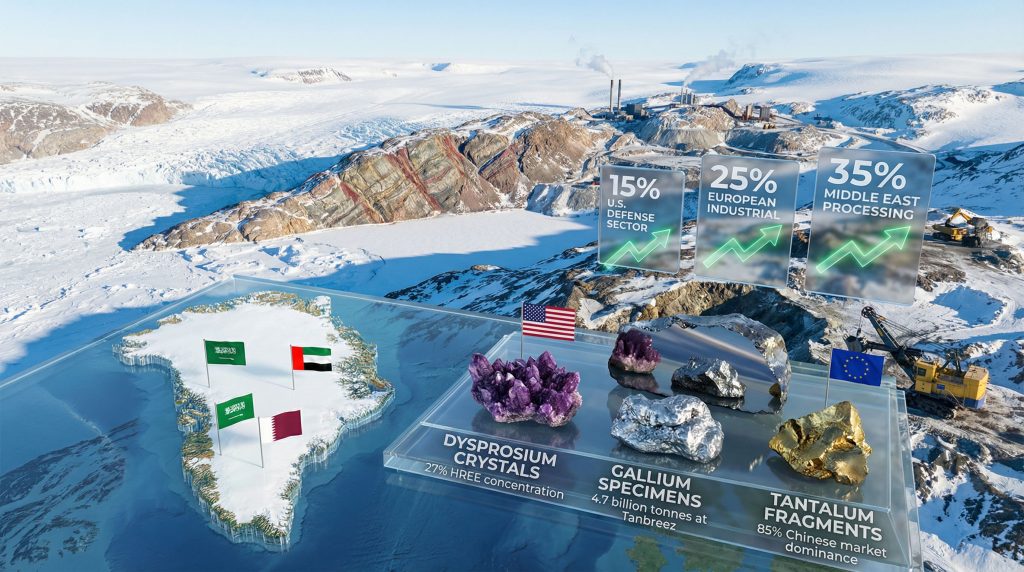
Greenland's geological formations contain exceptionally high concentrations of heavy rare earth elements (HREE), which command premium pricing due to their critical applications in advanced technologies. Unlike typical rare earth deposits that contain primarily light rare earths, Greenland's Tanbreez project exhibits unique mineralogy with elevated levels of dysprosium, terbium, and europium. These elements prove essential for permanent magnets in wind turbines, electric vehicle motors, and defence guidance systems.
The geological advantage extends beyond element concentration to deposit scale and accessibility. According to U.S. Geological Survey assessments, Arctic mineral formations often feature large tonnage resources with relatively straightforward extraction profiles compared to more geologically complex deposits elsewhere. This combination of scale, grade, and operational feasibility creates compelling economics for long-term supply agreements despite higher initial capital requirements for Arctic infrastructure development.
Supply Chain Vulnerabilities and Market Positioning
Western supply chain vulnerabilities have become increasingly apparent as China controls approximately 85% of global rare earth processing capacity, according to the U.S. Geological Survey's 2024 Mineral Commodity Summary. This concentration creates systemic risks for industries dependent on steady rare earth supplies, particularly given the US-China trade war impact on global supply chains. The critical minerals energy transition demands reliable access to these materials, making diversification imperative.
Western buyers currently pay premiums of 15-30% above Chinese spot prices for non-Chinese rare earth supplies, reflecting both scarcity value and supply chain security considerations. These price differentials provide economic justification for developing higher-cost Arctic operations whilst supporting national security objectives through source diversification.
Key vulnerability areas include:
• Defence sector dependencies: NATO defence systems require consistent access to rare earth elements for radar systems, missile guidance, and electronic warfare capabilities
• Renewable energy infrastructure: Wind turbine permanent magnets consume significant quantities of neodymium, dysprosium, and terbium
• Electric vehicle manufacturing: Motor magnets and battery cathode materials require diversified rare earth sourcing to support production scaling
• Consumer electronics: Smartphones, computers, and telecommunications equipment incorporate multiple rare earth elements throughout supply chains
Government Financing Frameworks and International Partnership Models
The Trump administration has implemented novel approaches to critical mineral supply chain development, including converting traditional grant structures into direct equity positions. Critical Metals CEO Tony Sage confirmed that Trump administration officials have discussed taking equity stakes in Arctic rare earth projects, representing a departure from conventional government support mechanisms.
According to Reuters reporting from December 31, 2025, the administration has intensified efforts to secure U.S. supply chains for critical minerals, including shifting some federal support from grants to direct equity stakes as Washington seeks to reduce reliance on market leader China. This policy evolution reflects recognition that traditional financing approaches may prove insufficient for competing with state-backed Chinese mineral development globally.
Defence Production Act applications have expanded beyond wartime mobilisation to encompass critical mineral supply chain security. The Act's authority enables presidential direction of domestic production capacity whilst providing legal frameworks for government investment in strategic industries. Furthermore, this approach aligns with broader defence critical materials strategy initiatives across allied nations.
Middle Eastern Strategic Diversification Initiatives
Energy-rich Middle Eastern nations have emerged as significant players in rare earth processing capacity development, leveraging competitive advantages in power costs and regulatory efficiency. CEO Tony Sage noted that "interest from the Middle East, including potential processing partners in Saudi Arabia, Qatar, Bahrain, Oman and the UAE, reflects efforts by energy-rich states to build rare earths processing capacity, supported by lower power costs and faster permitting than in the U.S. and Europe."
This regional positioning capitalises on several structural advantages:
• Energy cost benefits: Rare earth separation requires intensive electrical processing, making low-cost energy a crucial competitive factor
• Regulatory efficiency: Permitting timelines for industrial facilities in Gulf states typically range 2-3 years compared to 5-8 years in Western jurisdictions
• Geographic positioning: Strategic location between Western markets and Asian processing centres
• Investment capacity: Sovereign wealth funds provide patient capital for long-term industrial development projects
European Union Critical Raw Materials Strategy
The European Union's Critical Raw Materials Act, formally adopted in December 2024, establishes frameworks for reducing import dependencies whilst building domestic processing capacity. European industrial partners seek long-term supply agreements with non-Chinese producers to comply with EU diversification mandates whilst securing raw materials for manufacturing operations.
European engagement with greenland rare earth supply deals typically involves anorthosite supply agreements as foundation materials for broader rare earth partnerships. Additionally, processing capacity development in EU member states captures value-added production stages whilst regulatory pathway acceleration for Greenland-sourced materials occurs through established EU import procedures.
Commercial Structure and Financial Engineering of Arctic Supply Agreements
Critical Metals has already pre-sold 75% of planned output, split between the U.S. and Europe, according to CEO Tony Sage's December 31, 2025 statements to Reuters. The company expects to finalise the remaining 25% of offtake agreements by early 2026, with significant interest from Middle Eastern processing partners seeking secure raw material supplies for planned separation facilities.
Capital Deployment and Investment Phases
Arctic rare earth development requires sequential capital deployment aligned with operational milestones and regulatory approvals. Critical Metals CEO confirmed capital costs are expected to total about $500 million in Greenland, whilst downstream processing facilities are likely to cost more than $1 billion.
| Development Phase | Timeline | Capital Requirement | Key Milestones |
|---|---|---|---|
| Pre-production setup | 2025-2027 | $200-300 million | Environmental approvals, infrastructure |
| Mining operations startup | 2027-2028 | $500 million | First production, concentrate processing |
| Processing capacity expansion | 2028-2030 | $1+ billion | Downstream facilities, market penetration |
| Long-term optimisation | 2030+ | Variable | Technology upgrades, capacity expansions |
Pricing Mechanisms and Risk Allocation
Long-term rare earth supply agreements typically incorporate multiple pricing mechanisms to balance producer economics with buyer price certainty. However, mining industry innovation continues to evolve contract structures and risk management approaches.
The diversification strategy aims to "keep supply spread across geographic regions and end-use applications to limit geopolitical risk," according to company management statements. This approach balances commercial optimisation with strategic risk management across volatile international markets.
Environmental requirements for Arctic operations include climate impact assessments evaluating operational effects on Arctic ecosystems and permafrost stability. Wildlife protection measures involve seasonal restrictions and habitat preservation requirements, whilst water resource management protects Arctic watersheds from mining-related contamination.
Production Timeline Advantages and Competitive Positioning
Critical Metals plans to begin mining in 2027, with first production targeted for mid-2028, representing one of the most advanced non-Chinese rare earth development timelines globally. This competitive positioning reflects several operational and regulatory advantages over alternative projects in similar development stages.
Uranium Mining Ban Impact on Competing Projects
Greenland's uranium mining ban, imposed in 1988, has effectively eliminated several competing rare earth projects that contained significant uranium byproducts. The Kvanefjeld and Kringlerne deposits, previously considered major rare earth development opportunities, face regulatory obstacles due to uranium content that violates current Greenlandic mining policy.
This regulatory environment creates competitive advantages for projects like Tanbreez that avoid uranium extraction issues whilst maintaining access to high-grade rare earth resources. Consequently, the policy clarity reduces regulatory uncertainty compared to projects requiring uranium handling permits or byproduct management systems.
Infrastructure Development Requirements
Arctic rare earth operations require specialised infrastructure development to support year-round production and seasonal shipping access. The timeline for infrastructure development typically requires 24-36 months for major components, making early-stage planning crucial for meeting production targets.
Key infrastructure considerations include:
• Ice-free port facilities: Deep-water access for bulk concentrate shipments during Arctic shipping seasons
• Power generation systems: Reliable electricity supply for mining and preliminary processing operations
• Transportation networks: Road or rail connections linking mining sites to shipping facilities
• Communication systems: Satellite and terrestrial networks supporting remote operations management
• Worker accommodation: Housing and support facilities for rotating workforce requirements
Processing Technology and Workforce Development
Rare earth separation technology requires specialised expertise typically concentrated in Chinese industrial operations. Western rare earth projects often face challenges acquiring proven separation equipment and training qualified operators for complex chemical processing requirements.
Technology transfer partnerships with established rare earth processors can accelerate learning curves whilst reducing operational risks. Equipment lead times for rare earth separation facilities typically range 18-24 months from order to commissioning, requiring early procurement decisions to maintain project schedules.
Workforce development for Arctic rare earth operations involves mining equipment operation training for specialised Arctic mining machinery and techniques. Chemical processing requires advanced chemistry and process control expertise, whilst environmental monitoring demands specialised environmental compliance and monitoring capabilities.
Market Dynamics and Global Supply Chain Transformation
Greenland rare earth supply deals will fundamentally alter global market dynamics by introducing significant non-Chinese production capacity into historically concentrated supply chains. Chinese responses to Western supply diversification efforts will likely influence pricing, production strategies, and technological development across the industry.
Chinese Market Response Strategies
China's market leadership in rare earth processing provides multiple leverage points for responding to Western diversification initiatives. Production capacity adjustments allow increasing or decreasing output to influence global pricing, whilst technology advancement accelerates separation efficiency improvements and cost reductions.
The effectiveness of Chinese response strategies will significantly influence the commercial viability of higher-cost Arctic rare earth operations and determine long-term market share distributions between Chinese and non-Chinese suppliers. In addition, strategic stockpile management using government reserves to stabilise or destabilise markets remains a powerful tool.
Price Volatility and Contract Structures
Introduction of substantial new rare earth supplies from Greenland will likely increase short-term price volatility as markets adjust to altered supply-demand dynamics. Long-term contract structures help mitigate this volatility for both producers and consumers whilst providing price discovery mechanisms for spot markets.
"Strategic stockpiling policies by major consuming nations could further amplify market volatility as governments build buffer inventories against supply disruptions."
The balance between long-term contracts and spot market transactions will evolve as non-Chinese supply sources achieve operational stability and market confidence in alternative supply chains strengthens. This transition period may create arbitrage opportunities and pricing inefficiencies across different market segments.
Technology Transfer and Innovation Spillovers
Deployment of Western rare earth separation technologies in Greenland operations will likely generate innovation spillovers affecting other Arctic mineral projects and global rare earth processing efficiency. Knowledge transfer between international partners often produces unexpected technological improvements and cost reduction opportunities.
Innovation areas likely to benefit from Greenland project development include cold-weather processing adaptations and environmental impact minimisation. Energy efficiency improvements reduce processing power requirements through technological advancement, whilst automation and remote operation advance control systems for harsh environment operations.
The next major ASX story will hit our subscribers first
Investment Frameworks and Risk Assessment for Arctic Rare Earth Projects
Arctic rare earth investments present unique risk-return profiles combining strategic value, operational complexity, and geopolitical considerations. Different investor types require tailored approaches reflecting varying risk tolerance, return expectations, and strategic objectives.
Government Strategic Investment Pathways
Government involvement in greenland rare earth supply deals serves dual objectives of commercial returns and national security benefits. Development finance institutions provide patient capital aligned with long-term strategic interests rather than quarterly earnings requirements.
The Trump administration's consideration of equity stakes in Critical Metals represents evolution toward more direct government investment in strategic mineral supply chains. This reflects recognition that traditional financing may prove insufficient for competing with state-backed international competitors, particularly in the context of broader critical minerals strategy initiatives.
Government investment mechanisms include:
• Export-Import Bank financing: Trade credit support for international mineral development projects
• Development finance corporation equity: Direct investment through government development finance institutions
• Strategic partnership frameworks: Government-backed commercial agreements supporting supply chain security
• Grant-to-equity conversion programmes: Transforming traditional grant funding into ownership stakes
• Loan guarantee structures: Government-backed financing reducing private sector risk exposure
Private Sector Investment Considerations
Private equity and institutional investors evaluate Arctic rare earth projects through standard risk-adjusted return frameworks whilst accounting for unique factors including regulatory uncertainty, operational complexity, and long-term contract stability.
Key investment considerations encompass capital intensity with high upfront investment requirements and long payback periods. Operational risk involves Arctic conditions creating elevated technical and logistical challenges, whilst regulatory stability concerns government policy changes affecting mining rights and environmental requirements.
Risk Mitigation and Insurance Frameworks
Arctic mineral development requires comprehensive risk management addressing multiple uncertainty sources through diversified mitigation strategies. Political Risk Insurance provides coverage for government actions affecting project operations, including changes in mining laws, taxation, or permit cancellations.
Environmental Liability Management involves comprehensive insurance and bonding for environmental restoration obligations, groundwater protection, and ecosystem damage. Arctic operations require specialised environmental coverage reflecting unique ecosystem vulnerabilities and restoration challenges.
Timeline-Based Capital Planning requires carefully sequenced capital deployment aligned with regulatory milestones, construction phases, and market development. The 2025-2027 Pre-Production Phase typically requires $200-300 million across multiple funding sources including government grants, private equity, and development finance.
Strategic Transformation of Global Critical Minerals Security
Greenland rare earth supply deals represent a fundamental pivot in global critical minerals geopolitics, introducing significant non-Chinese production capacity into historically concentrated supply chains. The integration of Western government financing, Middle Eastern processing partnerships, and Greenlandic resource sovereignty creates unprecedented frameworks for supply chain diversification supporting both commercial objectives and national security imperatives.
Success in developing Arctic rare earth resources will depend on navigating complex regulatory environments, managing extreme operational conditions, and structuring financially sustainable long-term partnerships across multiple jurisdictions and stakeholder groups. For institutional investors and policymakers, Greenland's mineral development offers strategic necessity coupled with commercial opportunity in supporting global transitions toward clean energy technologies and advanced manufacturing.
The convergence of technological innovation, international financing cooperation, and geopolitical competition surrounding Arctic mineral resources will likely reshape critical materials markets for decades. As production timelines crystallise and supply agreements finalise through 2026, market participants face both significant opportunities and substantial risks in positioning for transformed global rare earth supply chains.
Understanding these dynamics proves essential for stakeholders across industries dependent on reliable rare earth access, from renewable energy infrastructure and defence technology to electric vehicle manufacturing and consumer electronics. The strategic implications extend beyond commodity markets into fundamental questions of economic security, technological sovereignty, and international cooperation frameworks governing critical mineral resources in an increasingly multipolar world.
Ready to Capitalise on the Next Critical Minerals Breakthrough?
Discovery Alert's proprietary Discovery IQ model delivers instant notifications on significant ASX mineral discoveries, empowering investors to identify actionable opportunities in critical materials sectors ahead of broader markets. Explore historic examples of exceptional discovery returns by visiting Discovery Alert's dedicated discoveries page and begin your 30-day free trial today to secure your competitive advantage in Australia's evolving critical minerals landscape.