July 1, 2026
Arctic Mining Regulations Face Unprecedented Transformation
The Arctic mining landscape has entered a period of significant regulatory upheaval, fundamentally reshaping how mineral extraction projects navigate approval processes in some of the world's most environmentally sensitive regions. The recent license renewal setback for Greenland mining project developments exemplifies this transformation, as governments balance economic development with environmental protection through new frameworks that prioritise specific technical standards over traditional economic considerations.
This shift represents more than incremental policy adjustment. It signals a broader transformation in how Arctic nations approach resource development, particularly projects involving mixed mineral deposits where environmental concerns may override substantial economic benefits. Understanding these evolving regulatory dynamics has become critical for mining companies, investors, and industry stakeholders operating in polar regions.
When big ASX news breaks, our subscribers know first
Greenland's Revolutionary Mining Regulatory Framework
Greenland's approach to mining regulation has undergone substantial evolution, establishing new precedents for Arctic resource governance. The territory's regulatory system now incorporates stringent environmental thresholds that can determine project viability regardless of economic potential, particularly relevant for Greenland's critical minerals sector development.
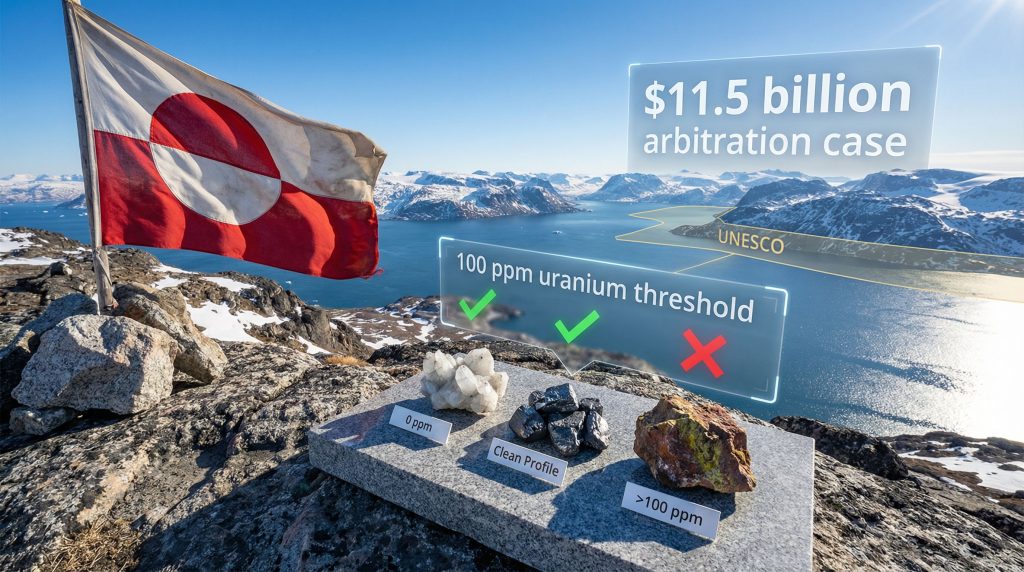
The regulatory framework emphasises environmental protection through specific technical criteria. Projects containing uranium concentrations above certain thresholds face significantly increased scrutiny, reflecting Greenland's commitment to environmental stewardship in sensitive Arctic ecosystems.
Key aspects of the current regulatory environment include:
• Streamlined approval processes for projects meeting environmental criteria
• Clear technical thresholds that provide regulatory certainty
• Enhanced environmental assessment requirements for mixed mineral deposits
• Community consultation mandates throughout the approval process
Political considerations also influence regulatory decisions. The current government coalition has demonstrated strong environmental priorities, affecting how mining applications are evaluated and processed. This has created challenges for companies seeking to advance their projects through traditional approval pathways.
Technical Standards and Environmental Thresholds
Environmental protection in Greenland's mining sector centres on specific technical standards that projects must meet. These standards reflect scientific understanding of environmental risks associated with different mineral compositions and align with broader mining industry evolution trends globally.
Uranium concentration levels serve as a critical determinant in project assessments. Projects with elevated uranium content face additional regulatory hurdles, regardless of their rare earth element potential or economic significance. This approach has particularly impacted Energy Transition Minerals' Kvanefjeld project, which contains significant rare earth deposits alongside uranium concentrations.
Scientific Rationale for Environmental Standards
The environmental standards reflect comprehensive scientific analysis of potential contamination risks. Regulatory authorities consider multiple factors when evaluating project applications:
• Geological composition and mineral concentration levels
• Proximity to protected areas and sensitive ecosystems
• Potential for environmental contamination during extraction and processing
• Long-term environmental impact assessments
These standards align with international best practices while addressing Greenland's unique Arctic environment and indigenous community considerations. Furthermore, effective risk management communication has become essential for companies navigating these regulatory requirements.
| Project Category | Regulatory Approach | Key Factors |
|---|---|---|
| Single mineral deposits | Standard assessment | Environmental impact scope |
| Mixed mineral deposits | Enhanced scrutiny | Uranium content levels |
| Near protected areas | Comprehensive review | Buffer zone requirements |
Economic Implications of Environmental Prioritisation
The prioritisation of environmental standards over economic considerations creates significant implications for global mineral supply chains. Greenland's approach demonstrates how environmental policies can override substantial economic benefits, as evidenced by the license renewal setback for Greenland mining project developments affecting multiple companies.
Global Rare Earth Supply Chain Impacts
Greenland's regulatory decisions affect worldwide rare earth element availability. The Kvanefjeld project represents a substantial potential source of rare earth elements critical for technology manufacturing and renewable energy systems. According to Mining.com, the regulatory uncertainty has created significant challenges for Energy Transition Minerals' advancement plans.
The project's regulatory challenges illustrate how environmental regulations can influence global supply chains. This regulatory uncertainty affects:
• Technology sector input costs and supply security
• Renewable energy project development timelines
• Critical mineral supply diversification strategies
• Investment allocation toward alternative sources
Investment Climate Assessment
Regulatory uncertainty in Greenland creates broader investment climate considerations for Arctic mining ventures. Companies must now factor environmental compliance costs and regulatory risk into project economics, while implementing comprehensive waste management solutions to meet evolving standards.
Investment decisions increasingly incorporate:
- Environmental compliance costs from initial exploration through production
- Regulatory timeline uncertainty affecting project development schedules
- Political risk assessment related to changing government priorities
- Alternative jurisdiction evaluation for similar mineral deposits
The regulatory environment has created a risk premium for Arctic mining investments, particularly projects involving mixed mineral deposits with environmental sensitivities. However, this also creates opportunities for companies that can demonstrate superior environmental performance.
Environmental Protection Protocols and Community Considerations
Environmental protection in Greenland extends beyond technical standards to encompass broader ecosystem preservation and community welfare considerations. These protocols reflect the territory's commitment to balancing resource development with environmental stewardship, incorporating mine reclamation practices from project inception.
Protected Area Management
Mining projects near environmentally significant areas face enhanced scrutiny through comprehensive assessment protocols. These areas require careful evaluation of potential impacts on:
• Ecosystem integrity and biodiversity preservation
• Traditional land use patterns and indigenous rights
• Tourism industry economic contributions
• Long-term environmental sustainability
The regulatory framework establishes buffer zones and protection protocols that mining companies must navigate during project planning and implementation. Consequently, companies must demonstrate comprehensive understanding of local ecosystems and traditional land uses.
Community Engagement Requirements
Meaningful community consultation has become integral to the mining approval process. Regulatory authorities require comprehensive engagement with local communities, including:
• Indigenous community consultation respecting traditional knowledge
• Local economic impact assessment considering various stakeholder interests
• Cultural heritage protection measures throughout project lifecycles
• Ongoing community liaison during operational phases
The regulatory framework emphasises community welfare and environmental protection as fundamental considerations that may outweigh economic benefits in project evaluation processes.
Comparative Analysis with International Mining Standards
Greenland's approach provides valuable insights for other Arctic and environmentally sensitive jurisdictions. The territory's regulatory framework demonstrates how environmental priorities can be integrated into mining governance while maintaining investment attractiveness for compliant projects.
Regulatory Clarity Benefits
Clear environmental standards provide several advantages for both regulatory authorities and mining companies:
• Reduced regulatory uncertainty for projects meeting environmental criteria
• Streamlined approval processes for compliant developments
• Predictable assessment timelines enabling better project planning
• Enhanced investor confidence in regulatory consistency
These benefits demonstrate how environmental standards can enhance rather than hinder investment climate when implemented with clarity and consistency. Moreover, companies that invest early in environmental compliance often achieve competitive advantages.
Risk Management Framework
Greenland's approach offers a framework for managing political and environmental risks in resource development:
- Early environmental assessment integration into project planning
- Comprehensive community engagement from exploration phases
- Political risk monitoring throughout regulatory processes
- Alternative scenario planning for regulatory outcome variations
This framework enables companies to better navigate complex regulatory environments while maintaining project viability. In addition, it provides stakeholders with confidence that environmental considerations receive appropriate attention.
The next major ASX story will hit our subscribers first
Future Regulatory Evolution and Industry Adaptation
The Arctic mining regulatory landscape continues evolving as governments balance economic development with environmental protection. Understanding these trends becomes critical for industry stakeholders planning long-term investment strategies, particularly given recent setbacks affecting major projects.
Political Dynamics and Policy Stability
Regulatory stability depends on political consensus around environmental priorities. Future policy directions will likely be influenced by:
• Electoral outcomes and coalition government compositions
• International environmental commitments affecting domestic policy
• Economic pressure from global mineral demand
• Climate change considerations shaping long-term planning
Political risk assessment must incorporate these factors when evaluating Arctic mining investments. The recent license renewal setback for Greenland mining project developments highlights how political changes can affect established projects.
Strategic Recommendations for Mining Companies
Companies operating in Arctic jurisdictions should adopt comprehensive risk management strategies. According to Green Left, Energy Transition Minerals' experience demonstrates the importance of understanding political and regulatory dynamics.
Due Diligence Protocols:
• Comprehensive geological characterisation identifying all mineral components
• Early environmental impact assessment and mitigation planning
• Political risk evaluation incorporating electoral cycle considerations
• Community engagement strategy development from project inception
Investment Decision Frameworks:
• Multi-scenario analysis incorporating regulatory outcome variations
• Alternative jurisdiction evaluation for similar mineral deposits
• Risk-adjusted financial modelling reflecting regulatory uncertainties
• Stakeholder engagement cost integration into project economics
Implications for Arctic Mining Development
Greenland's regulatory approach establishes important precedents for Arctic mining governance. The territory's emphasis on environmental protection demonstrates how regulatory frameworks can prioritise ecosystem preservation while maintaining pathways for responsible resource development.
The ongoing challenges facing major projects illustrate the complex interplay between environmental regulation and economic opportunity in Arctic regions. This regulatory evolution requires industry adaptation and enhanced risk management approaches that account for changing political and environmental priorities.
Critical Success Factors
Successful navigation of evolving Arctic regulatory environments requires:
• Early environmental compliance integration into project planning
• Comprehensive stakeholder engagement throughout project lifecycles
• Political risk monitoring and adaptive management strategies
• Alternative development pathway evaluation and planning
The regulatory transformation underway in Greenland provides valuable insights for Arctic mining development while demonstrating the importance of environmental stewardship in resource extraction activities. Companies that proactively address these requirements position themselves for long-term success in challenging regulatory environments.
Disclaimer: This analysis is based on publicly available information and should not be considered investment advice. Mining investments carry significant risks, including regulatory, environmental, and market uncertainties. Readers should conduct independent research and consult qualified professionals before making investment decisions.
Interested in Arctic Mining Investment Opportunities?
Discovery Alert's proprietary Discovery IQ model delivers real-time alerts on significant mineral discoveries across global markets, instantly empowering subscribers to identify actionable opportunities ahead of the broader market. Begin your 14-day free trial today and secure your market-leading advantage in the evolving mining landscape.