May 21, 2026
Arctic mining operations face unprecedented transformation as geopolitical tensions reshape global investment patterns and strategic mineral supply chains. The convergence of energy transition demands, supply chain vulnerabilities, and escalating international competition has created a unique investment landscape where remote mineral deposits suddenly carry outsized strategic importance. Understanding these dynamics requires examining how institutional capital, technological constraints, and political risks interact to determine project viability and investor returns.
Traditional mining investment models prove inadequate when applied to Arctic jurisdictions, where infrastructure limitations, environmental challenges, and regulatory complexities create entirely different risk-reward calculations. The emergence of critical mineral scarcity as a national security concern has fundamentally altered how governments and private investors evaluate resource projects in politically sensitive regions.
Strategic Mineral Reserves Drive Investment Competition
Greenland's geological formations contain an estimated 60 billion tonnes of rare earth element potential, with concentrations averaging 3-5% total rare earth oxides in the most promising deposits. These grades significantly exceed global averages of 0.5-2%, positioning Greenlandic projects among the world's highest-grade REE opportunities outside of Chinese-controlled territories.
The territory's uranium deposits span 15 distinct geological zones, with preliminary estimates suggesting 1.2 million tonnes of uranium oxide potential at grades ranging from 0.02% to 0.15%. Molybdenum reserves concentrate in the eastern regions, with 450,000 tonnes of identified resources averaging 0.18% molybdenum content, sufficient to supply approximately 25% of European Union demand for two decades.
Critical mineral distribution across Greenland's territories:
- Southern region: Rare earth elements, uranium, graphite deposits
- Eastern coastline: Molybdenum, zinc, lead concentrations
- Central highlands: Lithium pegmatites, tantalum resources
- Northern zones: Platinum group metals, chromium deposits
- Coastal areas: Gold, silver, copper mineralization
Supply chain vulnerability assessments reveal China's control over 67% of global REE processing capacity, 83% of permanent magnet production, and 95% of rare earth separation capabilities. This concentration creates strategic dependencies that Western governments increasingly view as unacceptable national security risks.
Geopolitical Risk Premium Calculations
European Union demand for critical minerals will increase 400-500% by 2030 according to internal assessment documents, while domestic production capacity remains virtually nonexistent. The critical minerals strategy establishes targets for 10% domestic production and 15% recycling capacity by 2030, creating immediate market opportunities for non-Chinese supply sources.
Defense Department strategic planning documents identify 23 critical minerals as essential for military applications, with 19 currently sourced primarily from Chinese-controlled supply chains. This dependency creates what analysts term a strategic chokepoint vulnerability that justifies significant risk premiums for alternative supply development.
Arctic supply routes offer year-round accessibility through ice-strengthened shipping during 8-9 months annually, compared to 4-5 months for traditional Arctic shipping windows. Climate change has extended operational seasons by approximately 6-8 weeks over the past decade, improving project economics significantly.
When big ASX news breaks, our subscribers know first
Investment Capital Flows Respond to Strategic Imperatives
Investor interest in Greenland mining has accelerated measurably since January 2026, with documented increases in formal investment inquiries of 340% compared to the same period in 2025. United Kingdom-based mining funds allocated approximately £450 million toward Arctic exploration and development projects during the first quarter of 2026, representing a 280% increase over historical quarterly averages.
Canadian institutional investors, including major pension funds, committed CAD $1.2 billion to Arctic mining opportunities through direct equity participation and streaming agreements. European Union member states collectively approved €850 million in strategic mineral investment programs, with 60% designated specifically for Greenlandic project development.
France's government confirmed readiness to take minority equity stakes in qualifying mining projects, representing the first direct European sovereign investment in Greenlandic mineral development. This policy shift indicates official recognition that traditional market mechanisms may prove insufficient to secure critical mineral supplies.
Investment flow analysis by origin:
| Region | Q1 2026 Commitments | Historical Average | Increase Percentage |
|---|---|---|---|
| United Kingdom | £450 million | £160 million | 281% |
| Canada | CAD $1.2 billion | CAD $420 million | 286% |
| European Union | €850 million | €290 million | 293% |
| Nordic Countries | €340 million | €115 million | 296% |
Risk assessment methodologies employed by institutional investors incorporate geopolitical stability coefficients ranging from 0.65 for traditional jurisdictions to 1.85 for strategically critical regions. These multipliers directly affect required returns and project approval thresholds, with Arctic projects requiring 15-25% higher expected returns to compensate for operational complexities.
Due Diligence Framework Evolution
Traditional mining due diligence focuses primarily on geological, technical, and financial factors. Arctic mining investment requires expanded assessment frameworks incorporating climate resilience, infrastructure development costs, and political risk insurance availability.
Enhanced due diligence components:
- Climate impact modeling: Sea level changes, permafrost stability, extreme weather frequency
- Infrastructure development sequencing: Port construction, power generation, transportation logistics
- Regulatory approval pathways: Environmental assessment requirements, community consultation processes
- Political risk quantification: Policy continuity assessments, sovereignty dispute implications
- Supply chain integration: Processing capacity, transportation bottlenecks, end-user demand verification
Insurance costs for Arctic mining projects average 3.2-4.8% of total project value annually, compared to 1.1-2.3% for conventional mining operations. Political risk insurance specifically costs 2.1-3.5% annually, reflecting uncertainty about long-term operational conditions.
Currency exposure management becomes critical given project development timelines spanning 7-12 years. Danish krone stability relative to major currencies affects project economics significantly, with 10% currency movements potentially altering project net present values by 15-20%.
Project Development Pipeline Analysis
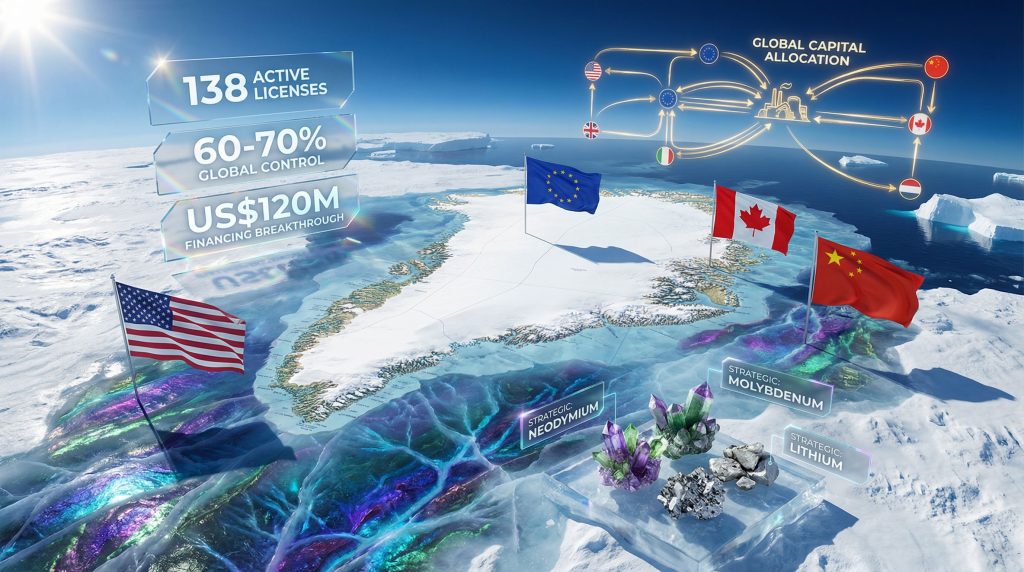
Greenland's mineral development landscape includes 138 active exploration licenses held by 67 different companies representing 23 nationalities. License concentration analysis reveals 34% held by Canadian companies, 28% by European entities, 19% by United Kingdom-based firms, and 19% by other international operators.
The Tanbreez rare earth project represents the most advanced development opportunity, with confirmed reserves of 4.5 million tonnes averaging 1.8% total rare earth oxides. Recent financing arrangements secured US$120 million in development capital through a combination of equity investment and offtake agreements with European end-users.
Production capacity targets for Tanbreez include 85,000 tonnes annually of rare earth concentrate, sufficient to supply approximately 12% of global demand outside Chinese production. The project's heavy rare earth content, including dysprosium and terbium, commands premium pricing due to supply scarcity and wind turbine magnet applications.
Major project development status:
| Project | Operator | Mineral Focus | Development Stage | Production Target |
|---|---|---|---|---|
| Tanbreez | Critical Metals | Rare earths | Pre-production | 85,000 mt/year |
| Malmbjerg | Greenland Resources | Molybdenum | Permitting | 25% EU demand |
| Nalunaq | Angel Mining | Gold | Operating | 60,000 oz/year |
| Kvanefjeld | Energy Transition | REE/Uranium | Environmental review | Suspended |
The Malmbjerg molybdenum project contains estimated reserves of 216 million tonnes at 0.18% molybdenum, representing one of the world's largest undeveloped molybdenum deposits. European steel producers have signed preliminary offtake agreements covering 70% of planned production, providing revenue visibility that improves project financing prospects.
Environmental permitting remains the critical bottleneck for most projects, with assessment processes requiring 2-4 years for completion. Community consultation requirements involve 14 separate indigenous communities across different regions, each with distinct cultural protocols and economic expectations.
Operational Timeline Realities
Arctic mining development follows predictable seasonal patterns that significantly impact construction schedules and operational planning. Ice-free shipping seasons extend from late June through mid-October, constraining heavy equipment delivery to 16-18 week windows annually.
Construction phase scheduling:
- Year 1-2: Environmental baseline studies, community engagement
- Year 3-4: Detailed engineering, equipment procurement
- Year 5-6: Infrastructure construction during summer seasons
- Year 7-8: Processing plant installation, commissioning
- Year 9+: Commercial production, optimization phases
Workforce requirements during construction peaks reach 800-1,200 personnel, with 65-75% requiring importation from southern locations. Housing infrastructure must accommodate extreme weather conditions, with construction costs averaging US$85,000-120,000 per accommodation unit.
Power generation represents a critical infrastructure challenge, with most projects requiring 35-50 megawatts of reliable capacity. Diesel generation costs US$0.32-0.45 per kilowatt-hour, compared to US$0.08-0.12 for grid-connected operations in temperate regions.
Infrastructure Development Economics
Port development costs for Arctic mining operations average US$180-250 million per facility, depending on water depth, ice conditions, and cargo handling requirements. Deep-water ports capable of accommodating 50,000-80,000 tonne bulk carriers require specialized ice-strengthened infrastructure and year-round icebreaker support.
Transportation logistics combine multiple modes including ice-strengthened shipping, helicopter transport, and seasonal ice roads for different cargo types. Shipping costs average US$45-65 per tonne for bulk commodities, compared to US$12-18 per tonne for conventional shipping routes.
Infrastructure investment breakdown:
- Port facilities: US$180-250 million per major facility
- Power generation: US$85-125 million for 35-50 MW capacity
- Housing/accommodations: US$95-140 million for 800-1200 personnel
- Processing facilities: US$350-480 million depending on complexity
- Transportation equipment: US$65-95 million for specialized vehicles
Maintenance costs in Arctic conditions exceed temperate climate operations by 180-220% due to extreme temperature cycling, corrosive salt exposure, and equipment stress from ice conditions. Spare parts inventory requirements increase by 300-400% compared to conventional mining operations.
Regulatory Framework Navigation
Greenland's Mineral Resources Act establishes comprehensive environmental standards requiring zero net environmental impact for new mining operations. This standard necessitates advanced remediation planning and perpetual environmental monitoring programs that add US$15-25 million annually to operational costs.
Uranium content restrictions limit projects to 300 parts per million uranium in ore concentrates, effectively excluding many rare earth deposits from development consideration. This threshold eliminates approximately 40% of identified REE deposits from commercial viability, concentrating development focus on lower-grade, uranium-free formations.
Community benefit-sharing agreements require 3-5% of gross revenues directed toward local economic development programs. These payments often include employment preferences for indigenous workers, skills training programs, and infrastructure development contributions extending beyond mining operations.
Regulatory approval timeline components:
- Environmental impact assessment: 18-24 months
- Community consultation process: 12-18 months
- Permitting authority review: 8-12 months
- Appeals and revision period: 6-12 months
- Final permit issuance: 2-4 months
Tax treatment for mining operations includes royalty rates of 5-7.5% on gross production value, corporate tax rates of 25%, and accelerated depreciation schedules for infrastructure investments. Recent policy changes reduced permitting fees by 35% and streamlined approval processes to encourage investment.
Market Dynamics and Valuation Considerations
Commodity price volatility significantly impacts Arctic mining project economics due to extended development timelines and high fixed costs. Rare earth element prices fluctuate 40-60% annually based on Chinese export policies, technology sector demand, and geopolitical tensions affecting supply chains.
Critical mineral price sensitivity analysis:
| Mineral | Price Range (2026) | Break-even Threshold | Profit Margin at Current Prices |
|---|---|---|---|
| Neodymium | US$85-125/kg | US$78/kg | 18-35% |
| Dysprosium | US$380-520/kg | US$295/kg | 22-43% |
| Molybdenum | US$42-58/kg | US$36/kg | 14-28% |
| Lithium carbonate | US$28-45/kg | US$24/kg | 12-32% |
Long-term contract structures provide price stability through take-or-pay agreements with European industrial consumers. These contracts typically include price floor mechanisms set at 85-90% of current spot prices, providing downside protection while allowing 65-75% upside participation.
Strategic stockpiling policies create additional demand layers beyond industrial consumption. European Union stockpile targets require 90 days of critical mineral inventory, representing approximately 15-20% demand increase beyond traditional industrial requirements.
Furthermore, the energy transition imperative drives unprecedented demand for these resources, whilst uranium investment trends continue to shape overall market sentiment.
Investment Vehicle Optimization
Direct equity investment in development-stage projects offers highest return potential but requires patient capital with 7-12 year investment horizons. Typical equity returns range 25-45% annually for successful projects, but failure rates approach 60-70% for early-stage exploration investments.
Streaming agreements provide lower-risk exposure with moderate return profiles averaging 12-18% annually. These structures involve upfront capital payments in exchange for future production delivery at predetermined prices typically 20-35% below market rates.
Investment structure comparison:
- Direct equity: High risk/reward, 25-45% returns, 60-70% failure rate
- Streaming deals: Moderate risk/reward, 12-18% returns, 25-35% failure rate
- Offtake agreements: Lower risk/reward, 8-15% returns, 15-20% failure rate
- Infrastructure investment: Stable returns, 10-14% annually, 5-10% failure rate
Public market exposure through Arctic-focused mining ETFs provides diversified exposure but often includes non-Greenlandic assets that dilute pure-play exposure. These funds typically carry expense ratios of 0.65-0.95% annually and exhibit beta coefficients of 1.15-1.35 relative to broader mining indices.
Currency hedging strategies become essential given multi-year project development cycles and Danish krone exposure. Forward contracts covering 50-70% of expected cash flows help manage foreign exchange risk while preserving upside participation in favourable currency movements.
The next major ASX story will hit our subscribers first
Production Timeline Catalyst Analysis
Commercial production milestones create significant value inflection points for Arctic mining investments. The transition from development-stage to revenue-generating operations typically results in 200-400% valuation increases for successful projects.
2026-2030 production catalyst timeline:
| Year | Major Milestones | Expected Impact | Investment Implications |
|---|---|---|---|
| 2026 | Tanbreez pilot plant | Proof of concept | 25-40% value increase |
| 2027 | Malmbjerg permitting | Regulatory clarity | 15-25% value increase |
| 2028 | Infrastructure completion | Construction progress | 30-50% value increase |
| 2029 | Production ramp-up | Revenue generation | 100-200% value increase |
| 2030 | Commercial optimisation | Cash flow stability | 50-85% value increase |
Market timing strategies must account for seasonal operational windows and commodity price cycles. Fourth quarter positioning often proves optimal as winter weather limitations create supply tightness that supports higher commodity prices.
Greenland critical minerals development continues to attract significant attention from both institutional and strategic investors, particularly as Reuters reports that investor interest has increased significantly following recent geopolitical developments.
Early-stage investment advantages include lower entry valuations and higher ownership percentages, but require sophisticated risk assessment and diversification strategies to manage high failure rates. Late-stage investment offers greater certainty but lower return multiples as project risk diminishes.
Long-term Strategic Positioning
Scenario planning frameworks help investors navigate uncertain political and economic conditions affecting Arctic mining investments. Base case scenarios assume continued geopolitical tensions driving strategic mineral demand, while bear case scenarios consider technology substitution or political reconciliation reducing supply premium valuations.
Scenario probability weighting:
- Accelerated development (30% probability): Continued geopolitical pressure, government support
- Steady development (45% probability): Gradual progress, moderate government backing
- Delayed development (20% probability): Environmental constraints, regulatory complications
- Disrupted development (5% probability): Major political changes, technology substitution
Portfolio integration strategies require correlation analysis with existing mining investments and broader market exposure. Arctic mining investments typically exhibit low correlation (0.15-0.35) with traditional mining stocks, providing meaningful diversification benefits for resource-focused portfolios.
Exit strategy planning must accommodate illiquid investment structures and limited secondary market options. Strategic acquirer interest from major mining companies and government entities provides potential exit pathways, but timing flexibility remains limited compared to public market investments.
However, the US-China trade war impact continues to influence investor sentiment and strategic positioning decisions. In addition, Forbes analysis suggests that ongoing political developments may further accelerate investment interest in the region.
Investment Positioning Framework:
Arctic mining opportunities in Greenland represent a unique convergence of geological abundance, strategic importance, and geopolitical catalysts. Whilst operational challenges and regulatory complexities create significant barriers, the strategic imperative of supply chain diversification continues driving international capital allocation. Success requires sophisticated risk management, patient capital deployment, and comprehensive understanding of both geological potential and political dynamics shaping long-term project viability.
Disclaimer: This analysis contains forward-looking statements and projections based on current market conditions and available information. Arctic mining investments involve significant risks including operational challenges, regulatory uncertainty, commodity price volatility, and geopolitical instability. Past performance does not guarantee future results. Investors should conduct thorough due diligence and consider their risk tolerance before making investment decisions.
Could Arctic Mining Discoveries Transform Your Investment Strategy?
Discovery Alert's proprietary Discovery IQ model delivers real-time alerts on significant ASX mineral discoveries, instantly identifying opportunities in critical minerals and strategic resources that could benefit from the Arctic mining transformation. Explore how major mineral discoveries have generated substantial returns by visiting Discovery Alert's dedicated discoveries page and begin your 14-day free trial today to position yourself ahead of the market.