May 22, 2026
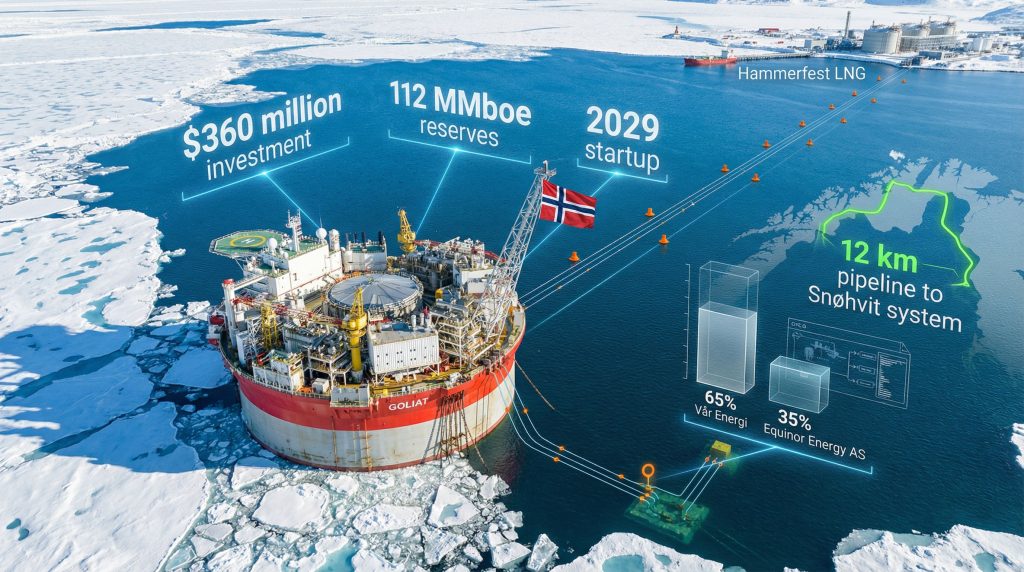
Arctic offshore energy development has transformed dramatically as aging oil fields evolve beyond traditional extraction models. The integration of advanced subsea infrastructure with existing production platforms represents a pivotal shift in resource optimization strategies, where previously stranded gas reserves become commercially viable export commodities. The Goliat Gas Export project exemplifies this technological convergence, addressing dual objectives of extending field economics while contributing to regional energy security through established processing networks.
Modern offshore operations increasingly demonstrate how mature assets can be repositioned as integrated hydrocarbon hubs rather than single-commodity producers. The conversion of pressure maintenance systems into revenue-generating export infrastructure exemplifies this strategic evolution, where reservoir management techniques simultaneously support enhanced oil recovery and gas monetization programs.
Understanding Arctic Gas Infrastructure and Regional Integration
The Barents Sea has emerged as a critical testing ground for advanced offshore energy technologies, where harsh environmental conditions demand robust engineering solutions and integrated operational approaches. Regional infrastructure development in this Arctic frontier relies heavily on interconnected pipeline networks that reduce individual project capital requirements while maximizing resource utilization across multiple fields.
The Snøhvit pipeline system serves as the backbone for regional gas transportation, spanning 80 kilometers to connect offshore production facilities with the Hammerfest LNG processing plant. This established infrastructure enables new projects to leverage existing transportation and processing capacity rather than requiring standalone facilities, fundamentally altering project economics and environmental footprints.
Key Regional Infrastructure Components:
- Established pipeline networks connecting multiple offshore fields
- Centralized LNG processing at Hammerfest facility
- Gas banking mechanisms enabling flexible capacity allocation
- Hub-and-spoke development model for future discoveries
The integration model demonstrates how Arctic energy development has evolved from isolated field operations toward coordinated regional systems. This approach reduces per-unit development costs while creating opportunities for smaller discoveries to achieve commercial viability through shared infrastructure utilization.
When big ASX news breaks, our subscribers know first
Gas Reinjection Technology and Enhanced Recovery Systems
Pressure maintenance through gas reinjection represents a fundamental petroleum engineering principle designed to maximize hydrocarbon recovery from reservoir formations. In offshore environments, this technique becomes particularly critical due to the high capital costs associated with platform installations and the need to optimize production throughout extended field lives.
The technical mechanics of gas reinjection systems involve capturing produced gas, processing it to remove contaminants, and reinjecting it into specific reservoir zones to maintain formation pressure above bubble-point pressures. This process ensures continued oil mobility and prevents premature production decline that would otherwise occur through natural reservoir depletion.
Core Reinjection System Functions:
- Reservoir pressure maintenance above critical bubble-point thresholds
- Enhanced oil recovery through sustained formation energy
- Production decline mitigation extending field productive life
- Gas inventory management for future monetization opportunities
The evolution from pure reinjection to dual-purpose systems represents a significant advancement in field development strategy. Rather than treating reinjected gas as an operational necessity, modern approaches view this resource as future revenue potential that can be monetized when market conditions and infrastructure capacity align favorably.
Advanced reservoir modeling techniques enable operators to optimize the balance between pressure maintenance requirements and exportable gas volumes. Furthermore, these strategies ensure maximum recovery from both oil and gas phases throughout the field's productive life.
Infrastructure Components and Subsea Engineering Solutions
The Goliat Gas Export project demonstrates sophisticated subsea engineering designed to integrate new export capabilities with existing production infrastructure. The system architecture combines multiple technological components to enable simultaneous oil production optimization and gas export operations without compromising existing operational safety protocols.
| Infrastructure Component | Specification | Primary Function |
|---|---|---|
| Gas Export Pipeline | 12 kilometers | Connects FPSO to regional network |
| Subsea Gas Riser | Variable depth | Facilitates controlled gas flow |
| Control Umbilical | Integrated system | Enables remote operation management |
| FPSO Modifications | Processing upgrades | Supports dual-phase operations |
The 12-kilometer gas export pipeline represents the critical connection between the Goliat FPSO and the established Snøhvit pipeline network. This subsea installation must withstand Arctic conditions including ice loading, extreme temperature variations, and challenging installation weather windows that limit construction activities to specific seasonal periods.
Subsea System Integration Requirements:
- Arctic-rated materials resistant to low-temperature embrittlement
- Remote monitoring capabilities for harsh environment operations
- Emergency shutdown systems integrated across multiple platforms
- Modular expansion provisions for future field developments
The umbilical network provides essential control and power distribution for remote subsea equipment operation. This system enables real-time monitoring and control of gas flow rates, pressure management, and emergency response protocols from the FPSO control room, ensuring operational safety in challenging Arctic conditions.
FPSO modifications represent perhaps the most technically complex aspect of the project, requiring integration of new processing equipment with existing oil production systems. These modifications must be accomplished without disrupting ongoing operations, demanding precise engineering coordination and phased implementation strategies.
Economic Transformation and Resource Monetization Strategy
The Goliat Gas Export project fundamentally transforms field economics by converting previously non-revenue generating resources into exportable commodities. With 112 million barrels of oil equivalent in proved plus probable reserves, including approximately 15 percent oil content, the project extends field life while creating new revenue streams from existing infrastructure investments.
The $360 million gross pre-tax investment represents a mid-scale Arctic development project that leverages existing infrastructure to minimize capital intensity per barrel of equivalent production. This investment approach demonstrates how mature field redevelopment can achieve attractive economics through strategic infrastructure sharing and operational optimization.
Revenue Stream Optimization:
- Immediate incremental oil production from enhanced reservoir management
- Staged gas monetization aligned with processing capacity availability
- Extended field life to approximately 2050 representing 10-year extension
- Hub development potential for neighboring discoveries
The project timeline targets third-quarter 2029 for production startup, allowing sufficient lead time for subsea installation, FPSO modifications, and system integration testing. This schedule aligns with regional infrastructure capacity planning and market development projections for Arctic gas resources.
Gas banking arrangements with the Snøhvit system provide operational flexibility by enabling gas volumes to be stored and released as downstream processing capacity becomes available at the Hammerfest LNG facility. However, this mechanism prevents forced sales at suboptimal market conditions while maintaining production efficiency.
The economic model demonstrates how resource categories can be transformed through infrastructure investment. Gas previously classified as operational expense for pressure maintenance becomes a revenue-generating asset, while enhanced oil recovery extends the productive life of existing reserves beyond traditional decline curves.
Environmental Compliance and Zero-Emission Operations
Arctic offshore operations face stringent environmental regulations due to the sensitive ecosystem and challenging remediation conditions in polar environments. The Goliat Gas Export project operates within established regulatory frameworks while maintaining zero incremental CO2 emissions through complete electrification from shore-based power sources.
The project introduces no additional carbon emissions to Arctic operations as the Goliat field operates with full electrification from shore-based renewable energy sources, eliminating the need for additional power generation equipment.
The electrification model represents advanced Arctic operational practice where shore-based power eliminates the need for platform-mounted generators, reducing both emissions and operational complexity. This approach aligns with Norwegian environmental policies emphasizing low-carbon offshore energy development and supports broader decarbonisation benefits across the energy sector.
Environmental Compliance Framework:
- Plan for Development and Operation (PDO) submitted to Ministry of Energy
- Environmental impact assessments for subsea installations
- Zero incremental emissions through existing electrification systems
- Arctic operational standards for year-round production safety
The regulatory approval process for Arctic developments requires comprehensive environmental impact documentation, including marine ecosystem assessments, ice interaction studies, and emergency response planning for extreme weather conditions. These requirements ensure operational safety while protecting sensitive Arctic marine environments.
Regional Hub Development and Strategic Positioning
The Goliat Gas Export project positions the field as a potential hub for multi-field development in the Barents Sea, with infrastructure designed to accommodate future tie-ins from nearby discoveries. The Goliat Ridge development represents the first planned integration, demonstrating the hub concept's commercial viability.
Partnership Structure and Ownership:
| Partner | Ownership Stake | Operational Role |
|---|---|---|
| Vår Energi | 65% (Operator) | Project management and operations |
| Equinor Energy AS | 35% | Technical expertise and co-financing |
The hub-and-spoke development model reduces per-unit development costs for future discoveries by utilizing established infrastructure for transportation and processing. This approach creates economies of scale that make smaller discoveries economically viable while maximizing returns from infrastructure investments.
Regional development coordination enables exploration activity to concentrate around existing infrastructure, increasing the probability of commercial discoveries through reduced development costs and shortened project timelines. Consequently, this clustering effect accelerates regional resource development while optimizing capital allocation across multiple opportunities.
The strategic positioning within Production License 229 provides regulatory precedent for expansion activities while maintaining operational consistency across related developments. This framework facilitates permitting processes and reduces regulatory uncertainty for future project phases.
The next major ASX story will hit our subscribers first
Broader Arctic Energy Development Implications
The project demonstrates technological approaches applicable to other Arctic offshore developments, where harsh environmental conditions and remote locations create similar engineering and economic challenges. The successful integration of export infrastructure with existing production systems provides a template for mature field redevelopment strategies.
Technology Transfer Applications:
- Subsea engineering solutions for extreme environment operations
- Infrastructure integration methodologies for aging platforms
- Gas evacuation techniques for remote offshore locations
- Arctic installation procedures for year-round operations
Supply chain implications extend beyond immediate project requirements to encompass long-term regional development support. The concentration of specialized Arctic offshore capabilities in the Hammerfest region creates a center of expertise that supports broader Barents Sea development activities.
European energy security contributions through LNG exports demonstrate how Arctic resources can contribute to continental energy diversification strategies. In addition, the connection to established processing infrastructure enables flexible market access through both pipeline and LNG export channels.
Local economic impact includes employment stabilization in Arctic communities through extended field operations and service industry development. The 10-year life extension provides economic continuity for regional support services while maintaining specialized workforce capabilities.
Investment Economics and Risk Management Framework
The $360 million capital investment represents a disciplined approach to mature field redevelopment, where established reservoir characteristics and proven infrastructure reduce geological and technical risks compared to greenfield developments. This investment level demonstrates attractive economics for Arctic projects utilizing existing regional infrastructure and aligns with modern investment strategies for energy sector opportunities.
Risk Mitigation Elements:
- Proven reservoir performance from existing Goliat operations
- Established infrastructure connections to regional processing facilities
- Regulatory precedent for similar Arctic development projects
- Operational experience base from ongoing field operations
The phased implementation approach minimizes operational disruption by enabling modifications to proceed without halting existing production. This strategy preserves revenue streams during construction phases while allowing for technical adjustments based on initial system performance.
Capital allocation efficiency benefits from shared infrastructure utilization, where pipeline and processing costs are distributed across multiple resource streams rather than allocated to single-product developments. This approach improves project returns while reducing overall development risk through operational diversification.
Financial structuring through partnership arrangements enables risk sharing and technical expertise combination between Vår Energi's operational capabilities and Equinor's Arctic offshore experience. This collaboration model provides access to specialized knowledge while distributing capital requirements across proven industry participants.
Technical Challenges in Arctic Gas Export Operations
Arctic offshore operations present unique technical challenges requiring specialized engineering solutions and redundant safety systems. The combination of extreme temperatures, ice loading conditions, and remote location access creates operational constraints that demand innovative approaches to equipment design and maintenance strategies.
Environmental Engineering Considerations:
- Sub-zero operational temperature requirements for all equipment systems
- Ice management protocols for subsea infrastructure protection
- Remote maintenance capabilities minimizing personnel exposure
- Weather window optimization for critical construction activities
Installation complexity increases significantly in Arctic conditions where equipment deployment must occur within limited seasonal weather windows. The coordination of multiple subsea installations, FPSO modifications, and system integration testing requires precise scheduling to minimize weather-related delays and cost overruns.
Pipeline installation techniques for Arctic conditions involve specialized vessels and equipment capable of operating in ice-affected waters. The 12-kilometer pipeline installation requires careful route planning to avoid sensitive seafloor areas while maintaining optimal flow characteristics for gas transportation.
Safety system integration across multiple operational interfaces presents complex technical challenges where existing oil production systems must interface seamlessly with new gas export infrastructure. Emergency shutdown protocols must encompass both production streams while maintaining operational safety for personnel and environmental protection.
Material specifications for Arctic service require enhanced metallurgy and component design to withstand low-temperature operations, pressure cycling, and potential ice loading. These requirements increase component costs but ensure operational reliability throughout the extended Arctic operating season.
Future Development Scenarios and Regional Energy Hub Evolution
The successful implementation of the Goliat Gas Export project establishes infrastructure and operational precedents that support broader Barents Sea development activities. The hub concept enables future discoveries to achieve commercial viability through reduced development costs and accelerated project timelines.
Expansion Pathway Analysis:
- Additional field tie-ins from Goliat Ridge and nearby discoveries
- Processing capacity scaling at Hammerfest LNG facility
- Transportation infrastructure expansion for increased throughput
- Regional exploration activity concentration around proven infrastructure
Multi-field development coordination becomes increasingly attractive as infrastructure utilization rates improve and operational costs are distributed across multiple production streams. This coordination model enables smaller discoveries to contribute meaningful reserves to regional production totals.
The technology advancement integration potential includes enhanced production optimization techniques, improved subsea equipment reliability, and advanced reservoir management systems that maximize recovery rates across multiple fields simultaneously. Furthermore, these developments may benefit from broader natural gas trends affecting global market conditions.
Arctic expertise concentration in the region creates a competitive advantage for future projects through specialized workforce capabilities, proven equipment suppliers, and established operational procedures adapted to extreme environment conditions. This expertise clustering accelerates project development timelines while reducing technical risks through accumulated experience.
Regional energy security implications extend beyond immediate production volumes to encompass strategic resource diversification for European energy markets. The development of Arctic gas resources through established infrastructure provides flexible supply options during periods of geopolitical uncertainty in other supply regions.
What challenges exist for Arctic offshore development?
Arctic offshore development faces multiple interconnected challenges that require sophisticated engineering and operational responses. Extreme weather conditions limit construction and maintenance windows, while ice loading creates additional structural requirements for all infrastructure components.
Environmental sensitivity demands enhanced protection measures and comprehensive monitoring systems to ensure ecosystem preservation throughout project lifecycles. Regulatory complexity increases project timelines and compliance costs compared to conventional offshore developments in temperate regions.
Remote location access creates logistical challenges for equipment delivery, personnel transportation, and emergency response capabilities. Supply chain resilience becomes critical when weather conditions prevent routine access for extended periods.
How does gas banking work in Arctic operations?
Gas banking enables operators to manage production volumes independently from immediate downstream processing capacity. This mechanism allows produced gas to be stored temporarily within pipeline systems when processing facilities reach capacity limits or undergo maintenance.
The Barents Sea gas transportation system provides flexibility for multiple producers to coordinate deliveries with available processing slots at the Hammerfest LNG facility. This coordination optimizes both upstream production rates and downstream utilization efficiency.
Banking arrangements typically include volume allocation protocols, quality specifications, and scheduling procedures that ensure equitable access to transportation capacity. These systems become particularly valuable during seasonal demand variations or unplanned facility outages.
Investment Disclaimer: This analysis contains forward-looking statements and projections based on current market conditions and company announcements. Arctic offshore energy projects involve significant technical, environmental, and market risks that may affect actual outcomes. Investors should conduct independent analysis and consider professional advice before making investment decisions.
Could Arctic Gas Development Unlock Your Next Investment Opportunity?
Arctic offshore projects like the Goliat Gas Export development demonstrate how innovative infrastructure strategies are transforming mature energy assets into multi-revenue platforms. Discovery Alert's proprietary Discovery IQ model continuously monitors significant developments across energy and mineral sectors, delivering instant notifications when companies announce breakthrough projects or major resource discoveries. Begin your 14-day free trial today to position yourself ahead of the market with real-time insights into actionable investment opportunities.