August 14, 2026
Arctic Resource Economics: The True Cost of Greenland's Untapped Mineral Reserves
Global supply chains face unprecedented vulnerabilities as traditional resource dependencies shift toward Arctic territories previously considered economically inaccessible. The convergence of climate change, technological advancement, and geopolitical competition has transformed remote mineral deposits from geological curiosities into strategic assets worth trillions of dollars in potential economic value.
Furthermore, Greenland rare earth minerals have emerged as a critical frontier that could reshape global supply chains. The territory contains complex mineral formations that could address supply chain vulnerabilities, but only if massive infrastructure, technological, and social challenges can be economically overcome.
When big ASX news breaks, our subscribers know first
The Arctic's Emerging Role in Critical Materials Supply Chains
The global rare earth elements market faces fundamental structural imbalances that Greenland's mineral wealth could theoretically address. Current supply chain concentration creates systemic risks for industries ranging from renewable energy to defence manufacturing.
However, processing bottlenecks represent the most significant constraint to market expansion. This pivot in critical minerals strategy has become essential for Western nations.
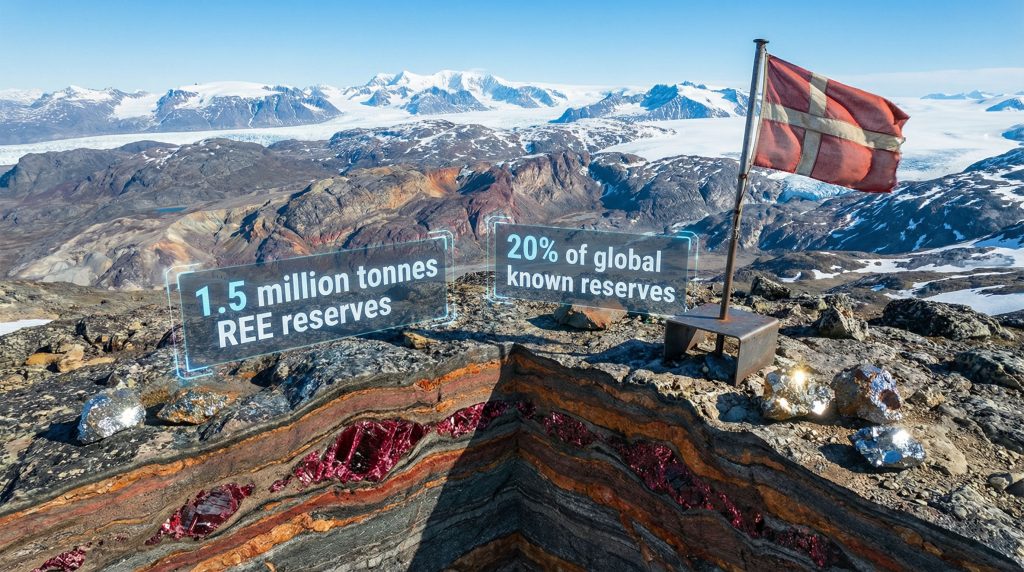
Greenland's geological formations contain an estimated 1.5 million tonnes of rare earth element reserves, though global reserve calculations vary significantly. According to the United States Geological Survey's 2024 Mineral Commodity Summaries, worldwide rare earth oxide equivalent reserves total approximately 120 million tonnes.
This suggests Greenland rare earth minerals represent roughly 1.25% of identified global reserves rather than the commonly cited 20% figure. The distinction between reserves and resources proves critical for understanding economic viability.
Strategic Positioning Within Complex Sovereignty Frameworks
Denmark's sovereignty over Greenland creates unique strategic dynamics within NATO security frameworks. The Kingdom of Denmark's membership in the North Atlantic Treaty Organisation extends defensive commitments to Greenlandic territory.
This includes existing military installations like Pituffik Space Base, formerly known as Thule Air Base until its official renaming in 2022. The facility's strategic value demonstrates how geographic location creates military relevance separate from resource economics.
Additionally, the development of an European CRM facility could strengthen these strategic partnerships.
Quantifying Greenland's Resource Potential Against Global Market Forces
Greenland's Position in Global Rare Earth Markets
| Metric | Greenland Estimates | Global Context |
|---|---|---|
| REE Reserves | ~1.5 million tonnes REO | ~120 million tonnes worldwide |
| Processing Infrastructure | Limited pilot facilities | China controls 60-70% separation capacity |
| Major Identified Deposits | 8+ significant locations | Concentrated in politically sensitive regions |
| Transportation Access | Seasonal/limited ports | Year-round accessibility required for scale |
China's dominance in rare earth processing represents the primary strategic chokepoint rather than raw material extraction capacity. The United States Department of Energy's Critical Materials Strategy identifies processing as the fundamental constraint.
Moreover, current processing capacity outside China remains insufficient to handle significant new ore production. This creates scenarios where newly extracted minerals could still require processing through Chinese facilities.
Geological Composition and Metallurgical Complexity Challenges
Greenland rare earth minerals differ fundamentally from conventional ores mined elsewhere globally. The predominance of eudialyte-dominated ore bodies presents unique metallurgical challenges that current processing technologies struggle to address economically.
Eudialyte represents a complex silicate mineral requiring sophisticated separation techniques. Traditional approaches used for monazite or xenotime ores prove inadequate for eudialyte extraction, necessitating development of specialised processing technologies.
What Makes Kakortokite Formations Unique?
Southern Greenland's kakortokite formations contain the highest concentrations of rare earth elements, particularly around the Kvanefjeld and Sarfartoq project areas. These alkaline igneous complexes formed during specific geological periods.
The formations create unique mineral assemblages not found in traditional rare earth mining regions. Technical readiness levels for processing these formations remain at early development stages, requiring significant research investment.
Arctic Infrastructure Economics and Operational Cost Multipliers
Arctic mining operations face cost structures fundamentally different from temperate climate mining. Infrastructure limitations, seasonal accessibility constraints, and specialised equipment requirements create substantial cost multipliers.
Industry analyses suggest Arctic operations can cost 3-5 times more than equivalent temperate region projects. Transportation costs typically exceed temperate equivalents by 30-50% due to limited infrastructure networks.
Critical Infrastructure Gaps:
• Port facilities: Current ports cannot handle large-scale mineral export volumes
• Power generation: Electricity infrastructure inadequate for energy-intensive processing
• Transportation networks: Road and rail connections largely non-existent
• Communication systems: Reliable data networks required for modern mining operations
• Emergency services: Search and rescue capabilities insufficient for industrial operations
How Do Seasonal Constraints Affect Mining Economics?
Greenland's mining potential faces fundamental limitations from seasonal accessibility patterns. Sea ice conditions, weather patterns, and daylight variations create operational constraints unknown in traditional mining regions.
Current shipping seasons allow approximately 4-6 months of reliable ocean access depending on specific port locations. This seasonal limitation requires either stockpiling capabilities that dramatically increase capital costs or year-round logistics solutions.
The next major ASX story will hit our subscribers first
Climate Change Impacts on Mining Economics
Climate change creates contradictory effects on Greenlandic mining economics. It simultaneously improves access whilst increasing infrastructure costs and operational unpredictability.
Reduced sea ice coverage extends potential operational seasons, providing longer windows for equipment transport. However, permafrost degradation increases foundation costs for mining infrastructure, whilst changing weather patterns create logistical unpredictability.
What Are the Infrastructure Stability Challenges?
Active layer thaw in southern Greenland affects foundation stability for mining infrastructure. This requires specialised construction techniques and ongoing maintenance protocols that significantly increase costs.
Permafrost research indicates active layer thickness could increase 1-3 metres by 2050, fundamentally altering ground conditions. Mining operations typically require stabilisation techniques including thermosyphons and specialised foundation designs.
Major Greenlandic Rare Earth Projects: Economic Analysis
Critical Metals' Tanbreez Project Development Strategy
Critical Metals Limited has identified 45 million tonnes of rare earth resources at its Tanbreez project. This represents one of Greenland's most advanced development prospects with a modular approach planning production scaling.
The company plans scaling from 85,000 tonnes annually through pilot operations toward potential 425,000 tonne full-scale production. The 2026 pilot plant timeline represents a crucial proof-of-concept for Greenlandic rare earth extraction economics.
How Have Regulatory Challenges Affected Kvanefjeld?
The Kvanefjeld project contained over 1.0 billion tonnes of resources at 1.10% Total Rare Earth Oxides. However, Greenland's 2021 uranium mining ban effectively suspended the project due to uranium byproduct presence.
Multi-billion dollar compensation claims have emerged from project suspension. These disputes highlight regulatory risk premiums that investors must consider when evaluating Greenlandic projects compared to politically stable mining jurisdictions.
What Alternative Development Approaches Are Emerging?
Neo Performance Materials' involvement in Sarfartoq and Motzfeldt Sø projects represents alternative development approaches. The company focuses on integration with existing processing facilities, with Estonian refining capabilities potentially providing downstream processing.
Furthermore, these integration strategies suggest recognition that successful Greenlandic mining requires coordinated development of extraction and processing capabilities rather than isolated mining operations.
Processing Infrastructure Dependencies and Strategic Vulnerabilities
The fundamental strategic challenge lies not in extraction but in processing capacity limitations outside Chinese control. China's dominance in rare earth separation creates scenarios where newly mined Greenlandic ore could still flow through Chinese facilities.
Global Rare Earth Processing Landscape:
• Chinese facilities: Control 60-70% of separation capacity globally
• Western alternatives: Limited to MP Materials (California), Energy Fuels (Utah), and small specialised facilities
• Planned expansions: Multiple Western projects announced but few achieving commercial production
• Technology transfer: Chinese processing expertise remains largely proprietary
• Capital requirements: Western processing facilities require $500M-$2B+ investment per facility
Why Are Midstream Bottlenecks Critical?
Controlling ore extraction without corresponding processing capabilities creates limited strategic value for supply chain security. The experience of MP Materials at Mountain Pass demonstrates that even Western-controlled mines can remain dependent on Chinese processing.
Until Western processing capacity expansion reaches commercial scale, new Greenlandic production risks becoming symbolic victories. This relationship between critical minerals energy-security remains paramount for strategic independence.
Social License Requirements and Community Economics
Mining development in Greenland faces social license requirements that function as effective veto power over project advancement. Community consent represents a fundamental prerequisite that cannot be bypassed through political or financial pressure.
Key Social License Factors:
• Environmental impact: Fishing industry concerns over water contamination risks
• Cultural preservation: Protection of traditional land use practices
• Economic benefits: Local employment and revenue sharing requirements
• Tourism conflicts: Potential interference with emerging tourism sector
• Democratic process: Parliamentary approval requirements and public consultation
What Revenue Sharing Models Are Required?
Successful mining development requires credible commitments to local economic benefits beyond temporary construction employment. Greenlandic communities expect long-term economic participation through revenue sharing and local hiring preferences.
The failure of previous projects partially stems from inadequate attention to local economic integration. Future success requires genuine partnership approaches rather than extraction-focused development models.
Economic Risk Assessment for Greenlandic Mining Investments
Investment Risk Categories and Mitigation Costs
| Risk Factor | Impact Level | Mitigation Requirements | Estimated Costs |
|---|---|---|---|
| Metallurgical complexity | Very High | Specialised R&D programmes | $500M-$1B+ |
| Arctic infrastructure | Extreme | Port, power, transport development | $2-5B+ per project |
| Regulatory uncertainty | High | Legal compliance, social licence | Ongoing 5-10% of revenue |
| Processing dependency | Very High | Western facility development | $1-3B+ industry-wide |
| Climate variability | Medium | Weather-resistant design | 15-25% construction premium |
Investment decision frameworks must incorporate risk premiums for Arctic operations and regulatory uncertainties. Standard discounted cash flow models may inadequately capture these unique risk profiles that affect Greenland rare earth minerals development.
Geopolitical Competition and Strategic Value Calculations
Greenlandic rare earth development occurs within broader geopolitical competition for critical materials supply chain control. NATO security considerations, EU Critical Raw Materials Act positioning, and US-China strategic competition create value calculations beyond pure commodity economics.
The proximity to Pituffik Space Base adds military strategic dimensions independent of mineral extraction activities. Arctic surveillance capabilities create multiple layers of strategic value that complicate simple economic analyses.
How Do Investment Flows Reflect National Interests?
European Union strategic partnership initiatives with Greenland reflect recognition of critical materials importance. These partnerships potentially provide patient capital and technical support that pure commercial investors might not offer.
Chinese investment restrictions in Greenland mining demonstrate how strategic considerations override pure market mechanisms. This Greenland mineral strategy reflects broader geopolitical dynamics.
Timeline Analysis for Economic Viability
Greenlandic rare earth projects face development timelines significantly longer than traditional mining operations. Infrastructure requirements, processing technology development, and social licence complexities create extended development cycles.
Projected Development Milestones:
• 2026-2028: Pilot operations and proof-of-concept demonstration
• 2028-2032: Infrastructure development and financing arrangements
• 2032-2035: Full-scale production commencement (optimistic scenario)
• 2035-2040: Mature operations and supply chain integration
What Investment Requirements Are Necessary?
Total sector development potentially requires $10-20 billion in combined mining, infrastructure, and processing investments. Individual projects face capital requirements of $2-5 billion each.
This necessitates novel financing approaches that blend commercial investment with strategic government support. Green transition financing opportunities may provide favourable capital costs for projects demonstrating environmental compliance.
Market Price Dynamics and Economic Sensitivity Analysis
Rare earth price volatility significantly affects project economics for high-cost Arctic operations. Historical price cycles demonstrate that brief price spikes often reverse before long-term development projects can capitalise.
Scenario Analysis: Price Impact on Project Viability
A sustained 50% increase in rare earth prices could potentially accelerate Greenlandic project development by 2-3 years. However, such price increases typically attract supply responses from existing producers.
Conversely, price declines of 25-30% could delay projects indefinitely. Arctic operations require premium pricing to justify their inherent cost disadvantages compared to conventional mining regions.
Processing Capacity Development Requirements
Western rare earth processing facility development represents the critical path constraint for Greenlandic mining success. Current Western processing capacity remains insufficient to handle significant new production volumes from Greenland rare earth minerals.
Required Processing Infrastructure Development:
• Separation facilities: Multiple large-scale plants needed across North America and Europe
• Refining capabilities: Secondary processing for high-purity products
• Magnet manufacturing: Downstream integration for strategic applications
• Technology development: Specialised techniques for eudialyte-based ores
• Skilled workforce: Technical expertise currently concentrated in China
What Economic Incentives Are Required?
Government incentives, tax credits, and strategic partnerships may prove necessary to justify economic risks. Pure market mechanisms may prove insufficient to overcome Chinese cost advantages and established supply relationships.
The Greenland Minerals Fantasy article highlights the complexity of these challenges. The U.S. Inflation Reduction Act and EU Critical Raw Materials Act provide policy frameworks supporting domestic processing development.
Long-term Economic Development Models
Successful Greenlandic rare earth development requires economic models that extend beyond traditional extractive industry approaches. Integration with broader industry innovation trends becomes essential for sustainable development.
Sustainable Development Integration Requirements:
• Local employment: Long-term job creation beyond construction phases
• Skills development: Technical training and education programmes
• Revenue sharing: Transparent benefit distribution mechanisms
• Environmental protection: Ecosystem preservation alongside development
• Economic diversification: Reduced dependence on single-commodity economics
What Market Share Potential Exists?
Over a 10-20 year development horizon, Greenlandic production could potentially capture 15-25% of global rare earth market share. However, this requires coordinated development across multiple project sites and processing facilities.
Integration with North American and European supply chains offers the strongest pathway for market penetration. This particularly applies to defence and renewable energy applications where supply chain security commands premium pricing.
Economic Success Metrics and Development Indicators
Measuring success for Greenlandic rare earth development requires metrics beyond traditional mining project indicators. Social, environmental, and strategic considerations create multidimensional success criteria that reflect the unique nature of Arctic resource development.
Economic Impact Projections:
• GDP contribution: Potential 15-25% impact from full sector development
• Employment creation: 2,000-5,000 direct jobs plus multiplier effects
• Government revenues: Significant royalty and tax generation potential
• Infrastructure benefits: Transportation and power improvements serving broader economy
• Knowledge transfer: Technical expertise development with broader applications
The economic transformation potential extends beyond mining operations toward broader Arctic development capabilities. Furthermore, this positions Greenland strategically within global critical materials markets, creating lasting economic benefits.
According to BBC analysis, the global scramble for Greenland's resources reflects the strategic importance of these deposits. However, success requires balancing economic opportunities with environmental protection and community interests.
Disclaimer: This analysis contains forward-looking projections and speculative assessments based on currently available information. Actual development outcomes may differ significantly from projections due to technological, political, economic, and environmental factors. Investment decisions should incorporate comprehensive due diligence and professional financial advice.
Ready to Invest in the Next Major Mineral Discovery?
Discovery Alert instantly alerts investors to significant ASX mineral discoveries using its proprietary Discovery IQ model, turning complex mineral data into actionable insights. Understand why historic discoveries can generate substantial returns by exploring Discovery Alert's dedicated discoveries page, showcasing historic examples of exceptional outcomes, and begin your 30-day free trial today to position yourself ahead of the market.