July 1, 2026
Arctic Resource Politics Reshape Global Critical Mineral Strategies
The intersection of environmental policy and resource sovereignty increasingly defines access to critical minerals energy transition needed for clean energy infrastructure. Arctic regions, particularly Greenland, have emerged as focal points where indigenous governance intersects with Western supply chain security concerns, creating complex dynamics that extend far beyond traditional mining economics.
Resource nationalism in polar territories reflects broader shifts in how small autonomous regions assert control over mineral wealth. These decisions carry implications that ripple through global supply chains, affecting everything from renewable energy manufacturing costs to geopolitical strategic planning. Understanding these dynamics requires examining both immediate project-level impacts and longer-term structural changes in critical mineral access patterns.
When big ASX news breaks, our subscribers know first
How Regulatory Frameworks Control Arctic Mineral Development
Understanding Greenland's Legislative Approach to Uranium-Associated Projects
Greenland's 2021 Uranium Act represents a significant shift in Arctic resource governance, establishing comprehensive restrictions on uranium-related mining activities. This December 2021 legislation effectively prohibits uranium prospecting, exploration, and exploitation, creating regulatory barriers for projects containing uranium as a byproduct of rare earth extraction.
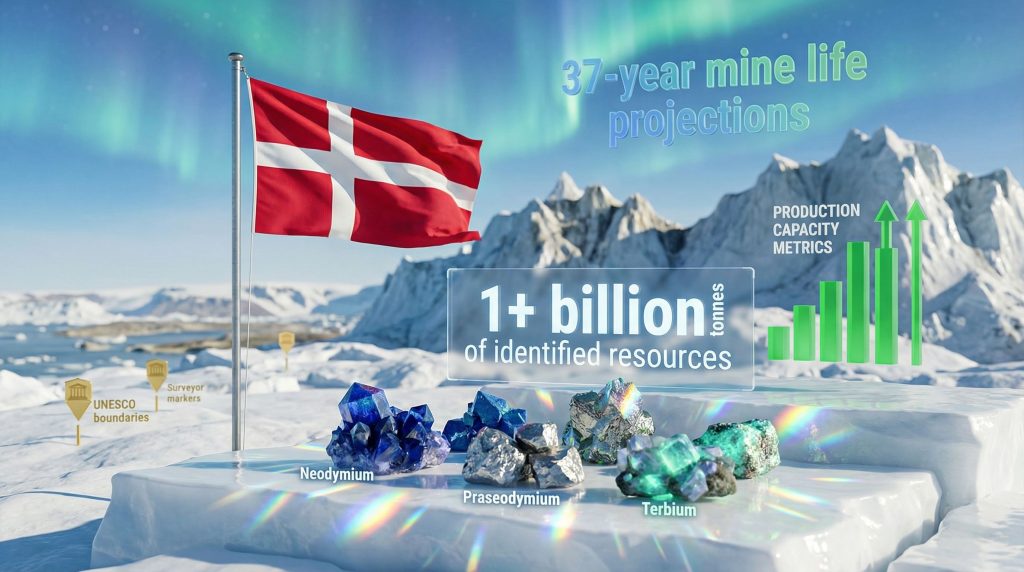
The Kvanefjeld rare earths project, operated by Energy Transition Minerals' subsidiary Greenland Minerals A/S, exemplifies how these regulatory changes affect large-scale development plans. The project, characterised as having potential to become a significant Western producer of Greenland critical minerals for consumer electronics manufacturing, faces licence renewal rejection under the new legislative framework.
Energy Transition Minerals experienced immediate market consequences following the Greenland rare earths licence rejection notification, with shares declining 5.6% to A$0.051 during trading resumption. This contrasted sharply with broader market performance, as the S&P/ASX 200 benchmark gained 1.5% on the same trading day, highlighting investor concerns about regulatory risk in Arctic mining jurisdictions.
Government Decision-Making Processes in Resource-Rich Territories
The Greenland government's rationale for the Kvanefjeld licence rejection centres on the position that exploration activities no longer serve a strategic purpose under current legislative parameters. This represents a fundamental shift from previous approaches, where the territory had granted licence renewals even during active legal disputes and following the 2021 Uranium Act's introduction.
This apparent inconsistency in regulatory application has prompted significant legal challenges. Energy Transition Minerals filed arbitration proceedings in Copenhagen during 2023, seeking resolution regarding Greenland Minerals A/S' legal right to obtain exploitation licences. Furthermore, the arbitration process highlights tensions between established property rights and evolving environmental legislation in autonomous territories.
The company has characterised Greenland's draft rejection as inconsistent with historical project treatment, raising questions about regulatory predictability in Arctic jurisdictions. This uncertainty affects not only current projects but also future investment decisions across similar geological and political environments.
Why Western Supply Chain Strategies Face Arctic Governance Challenges
Investment Risk Assessment in Politically Dynamic Regions
Arctic mining projects operate within complex political frameworks where autonomous territories balance resource development against environmental protection priorities. The Kvanefjeld situation demonstrates how legislative changes can fundamentally alter project viability, even for advanced-stage developments with substantial resource identification and infrastructure planning.
Arbitration proceedings initiated in Copenhagen reflect broader trends in international mining dispute resolution. These cases typically involve bilateral investment treaty protections, though the specific application of Denmark-Australia investment frameworks to Greenland operations remains subject to legal interpretation. The timeline for arbitration resolution often extends beyond immediate market expectations, creating prolonged uncertainty periods for affected companies and their stakeholders.
Sovereign risk pricing mechanisms increasingly incorporate environmental policy volatility alongside traditional political stability metrics. Mining companies operating in Arctic jurisdictions must account for regulatory framework evolution, particularly regarding uranium content thresholds and environmental protection priorities, similar to the Nova Scotia uranium ban approach.
Supply Chain Diversification Constraints in Remote Regions
The rejection of large-scale Arctic projects like Kvanefjeld affects Western critical mineral supply diversification strategies. Rare earth projects in Arctic regions offer potential advantages including proximity to North American and European processing facilities, reduced transportation costs compared to other remote locations, and operation within allied political frameworks.
However, Arctic operations also present unique challenges:
- Extreme weather conditions affecting year-round operations
- Limited infrastructure requiring substantial capital investment
- Environmental sensitivity in pristine Arctic ecosystems
- Complex jurisdictional arrangements between autonomous territories and parent nations
- Indigenous land rights considerations affecting project development
Alternative supply source development typically requires longer timelines and higher capital expenditure compared to projects in established mining jurisdictions. Consequently, this creates structural constraints on Western supply chain resilience improvement efforts.
Critical Mineral Supply Concentration Risks and Market Dynamics
Western Production Capacity Gaps in Rare Earth Elements
The Kvanefjeld project represented potential significance for Western rare earth production capacity, particularly given its scale and location within allied territory. Large-scale Western rare earth projects remain relatively rare, making individual project cancellations more consequential for overall supply security.
Current global rare earth production remains heavily concentrated in Asian markets, creating strategic vulnerabilities for Western renewable energy manufacturing. Key rare earth elements including neodymium and praseodymium are essential for permanent magnet production in wind turbines and electric vehicle motors.
The loss of potential Western production capacity from projects like Kvanefjeld affects several critical supply chain considerations:
- Manufacturing cost structures for renewable energy equipment
- Supply security during geopolitical tensions
- Technology development timelines for clean energy deployment
- Strategic reserve requirements for Western governments
Market Structure Implications of Reduced Western Supply Options
Rare earth market concentration creates price volatility risks and supply security concerns for Western manufacturers. When potential Western supply sources face regulatory barriers, existing suppliers may adjust pricing strategies and allocation priorities, particularly as nations develop their Australia strategic reserve capabilities.
Technology substitution research gains increased importance when supply diversification faces obstacles. Alternative magnet technologies, recycling improvements, and rare earth-free motor designs become more economically attractive when Western supply security decreases.
Investment flows tend to redirect toward lower-risk jurisdictions when Arctic projects face regulatory challenges. This can accelerate development in alternative locations whilst potentially increasing overall project development costs industry-wide.
How International Arbitration Shapes Future Arctic Mining Investment
Legal Framework Applications in Mining Disputes
The Copenhagen arbitration proceedings regarding Kvanefjeld establish important precedents for Arctic mining dispute resolution. International arbitration tribunals typically examine whether regulatory changes constitute expropriation under bilateral investment treaty frameworks, though outcomes vary significantly based on specific circumstances.
Key factors in mining arbitration cases include:
- Timing of regulatory changes relative to investment commitments
- Compensation mechanisms for stranded assets
- Environmental justification for policy modifications
- Due process requirements in licence decision-making
- Legitimate expectations based on prior government communications
The arbitration timeline typically extends 2-4 years from filing to final award, creating prolonged uncertainty periods for all stakeholders. During this time, companies cannot proceed with development activities, and governments face potential compensation obligations.
Resource Nationalism Trends in Arctic Governance
Greenland's approach to uranium-associated mining reflects broader resource nationalism trends among Arctic territories. Small autonomous regions increasingly prioritise environmental protection and resource sovereignty over foreign investment in extractive industries, contrasting with approaches like Trump's critical minerals order.
This shift affects investment climate considerations across Arctic jurisdictions:
- Risk premium adjustments for Arctic mining investments
- Due diligence requirements for regulatory framework stability
- Insurance cost increases for political risk coverage
- Financing availability for Arctic mining projects
Foreign direct investment patterns in Arctic mining may shift toward jurisdictions with more established regulatory frameworks and longer-term policy stability. This could benefit Canadian and Alaskan projects whilst creating challenges for Greenlandic and other autonomous Arctic territories seeking mining investment.
The next major ASX story will hit our subscribers first
Global Energy Transition Timeline Implications
Manufacturing Capacity Constraints for Renewable Energy Equipment
The loss of potential Western rare earth supply affects renewable energy manufacturing timelines and costs. Wind turbine production requires substantial quantities of neodymium and dysprosium for permanent magnet generators, whilst electric vehicle manufacturing depends on similar materials for motor production.
Supply constraints typically manifest through:
- Extended procurement timelines for critical materials
- Price volatility affecting project economics
- Manufacturing bottlenecks in equipment production
- Strategic inventory building by major manufacturers
Clean energy deployment targets established by Western governments may require adjustment if critical mineral supply security decreases. Alternative technology pathways become more attractive when primary supply routes face obstacles.
Long-Term Market Structure Evolution
Arctic mining governance changes contribute to broader restructuring of global critical mineral markets. Resource diplomacy between Arctic territories and manufacturing nations increasingly influences supply security arrangements.
Several structural adaptations appear likely:
- Government strategic reserve expansion for critical minerals
- Public-private partnerships for supply chain security
- International cooperation frameworks for Arctic resource development
- Technology innovation acceleration for material substitution
Investment capital allocation patterns may shift toward vertically integrated approaches where manufacturers invest directly in mining operations to ensure supply security. This represents a departure from traditional market-based procurement strategies.
The Greenland rare earths licence rejection of the Kvanefjeld project represents more than an isolated regulatory decision. In addition, it reflects the complex interplay between environmental protection, resource sovereignty, and global supply chain security concerns. Arctic resource governance evolution reflects broader trends in environmental policy, resource sovereignty, and supply chain security. The intersection of these factors creates complex dynamics that extend well beyond individual project outcomes, affecting global energy transition strategies and critical mineral market structures for years to come.
Investment Disclaimer: This analysis discusses speculative elements including arbitration outcomes, market projections, and regulatory framework evolution that involve significant uncertainties. Mining investments carry substantial risks including regulatory changes, environmental concerns, and market volatility. Readers should conduct independent research and consult qualified professionals before making investment decisions.
Ready to Capitalise on Critical Mineral Discoveries?
Discovery Alert's proprietary Discovery IQ model delivers real-time notifications on significant ASX mineral discoveries, enabling subscribers to identify actionable investment opportunities ahead of the broader market. Begin your 14-day free trial today and understand why major mineral discoveries can generate substantial returns by positioning yourself with instant market intelligence.