August 13, 2026
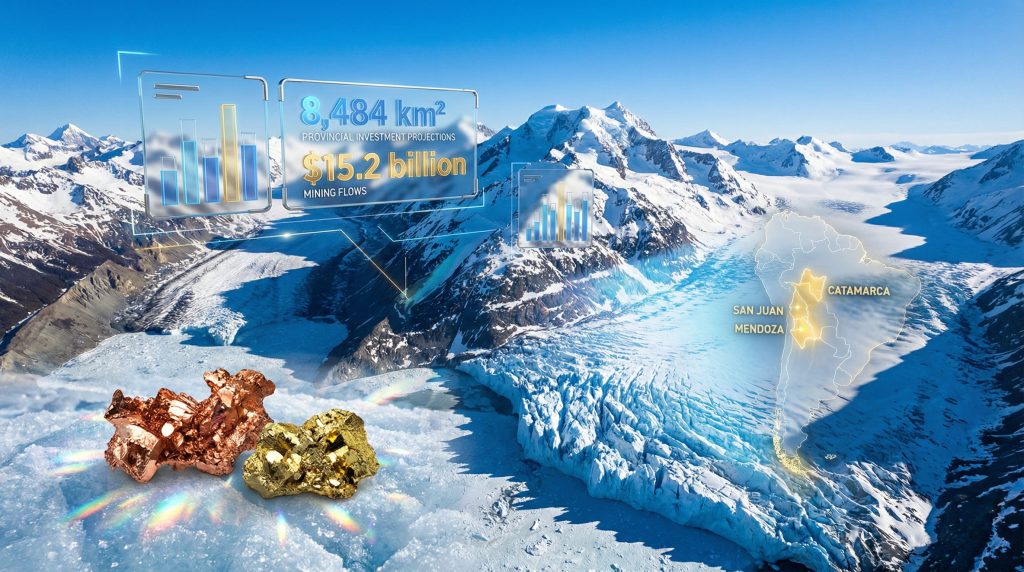
Argentina's complex regulatory landscape presents ongoing challenges as the nation attempts to balance environmental preservation with economic development opportunities. The recent Argentina glacier law reform exemplifies this tension, where constitutional environmental protections intersect with provincial economic development priorities. Understanding these dynamics requires examining both technical mechanisms and economic forces driving policy transformation.
The evolution of glacier protection frameworks reflects broader shifts in how nations approach natural resource governance. Traditional centralised regulatory models are giving way to hybrid systems that attempt to reconcile federal oversight with local administrative flexibility. This transformation carries significant implications for investment flows, environmental outcomes, and legal precedent across the region.
Furthermore, understanding these regulatory dynamics requires examining both the technical mechanisms of environmental law and the economic forces driving policy change. The intersection of constitutional law, water resource management, and mining investment creates a complex framework where legal interpretation directly impacts capital allocation decisions.
Constitutional Framework and Water Resource Governance
Argentina's environmental protection system operates under Article 41 of the national constitution, which establishes the fundamental right to a healthy environment while distributing responsibility between federal and provincial authorities. This constitutional foundation creates a minimum environmental standard requirement that all provinces must maintain, regardless of local economic pressures.
The original 2010 Glacier Protection Law (Law 26,639) built upon this constitutional framework by creating a comprehensive national inventory system managed by the Argentine Institute of Snow, Glaciology and Environmental Sciences (IANIGLA). This federal approach established uniform protection standards across all provinces, prohibiting mining and hydrocarbon exploration activities on glaciers identified through scientific inventory processes.
Key Components of the Original Framework:
- National scientific inventory covering glacial formations across 12 provinces
- Federal oversight through IANIGLA technical authority
- Uniform prohibition standards for mining activities
- Constitutional compliance with Article 41 environmental protections
- Distinction between glaciers and periglacial environments
The strategic importance of Andean water resources extends beyond national boundaries, with Argentina sharing critical water basins with Chile, Bolivia, and Paraguay. These cross-border dependencies create additional layers of complexity in regulatory decision-making, as changes to glacier protection policies can affect downstream water availability in neighbouring countries.
Climate change vulnerability assessments indicate that Andean glaciers serve as natural water storage systems, regulating seasonal availability and maintaining baseflow in river systems during dry periods. The hydrological function of these formations makes their protection particularly critical for agricultural regions in provinces like Mendoza, San Juan, and La Rioja, where glacier-fed irrigation systems support significant export agricultural production.
When big ASX news breaks, our subscribers know first
Senate-Approved Reform Mechanisms
The reform that passed Argentina's Senate with a 40-31 vote fundamentally restructures the regulatory authority distribution between federal and provincial governments. This decentralisation represents a significant departure from the uniform federal oversight model established in 2010, transferring primary decision-making authority to individual provinces.
The legislation introduces a new classification system for "non-functional glaciers" that allows provinces to establish their own criteria for determining which formations require protection from mining activities. This provincial discretion mechanism creates the potential for significant regulatory variance across different jurisdictions, as each province can interpret glacier protection thresholds according to local standards.
Technical Modifications in the Reform:
- Transfer of regulatory authority from federal IANIGLA to provincial jurisdiction
- Introduction of "non-functional glacier" classification criteria
- Provincial exemption powers for mining activities in specified areas
- Revised periglacial environment assessment standards
- Water resource functionality evaluation requirements
According to legal analysis from the mining sector, these changes address long-standing concerns about regulatory uncertainty that has complicated investment planning. The implementation of this comprehensive mining permitting guide approach aims to provide clearer understanding of periglacial environment definitions across different provinces.
However, environmental organisations have expressed significant concerns about this regulatory shift. They argue that provinces with direct economic interests in mining development may face conflicts of interest when making glacier protection determinations. "All Argentines will be affected by water shortages that the changes may cause in the short term," stated Agostina Rossi Serra from Greenpeace Argentina.
The reform's technical redefinitions focus particularly on periglacial environment standards and water resource functionality assessments. These modifications potentially narrow the scope of areas automatically protected from mining activities, while requiring provinces to conduct their own evaluations of which formations provide critical water supply functions.
Investment Flow Implications and Economic Analysis
The regulatory changes create immediate implications for previously stalled mining investments across Argentina's mineral-rich provinces. Mining companies have argued that unclear glacier and periglacial definitions under the original framework created investment uncertainty that prevented long-term project planning and capital allocation decisions.
The reform's impact on capital flows depends significantly on how individual provinces implement their new regulatory authority. Provinces with substantial mineral deposits may develop more permissive frameworks to attract investment, while those prioritising water resource protection may maintain stricter standards.
Provincial Revenue Generation Opportunities include:
- Direct mining royalty contributions to provincial budgets
- Economic multiplier effects through employment and supply chain development
- Infrastructure investment catalysts as mining companies fund local development
- Potential for increased foreign direct investment in mineral extraction sectors
The employment generation potential represents a significant consideration for provincial governments facing economic development pressures. Large-scale mining operations typically create both direct employment in extraction activities and indirect employment through supply chain requirements, equipment maintenance, and service provision.
Nevertheless, revenue projections must account for commodity price volatility that can significantly affect the sustainability of mining-dependent economic development strategies. Historical analysis of mining-dependent regions indicates that revenue streams can fluctuate dramatically based on global market conditions, creating potential fiscal planning challenges for provincial governments.
International mining companies are likely to conduct detailed assessments of individual provincial regulatory frameworks before committing capital to specific projects. This evaluation process will consider not only the permissiveness of regulations but also the stability and predictability of the regulatory environment over project lifecycles that can extend multiple decades.
Constitutional and Legal Challenge Analysis
The reform faces potential constitutional challenges based on Article 41's requirement for minimum environmental standards across all provinces. Legal experts question whether delegating glacier protection decisions to provinces with direct economic interests in mining development maintains sufficient environmental protection consistency.
Federal-provincial jurisdiction conflicts may emerge if provinces adopt significantly different interpretation standards for glacier and periglacial environment protection. These disputes could require resolution through Argentina's judicial system, potentially creating extended periods of regulatory uncertainty while cases proceed through the courts.
Potential Legal Challenge Areas:
- Constitutional compliance with Article 41 minimum environmental standards
- Federal versus provincial authority over water resource protection
- Cross-border water treaty obligations with neighbouring countries
- Environmental impact assessment protocol consistency
- International arbitration exposure through investment treaties
Water security risk analysis becomes particularly complex under the reformed system, as different provinces may adopt varying approaches to assessing downstream impacts of mining activities. Agricultural sectors in provinces like Mendoza depend heavily on glacier-fed irrigation systems, making water availability assessments critical for economic stability.
Consequently, the reform's international legal implications extend beyond constitutional considerations to include Argentina's obligations under bilateral water treaties with Chile, Bolivia, and Paraguay. Changes to glacier protection standards could affect cross-border water availability, potentially triggering disputes under existing international agreements.
Investment treaty arbitration represents another potential area of legal exposure, as environmental organisations or affected communities might pursue international legal challenges based on environmental protection principles established in various international frameworks to which Argentina is a signatory.
Comparative International Regulatory Models
Chile's glacier protection legislation predates Argentina's framework, implemented through Law 20,283 in 2008. The Chilean approach similarly restricts mining activities in glacier zones while incorporating constitutional environmental protections, though with different technical definitions and implementation mechanisms.
Peru operates under a regulatory framework that balances mining development with Andean water resource protection through a system that incorporates more provincial discretion than Argentina's original 2010 law. The Peruvian model provides useful comparative analysis for understanding how decentralised glacier protection systems function in practice.
International Best Practice Elements:
- Adaptive management frameworks that respond to changing environmental conditions
- Stakeholder consultation mechanisms involving affected communities
- Environmental monitoring standards with scientific oversight
- Transparent decision-making processes with public participation
- Regular review and updating procedures based on new scientific information
Canadian Arctic mining regulatory models offer additional comparative insights, particularly regarding how jurisdictions balance environmental protection with resource development in sensitive ecosystems. Canada's federal-territorial regulatory structure provides precedent for managing jurisdiction coordination in resource extraction oversight, reflecting patterns seen in the broader mining claims framework implementation across various jurisdictions.
The integration of international best practices could strengthen Argentina's reformed system by incorporating proven mechanisms for stakeholder engagement, environmental monitoring, and adaptive management. These elements help address some of the concerns raised by environmental groups while maintaining regulatory clarity for mining investment planning.
Opposition Forces and Implementation Challenges
Civil society mobilisation against the reform includes coordinated protests across more than 35 cities, demonstrating significant public opposition to changes in glacier protection standards. Environmental organisations including Greenpeace Argentina and the Argentine Environmental and Natural Resources Foundation (FARN) have organised sustained advocacy campaigns against the legislation.
The reform must now pass through Argentina's Chamber of Deputies, where vote count projections and swing constituency dynamics will determine final passage. Opposition parties maintain negotiation leverage that could result in amendments or modifications to the Senate-approved version.
Implementation Obstacles include:
- Multi-city protest coordination by environmental groups
- NGO coalition strategies targeting specific legislative constituencies
- Academic expert testimony challenging technical assumptions
- Public awareness campaigns emphasising water security risks
- International environmental organisation pressure through media and diplomatic channels
Provincial government capacity building represents a significant implementation challenge, as many provinces lack the technical expertise and regulatory infrastructure necessary to conduct sophisticated glacier and periglacial environment assessments. This capacity gap could result in inconsistent or inadequate environmental protection standards.
The timeline for provincial regulatory framework development varies significantly across jurisdictions. Some provinces are better positioned to implement new systems quickly while others may require extended preparation periods. This implementation variance could create temporary regulatory uncertainty during the transition period.
The next major ASX story will hit our subscribers first
Broader Economic Policy Context
President Javier Milei's libertarian economic philosophy emphasises reducing regulatory barriers to investment while promoting foreign capital attraction. The Argentina glacier law reform aligns with broader administration goals of ending what officials describe as arbitrary interpretations of environmental regulations that have stalled economic development.
Argentina's positioning within South American mining jurisdiction rankings could improve if the reform successfully reduces regulatory uncertainty while maintaining credible environmental protections. This competitive advantage becomes particularly important as countries compete for limited international mining investment capital, reflecting broader trends in Canada's energy transition challenges and resource policy evolution.
Regional Competitiveness Factors:
- Regulatory certainty enhancement for long-term investment planning
- Infrastructure development acceleration through mining company partnerships
- Supply chain security considerations for critical mineral production
- Foreign exchange generation through mineral export revenues
- Technology transfer opportunities through international mining partnerships
The reform reflects broader trends in South American resource policy, where governments are reassessing the balance between environmental protection and economic development pressures. This policy evolution occurs against the backdrop of increasing global demand for critical minerals used in renewable energy technologies.
Mining Industry Transformation Trends
The regulatory changes occur within the context of significant mining industry evolution across global markets. Companies are adapting to increasingly complex regulatory environments while implementing new technologies and sustainability practices.
Environmental compliance system upgrades will be necessary as companies adapt to potentially varying provincial standards rather than uniform federal requirements. These systems must be flexible enough to accommodate different provincial interpretation approaches while maintaining consistent environmental performance standards.
Stakeholder Preparation and Strategic Considerations
Mining companies must develop comprehensive strategies for engaging with individual provincial governments under the reformed regulatory system. This relationship building becomes critical for securing project approvals and maintaining operational licences in the decentralised framework.
Furthermore, companies must understand how these changes integrate with global supply chain considerations, particularly given European supply insights that emphasise the importance of regulatory stability in critical mineral sourcing decisions.
Strategic Adaptation Requirements:
- Provincial relationship building and stakeholder engagement protocols
- Environmental compliance systems designed for regulatory variance
- Community engagement frameworks tailored to local concerns
- Technical capacity development for provincial standard compliance
- Legal strategy development for potential constitutional challenges
Environmental organisations are preparing alternative response strategies including legal challenge frameworks, public awareness campaign optimisation, and alternative policy proposal development. These groups aim to influence provincial implementation decisions even if federal reform efforts succeed.
Provincial governments face the challenge of building technical expertise and regulatory capacity while managing competing stakeholder interests. Success in implementation requires balancing economic development opportunities with environmental protection responsibilities and community concerns.
Long-Term Scenario Analysis and Risk Assessment
Successful implementation of the reformed system could result in a balanced development model that maintains water resource protection while enabling responsible mining development. This outcome requires effective provincial capacity building and stakeholder engagement mechanisms.
Economic growth acceleration through increased mining investment could generate significant employment and revenue benefits for participating provinces. However, these economic gains must be weighed against potential environmental risks and long-term sustainability considerations.
Positive Scenario Elements:
- Balanced development model outcomes with environmental protection
- Water resource conservation through improved technical assessments
- Economic growth acceleration through strategic mining development
- Enhanced provincial regulatory capacity and expertise development
- Improved investor confidence through regulatory clarity
Alternatively, regulatory conflict escalation could emerge through federal-provincial jurisdiction disputes, potentially triggering prolonged legal challenges that extend investment uncertainty. International arbitration triggers represent another risk factor that could complicate implementation efforts.
Compromise framework development offers a middle path through hybrid federal-provincial oversight models that maintain minimum environmental standards while allowing provincial flexibility in implementation approaches. Enhanced environmental monitoring requirements could address stakeholder concerns while preserving investment attractiveness.
In addition, the Argentina glacier law reform represents a significant shift in the balance between environmental protection and economic development priorities. The controversial changes to glacier protections have generated substantial debate about the appropriate role of federal versus provincial authority in environmental governance.
The ultimate success of this regulatory transformation will depend on the effectiveness of provincial implementation strategies, the stability of political support for the changes, and the ability to balance competing economic and environmental priorities. Stakeholders across all sectors must prepare for an extended period of regulatory adjustment as the new system takes effect.
This analysis is provided for informational purposes only and does not constitute investment advice. Regulatory changes involve significant uncertainty, and stakeholders should conduct independent analysis before making investment or policy decisions. The author does not guarantee the accuracy of forward-looking statements or projections contained in this analysis.
Ready to Capitalise on Argentina's Evolving Mining Landscape?
Discovery Alert's proprietary Discovery IQ model delivers real-time alerts on significant ASX mineral discoveries, helping subscribers identify actionable opportunities in Argentina-focused mining companies ahead of regulatory developments. Start your 14-day free trial today to position yourself at the forefront of South American mining investment opportunities.