June 28, 2026
Argentina's Strategic Position in Global Commodity Markets
The convergence of favourable commodity cycles, strategic policy reforms, and geographic advantages has positioned Argentina as a transformative force in South America's mining landscape. With the country controlling approximately 58% of the world's lithium reserves within the renowned Lithium Triangle, Argentina lithium insights reveal opportunities at the intersection of global energy transition demands and traditional precious metals production.
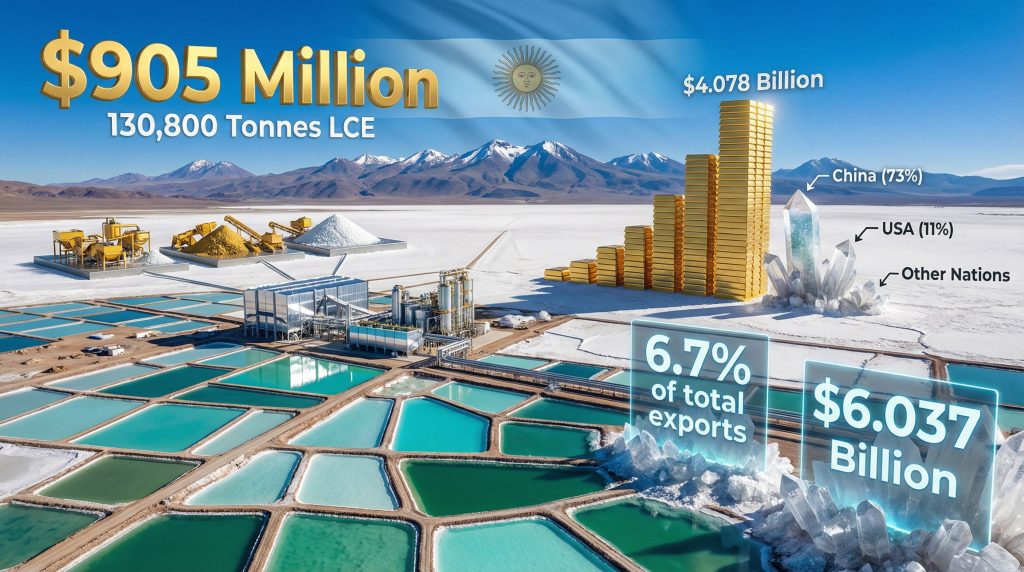
The nation's mining sector achieved unprecedented Argentina mining exports 2025 revenues of $6.037 billion, representing a remarkable 29.2% year-over-year increase that underscores the sector's emergence as a critical economic pillar. This performance reflects the optimisation of geographic assets spanning from the lithium-rich Andean highlands to established gold mining operations across northwestern provinces.
Furthermore, Argentina's unique positioning offers natural hedging mechanisms against domestic economic volatility through USD-denominated export revenues. The mining sector now contributes 6.7% of total national exports, providing essential foreign exchange generation during periods of currency instability and economic restructuring.
Geographic Advantages and Resource Concentration
The Andean gold belt extending across Jujuy, Salta, and Catamarca provinces houses world-class deposits that benefit from established infrastructure and proven geological formations. Major operations including Veladero, Cerro Negro, and Cerro Moro demonstrate the region's capacity for sustained high-grade production.
Key Infrastructure Benefits:
• Proximity to Pacific export routes via Chilean ports
• Established transportation networks connecting mining regions to processing facilities
• Access to skilled mining workforce with decades of operational experience
• Favourable geological conditions enabling efficient extraction methodologies
In addition, the lithium-bearing salars of the Puna region provide strategic advantages through their concentration within a relatively compact geographic area. This reduces logistical complexities and enables shared infrastructure development across multiple projects.
When big ASX news breaks, our subscribers know first
Policy Framework Revolution Driving Record Performance
The implementation of Argentina's Large Investment Incentive Regime (RIGI) has fundamentally altered the investment landscape for mining operations. This comprehensive policy framework addresses historical barriers to foreign investment whilst streamlining regulatory processes that previously extended project development timelines.
However, the regime's impact extends beyond simple tax incentives, creating predictable regulatory environments that enable long-term capital allocation decisions. Mining companies now operate within clearly defined parameters that reduce regulatory uncertainty and accelerate project development phases.
Regulatory Streamlining Effects
The deregulation initiatives have produced measurable improvements in operational efficiency across existing operations. Environmental compliance processes have been standardised without compromising environmental protection standards, reducing administrative delays that previously impacted production schedules.
Moreover, foreign investment attraction mechanisms embedded within RIGI have resulted in increased capital flows directed toward both exploration and production expansion activities. The policy framework specifically addresses currency convertibility concerns that historically deterred international mining companies from committing significant capital resources.
RIGI Implementation Benefits:
• Reduced project approval timeframes through consolidated permitting processes
• Enhanced legal certainty for foreign exchange operations and profit repatriation
• Streamlined environmental assessment procedures maintaining international standards
• Accelerated customs procedures for specialised mining equipment imports
Gold Sector Dominance: Understanding the $4.078 Billion Achievement
Argentina's gold sector reached an all-time export record of $4.078 billion in 2025, driven by the convergence of favourable international pricing and operational optimisation across major producing assets. The sector benefited from gold market performance exceeding $4,100 per ounce during key production periods, maximising revenue generation from existing capacity.
Consequently, the performance reflects successful consolidation of existing operations rather than dramatic capacity expansions. This indicates mature asset optimisation and improved recovery rates, demonstrating sustainable growth strategies focused on maximising returns from established geological resources.
Major Operations Performance Analysis
Veladero Mine Complex:
Located in Jujuy Province and operated by Barrick Gold Corporation, Veladero represents one of Argentina's flagship gold operations. The mine has implemented advanced extraction technologies that have improved recovery rates whilst maintaining environmental compliance standards.
Cerro Negro Operations:
Situated in Santa Cruz Province, Cerro Negro has demonstrated consistent production capabilities throughout 2025. The operation benefits from modern processing facilities that enable efficient ore processing and waste management.
Cerro Moro Development:
This Santa Cruz Province operation has successfully transitioned from development to full production status. It contributed meaningfully to the sector's record performance through optimised processing methodologies.
Export Market Integration
Argentina's gold exports demonstrate sophisticated market integration with global precious metals trading networks. Furthermore, export destinations reveal strategic diversification across major consumption centres, with gold price forecast analysis supporting sustained demand.
The Swiss market concentration reflects Argentina's integration with established precious metals trading infrastructure. Meanwhile, US market penetration provides direct access to North American investment and industrial demand.
Argentina's Lithium Revolution: From Potential to Reality
The transformation of Argentina's lithium sector from potential to $905 million in export revenues represents one of the most significant developments in the mining industry evolution. This achievement results from the successful startup of four new lithium projects between 2024 and 2025, contributing to total production of 130,800 tonnes LCE (Lithium Carbonate Equivalent).
In addition, the sector's rapid expansion coincided with optimal market conditions, including sustained battery-grade lithium pricing and accelerated global electric vehicle adoption. Argentina's lithium operations have achieved 15% of total mining export value, establishing the sector as a crucial component of the country's commodity export portfolio.
Production Capacity Development
The four new operational projects represent diverse technological approaches to lithium extraction. These range from traditional evaporation pond methodologies to direct lithium extraction technologies, providing operational flexibility and enabling optimisation based on specific geological conditions at each site.
2025 Production Achievements:
• Total lithium production: 130,800 tonnes LCE
• Export value: $905 million
• Percentage of mining exports: 15%
• New projects operational: 4 facilities
Production quality has met international battery-grade specifications, with purity levels exceeding 99.5% lithium carbonate content required for advanced battery applications. This quality achievement enables premium pricing within global supply contracts.
Global Supply Chain Integration Analysis
Argentina's lithium exports demonstrate strategic positioning within the global battery supply chain. Moreover, market distribution reflects both geographic proximity and established trade relationships with key manufacturing hubs.
China's dominance reflects its position as the world's primary battery cell manufacturer and electric vehicle producer. The 73% market share indicates Argentina's integration into established Asian supply chains whilst maintaining diversification through North American and European partnerships.
Economic Impact Assessment: Beyond Export Figures
Argentina mining exports 2025 generate economic benefits extending far beyond the $6.037 billion export figure. The sector's contribution to macroeconomic stability through foreign exchange generation has become increasingly significant during periods of currency volatility and inflation management.
The 6.7% contribution to total national exports provides crucial USD revenue streams that support balance of payments stability. This foreign exchange generation enables government reserves accumulation whilst reducing external debt pressures through natural hedging mechanisms.
Employment and Regional Development
Mining operations generate employment multiplier effects extending throughout regional economies. Direct mining employment supports specialised technical positions whilst creating demand for service sector employment in transportation, equipment maintenance, and professional services.
Economic Multiplier Effects:
• Direct employment in mining operations and processing facilities
• Indirect employment in transportation and logistics services
• Service sector job creation in mining regions
• Infrastructure development benefiting broader regional economies
Regional economic development has accelerated in mining provinces, with infrastructure investments in roads, power generation, and telecommunications benefiting communities beyond mining operations. This development creates sustainable economic foundations that extend beyond individual mine lifecycles.
Investment Attraction and Capital Flows
Foreign direct investment has increased substantially following RIGI implementation. International mining companies have committed capital to both expansion of existing operations and exploration of new deposits, with these investment flows including technology transfer benefits that enhance local technical capabilities.
Investment Categories:
• Production capacity expansion at existing operations
• Exploration and development of new deposits
• Processing facility construction and modernisation
• Infrastructure development supporting mining operations
Risk Assessment Framework for Future Performance
Argentina's mining sector faces several risk categories that could impact future performance trajectories. Commodity price volatility remains the primary external risk factor, particularly for operations with significant exposure to gold and lithium price fluctuations.
Disclaimer: Future performance projections involve uncertainty and should not be considered guaranteed outcomes. Commodity markets are subject to significant volatility influenced by global economic conditions, technological developments, and geopolitical factors.
Commodity Price Sensitivity Analysis
Gold operations demonstrate sensitivity to price movements within the $3,800-$4,500 per ounce range, with production economics remaining favourable across this spectrum. However, significant price declines below $3,500 could impact marginal operations and expansion investment decisions.
Lithium market dynamics present more complex risk scenarios due to evolving battery technology and potential supply additions from other global producers. Market hedging strategies become crucial as price volatility reflects uncertainty regarding long-term demand growth rates and alternative technology development.
Risk Mitigation Strategies:
• Currency hedging through USD-denominated revenue streams
• Diversified commodity exposure across gold, lithium, and silver
• Operational flexibility enabling production adjustments
• Long-term supply contracts providing price stability
Infrastructure and Operational Challenges
Transportation capacity limitations could constrain future growth if production expansion outpaces infrastructure development. Power supply reliability remains critical for processing operations, particularly energy-intensive lithium processing facilities.
Water resource availability presents long-term sustainability considerations, especially for lithium operations requiring significant water resources for processing. Environmental compliance costs may increase as regulatory standards evolve and community expectations expand.
Furthermore, according to Argentina's Mining Export Analysis, maintaining balance between production growth and environmental stewardship remains essential for sustainable operations.
The next major ASX story will hit our subscribers first
Regional Competitive Analysis
Argentina's mining performance must be evaluated within the context of regional competition, particularly from established mining economies like Chile and Brazil. Each country offers distinct advantages based on geological endowments, infrastructure capabilities, and regulatory frameworks.
Chile Comparison Analysis
Chile's mining sector focuses heavily on copper production supplemented by established lithium operations in the Atacama Desert. In contrast, Argentina's diversification across gold, lithium, and silver provides different risk-return characteristics compared to Chile's copper concentration.
Comparative Advantages:
Argentina:
- Diversified commodity exposure reducing concentration risk
- Lower labour costs due to currency devaluation
- RIGI incentives attracting new investment
- Untapped exploration potential across multiple commodities
Chile:
- Established infrastructure and logistics networks
- Mature regulatory frameworks with predictable processes
- Advanced technical expertise in copper operations
- Strong international mining company presence
Brazil Mining Sector Contrast
Brazil's mining focus on iron ore and industrial minerals creates limited direct competition with Argentina's precious metals and lithium concentration. However, Brazil's infrastructure advantages and established export logistics provide benchmarks for Argentina's development planning.
The comparative analysis reveals opportunities for Argentina to leverage geographic advantages whilst addressing infrastructure gaps that currently limit production expansion capabilities.
Technology and Innovation Drivers
Argentina's mining sector has embraced technological advancement as a competitive differentiator, particularly in lithium extraction methodologies and gold processing optimisation. Direct lithium extraction technologies offer potential advantages over traditional evaporation pond approaches through reduced environmental impact and faster production cycles.
Operational Efficiency Technologies
Digital mining technologies have been implemented across major operations, enabling real-time monitoring of extraction processes and predictive maintenance scheduling. These technologies reduce operational downtime whilst optimising resource utilisation across mining complexes.
Technology Implementation Areas:
• Automated extraction and processing systems
• Real-time geological monitoring and ore grade optimisation
• Predictive maintenance reducing equipment downtime
• Environmental monitoring ensuring compliance standards
Data analytics applications have improved ore grade prediction and processing efficiency, enabling optimisation of extraction sequences based on market conditions and production targets.
Environmental Technology Integration
Sustainability technologies have become integral to operations, with water recycling systems achieving significant efficiency improvements whilst reducing environmental impact. Carbon footprint reduction initiatives include renewable energy integration where geographic conditions permit.
Environmental Innovation Focus:
• Water recycling and treatment system optimisation
• Renewable energy integration for processing operations
• Waste management technology reducing environmental impact
• Biodiversity protection measures in mining regions
Strategic Scenarios for Future Development
Argentina mining exports 2025 achievements provide a foundation for multiple potential development pathways between 2026 and 2030. Each scenario depends on different combinations of market conditions, policy continuity, and operational execution.
Disclaimer: The following scenarios represent analytical frameworks rather than predictions. Actual outcomes may differ significantly from modelled scenarios due to unforeseen market conditions, technological developments, or policy changes.
Optimistic Growth Scenario
An optimistic scenario envisions mining exports reaching $10+ billion by 2030, driven by continued commodity price strength and successful expansion of existing operations. This scenario requires sustained investment in infrastructure development and successful exploration outcomes.
Growth Scenario Requirements:
• Continued favourable commodity pricing for gold above $4,000 per ounce
• Lithium demand growth supporting price levels above $20,000 per tonne
• Successful development of copper exploration projects
• Infrastructure capacity expansion supporting increased production
• Regulatory stability maintaining RIGI incentives
This scenario assumes successful diversification into copper production, which could add significant export value given Argentina's geological potential in this commodity.
Conservative Consolidation Scenario
A conservative scenario projects $6-8 billion in sustained annual mining exports through 2030. This focuses on optimisation of existing operations rather than dramatic capacity expansion, emphasising operational efficiency improvements and cost management strategies.
Consolidation Scenario Characteristics:
• Focus on existing operation optimisation rather than new development
• Technology upgrades improving recovery rates and reducing costs
• Selective expansion based on proven geological resources
• Market share maintenance through quality and service differentiation
• Conservative capital allocation prioritising returns over growth
This scenario provides more predictable outcomes whilst maintaining flexibility to capitalise on favourable market conditions when they arise.
Investment Implications and Market Psychology
Argentina's mining sector presents unique investment characteristics combining commodity exposure with emerging market dynamics. The sector's USD revenue generation provides natural hedging against domestic currency volatility, creating attractive risk-adjusted return potential.
Portfolio Diversification Benefits
Mining sector exposure offers portfolio diversification through commodity allocation complementing traditional financial assets. The combination of gold and lithium exposure provides benefits from both precious metals safe-haven demand and energy transition growth trends.
Investment Allocation Considerations:
• Commodity price correlation analysis for portfolio optimisation
• Currency hedging benefits through USD revenue streams
• Geopolitical diversification away from traditional mining regions
• Technology adoption potential creating operational advantages
Market psychology surrounding Argentina mining exports 2025 reflects growing confidence in the sector's ability to deliver consistent performance despite macroeconomic challenges. This confidence stems from demonstrated operational capability and policy framework stability.
Risk-Adjusted Return Analysis
The sector's risk profile includes commodity price volatility balanced by operational diversification and policy support. Currency devaluation creates cost advantages for USD-revenue operations whilst potentially impacting domestic input costs.
Long-term investment attractiveness depends on infrastructure development progression and continued policy stability supporting foreign investment. The sector's integration with global supply chains provides revenue stability through established customer relationships.
Conclusion: Argentina's Mining Transformation Trajectory
Argentina's achievement of record-breaking Argentina mining exports 2025 totalling $6.037 billion represents more than statistical accomplishment. This performance demonstrates the successful convergence of policy reform, operational excellence, and favourable market conditions creating sustainable competitive advantages.
The 29.2% year-over-year growth reflects structural changes positioning Argentina as a reliable supplier within global commodity markets. Gold sector dominance at $4.078 billion combined with lithium sector emergence at $905 million creates diversified revenue streams reducing dependence on single commodity performance.
Strategic success factors identified through this analysis include policy stability maintenance, infrastructure development priorities, and technology adoption acceleration. The Large Investment Incentive Regime (RIGI) has demonstrated effectiveness in attracting foreign investment whilst streamlining operational processes.
Key Strategic Advantages:
• Geographic resource concentration enabling efficient development
• Diversified commodity exposure reducing market risk
• USD revenue generation providing economic stability
• Integration with global supply chains ensuring market access
• Policy framework supporting long-term investment planning
Argentina's mining sector transformation extends beyond export figures to encompass broader economic development through employment creation, infrastructure investment, and regional economic growth. According to analysis by global mining research, the sector's contribution of 6.7% to total national exports provides essential foreign exchange generation supporting macroeconomic stability.
Looking forward, Argentina mining exports 2025 establishes a foundation for continued growth based on proven operational capabilities and favourable geological endowments. The successful integration of new lithium projects with established gold operations demonstrates the sector's capacity for sustainable expansion whilst maintaining quality standards required for premium market positioning.
The transformation trajectory indicates Argentina's evolution from commodity potential to established mining powerhouse, with implications extending throughout South America's resource landscape and global supply chain dynamics.
Ready to Capitalise on the Next Major Mining Discovery?
Discovery Alert's proprietary Discovery IQ model delivers instant notifications when significant ASX mineral discoveries are announced, transforming complex geological data into actionable investment insights. Experience how major mineral discoveries can generate substantial returns by exploring historic examples, then begin your 30-day free trial today to position yourself ahead of the market.