June 15, 2026
Argentina's lithium sector continues attracting unprecedented global investment as battery technology demands accelerate across automotive and energy storage markets. The convergence of abundant geological resources, improving regulatory frameworks, and strategic geographic positioning has created conditions for large-scale industrial development that could reshape regional economic dynamics through argentina lithium brine insights and innovative extraction methodologies.
Within this evolving landscape, integrated production strategies have emerged as critical competitive advantages for companies seeking to capture value across the entire supply chain from resource extraction to battery-grade chemical manufacturing. Furthermore, technological innovations are driving significant improvements in operational efficiency and environmental performance.
Understanding POSCO's Integrated Lithium Production Strategy
The POSCO lithium project Sal de Oro represents a comprehensive approach to lithium value chain integration, spanning from brine extraction operations in the Salar del Hombre Muerto through to battery-grade chemical production at industrial facilities in Salta Province. This vertical integration model addresses key supply chain vulnerabilities that have historically affected lithium market dynamics.
Direct lithium extraction (DLE) technology forms the foundation of POSCO's operational strategy, offering significant advantages over traditional evaporation methods. While conventional approaches require 12-18 months for brine concentration and consume over 500,000 gallons of water per tonne of lithium produced, DLE processes can reduce processing timelines to weeks.
In addition, these lithium mining techniques can decrease water consumption by 50-90% according to industry technical assessments. The efficiency gains represent substantial environmental and economic advantages for large-scale operations.
The Salar del Hombre Muerto's geological characteristics provide optimal conditions for lithium extraction operations. This salt flat contains lithium-rich brine deposits with concentrations that support economically viable extraction, positioning the POSCO lithium project Sal de Oro within one of South America's most prospective lithium regions.
Technology Infrastructure and Operational Framework
POSCO's infrastructure development encompasses multiple integrated components designed to optimise production efficiency and product quality. The company has established brine extraction facilities at the salar level, with processing infrastructure connecting to refinement operations at the General Güemes industrial park.
Key technological advantages include:
• Reduced environmental footprint through subsurface well systems versus large-scale evaporation ponds
• Enhanced production flexibility enabling responsive scheduling based on market conditions
• Improved quality control through controlled processing environments
• Lower operational costs from reduced water and energy consumption
The transportation and logistics framework connecting salar operations to industrial processing facilities requires specialised infrastructure capable of handling corrosive lithium brines. However, maintaining product integrity throughout the supply chain remains essential for quality assurance.
When big ASX news breaks, our subscribers know first
Investment Scale and Regional Economic Transformation
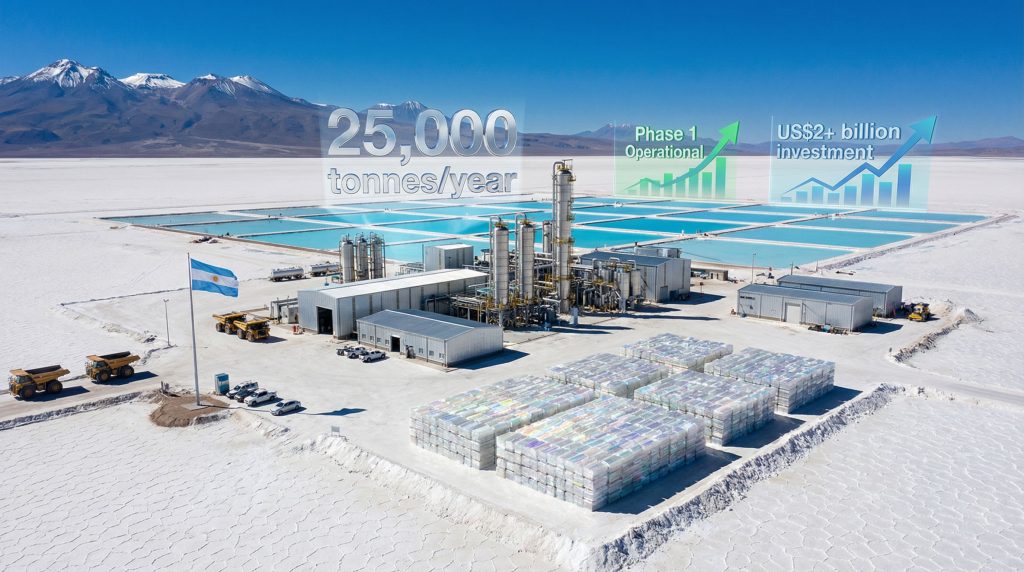
The POSCO lithium project Sal de Oro involves capital deployment exceeding US$2 billion across multiple development phases, representing one of the largest mining investments in northern Argentina's recent history. This investment scale reflects the comprehensive nature of the development, encompassing extraction infrastructure, processing facilities, logistics systems, and supporting industrial capacity.
According to reports from Panorama Minero, the project has generated significant employment opportunities during its construction and operational phases. Direct employment has exceeded 500 positions, while indirect employment creation has reached over 5,000 jobs across supplier networks, transportation services, and related economic activities.
Economic Multiplier Effects and Industrial Development
The project's economic impact extends beyond direct operational employment through several key mechanisms. Furthermore, these effects demonstrate the potential for resource development to catalyse broader regional transformation.
Primary Economic Impacts:
• Capital investment in industrial infrastructure and equipment
• Direct operational employment in extraction and processing
• Government revenue through taxation and royalty payments
• Local procurement of goods and services where feasible
Secondary Economic Effects:
• Supplier network development and capacity building
• Transportation and logistics service expansion
• Technical training and skills development programs
• Community infrastructure improvements and social investment
Regional development strategies have positioned Salta Province as an emerging lithium production hub. Consequently, the POSCO lithium project Sal de Oro serves as a cornerstone investment that could attract additional industrial development and supplier ecosystem formation.
Production Capacity and Market Positioning Analysis
Phase 1 operations at the POSCO lithium project Sal de Oro have achieved production capacity of 25,000 tonnes annually of lithium hydroxide, positioning the facility as Argentina's first commercial-scale lithium hydroxide production plant. The General Güemes industrial park location provides strategic advantages for product distribution and access to skilled workforce resources.
Current operational performance indicates the facility has achieved over 70% operational efficiency during its ramp-up phase. For instance, monthly production reached 1,500 tonnes as of March 2026 according to industry reporting. This performance trajectory aligns with comparable lithium refinery startups globally, where initial years typically achieve 60-80% efficiency before reaching nameplate capacity.
| Production Metrics | Phase 1 Status | Phase 2 Planning |
|---|---|---|
| Lithium Hydroxide Capacity | 25,000 t/yr | Optimisation focus |
| Operational Efficiency | 70%+ achieved | Target 95%+ |
| Monthly Output (March) | 1,500 tonnes | Scaling trajectory |
| Lithium Carbonate Capacity | Not applicable | 23,000 t/yr planned |
| Timeline | Operational | End-2026 target |
Product Quality and Market Standards
Battery-grade lithium hydroxide requires stringent quality specifications to meet automotive and energy storage applications. Technical specifications typically mandate specific purity levels and contamination limits for optimal battery performance.
• ≥56% Li₂O content for lithium concentration standards
• <100 ppm iron content to prevent battery performance degradation
• <50 ppm chloride levels for electrochemical stability
• <0.5% moisture content for handling and storage requirements
Phase 2 development plans include lithium carbonate production capacity of 23,000 tonnes annually, creating a diversified product portfolio serving different market segments. Lithium carbonate serves technical-grade applications (≥99.0% purity) and battery-grade specifications (≥99.5% purity) with strict heavy metal limitations.
The combined production capacity of approximately 48,000 tonnes annually (LCE equivalent) would position the facility among mid-tier global lithium producers. Consequently, this represents roughly 4-5% of projected global lithium market insights demand by 2026.
Technology Leadership and Operational Excellence
POSCO's approach to lithium extraction incorporates proprietary direct lithium extraction methodologies designed to address key industry challenges. These include water consumption, processing timeframes, and environmental impact management. These technological innovations represent significant departures from traditional evaporation-based approaches that have dominated lithium production for decades.
Water usage optimisation has become increasingly critical in lithium operations, particularly within water-stressed regions of the lithium triangle. Argentina's regulatory framework has implemented stricter water audit requirements for mining operations, necessitating demonstration of sustainable water management practices and impact mitigation measures.
Environmental Performance and Sustainability Metrics
The facility operates under comprehensive environmental management protocols addressing water consumption, waste management, and ecosystem impact mitigation. While specific quantified metrics require verification through independent environmental audits, the project's DLE approach theoretically offers substantial improvements over conventional methods.
Comparative environmental advantages include:
• Reduced surface disruption through subsurface extraction versus large evaporation pond systems
• Lower water consumption per unit of lithium produced through process efficiency
• Faster processing cycles reducing inventory requirements and land use
• Controlled waste stream management through contained processing systems
Process integration between salar-level extraction and industrial-scale refining requires sophisticated logistics coordination and quality control systems. The transportation of lithium-rich brines demands specialised equipment and handling protocols to prevent product degradation and ensure worker safety throughout the supply chain.
Moreover, geothermal brine extraction techniques being developed globally could inform future operational improvements. Quality control systems must monitor brine composition, intermediate processing parameters, and final product specifications to ensure consistency with battery manufacturer requirements.
Strategic Partnerships and Government Collaboration
The operation functions within a collaborative framework involving provincial government entities, regulatory authorities, and local stakeholder groups. This partnership approach has facilitated project development while addressing community concerns and regional development objectives.
Government collaboration has encompassed multiple dimensions including regulatory compliance, infrastructure development coordination, and workforce development programs. The Salta provincial administration has positioned lithium development as a strategic economic priority, creating policy frameworks supportive of responsible mining development.
Stakeholder Engagement and Community Development
Community engagement protocols include consultation processes with indigenous communities, environmental monitoring programs, and social investment initiatives within the project's area of influence. These programs address both regulatory requirements and corporate social responsibility objectives.
Key engagement components include:
• Indigenous community consultation following international best practices
• Environmental monitoring with community participation and transparency
• Technical training programs for local workforce development
• Social investment in education, healthcare, and infrastructure
Local supplier development initiatives aim to maximise economic benefits for regional businesses capable of meeting project quality and volume requirements. These programs typically include supplier identification, training and certification support, and preferential procurement policies where technically feasible.
Academic partnerships with provincial educational institutions support technical training programs and knowledge transfer initiatives. These collaborations help develop local technical capacity while providing research opportunities in lithium extraction and processing technologies.
Market Dynamics and Competitive Positioning
Global lithium markets have experienced significant volatility as supply and demand dynamics respond to electric vehicle adoption rates, battery technology evolution, and macroeconomic conditions. The facility enters this market environment with integrated production capabilities designed to provide supply chain stability and cost competitiveness.
Market timing considerations have become increasingly important as lithium prices fluctuate based on inventory levels, production capacity additions, and demand growth trajectories. The project's phased development approach allows for production scaling aligned with market conditions and customer requirements.
Customer Relationships and Market Access
Battery-grade lithium chemicals require long-term customer relationships with automotive manufacturers and battery producers who demand consistent quality, reliable supply, and competitive pricing. The operation benefits from POSCO's existing relationships within steel and industrial materials markets, potentially facilitating customer development in emerging battery supply chains.
Distribution logistics for lithium chemicals involve specialised transportation and storage requirements due to the products' chemical properties and handling specifications. The General Güemes facility's location provides access to transportation networks serving both domestic and export markets.
Market access advantages include:
• Strategic geographic positioning for South American and global markets
• Integrated production capabilities reducing supply chain dependencies
• Product diversification serving multiple market segments
• Quality certifications meeting international battery industry standards
The next major ASX story will hit our subscribers first
Risk Management and Future Development Scenarios
The operation functions within a complex risk environment encompassing commodity price volatility, regulatory changes, environmental compliance requirements, and geopolitical considerations affecting international trade and investment.
Price volatility in lithium markets reflects supply and demand imbalances, inventory adjustments, and speculation regarding future electric vehicle adoption rates. The project's integrated production model provides some protection against price volatility by capturing value across multiple supply chain stages.
Regulatory and Political Risk Considerations
Argentina's mining regulatory framework continues evolving as the government balances economic development objectives with environmental protection and social considerations. Recent policy developments have emphasised environmental compliance, community consultation, and local economic benefit maximisation.
Political risk factors include potential changes in taxation policies, export restrictions, or regulatory requirements that could affect project economics. However, lithium industry innovations in other regions demonstrate how supportive policies can enhance sector development.
Risk mitigation strategies encompass:
• Comprehensive environmental compliance exceeding minimum regulatory requirements
• Community engagement programs building local support and addressing concerns
• Government relations maintaining dialogue with provincial and national authorities
• Operational flexibility enabling production adjustments based on market conditions
Industry Implications and Development Lessons
The project provides valuable insights into best practices for large-scale lithium development in South America's lithium triangle region. The integrated approach, stakeholder engagement model, and technology deployment offer lessons applicable to other development scenarios.
Successful lithium project development increasingly requires balancing multiple objectives including economic viability, environmental sustainability, community benefit, and operational excellence. This demonstrates how these objectives can be integrated through comprehensive planning and stakeholder collaboration.
Replicability and Scaling Potential
The project's development model could potentially be replicated at other lithium resources within Argentina and across the lithium triangle region. Key success factors include access to high-quality lithium resources, supportive regulatory frameworks, infrastructure availability, and technical expertise.
Technology transfer and knowledge sharing could accelerate development timelines for subsequent projects while improving industry standards for environmental performance and community engagement. Furthermore, Wood Mackenzie's analysis indicates the project's strategic importance within global lithium supply dynamics.
The project's contribution to regional industrial development demonstrates how resource extraction can catalyse broader economic transformation. This occurs through supplier development, workforce training, and infrastructure investment that benefits multiple economic sectors.
This analysis is based on publicly available information and industry reports. Investment decisions should consider comprehensive due diligence including technical, environmental, regulatory, and financial assessments. Lithium market dynamics and project developments can change rapidly, requiring ongoing monitoring and analysis.
Looking to Capitalise on Argentina's Booming Lithium Sector?
Discovery Alert's proprietary Discovery IQ model delivers real-time notifications on significant lithium and mineral discoveries across the ASX, instantly empowering subscribers to identify actionable opportunities ahead of the broader market. Begin your 14-day free trial today and secure your market-leading advantage in this rapidly evolving sector.