June 17, 2026
What Drove Argentina's Historic $6 Billion Mining Export Milestone in 2025?
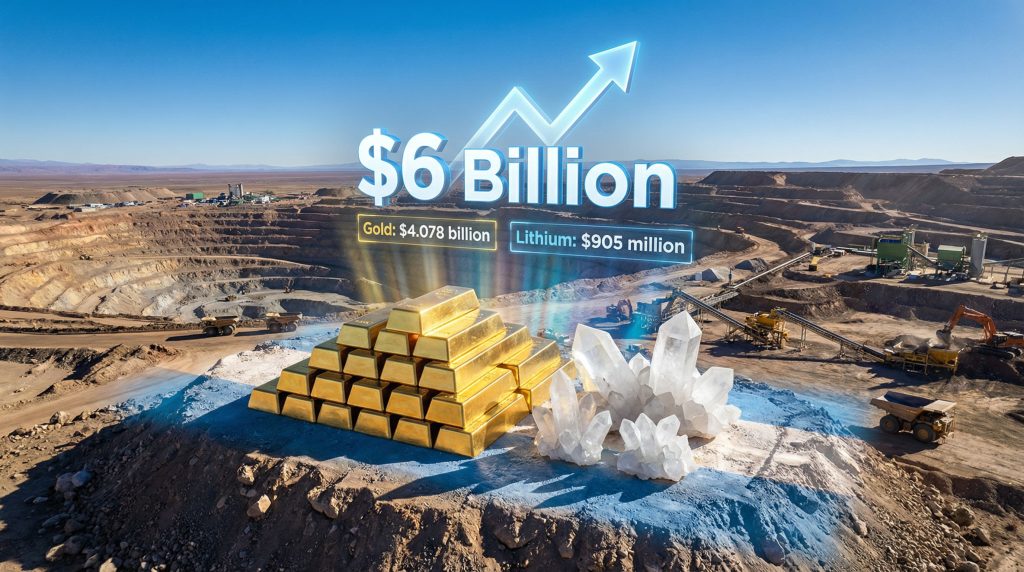
Argentina's extractive industries have undergone a remarkable transformation that positions the country among the world's fastest-growing mineral export markets. The Argentina mining exports 2025 achieved unprecedented heights, with total export values reaching $6.037 billion, representing a significant 29.2% year-over-year increase that reflects deeper structural changes in the South American economy.
This milestone emerges from a confluence of macroeconomic reforms, favourable commodity cycles, and strategic project developments that have fundamentally altered Argentina's position in global mineral markets. The sector now contributes approximately 6.7% of the nation's total export portfolio, demonstrating mining's growing importance to Argentina's economic stability and foreign exchange earnings.
Macroeconomic Policy Shifts That Unlocked Mining Potential
The recent surge in Argentina mining exports 2025 results from comprehensive regulatory and economic reforms that removed long-standing barriers to sector growth. Policy changes have created an environment where international mining companies can operate with greater certainty and efficiency.
Currency devaluation policies have enhanced the competitiveness of Argentine mineral exports in global markets, while deregulation initiatives have streamlined operational processes for mining companies. These reforms have attracted substantial foreign direct investment, with companies recognising Argentina's resource potential under more favourable investment conditions.
Infrastructure development programmes have connected remote mining operations to international shipping corridors, reducing logistics costs and improving project economics. The government has prioritised mining-related infrastructure as part of broader economic development strategies.
Global Commodity Price Dynamics and Timing
Argentina's mining export success coincided with a period of exceptional commodity price strength across multiple minerals. The recent gold price surge saw prices rise above $4,600 per ounce during 2025, driven by economic uncertainty and inflation hedging demand from institutional investors.
The lithium market experienced robust growth as electric vehicle adoption accelerated globally, creating sustained demand for battery-grade mineral products. Silver maintained strong pricing due to both industrial applications and precious metals investment demand.
This favourable pricing environment amplified the value of Argentina's mineral production, with existing operations generating higher revenues whilst new projects achieved improved project economics. The timing of Argentina's production increases aligned perfectly with these commodity super-cycles.
When big ASX news breaks, our subscribers know first
How Did Gold Become Argentina's $4.078 Billion Mining Export Champion?
Gold dominated Argentina's mining export portfolio in 2025, generating $4.078 billion in export revenues and representing approximately 67.5% of total sector exports. This achievement marks an all-time high for gold exports from Argentina and reflects the culmination of years of investment in mining infrastructure and operations.
The gold sector's performance demonstrates how Argentina has successfully leveraged its geological endowments to capture value from global precious metals markets. Production increases from established operations combined with new project developments to create this record-high gold prices export performance.
Production Volume Analysis by Major Operations
Argentina's gold production comes primarily from large-scale mining operations distributed across several provinces, each contributing to the overall export success through different geological and operational advantages.
The country's mining operations have adopted advanced extraction technologies that improve recovery rates and reduce operational costs. Modern processing facilities enable Argentine gold producers to meet international quality standards whilst maintaining competitive production costs.
Technology adoption has been particularly important in optimising ore processing and improving environmental performance. Mining companies have invested in automation systems, data analytics, and advanced metallurgical processes to enhance operational efficiency.
Market Access and Trading Partner Diversification
Argentina's gold exports benefit from established trading relationships with major international markets, creating multiple channels for product distribution and price optimisation.
The diversification of export markets reduces dependence on any single trading partner whilst enabling Argentine producers to capture the best available pricing for their products. Furthermore, this market diversification strategy has proved crucial during periods of US-China trade impact.
Export infrastructure improvements have facilitated better market access, with upgraded port facilities and logistics networks supporting increased export volumes. These infrastructure investments have reduced transportation costs and improved delivery reliability.
Investment Climate Transformation Effects
The transformation of Argentina's investment climate has attracted significant capital to gold mining projects, enabling production expansions and new project developments that contributed to 2025's export success.
Regulatory stability has encouraged long-term planning and investment by mining companies, with clearer permitting processes and more predictable policy frameworks. This stability has been essential for attracting the multi-year capital commitments required for major mining projects.
Foreign investment in Argentina's gold mining sector has brought advanced technologies, international expertise, and access to global markets that enhance the sector's competitiveness. These investments have modernised operations and improved production capabilities.
Why Did Lithium Exports Surge to $905 Million Despite Global Market Volatility?
Lithium emerged as Argentina's second-largest mining export category in 2025, with $905 million in export revenues representing 15% of total sector exports. This performance occurred despite significant volatility in global lithium markets and demonstrates Argentina's strategic importance in the global energy transition.
The lithium sector's success stems from Argentina lithium insights within the "Lithium Triangle" of South America, where unique geological conditions create some of the world's most cost-effective lithium production opportunities. The country's salt flat deposits offer advantages in terms of resource quality and extraction efficiency.
Project Pipeline Acceleration Analysis
Argentina's lithium export growth was driven by the commissioning of four major lithium projects between 2024 and 2025, significantly expanding the country's production capacity and export potential.
These new projects represent years of development work, environmental permitting, and capital investment that culminated in commercial production during this critical period. The timing of these project completions contributed substantially to 2025's export milestone.
Production capacity expansion has positioned Argentina to capture growing demand from battery manufacturers and electric vehicle companies worldwide. The scale of these new operations enables Argentina to compete effectively with established lithium producers in Chile and Australia.
Argentina's Position in Global Lithium Triangle Dynamics
Argentina's lithium operations benefit from several comparative advantages within the South American lithium-producing region, including resource quality, production costs, and infrastructure access.
The country's salt flat deposits contain high lithium concentrations that enable efficient extraction through solar evaporation processes. In addition, this natural advantage reduces production costs compared to hard-rock lithium mining operations in other regions.
Technological improvements in brine processing have enhanced recovery rates and product quality, enabling Argentine producers to meet the demanding specifications required by battery manufacturers. These technological advances have been crucial for market access and pricing.
Strategic Market Positioning for Energy Transition
Argentina's lithium sector has positioned itself strategically within global supply chains supporting the energy transition, with long-term supply agreements and partnerships with major battery and automotive companies.
The country's lithium producers have invested in upgrading their products to battery-grade quality standards, enabling direct sales to lithium-ion battery manufacturers. This value-added approach has improved profit margins and market positioning.
Supply chain integration initiatives have connected Argentine lithium producers with international customers through technical partnerships, joint ventures, and long-term supply contracts that provide market stability and pricing visibility.
What Role Did China Play in Argentina's Mining Export Transformation?
China has emerged as an increasingly important destination for Argentina's mineral exports, reflecting broader shifts in global trade patterns and China's growing demand for raw materials to support its industrial economy.
The expansion of China-Argentina mineral trade represents a significant diversification of Argentina's export markets, reducing traditional dependence on Western markets whilst creating new opportunities for mining sector growth.
Trade Relationship Evolution and Market Expansion
The bilateral trade relationship between China and Argentina has expanded significantly in recent years, with Chinese demand for minerals creating new export opportunities for Argentine mining companies.
Chinese companies have invested in Argentine mining operations through joint ventures, direct investments, and long-term supply agreements that provide capital for project development and guaranteed market access for production.
Infrastructure investments supported by Chinese development finance have improved Argentina's ability to transport minerals to international markets, reducing logistics costs and enabling increased export volumes.
Geopolitical Implications of Resource Diplomacy
The growing mineral trade relationship between China and Argentina reflects broader geopolitical trends toward resource security and supply chain diversification by major consuming nations.
China's involvement in Argentina's mining sector includes technology transfer arrangements, equipment supply agreements, and technical expertise sharing that enhance operational capabilities and efficiency.
This resource diplomacy creates mutual benefits, with China securing access to critical minerals whilst Argentina gains investment capital, technology access, and guaranteed export markets for its production.
Market Diversification Strategy Assessment
Argentina's expanded trade relationship with China forms part of a broader market diversification strategy designed to reduce export concentration risk and improve pricing power across different regional markets.
Multiple trading partner relationships enable Argentine mining companies to optimise sales strategies, taking advantage of regional price differences and market conditions to maximise revenue from production. However, the mining industry evolution requires continued adaptation to changing global dynamics.
Currency diversification through multiple export markets helps stabilise foreign exchange earnings and reduces exposure to individual currency fluctuations or trade policy changes.
How Sustainable Is Argentina's Mining Export Growth Trajectory?
The sustainability of Argentina's mining export growth depends on multiple factors including continued investment in new projects, maintenance of favourable policy frameworks, and successful navigation of environmental and social challenges.
Argentina's geological endowments provide a strong foundation for continued mining sector growth, with significant unexplored mineral potential across multiple commodity categories and geographic regions. According to recent industry reports, the country's mineral reserves position it well for continued expansion.
Production Capacity Expansion Pipeline
Argentina's mining sector benefits from a robust pipeline of development projects across different commodities and regions, providing potential for continued export growth beyond 2025's milestone achievement.
Capital investment requirements for these pipeline projects are substantial, requiring continued access to international capital markets and favourable investment conditions to realise full development potential.
Infrastructure development remains critical for supporting expanded mining operations, with continued improvements needed in transportation networks, power generation, and water management systems. Furthermore, the government has recognised these infrastructure needs as strategic priorities.
Environmental and Social Licence Considerations
Argentina's mining operations face increasing scrutiny regarding environmental impacts, particularly water usage in arid regions where many mining operations are located.
Community engagement has become essential for mining project success, with companies required to demonstrate local benefits and environmental stewardship to maintain social acceptance of operations.
Environmental impact mitigation technologies are being adopted across Argentina's mining sector to address concerns about air quality, water resources, and ecosystem protection in mining regions.
Global Market Competition Analysis
Argentina competes in global mineral markets against established producers in Africa, Australia, and North America, requiring continued improvements in cost competitiveness and operational efficiency.
Technology adoption rates affect Argentina's ability to compete with more established mining jurisdictions that have longer experience with large-scale mineral extraction and processing operations.
Supply-demand balance projections for key commodities suggest continued opportunities for Argentina's mineral exports, particularly in lithium and gold markets where demand growth is expected to continue. Moreover, data from Trading View indicates sustained investor confidence in the sector.
What Economic Impact Does Mining's 6.7% Export Share Generate?
Argentina's mining sector generates significant economic impacts beyond direct export revenues, creating employment opportunities, tax revenues, and regional development benefits across mining provinces.
The sector's 6.7% share of total exports represents a strategic contribution to Argentina's balance of payments and foreign exchange earnings, supporting currency stability and import capacity.
Multiplier Effects Across Argentine Economy
Mining operations generate employment both directly within mining companies and indirectly through supporting industries including transportation, equipment supply, and professional services.
Regional development impacts are particularly significant in mining provinces, where mining operations often represent the largest economic activity and primary source of employment and tax revenues.
Tax revenue contributions from mining operations support government services and infrastructure development at national, provincial, and municipal levels, creating broader economic benefits.
Balance of Payments and Currency Stability
Foreign exchange earnings from mineral exports provide crucial support for Argentina's balance of payments, helping to finance imports and service external debt obligations.
The mining sector's contribution to export revenues helps stabilise Argentina's currency by providing reliable sources of foreign exchange earnings that are less volatile than some other export sectors.
Import capacity enhancement through mining export revenues enables Argentina to access essential goods and technologies required for economic development and industrial operations.
Industrial Development Linkages
Argentina's mining sector creates opportunities for downstream processing and value-added manufacturing that could further enhance export revenues and domestic job creation.
Local supplier network development has been encouraged through mining operations, with companies increasingly sourcing goods and services from Argentine suppliers when quality and cost requirements can be met.
Value-added export product diversification represents a strategic opportunity for Argentina to capture more value from its mineral resources through processing and manufacturing activities.
The next major ASX story will hit our subscribers first
Key Takeaways and 2026 Outlook for Argentine Mining Exports
Argentina's achievement of record $6.037 billion in mining exports during 2025 represents a transformation of the country's extractive industries sector and positions Argentina as a significant player in global mineral markets.
The success demonstrates how favourable policy frameworks, strategic project development, and advantageous commodity market conditions can combine to create exceptional export performance results. Consequently, the Argentina mining exports 2025 milestone establishes a new baseline for future growth expectations.
Performance Metrics Summary
| Commodity | 2025 Export Value | Sector Share | Growth Trajectory |
|---|---|---|---|
| Gold | $4.078 billion | 67.5% | All-time high achievement |
| Lithium | $905 million | 15.0% | New project contributions |
| Other Minerals | $1.054 billion | 17.5% | Supporting commodity growth |
| Total Sector | $6.037 billion | 100% | 29.2% annual growth |
Strategic Priorities for Sustained Growth
Regulatory framework optimisation remains essential for maintaining investor confidence and supporting continued capital investment in new mining projects and expansion of existing operations.
Infrastructure development acceleration will be crucial for supporting increased mining operations and reducing logistics costs that affect project economics and export competitiveness.
Technology adoption in extraction and processing operations will help Argentine mining companies maintain competitiveness against international producers and improve operational efficiency.
Market diversification expansion strategies will continue to be important for reducing concentration risk and optimising pricing across different regional markets and trading relationships.
Risk Factors and Mitigation Strategies
Commodity price volatility management represents an ongoing challenge for mining companies and government planners, requiring strategies to maintain operations through price cycles.
Political stability maintenance will be essential for preserving investor confidence and ensuring continued access to international capital markets for project financing.
Environmental compliance cost considerations may increase as environmental standards evolve, requiring continued investment in clean technologies and environmental management systems.
Global supply chain disruption preparedness has become more important following recent international trade tensions and logistics challenges affecting global mineral markets. For instance, the Argentina mining exports 2025 success demonstrates resilience in the face of such challenges.
Disclaimer: This analysis is based on publicly available information and includes forward-looking projections that involve uncertainty. Commodity markets, political conditions, and economic factors can significantly impact mining sector performance. Investors should conduct independent research and consider professional advice before making investment decisions related to Argentine mining companies or commodities markets.
Ready to Capitalise on the Next Breakthrough Mineral Discovery?
Discovery Alert's proprietary Discovery IQ model delivers real-time alerts on significant ASX mineral discoveries, instantly empowering subscribers to identify actionable opportunities ahead of the broader market. Understand why major mineral discoveries can lead to substantial returns by exploring historic examples of exceptional outcomes, then begin your 30-day free trial today to position yourself ahead of the market.