
August 22, 2026
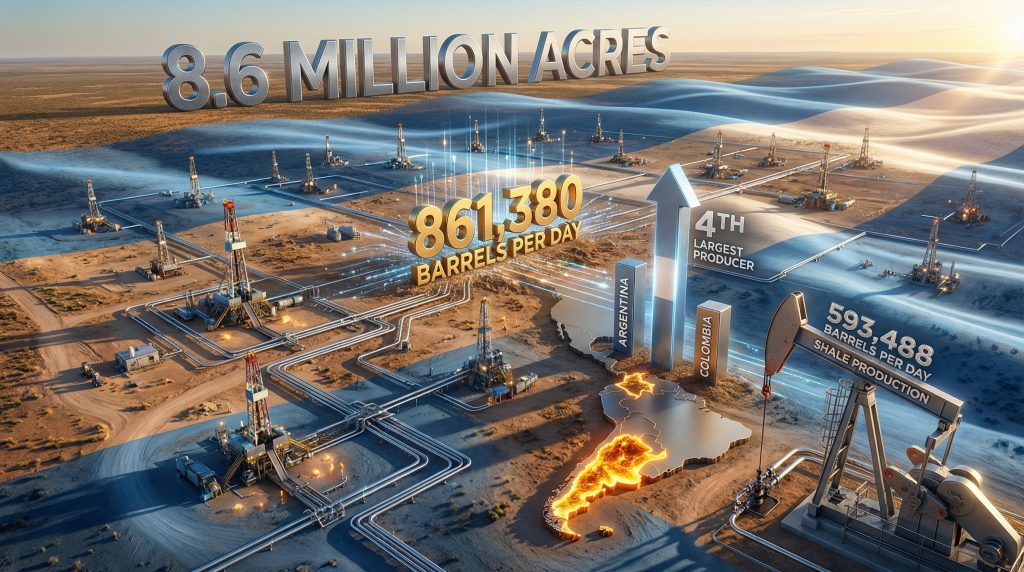
Argentina's emergence as a major shale producer demonstrates how the Argentina and Vaca Muerta shale boom is reshaping South American energy dynamics. Global energy markets are witnessing transformative shifts as unconventional resource development reshapes traditional production hierarchies. While North American shale formations established the template for horizontal drilling and hydraulic fracturing technologies, South American geology presents unique opportunities for resource extraction at unprecedented scales. The convergence of favourable geological conditions, improved extraction techniques, and supportive regulatory frameworks creates environments where previously inaccessible hydrocarbon reserves become economically viable. These macro-level changes extend beyond individual fields or countries, fundamentally altering continental energy security calculations and establishing new competitive dynamics among regional producers.
Understanding Argentina's Unconventional Revolution
The transformation of Argentina from energy importer to continental powerhouse represents one of the most significant shifts in South American resource dynamics within the past decade. This transition stems from successful exploitation of the Vaca Muerta formation, which has evolved from geological curiosity to production engine challenging established regional energy hierarchies.
Production Performance Metrics (December 2025):
- Total crude oil production: 861,380 barrels per day
- Year-over-year growth: 14% increase
- Month-over-month growth: 2% increase
- Decade comparison: Nearly double 2015 production levels
The scale of this transformation becomes apparent when examining historical trajectories. December 2015 production registered 494,721 barrels per day, meaning current output represents approximately 174% growth over ten years. This sustained expansion rate positions Argentina among the world's fastest-growing oil producers, providing valuable oil price rally insights for global markets.
Natural gas production demonstrates similar momentum, reaching 4.6 billion cubic feet per day in December 2025. This represents 7.4% monthly growth and 5.7% annual increase, though it remains below the record 5.7 billion cubic feet daily achieved in July 2025. Furthermore, the natural gas price forecast indicates continued volatility in this sector.
Shale Formation Dominance
Unconventional Production Composition:
| Resource Type | Daily Output | Total Share | Annual Growth |
|---|---|---|---|
| Shale Oil | 593,488 barrels | 69% of total | 31% increase |
| Shale Gas | 3 billion cubic feet | 65% of total | 12% increase |
The Argentina and Vaca Muerta shale boom encompasses 8.6 million acres containing estimated reserves of 16 billion barrels of recoverable shale oil and 308 trillion cubic feet of recoverable shale gas. Current development represents approximately 10% of total formation potential, indicating substantial room for production expansion.
Technical Performance Indicators:
- Drilling efficiency: 1.1-1.3 wells per rig monthly
- Individual rig output: 28,000 barrels per day average
- Breakeven cost range: $36-45 per barrel
- Development stage: Early phase with 15-20 year growth runway
When big ASX news breaks, our subscribers know first
Why Argentina Surpassed Traditional Regional Producers
Argentina's ascension to fourth-largest oil producer in South America during late 2024, displacing Colombia, reflects fundamental changes in continental production dynamics. This ranking shift occurred as Argentina maintained 14% annual growth while traditional producers faced declining output from mature conventional fields.
Economic Transformation Impact
The reversal from energy deficit to surplus represents approximately $7 billion annual economic swing. Argentina's energy deficit peaked at $7 billion in 2013, making the subsequent transition to net exporter status a critical restructuring achievement for the crisis-prone economy. However, this success presents energy export challenges that require strategic planning.
Key Economic Indicators:
- Historic energy deficit (2013): $7 billion annually
- Current status: Net energy exporter
- Economic transformation: $7+ billion positive swing
- Import substitution: Domestic gas at $2-3.5 per million BTU versus Bolivian imports at $11.4 per million BTU
YPF's Strategic Transformation
Yacimientos Petrolíferos Fiscales (YPF), Argentina's national oil company, exemplifies the shift toward unconventional focus. The company, 51% owned by federal and state governments following 2012 nationalisation, plans to become a pure unconventional oil and gas company by decade's end.
YPF Production Profile (December 2025):
- Total crude production: 384,397 barrels per day (55% of Argentina's total)
- Shale oil component: 86% of YPF's petroleum output
- Natural gas production: 947,191 million cubic feet per day (20% of national total)
- Shale gas component: 80% of YPF's total gas production
Investment Flows Reshaping the Formation
Capital deployment across the Vaca Muerta demonstrates sustained confidence in formation economics. Total hydrocarbon sector investment for 2026 is projected at $11 billion, representing a 17% increase over 2025's $9.4 billion commitment. This aligns with broader energy security trends across global markets.
YPF's Strategic Investment Programme (2025-2030)
Capital Allocation Framework:
- Total committed investment: $36 billion
- Peak drilling activity: 32 active rigs (2029)
- Production target: 1 million barrels oil equivalent per day
- Current baseline: 553,009 barrels oil equivalent per day (December 2025)
Projected Production Composition by 2030:
- Crude oil: 47.5% weighting (approximately 475,000 barrels per day)
- Natural gas: 440,000 barrels oil equivalent
- Natural gas liquids: 75,000 barrels oil equivalent
International Participation Patterns
Major energy companies are implementing diverse engagement strategies within the formation. According to Argentina's shale boom analysis, this development is rewriting South America's energy map.
Shell's Commitment:
- 2026 investment: $700 million
- Strategic focus: Dismissing divestiture speculation
- Long-term positioning: Sustained participation despite market volatility
GeoPark's Entry:
- Financing secured: $50 million for block development
- Target blocks: Loma Jarillosa Este and Puesto Silva Oeste
- Acquisition source: Purchased from Pluspetrol (September 2025)
Chevron and Petronas:
- Joint venture partnerships through Loma Campana field
- Strategic alliance frameworks for long-term development
Infrastructure Development Enabling Scale-Up
The transition from production growth to export capability requires substantial midstream infrastructure investment. Pipeline development and port facilities represent critical bottlenecks that determine ultimate production potential.
Vaca Muerta Sur Pipeline Project
Infrastructure Specifications:
- Total investment: $2.5 billion
- Initial export capacity: 930,000 barrels per day (late 2026)
- Long-term target: 1.5 million barrels per day (2030)
- Strategic endpoint: Punta Colorada port facility
This pipeline system addresses the fundamental challenge of moving landlocked production to international markets. Without adequate takeaway capacity, even the most productive wells cannot contribute to export revenue generation.
Natural Gas Distribution Networks
Gas infrastructure development focuses on import substitution and export capability development. The cost differential between domestic production ($2-3.5 per million BTU) and imported gas from Bolivia ($11.4 per million BTU) demonstrates the economic incentive for infrastructure investment.
Current Gas Production Metrics:
- Shale gas share: 65% of national production
- Year-over-year growth: 12% increase
- Peak production comparison: 18% below July 2025 record of 3.8 billion cubic feet daily
Economic Reforms Accelerating Development
President Javier Milei's administration has implemented economic restructuring policies creating favourable conditions for energy sector expansion. These reforms address historical impediments to foreign investment and operational efficiency.
Policy Framework Changes
Regulatory Environment Improvements:
- Currency stabilisation through managed floating rates
- Capital control elimination procedures
- Foreign investment barrier reduction
- Fiscal spending rationalisation measures
Investment Climate Enhancements:
- Streamlined permitting processes for energy projects
- Enhanced legal certainty for international operators
- Improved repatriation mechanisms for foreign earnings
- Reduced regulatory compliance costs
"Economic Impact: These reforms complement the natural resource advantages by reducing institutional friction that historically deterred sustained foreign investment in Argentine energy projects."
Long-Term Strategic Implications
The success of the Argentina and Vaca Muerta shale boom extends beyond production metrics to encompass broader implications for South American energy security and global market dynamics. For investors considering comprehensive investment strategy components, this development presents significant opportunities.
Regional Energy Security Scenarios
Scenario Analysis Framework:
Optimistic Growth Scenario:
- Oil prices: Sustained above $70/barrel
- Political stability: Maintained policy continuity
- Infrastructure: Completion on schedule
- Projected Outcome: 1.5 million barrels per day by 2030
Base Case Expansion:
- Oil prices: $50-70/barrel volatility range
- Regulatory improvements: Gradual implementation
- Infrastructure: Phased development approach
- Projected Outcome: 1.2 million barrels per day by 2030
Conservative Development:
- Oil prices: Sustained below $50/barrel
- Political uncertainty: Potential policy reversals
- Infrastructure bottlenecks: Persistent delays
- Projected Outcome: 900,000 barrels per day by 2030
Continental Market Reconfiguration
Argentina's production growth creates new trade flows and reduces South American dependence on external energy imports. The country's transition from deficit to surplus fundamentally alters regional energy security calculations and competitive positioning among continental producers.
South American Producer Rankings:
| Country | Current Rank | Strategic Advantages | Primary Challenges |
|---|---|---|---|
| Brazil | #1 | Pre-salt expertise, offshore technology | High development costs |
| Venezuela | #2 | Massive conventional reserves | Political instability, sanctions |
| Ecuador | #3 | Established export infrastructure | Limited growth potential |
| Argentina | #4 | Low-cost shale, rapid growth | Infrastructure gaps |
| Colombia | #5 | Political stability, established operations | Declining conventional production |
The next major ASX story will hit our subscribers first
Investment Opportunities Emerging
The Argentina and Vaca Muerta shale boom creates opportunities across the energy value chain, from upstream drilling services to downstream processing facilities. Analysts at Rystad Energy note that this development signals Argentina's pivot towards LNG exports.
Sector-Specific Growth Areas
Upstream Development Opportunities:
- Drilling services and specialised equipment providers
- Completion technology and hydraulic fracturing services
- Well servicing and maintenance companies
- Geological consulting and reservoir engineering
Midstream Infrastructure Needs:
- Pipeline construction and operation companies
- Processing facility development and management
- Storage terminal and logistics providers
- Transportation and distribution networks
Downstream Integration Potential:
- Refining capacity expansion projects
- Petrochemical facility development
- Export terminal construction and operation
- Value-added processing capabilities
Investment Risk Considerations
Despite favourable fundamentals, several risk factors require evaluation. Furthermore, investors should consider how these developments align with global market trends:
Operational Risks:
- Infrastructure development delays
- Regulatory policy reversals
- Currency fluctuation impacts
- Technical execution challenges
Market Risks:
- Oil price volatility effects
- Global demand fluctuations
- Competitive pressure from other shale plays
- Transportation cost escalation
Political and Economic Risks:
- Government stability concerns
- Tax and royalty regime changes
- Labour relations and social issues
- Environmental regulatory evolution
The combination of world-class geological resources, improving economic fundamentals, and supportive policy frameworks positions Argentina's Vaca Muerta shale boom as a transformative force in South American energy markets. Current production levels represent only the early stages of what could become one of the world's most significant unconventional resource developments, fundamentally reshaping continental energy security and creating substantial investment opportunities across the energy value chain.
Disclaimer: This analysis contains forward-looking statements and projections based on current available data. Actual production levels, investment returns, and market developments may vary significantly from projections due to numerous factors including oil price volatility, regulatory changes, political developments, and technical challenges inherent in unconventional resource development.
Ready to Capitalise on the Next Major Resource Discovery?
While Argentina's shale boom demonstrates how transformative resource discoveries can reshape entire energy markets, Australian investors shouldn't overlook similar opportunities closer to home. Discovery Alert's proprietary Discovery IQ model delivers real-time alerts on significant ASX mineral discoveries, instantly empowering subscribers to identify actionable opportunities ahead of the broader market and understand why historic discoveries can generate substantial returns by exploring exceptional examples of market-leading outcomes.