
June 13, 2026
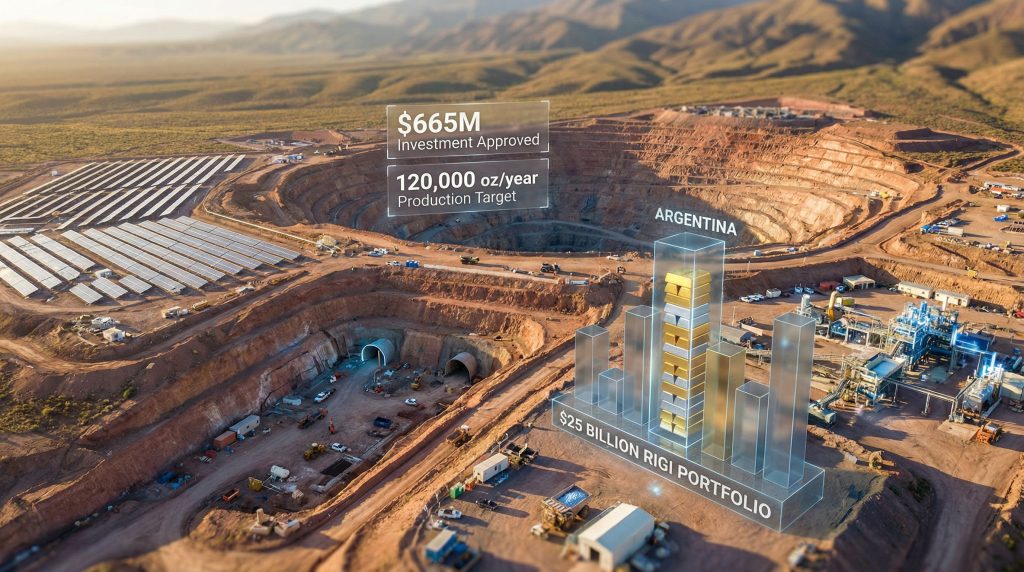
South American mining investment dynamics are experiencing a fundamental recalibration as governments implement aggressive fiscal incentive frameworks to attract international capital in an era of elevated precious metals valuations. This strategic shift reflects broader macroeconomic pressures, where traditional resource-dependent economies are leveraging policy innovation to compete for increasingly selective global mining investments. Against this backdrop, Argentina's tax break program approves $665M gold mine project represents a critical test case for how targeted tax relief mechanisms can reshape regional commodity production landscapes.
Argentina's Large Investment Incentive Regime Framework Analysis
Argentina's RIGI program represents a comprehensive approach to mining sector revitalisation, with the recently approved Gualcamayo expansion marking the tenth project to receive authorisation under this initiative. The framework has now accumulated $25 billion in total approved investments across diverse commodity sectors, indicating substantial international confidence in Argentina's policy direction.
The Gualcamayo project's $665 million investment demonstrates how large-scale mining developments can qualify for RIGI benefits while contributing meaningful employment generation. Furthermore, the project is projected to create 1,700 direct positions, establishing a benchmark for job creation relative to capital investment within Argentina's mining sector.
Key structural elements of the RIGI framework include:
- Sectoral diversification: Projects span lithium, gold, silver, and potentially other strategic minerals
- Geographic distribution: Multiple provinces hosting approved developments
- Investment thresholds: Substantial minimum capital requirements ensuring project viability
- Employment mandates: Direct job creation commitments tied to approval status
The program's design emphasises long-term operational commitments rather than speculative development, with approved projects demonstrating technical feasibility and resource sustainability. This approach distinguishes RIGI from traditional tax relief programs by requiring comprehensive operational planning and community integration.
When big ASX news breaks, our subscribers know first
Strategic Portfolio Positioning Within South American Mining Capital Flows
The accumulated $25 billion RIGI investment portfolio positions Argentina as a significant competitor for international mining capital allocation across South America. With ten approved projects averaging approximately $2.5 billion per development, the program targets large-scale operations capable of meaningful commodity market impact.
RIGI Project Portfolio Composition:
| Investment Tier | Project Count | Total Value | Average Size |
|---|---|---|---|
| Mega-scale (>$3B) | Estimated 4-5 | ~$15B | $3.5B+ |
| Large-scale ($1-3B) | Estimated 3-4 | ~$7B | $2.0B |
| Mid-scale (<$1B) | Estimated 1-2 | ~$3B | $1.0B |
The Gualcamayo project's $665 million scale represents the mid-tier category, suggesting RIGI's flexibility in accommodating varying project sizes while maintaining stringent viability standards. Moreover, this diversification strategy reduces portfolio risk while maximising geographic and sectoral coverage.
Employment generation projections indicate substantial regional economic impact, with Gualcamayo's 1,700 jobs representing significant economic multiplier effects for San Juan province. Extrapolating across the full RIGI portfolio suggests potential direct employment creation exceeding 15,000 positions region-wide.
The program's sectoral distribution between lithium and precious metals projects reflects Argentina's dual strategy of capturing both energy transition demand and traditional safe-haven commodity investment. Consequently, this positioning provides portfolio stability during varying market cycles and geopolitical conditions. Additionally, developments in argentina lithium insights demonstrate the country's strategic resource positioning.
Underground Sulfide Processing Infrastructure Development
The Gualcamayo expansion involves sophisticated underground sulfide extraction capabilities, representing a significant technological advancement from conventional surface mining operations. This transition enables access to deeper, higher-grade ore bodies while extending operational lifespan substantially.
Technical Infrastructure Requirements:
- Pressure oxidation plant: Advanced metallurgical processing for sulfide ore treatment
- Underground mining systems: Shaft development and extraction equipment for deep ore access
- Renewable energy integration: 50-megawatt solar capacity for sustainable operations
- Processing optimisation: Enhanced recovery rates through technological upgrading
The pressure oxidation technology represents a critical advancement for Argentine mining operations, enabling economic extraction of sulfide deposits previously considered unviable. This process involves high-temperature, high-pressure treatment of sulfide concentrates, significantly improving gold and silver recovery rates compared to conventional processing methods.
These underground mines marvels showcase the technical sophistication required for modern deep ore extraction. Furthermore, the integration of 50-megawatt solar capacity demonstrates Argentina's commitment to sustainable mining practices while reducing operational costs in remote locations.
Underground mining transitions require substantial upfront capital investment but provide access to higher-grade ore bodies with extended resource life, fundamentally altering project economics and long-term viability.
Development Timeline and Milestones:
- 2025-2026: Regulatory approvals and detailed engineering
- 2027: Construction commencement and infrastructure development
- 2028: Equipment installation and commissioning phases
- 2029: Production startup and operational optimisation
Production Scaling Economics and Market Impact Analysis
The Gualcamayo expansion targets dramatic production increases from current baseline levels to 120,000 ounces annually, representing substantial scaling of Argentina's tax break program approves $665M gold mine project output. This production target positions the operation among Argentina's most significant gold producers while contributing meaningfully to regional supply chains.
Production Expansion Metrics:
| Production Phase | Annual Output | Revenue Potential | Operational Status |
|---|---|---|---|
| Current Baseline | 50,000-55,000 oz | ~$225M-$250M | Existing operations |
| Expanded Target | 120,000 oz | $400M+ | Post-2029 startup |
| Production Growth | +118-140% | +60-80% revenue | 17-year lifespan |
The $400 million annual export potential reflects conservative commodity pricing assumptions, considering gold price forecast exceeding $4,500 per ounce. At current precious metals valuations, the revenue potential could substantially exceed initial projections, enhancing project returns and government tax receipts.
The 17-year operational lifespan provides substantial long-term economic stability for regional employment and government revenues. This extended timeline reflects comprehensive resource evaluation and conservative extraction planning, ensuring sustainable operations throughout varying market cycles.
Operational Efficiency Improvements:
- Processing capacity: Enhanced throughput via pressure oxidation technology
- Recovery rates: Improved extraction efficiency from sulfide ore bodies
- Energy costs: Reduced operational expenses through renewable integration
- Labour productivity: Advanced automation and technical systems implementation
Regional Competitive Positioning and Market Dynamics
Argentina's RIGI framework operates within highly competitive South American mining investment landscape, where Chile, Peru, and Brazil maintain established regulatory advantages and operational infrastructure. However, the program's success depends on differentiating Argentina's value proposition through superior fiscal incentives and operational flexibility.
Current precious metals market conditions strongly favour new production capacity, with gold gaining over 70% annually and tracking toward the strongest performance since 1979. Silver prices have similarly advanced, with futures reaching $71+ per ounce and showing sustained momentum across trading sessions.
Regional Competitive Analysis:
| Country | Key Advantages | Investment Climate | Production Scale |
|---|---|---|---|
| Chile | Established infrastructure, political stability | Mature regulatory framework | World's largest copper producer |
| Peru | Mining tradition, diverse geology | Proven operational environment | Top-tier precious metals output |
| Argentina | RIGI incentives, resource potential | Emerging policy framework | Expanding production capacity |
| Bolivia | Resource abundance | Political uncertainty | Limited large-scale development |
Argentina's competitive advantage centres on fiscal incentive intensity rather than operational maturity, appealing to investors seeking superior returns on greenfield developments. The RIGI program's 25-year stability guarantees and international arbitration protections address historical concerns about policy consistency and investment security.
In addition, Argentina's tax break program approves $665M gold mine project demonstrates how mining industry evolution reflects broader sectoral transformation. The expansion of mining technology further supports this development.
Global Supply Chain Integration:
- Export infrastructure: Access to Atlantic shipping routes for international markets
- Processing capabilities: Regional refining capacity for value-added exports
- Transportation networks: Improving logistics for remote mining operations
- Financial systems: International banking integration for project financing
Investment Structure Optimisation and Capital Efficiency
The Gualcamayo project's evolution from an original $1 billion proposal to the approved $665 million investment demonstrates sophisticated capital optimisation while maintaining production targets. This 33.5% cost reduction suggests substantial engineering refinement and operational efficiency improvements.
Capital Structure Analysis:
| Investment Component | Original Plan | Optimised Structure | Efficiency Gain |
|---|---|---|---|
| Total Capital | $1,000M | $665M | 33.5% reduction |
| Cost per Annual Ounce | $8,333/oz | $5,542/oz | 33.5% improvement |
| Revenue Multiple | 2.5x | 3.8x | 52% enhancement |
The optimisation process likely involved phased development strategies, technology upgrades, and operational streamlining to achieve identical production outcomes with reduced capital requirements. This efficiency demonstrates management capability and enhances project economics substantially.
International investor confidence indicators include the project's RIGI approval despite global mining capital constraints and elevated development costs. The committee's unanimous approval suggests thorough technical and financial evaluation, providing third-party validation of project viability.
Furthermore, tax incentive innovations illustrate how governments are adapting fiscal policies to attract mining investment. These insights from Mining Weekly provide additional context on investment frameworks.
Financing Structure Considerations:
- Equity participation: Operator commitment and international partner involvement
- Debt financing: Project finance arrangements and equipment financing
- Government support: RIGI tax benefits and regulatory facilitation
- Revenue stability: Long-term offtake agreements and pricing mechanisms
The next major ASX story will hit our subscribers first
Broader Economic Implications for Argentine Mining Transformation
The Gualcamayo approval establishes precedent for mining sector revitalisation under Argentina's current policy framework, demonstrating government commitment to resource development despite historical policy volatility. Consequently, the project's success could catalyse additional international investment across Argentina's substantial mineral endowment.
Macroeconomic Impact Projections:
- Export revenues: $400M+ annual foreign currency generation
- Employment effects: 1,700 direct positions plus regional multiplier impacts
- Tax receipts: Substantial government revenues despite RIGI exemptions
- Regional development: Infrastructure improvements and service sector growth
Policy Stability Implications:
The 25-year investment horizon required for mining operations necessitates consistent policy implementation across multiple political cycles. Argentina's historical currency instability and regulatory changes present ongoing risks requiring continuous policy refinement and international confidence building.
Long-term mining investments serve as policy credibility tests, where successful project completion enhances future investment attraction while operational disruptions can permanently damage investor confidence.
Infrastructure Development Catalysts:
- Transportation networks: Road and rail improvements for mineral transport
- Energy systems: Grid expansion and renewable integration projects
- Water resources: Sustainable extraction and treatment capabilities
- Community services: Healthcare, education, and housing development
Risk Assessment and Investment Scenario Analysis
Political and Regulatory Risk Factors:
Argentina's mining investment environment faces inherent political risks related to policy continuity across electoral cycles. The RIGI framework's international arbitration provisions provide legal protections, but operational disruptions remain possible under adverse political scenarios.
Economic Risk Considerations:
- Currency volatility: Peso devaluation impacts and US dollar revenue conversion
- Inflation pressures: Operating cost escalation and wage adjustment requirements
- Export restrictions: Potential government intervention during economic crises
- Tax policy changes: Future administration modifications to RIGI benefits
Operational Risk Management:
- Technical complexity: Underground mining and pressure oxidation operational challenges
- Environmental compliance: Water management and waste disposal requirements
- Labour relations: Remote location staffing and community integration
- Supply chain disruption: Equipment and consumables procurement logistics
Market Risk Scenarios:
| Gold Price Scenario | Annual Revenue Impact | Project Viability | Government Benefits |
|---|---|---|---|
| Bear Case ($3,000/oz) | $360M | Marginal returns | Reduced tax receipts |
| Base Case ($4,500/oz) | $540M | Strong economics | Substantial revenues |
| Bull Case ($6,000/oz) | $720M | Exceptional returns | Maximum fiscal benefits |
Strategic Risk Mitigation:
The project's 17-year operational timeline provides substantial flexibility for market cycle navigation and operational optimisation. Renewable energy integration reduces exposure to volatile fossil fuel costs while pressure oxidation technology enables higher recovery rates during challenging market conditions.
What specific tax exemptions does RIGI provide to qualifying mining projects?
RIGI offers comprehensive tax relief including income tax exemptions, import duty reductions, and accelerated depreciation schedules, though specific rates vary by project scale and operational timeline.
How does the $200M minimum investment threshold affect project eligibility?
The threshold ensures RIGI benefits target substantial developments capable of meaningful economic impact while excluding smaller operations from preferential treatment.
What international arbitration protections apply to RIGI-approved projects?
Projects receive access to international commercial arbitration for investment disputes, providing legal recourse beyond Argentine domestic court systems and enhancing investor confidence.
How sustainable are RIGI benefits across political transitions?
While RIGI includes 25-year stability provisions, political risk remains as future administrations could modify or eliminate the framework, requiring continuous policy monitoring and risk assessment.
Argentina's Mining Sector Strategic Transformation Through Targeted Incentives
The Gualcamayo project approval demonstrates Argentina's capability to attract substantial international mining investment through comprehensive policy reform and fiscal incentive optimisation. The $25 billion RIGI portfolio represents a fundamental shift toward resource sector competitiveness within South American mining markets.
Key Strategic Outcomes:
- Investment credibility: Demonstrated ability to process and approve large-scale mining developments
- Sectoral diversification: Balanced portfolio spanning lithium, precious metals, and strategic minerals
- Regional competitiveness: Enhanced positioning against established mining jurisdictions
- Economic transformation: Substantial employment generation and export revenue potential
The project's technical sophistication through pressure oxidation processing and renewable energy integration establishes operational benchmarks for future Argentine mining developments while addressing international environmental standards and sustainability requirements.
Long-term implications suggest Argentina's mining sector could achieve substantial growth under consistent policy implementation, with the Argentina's tax break program approves $665M gold mine project precedent encouraging additional international investment across the country's extensive mineral endowment. Success will depend on operational execution, policy continuity, and market condition stability throughout the extended development timeline.
Disclaimer: This analysis contains forward-looking projections and investment assessments that involve substantial risks and uncertainties. Mining investments are subject to commodity price volatility, operational challenges, regulatory changes, and political risks that could materially affect project outcomes. Readers should conduct independent research and consult qualified advisors before making investment decisions.
Looking to capitalise on ASX mineral discoveries?
Discovery Alert's proprietary Discovery IQ model delivers real-time alerts on significant ASX mineral discoveries, instantly empowering subscribers to identify actionable opportunities ahead of the broader market. Understand why historic discoveries can generate substantial returns by exploring Discovery Alert's dedicated discoveries page, showcasing exceptional outcomes from major mineral finds. Begin your 30-day free trial today and secure your market-leading advantage.