August 5, 2026
The Trillion-Dollar Gap Between What Africa Has and What Africa Earns
The global mining industry sits at a peculiar crossroads. Annual investment flowing into energy and related sectors worldwide reaches approximately US$3.3 trillion, yet mining development capital totalled only around US$55 billion in 2024, according to PwC's Mine 2026 report. For a sector that supplies every metal and mineral needed to build solar panels, batteries, electric vehicles, and power grids, that proportional underinvestment is striking.
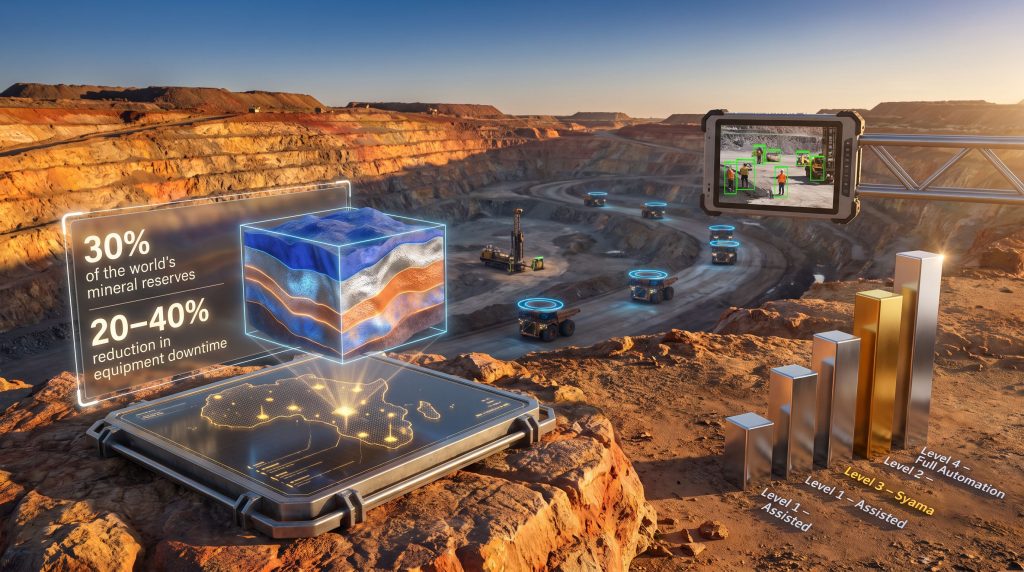
Nowhere is this disconnect more consequential than across Africa. The continent holds an estimated 30% of the world's known mineral reserves, including dominant geological positions in cobalt, manganese, platinum group metals, and chromite. Yet despite this extraordinary endowment, African nations capture a disproportionately small share of the value generated across critical mineral supply chains. The rising critical minerals demand driven by the energy transition makes this gap all the more urgent to address.
Artificial intelligence in African mining is increasingly being identified as the most credible mechanism to close that gap, not simply by extracting more, but by extracting smarter.
When big ASX news breaks, our subscribers know first
Why the Old Model No Longer Works
Legacy Operations Versus Modern Supply Chain Demands
For decades, African mining operated on a model that was fundamentally reactive: drill where geology suggested, maintain equipment after it broke, and sell commodities at prices set elsewhere. That model is now misaligned with what global buyers, institutional investors, and strategic partners actually require.
Modern supply chains demand transparency, ESG compliance, traceability, and operational efficiency at levels that manual, labour-intensive operations simply cannot deliver. The shift is not merely technological; it is structural. International offtake agreements, green financing arrangements, and battery supply chain audits increasingly require documented operational data that only digitally equipped mining operations can produce.
The report Artificial Intelligence and the Future of African Mining, authored by Anthony Carroll and Jef Karel Caers of Stanford University's Earth and Planetary Sciences department, frames this directly: the path to capturing greater value from critical minerals requires moving beyond legacy extraction models and siloed foreign investments. Caers, who founded the Stanford Mineral-X initiative with partial funding from technology providers including KoBold Metals, Ideon, Fleet Space, and Xcalibur Smart Mapping, brings a research perspective that straddles geological decision-making and computational methods.
The Core AI Technologies Reshaping the Sector
Before examining where and how AI is being deployed, it is useful to understand what the technology actually does inside a mining context.
| Technology Category | Primary Mining Application | Key Operational Benefit |
|---|---|---|
| Machine Learning (ML) | Geological target identification | Faster, higher-confidence mineral discovery |
| Computer Vision | Safety monitoring, equipment inspection | Reduced incidents, real-time hazard detection |
| Predictive Analytics | Maintenance scheduling, equipment health tracking | Lower downtime, extended asset life |
| Digital Mapping & Remote Sensing | Subsurface modelling, resource estimation | Reduced exploration cost and timeline |
| Autonomous Systems | Drilling, haulage, mine planning | Labour optimisation, 24/7 operational continuity |
| Natural Language Processing | Regulatory compliance, reporting automation | Faster documentation, improved ESG reporting |
The critical distinction separating AI from conventional mining technology is the capacity for continuous improvement. A conventional automated drill follows programmed instructions. An AI-enabled system analyses feedback data in real time, adjusts parameters dynamically, and improves its decision-making the more operational data it accumulates. This self-refining quality is what makes AI genuinely transformative rather than simply another layer of mechanisation.
Where Artificial Intelligence in African Mining Is Actually Being Deployed
Southern Africa: The Continent's Technology Vanguard
South Africa currently leads the continent in operational AI adoption, driven by three reinforcing factors: the concentration of major mining houses, well-established physical infrastructure, and geographic proximity to technology service providers. Applications span predictive maintenance in deep-level gold and platinum operations, underground safety monitoring systems, and AI-assisted geological modelling across the Witwatersrand Basin and Bushveld Complex.
Botswana is deploying AI-assisted exploration tools in diamond and copper projects, where digital mapping technologies are meaningfully compressing the cost of identifying greenfield targets. Zambia's copper belt is seeing early-stage integration of AI for exploration data analysis and production monitoring, reflecting growing interest from international technology partners attracted by the country's copper endowment.
West and Central Africa: Significant Promise, Structural Friction
Mali's Syama gold mine, operated by Resolute Mining, is arguably the most significant proof-of-concept for autonomous mining on the continent. The operation incorporates automated drilling systems and integrated mine planning tools, making it one of Africa's most advanced autonomous mining deployments. What Syama demonstrates is that the technology can work in an African operational context, but it also underscores how substantial the upfront capital commitment and technical expertise requirements actually are.
West African gold operations in Ghana, Côte d'Ivoire, and Guinea are beginning to explore AI-assisted exploration and processing optimisation, though adoption remains early-stage. The DRC mineral resources present a paradox: it holds the world's largest cobalt reserves, a commodity at the absolute centre of the global battery supply chain, yet significant infrastructure constraints continue to limit the scalability of AI deployment, with targeted production monitoring pilots representing the current frontier.
Structural Reality: Reliable power supply, high-bandwidth connectivity, and robust logistics corridors are not optional extras for AI deployment at scale. They are fundamental prerequisites. Across much of Sub-Saharan Africa, these foundations remain inconsistent, creating a pronounced two-speed adoption dynamic between well-capitalised Southern African operations and resource-rich but infrastructure-constrained regions elsewhere.
How AI Works Across the Mining Value Chain: A Stage-by-Stage Breakdown
Stage 1: Mineral Exploration and Target Generation
Conventional geological survey work is slow, expensive, and inherently limited by the volume of data a human analyst can meaningfully process. AI in mineral exploration fundamentally rewrites that constraint.
The process in an AI-enabled exploration programme typically follows this sequence:
-
Large geological, geochemical, and geophysical datasets, historically analysed manually over months or years, are ingested into machine learning models.
-
Algorithms identify statistical patterns and anomalies that correlate with known mineral deposit signatures.
-
Satellite and airborne remote sensing data is processed through computer vision systems to generate high-resolution subsurface models.
-
Exploration targets are ranked by probability of economic mineralisation, allowing geologists to concentrate drilling campaigns on the highest-confidence locations.
-
Digital mapping platforms, including gravity gradiometry and electromagnetic survey tools from providers such as Fleet Space, Xcalibur Smart Mapping, and Ideon, generate predictive subsurface maps at a fraction of the time and cost of conventional methods.
The practical effect is a material reduction in unproductive drill holes and a compression of the timeline from initial target identification to drill-ready decision. In exploration economics, where capital efficiency per discovery is a primary performance metric, this matters enormously.
Stage 2: Predictive Maintenance and Production Optimisation
Once ore is being extracted, AI's most immediate financial contribution is in keeping equipment running. Sensors embedded in haul trucks, crushers, conveyor systems, and drilling rigs continuously transmit operational data to AI monitoring platforms. Machine learning models analyse vibration patterns, temperature readings, fluid pressure, and usage cycles to predict component failure before it occurs.
Industry data suggests that well-implemented predictive maintenance programmes can reduce equipment downtime by 20 to 40 percent, a figure with direct implications for production output and unit operating costs. The shift from reactive to anticipatory maintenance is one of the clearest return-on-investment arguments for AI adoption in mining.
Beyond equipment health, AI systems monitor ore feed grades, processing plant performance, and recovery rates in real time. Dynamic adjustments to reagent dosing, grinding circuit settings, and flotation conditions can be made autonomously or flagged for operator review. Furthermore, integrating geological block models with live processing data allows operations to continuously optimise ore blending strategies, an approach that was computationally impractical even a decade ago.
Stage 3: Safety Monitoring and Hazard Detection
Underground and surface mining environments generate safety risks that are both predictable and preventable, provided the right monitoring systems are in place. According to research on AI-powered systems in African mining, the deployment of intelligent safety tools is accelerating across the continent's largest operations.
AI is being deployed across several safety dimensions simultaneously:
-
Computer vision systems analyse live camera feeds to detect unsafe behaviours, unauthorised zone entry, and equipment proximity violations.
-
Ground stability monitoring arrays use sensor data and AI analysis to identify early indicators of seismic activity, rock stress changes, and potential collapse zones.
-
Worker fatigue detection systems, combining wearable sensors with computer vision, flag impairment risks before incidents occur.
-
AI-powered ventilation management in underground operations adjusts airflow dynamically based on occupancy levels and atmospheric conditions, simultaneously improving air quality and reducing energy consumption.
The combination of these systems creates a safety monitoring layer that operates continuously, across multiple risk vectors, without the attention fatigue that limits human monitoring.
Stage 4: Autonomous Operations and Mine Planning
The autonomy spectrum in mining runs from AI decision-support tools at the basic end through to fully autonomous operations at the frontier.
| Autonomy Level | Description | Current African Adoption Status |
|---|---|---|
| Level 1: Assisted | Operator-controlled with AI decision support | Widespread in larger operations |
| Level 2: Partial Automation | Specific tasks automated, such as drill guidance | Growing in Southern Africa |
| Level 3: Conditional Automation | Autonomous within defined operational zones | Limited, Syama-type deployments |
| Level 4: Full Automation | Fully autonomous with remote supervision only | Nascent, pilot-stage only |
Syama currently represents the practical ceiling of what has been achieved at scale in Africa. The broader takeaway is not that full automation is imminent across the continent, but that even partial autonomy delivers measurable efficiency gains in contexts where the foundational infrastructure exists to support it.
The Barriers That Are Slowing Adoption
Infrastructure: The Non-Negotiable Foundation
No amount of software investment compensates for unreliable power, poor connectivity, or inadequate logistics. Load-shedding and grid instability, which remain prevalent across multiple African mining jurisdictions, create operational risk for data-intensive AI systems that depend on continuous, high-quality electricity supply.
Remote mine sites frequently lack the fibre or satellite connectivity required for cloud-based AI platforms to function effectively. The physical movement of AI hardware and technical personnel to those sites is further constrained by road, rail, and port infrastructure gaps that add cost and delay to every technology deployment.
Skills Gaps and Brain Drain Dynamics
Deploying AI requires a workforce that can operate, maintain, and interpret AI systems. That skillset is currently scarce across most African mining jurisdictions. University-industry partnerships are emerging, but the pace of skills development consistently lags behind the rate of technology deployment.
A less frequently discussed constraint is the brain drain dynamic, where African data scientists and AI engineers, once trained, migrate to higher-wage markets in Europe, North America, or the Gulf. The talent pipeline leaks at the very point where retention matters most, compounding the structural skills shortage.
Technology Dependency Versus Domestic Capability
Much of the AI investment currently flowing into African mining originates from foreign technology companies and multinational mining houses. This creates an important and underappreciated risk: technological dependency rather than domestic capability building.
When AI tools are deployed within individual mine sites without broader integration into national digital infrastructure, the systemic benefits remain trapped within a single operation and controlled by external providers. African nations that allow this pattern to solidify will find themselves perpetually licensing capability rather than owning it.
Data Governance: The Invisible Regulatory Gap
AI systems generate and depend on vast quantities of operational, geological, and environmental data. Questions about who owns that data, who can access it, and how it can be used are not yet resolved in most African mining jurisdictions.
The absence of comprehensive regulatory frameworks governing AI deployment, algorithmic decision-making, and data sovereignty in extractive industries creates uncertainty for both technology investors and mining operators. It also represents a genuine sovereignty risk: nations that do not establish data governance frameworks risk having their most valuable geological intelligence extracted alongside their minerals.
A Strategic Framework for Capturing Full Value
The Integration Imperative
The central insight from the Carroll-Caers analysis is that AI deployment in mining cannot be treated as a standalone technology investment. It must be integrated with:
-
Energy access improvements that provide the reliable, high-quality power AI systems require.
-
Digital infrastructure investment that extends broadband and satellite connectivity to remote mine sites.
-
Logistics corridor modernisation that enables the physical movement of equipment, personnel, and data systems.
-
Domestic capacity development that builds and retains the human talent needed to operate and evolve AI systems over time.
Building Local AI and Data Science Capability
Recommended pathways for African nations and their international partners include:
-
Establishing mining-focused data science and AI engineering programmes at African universities with industry-linked curricula.
-
Creating technology transfer frameworks that require foreign mining technology providers to train local personnel as a condition of market access.
-
Developing regional centres of excellence in mining AI, building on existing institutions such as the University of the Witwatersrand, to aggregate expertise and research capability.
-
Implementing structured graduate placement programmes connecting African data science graduates directly with mining operations.
The Geopolitical Dimension
The United States, European Union, and allied nations are actively competing to secure critical mineral supply chains, and artificial intelligence in African mining sits at the centre of that competition. African nations that develop sophisticated, data-driven mining operations will be better positioned to negotiate on equal terms with strategic partners, including processing agreements, technology access arrangements, and infrastructure co-investment.
Investor and Policy Perspective: A transactional extraction agreement delivers a one-time capital inflow. A durable supply chain partnership, built on AI-enabled operational transparency and domestic capability, compounds value across decades. The distinction matters enormously for long-term economic sovereignty.
Consequently, the nations and investors that understand this integration imperative — that AI must be paired with infrastructure, skills, and governance rather than deployed in isolation — will be best positioned to transform Africa's mineral endowment from a geological advantage into a sustained economic one. Efforts around mining decarbonisation in Africa further reinforce why this integrated approach is so critical to long-term competitiveness.
The next major ASX story will hit our subscribers first
Frequently Asked Questions: Artificial Intelligence in African Mining
What is AI currently being used for in African mining?
AI is being deployed across four primary areas: mineral exploration and target generation, predictive maintenance and production optimisation, safety monitoring and hazard detection, and autonomous drilling and haulage systems. Adoption is most advanced in Southern Africa, particularly South Africa, with emerging applications in Zambia, Botswana, Mali, Ghana, and parts of the Democratic Republic of Congo.
Which African country is most advanced in mining AI adoption?
South Africa currently leads the continent in AI deployment across mining operations, driven by its concentration of major mining companies, established infrastructure, and access to technology providers. Mali's Syama gold mine is notable as one of Africa's most advanced autonomous mining operations.
What are the biggest barriers to AI adoption in African mining?
The primary constraints are unreliable power supply, limited digital connectivity at remote mine sites, skills shortages in data science and AI engineering, fragmented investment models that create technology dependency rather than domestic capability, and the absence of comprehensive regulatory frameworks governing AI and data governance in extractive industries.
How does AI affect the economics of mineral exploration in Africa?
AI-assisted exploration reduces the cost and time required to identify viable mineral targets by analysing large geological and geophysical datasets more efficiently than conventional methods. Higher-confidence target generation reduces unproductive drill holes, lowering exploration expenditure per discovery — a significant advantage in jurisdictions where exploration budgets are constrained.
Can AI meaningfully improve safety in African mines?
Computer vision systems, wearable sensor networks, ground stability monitoring, and AI-powered ventilation management are all being deployed to reduce accident rates, detect hazardous conditions earlier, and improve worker health outcomes. Safety monitoring is one of the most compelling near-term use cases for artificial intelligence in African mining, given the high-risk nature of underground and deep-level operations. Furthermore, as noted by SAP's analysis of AI efficiency in the African mining sector, the productivity gains from these systems are already measurable across multiple operations.
What is the data sovereignty risk associated with AI in African mining?
Because AI systems generate and depend on large volumes of geological and operational data, nations without clear data ownership and governance frameworks risk having strategically valuable geological intelligence controlled by foreign technology providers. Establishing sovereign data frameworks is increasingly recognised as a priority alongside the technology investments themselves.
Disclaimer: This article contains forward-looking assessments, industry projections, and analytical perspectives that involve assumptions and uncertainties. Readers should conduct independent due diligence before making investment or policy decisions based on the information presented. References to percentage ranges for productivity improvements reflect industry-level estimates and may not be representative of outcomes in any specific operational context.
Want to Track the Next Major Mineral Discovery Before the Market Does?
Discovery Alert's proprietary Discovery IQ model scans ASX announcements in real time, instantly alerting subscribers to significant mineral discoveries across the commodities reshaping the global energy transition — from cobalt and copper to platinum group metals — turning complex geological data into actionable investment insights. Explore Discovery Alert's discoveries page to see how historic ASX mineral discoveries have generated substantial returns, and begin a 14-day free trial to position yourself ahead of the broader market.