August 11, 2026
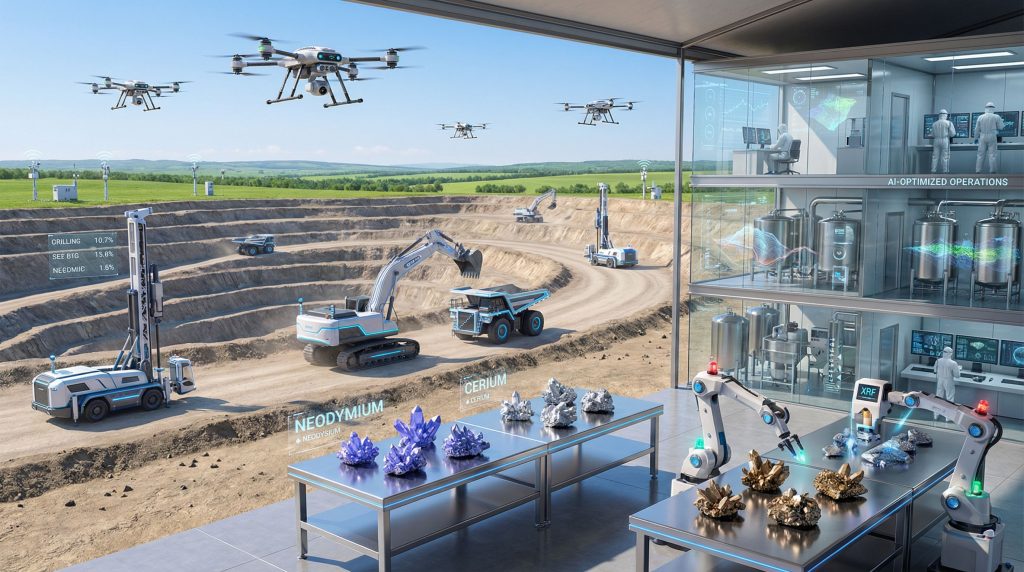
Industrial systems across multiple sectors continue embracing computational intelligence to enhance operational performance, with mining operations representing one of the most data-intensive applications of these emerging technologies. The extraction of critical materials has evolved beyond traditional methods, requiring sophisticated analytical frameworks to navigate complex geological formations and optimise resource recovery processes. Furthermore, the integration of artificial intelligence in rare earth mining is revolutionising how companies approach exploration, extraction, and processing of these strategically important materials.
Understanding the AI Integration Framework in Critical Mineral Extraction
The deployment of artificial intelligence in rare earth mining represents a fundamental transformation in how operators approach resource identification, extraction planning, and processing optimisation. Modern mining operations generate massive datasets from geological surveys, environmental monitoring, and equipment sensors, creating opportunities for machine learning systems to identify patterns invisible to conventional analysis methods.
Moreover, these advances align with broader data-driven mining operations that are reshaping the industry landscape. The technological evolution demonstrates how computational intelligence can enhance every aspect of mineral extraction processes.
Defining AI's Role in Modern Rare Earth Operations
Contemporary rare earth element operations integrate multiple AI technologies across their value chains, from initial prospecting through final processing stages. Machine learning algorithms analyse geological formations, deep learning networks process multispectral imagery, and autonomous systems coordinate equipment operations across mining sites.
The global rare earth elements market reached approximately $7.3 billion in 2023, with projections indicating growth to $10.7 billion by 2030, representing a compound annual growth rate of 5.6%. This expansion drives increased investment in technological solutions that can enhance discovery rates and processing efficiency.
Mining digitalisation surveys indicate that 35-40% of mid-to-large mining operations have implemented some form of AI or machine learning for operational optimisation. Rare earth element operations show higher adoption rates due to the complexity of separating and refining these materials, requiring advanced analytical capabilities to achieve economic viability.
The Economic Drivers Behind AI Adoption
Cost reduction represents a primary motivation for AI implementation across rare earth mining operations. Digital transformation strategies in mining demonstrate potential cost savings of 15-25% through predictive targeting and operational optimisation. These improvements stem from reduced exploration timelines, enhanced processing efficiency, and minimised environmental remediation requirements.
Traditional mineral exploration cycles average 5-7 years from initial target identification to resource definition. AI-powered mining efficiency systems demonstrate potential for compressing these timelines by 30-50%, accelerating project development and reducing capital requirements for exploration programs.
Return on investment calculations for AI implementation suggest payback periods of 2-4 years for exploration-phase systems, though extraction-phase applications require longer evaluation periods due to higher implementation costs and complex integration requirements.
When big ASX news breaks, our subscribers know first
Advanced Technological Systems Transforming Rare Earth Exploration
Remote sensing technologies combined with artificial intelligence in rare earth mining create unprecedented capabilities for identifying potential rare earth deposits across vast geographical areas. These systems analyse electromagnetic radiation patterns, magnetic field variations, and chemical signatures to locate mineralisation that traditional methods might overlook.
Additionally, this technological advancement forms part of broader industry evolution trends that are fundamentally changing how mining companies approach exploration and resource development.
Hyperspectral Imaging and Satellite-Based Detection
Modern hyperspectral sensors capture data across 400-2500 nanometer ranges, encompassing visible, near-infrared, and shortwave infrared portions of the electromagnetic spectrum. This range enables detection of absorption features characteristic of rare earth-bearing minerals, including monazite and bastnäsite formations.
Artificial intelligence models trained on spectral libraries can identify distinct absorption patterns associated with specific rare earth elements. Neodymium and dysprosium, for example, display identifiable spectral signatures that enable automated mapping of potential concentrations across extensive survey areas.
Integration of hyperspectral data with geophysical datasets creates comprehensive prospectivity maps that assign probability values to specific geographic coordinates. This approach enables exploration teams to prioritise field investigation areas based on quantitative analysis rather than subjective interpretation.
Processing Capabilities:
• Data Volume: Modern systems analyse hundreds of spectral bands simultaneously across survey areas
• Response Time: Real-time processing enables immediate target identification during aerial surveys
• Integration: Seamless combination with magnetic, radiometric, and geological databases
• Coverage: Continental-scale mapping capabilities for regional exploration programmes
Machine Learning Algorithms in Geological Modelling
Convolutional Neural Networks excel at recognising spatial patterns in geological imagery, identifying structural features such as fault systems and alteration zones that indicate potential mineralisation. These networks process satellite imagery, airborne photography, and ground-based sensor data to create comprehensive geological interpretations.
Bayesian inference systems calculate probability distributions for mineral occurrence based on multiple data inputs. These statistical approaches incorporate uncertainty quantification, enabling exploration teams to assess confidence levels for potential targets and optimise resource allocation decisions.
Key Analytical Methods:
• Pattern Recognition: Automated identification of geological structures and mineral assemblages
• Probability Mapping: Statistical analysis generating confidence intervals for target prioritisation
• Data Fusion: Integration of disparate datasets into unified geological models
• Anomaly Detection: Identification of unusual patterns that may indicate undiscovered deposits
Predictive Analytics for Resource Estimation
Three-dimensional modelling technologies create digital representations of subsurface geology, enabling exploration teams to simulate different formation scenarios and predict rare earth element concentrations. These models incorporate drilling data, geophysical surveys, and surface observations to build comprehensive underground maps.
Unsupervised learning algorithms analyse regional datasets to identify geochemical anomalies that deviate from established patterns. This approach proves particularly valuable for detecting concealed deposits lacking surface expressions, expanding the potential for discovering previously unknown mineralisation.
"Unsupervised learning systems can identify blind deposits by analysing geochemical patterns that don't conform to traditional models, potentially reducing exploration cycles from several years to months through automated anomaly detection."
Modelling Components:
• Scenario Simulation: Multiple formation hypotheses tested against geological constraints
• Resource Calculation: Volume and grade estimations based on integrated data analysis
• Uncertainty Assessment: Confidence intervals for resource estimates and development planning
• Continuous Updates: Models refined as new data becomes available during exploration
AI Systems Optimising Rare Earth Extraction Processes
Operational efficiency in rare earth mining depends heavily on precise control of extraction and processing systems due to low element concentrations and complex mineralogical associations. Artificial intelligence in rare earth mining enables real-time optimisation of these processes, maximising recovery rates while minimising energy consumption and environmental impact.
Autonomous Mining Equipment and Fleet Management
Self-navigating drilling systems utilise GPS guidance and terrain mapping to optimise hole placement and drilling parameters based on geological models. These systems adjust drilling speed, bit pressure, and cooling fluid circulation to maximise core recovery while minimising equipment wear.
Fleet coordination algorithms manage multiple pieces of equipment simultaneously, optimising traffic patterns, fuel consumption, and maintenance scheduling. Central control systems process real-time data from all operational units to coordinate activities and prevent conflicts or safety hazards.
Operational Benefits:
• Safety Enhancement: Reduced human exposure to hazardous areas and heavy equipment
• Efficiency Gains: Optimised routing and scheduling minimise idle time and fuel consumption
• Precision Control: Automated systems maintain consistent operational parameters
• Data Collection: Continuous monitoring generates comprehensive operational datasets
Real-Time Ore Sorting and Quality Control
X-ray fluorescence sensors deployed on conveyor systems analyse material composition in real-time, enabling immediate separation of ore from waste rock. Machine learning classification algorithms process spectroscopic data to determine material grades and direct automated sorting mechanisms.
These systems operate at industrial throughput rates, processing hundreds of tonnes per hour while maintaining classification accuracy. Automated separation reduces the volume of material requiring downstream processing, decreasing energy consumption and chemical reagent usage.
Performance Specifications:
| System Component | Operational Parameter | Performance Range |
|---|---|---|
| XRF Sensors | Response Time | 50-200 milliseconds |
| Sorting Mechanisms | Throughput Capacity | 300-600 tonnes/hour |
| Classification Accuracy | Grade Determination | 88-94% reliability |
| Separation Efficiency | Waste Rejection | 70-85% volume reduction |
Processing Plant Optimisation Through AI
Chemical separation processes benefit from machine learning models that predict optimal operating conditions for solvent extraction systems. These models analyse pH levels, temperature variations, and reagent concentrations to maximise recovery of high-value rare earth elements.
Reinforcement learning algorithms continuously adjust processing parameters based on real-time sensor feedback, identifying optimal operational settings that surpass manual control benchmarks. This approach proves particularly valuable for separating chemically similar elements that require precise control of extraction conditions.
Processing Improvements:
• Recovery Optimisation: Enhanced separation efficiency for chemically similar elements
• Energy Management: Reduced power consumption through optimised heating and mixing
• Chemical Efficiency: Minimised reagent usage while maintaining separation quality
• Process Stability: Consistent operating conditions despite feed variation
Environmental and Safety Benefits of AI in Rare Earth Mining
Environmental compliance and worker safety represent critical considerations for rare earth mining operations due to the potential for radioactive materials and chemical processing hazards. Artificial intelligence systems enhance monitoring capabilities and enable proactive management of environmental risks, supporting mining sustainability transformation initiatives across the industry.
Environmental Monitoring and Compliance Systems
Automated environmental impact assessment systems integrate satellite imagery analysis with ground-based sensor networks to monitor ecosystem changes around mining operations. These systems track vegetation health, water quality parameters, and soil chemistry variations to ensure compliance with environmental regulations.
Predictive modelling capabilities enable operators to forecast potential environmental impacts before they occur, supporting proactive mitigation strategies. Machine learning algorithms analyse historical data to identify patterns that precede environmental disturbances, enabling preventive interventions.
Monitoring Capabilities:
• Water Quality: Continuous analysis of pH, heavy metals, and radioactivity levels
• Air Quality: Real-time monitoring of particulate matter and chemical emissions
• Ecosystem Health: Vegetation analysis and wildlife habitat assessment
• Compliance Tracking: Automated reporting and regulatory documentation
Waste Management Optimisation
Spectroscopic analysis of tailings composition enables precise classification of waste materials based on their chemical characteristics and potential environmental risks. Automated systems route different waste streams to appropriate containment facilities, minimising environmental exposure.
Long-term environmental impact prediction models simulate waste behaviour over extended time periods, supporting design of containment systems and monitoring programmes. These models incorporate climate data, geological characteristics, and chemical stability factors to predict long-term waste evolution.
Worker Safety Enhancement Technologies
Computer vision systems monitor safety protocol compliance across mining operations, automatically detecting potential hazards and alerting supervisory personnel. These systems analyse worker behaviour, equipment operation, and environmental conditions to prevent accidents.
Predictive maintenance algorithms analyse equipment performance data to identify potential failures before they occur, reducing the risk of catastrophic equipment failures that could endanger workers. These systems schedule maintenance interventions based on actual equipment condition rather than predetermined time intervals.
Safety Features:
• Hazard Detection: Automated identification of unsafe conditions and practices
• Emergency Response: Optimised evacuation procedures and emergency coordination
• Health Monitoring: Air quality assessment and exposure tracking
• Equipment Safety: Predictive maintenance and failure prevention
AI Addressing Supply Chain Challenges in Rare Earth Markets
Global supply chain complexity for rare earth elements requires sophisticated analytical capabilities to manage geopolitical risks, market volatility, and quality assurance requirements. Artificial intelligence systems provide visibility into supply chain dynamics and enable proactive risk management strategies.
The supply chain challenges in rare earth markets have become increasingly complex, particularly given critical minerals' role in AI infrastructure. Furthermore, the growing demand for rare earth elements in AI applications demonstrates the interconnected nature of technological advancement and mineral resource requirements.
Strategic Resource Planning and Risk Management
Geopolitical risk modelling incorporates political stability indicators, trade policy analysis, and international relations data to assess potential supply disruptions. Machine learning algorithms analyse historical patterns to predict future political developments that could affect rare earth availability.
Alternative sourcing identification systems analyse global geological databases to identify potential new supply sources and evaluate their development feasibility. These analyses consider geological characteristics, infrastructure requirements, regulatory environments, and economic factors.
Risk Management Tools:
• Political Analysis: Assessment of regulatory and political stability factors
• Economic Modelling: Cost analysis for alternative sourcing options
• Transportation Planning: Route optimisation and contingency logistics
• Market Intelligence: Price forecasting and demand pattern analysis
Market Demand Forecasting
Machine learning models analyse industrial consumption patterns across technology sectors to predict future rare earth element demand. These models incorporate factors such as electric vehicle production, renewable energy deployment, and consumer electronics manufacturing.
Strategic stockpiling recommendations utilise predictive analytics to optimise inventory levels based on supply risk assessments and demand forecasts. These recommendations balance carrying costs against supply security considerations to minimise total cost of ownership.
Quality Assurance and Traceability Systems
Automated quality certification processes utilise spectroscopic analysis to verify rare earth element purity and composition throughout the supply chain. These systems generate digital certificates that accompany material shipments, providing transparency to end users.
Blockchain integration with AI verification systems creates immutable records of material provenance and quality characteristics. This approach enables customers to verify material origins and processing history, supporting responsible sourcing initiatives.
Challenges and Limitations in AI Implementation
Despite significant potential benefits, artificial intelligence implementation in rare earth mining faces numerous technical, economic, and regulatory challenges that require careful consideration and strategic planning.
Technical and Operational Constraints
Data quality and standardisation represent fundamental challenges for AI system implementation. Legacy geological databases often lack the consistency and format standardisation required for machine learning algorithms, necessitating significant data cleaning and reformatting efforts.
Integration limitations with existing processing infrastructure require careful evaluation of compatibility between new AI systems and established operational procedures. These integration challenges often necessitate significant modifications to existing systems and retraining of operational personnel.
Implementation Barriers:
• Data Consistency: Legacy datasets require extensive cleanup and standardisation
• System Integration: Compatibility challenges with existing operational infrastructure
• Personnel Training: Workforce development needs for AI system operation
• Technology Evolution: Rapid obsolescence risks in AI technology platforms
Metallurgical Complexity in REE Processing
Chemical separation challenges for rare earth elements involve complex multi-stage processes that may not fully benefit from AI optimisation. The similarity of chemical properties among rare earth elements requires precise control of separation conditions that may exceed current AI capabilities.
Human expertise remains essential for complex processing decisions, particularly when dealing with unusual ore compositions or processing anomalies. AI systems serve as decision support tools rather than complete replacements for experienced metallurgical engineers.
Economic and Strategic Considerations
Capital expenditure requirements for comprehensive AI system deployment can be substantial, particularly for smaller mining operations with limited financial resources. Implementation costs include hardware, software, training, and ongoing maintenance expenses.
Regulatory compliance frameworks for AI-enhanced mining operations continue evolving, creating uncertainty about future requirements and potential compliance costs. Environmental permitting processes may require additional documentation and approval procedures for AI-integrated operations.
Financial Considerations:
• Initial Investment: Hardware, software, and implementation consulting costs
• Ongoing Expenses: System maintenance, updates, and operational support
• Risk Assessment: Technology obsolescence and regulatory change risks
• Return Analysis: Long-term cost-benefit evaluation and payback calculations
The next major ASX story will hit our subscribers first
Future Prospects for AI in Rare Earth Mining
Technological advancement continues driving innovation in artificial intelligence applications for rare earth mining, with emerging technologies promising enhanced capabilities for exploration, extraction, and processing operations.
Emerging Technologies and Integration Opportunities
Quantum computing applications offer potential for solving complex geological modelling problems that exceed classical computing capabilities. These systems could enable more sophisticated subsurface modelling and optimisation of multi-variable processing systems.
Advanced robotics integration with AI systems promises enhanced capabilities for extreme environment operations, including deep underground mining and radioactive material handling. These systems could expand the range of deposits that can be safely and economically extracted.
Technology Development Areas:
• Computing Power: Quantum systems for complex geological modelling
• Robotics Integration: Advanced automation for hazardous environment operations
• Sensor Technology: Enhanced detection capabilities and measurement accuracy
• Communication Systems: Improved data transmission and system coordination
Industry Collaboration and Standardisation
Cross-industry collaboration initiatives focus on developing common AI platforms and data standards that enable information sharing while maintaining competitive advantages. These efforts aim to accelerate technology development and reduce implementation costs through shared development expenses.
International cooperation on AI mining standards supports development of best practices and safety protocols for AI-integrated operations. These standards provide frameworks for regulatory compliance and technology implementation across different jurisdictions.
Strategic Implications for Global Markets
Technology leadership in AI-enhanced mining creates competitive advantages for companies and countries that successfully implement these systems. First-mover advantages may provide sustained benefits through operational efficiency improvements and enhanced resource discovery capabilities.
Investment priorities for mining companies increasingly focus on digital transformation initiatives that integrate AI capabilities across their operations. These investments represent strategic commitments to maintaining competitiveness in evolving global markets.
Strategic Factors:
• Competitive Position: Technology leadership advantages in global markets
• Resource Security: Enhanced discovery capabilities for national resource independence
• Investment Strategy: Capital allocation priorities for digital transformation
• Workforce Development: Training and education requirements for AI-integrated operations
Long-term Sustainability and Innovation
Circular economy integration through AI optimisation enables more efficient material recycling and waste reduction strategies. These approaches support sustainability goals while reducing dependence on primary extraction of rare earth elements. The implementation of decarbonisation mining benefits demonstrates how technology can support environmental objectives whilst maintaining operational effectiveness.
Carbon neutrality objectives increasingly influence AI system design, with optimisation algorithms incorporating environmental impact considerations alongside operational efficiency metrics. This approach supports industry commitments to reduce greenhouse gas emissions while maintaining productive capacity.
"The convergence of artificial intelligence with rare earth mining operations represents a fundamental transformation that will likely define competitive advantages and operational capabilities for decades to come, requiring sustained investment in technology development and workforce capabilities."
Disclaimer: This analysis incorporates industry projections and technological assessments that involve uncertainty regarding future developments, market conditions, and regulatory changes. Operational results and implementation timelines may vary significantly from projections based on specific site conditions, technological advancement rates, and economic factors.
Want to identify major mineral discoveries before the market reacts?
Discovery Alert's proprietary Discovery IQ model provides instant notifications on significant ASX rare earth and critical mineral discoveries, empowering subscribers to capitalise on actionable opportunities ahead of the broader market. Explore why historic discoveries have generated substantial returns for early investors and begin your 30-day free trial today to secure your market-leading advantage.