
May 22, 2026
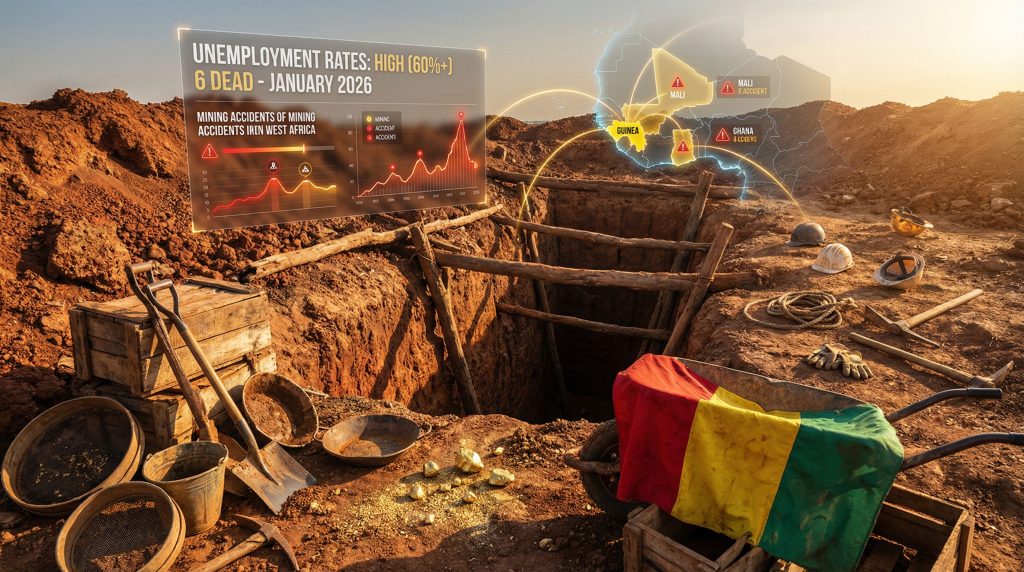
The recent artisanal gold mine collapse Guinea has highlighted the persistent safety challenges facing West Africa's informal mining sector. This tragic incident underscores the complex interplay between economic desperation, regulatory gaps, and geological vulnerabilities that characterise artisanal mining operations across the region. Understanding these dynamics requires examining both immediate safety concerns and the broader socioeconomic factors that drive communities toward high-risk extraction activities.
Understanding West Africa's Informal Mining Infrastructure Crisis
The Regional Scale of Unregulated Gold Extraction
West Africa's artisanal mining sector employs an estimated 2-3 million people directly across the region, with millions more dependent on related supply chain activities. Guinea occupies a significant position within this landscape, where artisanal and small-scale mining contributes approximately 20-30% of total national gold production by volume, though precise quantification remains challenging due to the informal nature of operations.
The Siguiri region in northeastern Guinea represents one of the continent's most active artisanal gold zones, where hundreds of small-scale operations function with minimal oversight or safety infrastructure. These sites typically operate as family-based enterprises involving 3-7 workers per location, with entire household economic security dependent on mining productivity.
Furthermore, Guinea's position within West Africa's gold production hierarchy creates unique vulnerabilities. The country holds proven gold reserves estimated between $300-500 billion equivalent, yet communities proximate to extraction zones experience poverty rates matching or exceeding national averages. This paradox reflects broader regional patterns where resource abundance coexists with persistent socioeconomic disadvantages.
Institutional Gaps in Remote Area Governance
Traditional mining claims framework designed for formal operations fail systematically when applied to artisanal sector characteristics. Guinea's mining code theoretically requires environmental impact assessments, safety audits, and worker registration for all mining activities, yet implementation capacity at local government levels remains severely constrained.
Remote communities lack basic institutional infrastructure necessary for regulatory compliance or emergency response. Geographic isolation from provincial administrative centres means government presence in artisanal mining zones often consists of occasional visits rather than continuous oversight. This creates de facto regulatory vacuums where safety standards become community-determined rather than institutionally enforced.
Consequently, the absence of local technical expertise, communication infrastructure, and enforcement mechanisms compounds these challenges. Artisanal miners operate within legal ambiguity, technically permitted under certain conditions but lacking practical access to compliance pathways or safety resources.
When big ASX news breaks, our subscribers know first
Economic Survival Mechanisms and Risk Acceptance
Rural Employment Constraints and Mining Participation
Guinea's rural economic landscape creates powerful incentives toward artisanal mining participation despite known safety risks. Approximately 55-65% of the rural population lives below the poverty line, with limited alternatives to subsistence activities including informal gold extraction.
Daily income from artisanal mining in Guinea ranges from $5-15 per worker, compared to $2-4 from agricultural day labour, creating significant economic incentive to accept mining risks. This wage differential becomes particularly pronounced during agricultural off-season periods lasting 6-8 months, when rural workers seek alternative income sources.
| Economic Factor | Impact Level | Community Response |
|---|---|---|
| Unemployment rates | High (60%+) | Direct mine participation |
| Agricultural seasonality | Moderate | Seasonal mining migration |
| Limited formal employment | Critical | Family-based operations |
However, the poverty-to-mining pipeline reflects structural economic failure: insufficient agricultural productivity, absent industrial development, and weak rural services create systematic incentives toward high-risk mining participation. Workers enter artisanal mining not through choice but economic necessity, accepting hazardous conditions as unavoidable trade-offs for household survival.
Mineral Wealth Distribution Imbalances
Understanding the mineral exploration importance reveals the paradox when examining value chain structures within artisanal gold extraction. Approximately 80-90% of artisanal gold extracted in the Siguiri region is marketed through informal channels, with minimal value-added benefit accruing to source communities.
Typical value distribution in artisanal gold chains allocates:
- 10-15% to artisanal miners
- 15-20% to local buyers/aggregators
- 20-30% to regional traders
- 25-35% to international exporters
- Remaining margin to refiners/processors
In addition, this structure concentrates wealth at international stages while leaving extraction communities with minimal economic benefit relative to risk exposure. Large-scale mining operations in Guinea typically include road networks, healthcare facilities, and communication infrastructure, while artisanal mining zones receive minimal investment despite similar resource extraction rates.
Technical Vulnerabilities in Informal Excavation
Geological Instability Factors
The March 2026 incident at the Barrière mine illustrates typical collapse mechanisms affecting artisanal operations in Guinea's geological environment. According to recent reports, the accident involved a sudden landslide that sent soil and debris into active mining shafts, resulting in fatalities and injuries with ongoing search operations.
Artisanal mining in Guinea's Siguiri region operates within laterite-derived soils characterised by high water retention capacity and low cohesion properties. These geological conditions require specific engineering precautions that informal operations systematically neglect due to resource constraints and technical knowledge gaps.
For instance, artisanal gold mines in West African laterite zones typically excavate 5-30 metres depth with minimal geometric planning or structural support design. Operations proceed without basic geological assessments, borehole analysis, or soil stability surveys that would be standard in formal mining contexts.
Seasonal Environmental Risk Amplification
Guinea's seasonal rainfall patterns create water saturation conditions that destabilise excavation sites during and immediately following the heavy precipitation period from May through October. Soil moisture content increases significantly during these months, reducing cohesion and increasing landslide probability.
The timing of the Barrière mine collapse in March 2026 corresponds with the transitional period between dry and wet seasons, when accumulated groundwater begins affecting soil stability but before communities typically adjust mining practices for seasonal risk factors.
Structural Engineering Deficits
Informal mining operations lack access to basic safety equipment including ventilation systems, shaft reinforcement materials, and emergency communication devices. Excavation methods rely on manual labour with simple tools, creating irregular shaft geometries that compound stability risks.
Artisanal mining operations typically lack basic geological surveys, proper ventilation systems, and structural support mechanisms that are standard in formal mining operations.
Furthermore, family-based mining operations in Guinea typically involve minimal capitalisation, making formal safety investment unfeasible without external intervention or cooperative arrangements. Most sites operate without permanent rescue equipment, emergency protocols, or nearby medical facilities adequate for trauma response.
Regional Accident Patterns and Comparative Analysis
West African Mining Incident Frequency
Recent artisanal mining incidents across West Africa demonstrate recurring safety vulnerabilities that extend beyond Guinea's specific circumstances. Mining industry evolution studies show these patterns reflect systematic challenges:
| Country | Date | Casualties | Primary Cause |
|---|---|---|---|
| Guinea | March 2026 | 1+ dead, 5+ injured | Landslide/shaft collapse |
| Guinea | January 2026 | 6 dead | Pit collapse |
| Ghana | December 2025 | 8 dead | Water ingress |
| Mali | November 2025 | 12 dead | Structural failure |
These incidents reflect common technical vulnerabilities: inadequate geological assessment, insufficient structural support, absent emergency response capacity, and seasonal environmental risk factors. Moreover, the frequency of occurrences suggests systematic rather than isolated safety challenges across the regional artisanal mining sector.
Cross-Border Safety Standard Variations
Regulatory approaches to artisanal mining safety vary significantly across West African countries, creating uneven protection levels for informal sector workers. Ghana has implemented more comprehensive formalisation pathways and safety training programs compared to Guinea's current regulatory framework.
Burkina Faso has developed cooperative mining models that share safety infrastructure costs across multiple small-scale operations, while Mali focuses on technology transfer solutions for basic safety equipment provision. These variations demonstrate alternative policy approaches that could potentially reduce accident frequency through institutional innovation.
Emergency Response System Limitations
Community-Level Rescue Capabilities
Local communities surrounding artisanal mining sites typically possess minimal emergency response capacity beyond immediate community member mobilisation. The Barrière mine collapse required deployment of heavy machinery to assist in clearing collapsed earth and locating potential survivors, indicating absence of permanent rescue infrastructure at the site.
Traditional rescue protocols in Guinea's artisanal mining zones rely on manual excavation techniques using basic tools, which prove inadequate for serious collapse incidents. Communication systems for emergency notification often depend on individual mobile phone coverage rather than dedicated emergency communication networks.
Government Emergency Response Protocols
District-level officials like Brema Camara, president of Fatoya 1 district, operate with provisional casualty reporting systems rather than comprehensive emergency response frameworks. Rescue team deployment depends on equipment availability at regional centres, creating significant time delays for remote mining site accidents.
However, the reactive nature of current emergency response contrasts with preventive safety oversight, which would require continuous government presence and technical capacity at local levels. Resource allocation for mining safety inspection remains limited at district and regional administrative levels.
International Technical Assistance Programs
Various international organisations provide technical assistance for artisanal mining safety improvement, though implementation faces significant logistical and institutional challenges. Programs typically focus on training provision, basic equipment distribution, and policy framework development rather than comprehensive infrastructure investment.
Technology transfer initiatives aim to introduce affordable safety equipment designed for small-scale operations, though adoption rates remain constrained by economic factors and technical maintenance requirements in remote areas.
Policy Intervention Pathways for Safety Improvement
Formalization Framework Development
Successful artisanal mining safety improvement requires formalisation pathways that accommodate the economic realities and operational characteristics of small-scale operations. This involves creating simplified regulatory compliance mechanisms that provide safety oversight without imposing unrealistic administrative burdens.
Cooperative mining models offer potential solutions by sharing safety infrastructure costs across multiple family-based operations. These arrangements can provide economies of scale for basic safety equipment, emergency communication systems, and technical training programmes.
Safety Training and Certification Systems
Practical safety training programmes must address specific geological conditions and extraction methods common in Guinea's artisanal mining zones. A comprehensive mining for dummies guide approach could provide essential safety knowledge adapted for informal mining contexts.
Certification systems could provide incentive structures for safety compliance while creating pathways for skill development and income advancement within the artisanal mining sector. Mobile training units could address geographic accessibility challenges in remote mining areas.
Technology Integration Solutions
Affordable technology solutions designed specifically for small-scale mining operations could significantly improve safety outcomes. These include basic geological assessment tools, simple structural support systems, and emergency communication devices adapted for rural infrastructure conditions.
Weather monitoring and early warning systems could help communities adjust mining practices during seasonal risk periods, particularly during transitional periods between dry and wet seasons when soil stability changes create elevated collapse risks.
The next major ASX story will hit our subscribers first
Corporate Sector Engagement in Artisanal Mining Safety
Corporate Social Responsibility Applications
International mining companies operating in Guinea have opportunities to contribute to artisanal sector safety through corporate social responsibility programmes focused on technical assistance, equipment provision, and training support. These initiatives can create positive spillover effects between formal and informal mining sectors.
Public-private partnership models could leverage corporate technical expertise and resources to develop safety infrastructure that benefits both formal operations and surrounding artisanal mining communities. Shared emergency response systems could provide mutual benefits while improving overall regional mining safety.
Technology Sharing and Equipment Provision
Large-scale mining operations possess technical knowledge and equipment resources that could be adapted for artisanal mining safety applications. Technology sharing programmes could focus on simplified versions of safety equipment and monitoring systems suitable for small-scale operations.
Consequently, equipment provision programmes must consider maintenance requirements and technical support needs in remote areas. Sustainable approaches involve training local technicians and establishing supply chains for replacement parts and ongoing technical assistance.
Economic Alternative Development Strategies
Agricultural Development Integration
Mining regions require economic diversification strategies that reduce community dependence on high-risk artisanal mining activities. Agricultural development programmes could provide alternative income sources during traditional mining seasons while maintaining mining as supplementary rather than primary economic activity.
Value-added agricultural processing opportunities could create year-round employment in mining regions, reducing economic pressure for mining participation during agricultural off-seasons. Cooperative arrangements could provide financing for agricultural equipment and processing infrastructure.
Value-Added Mineral Processing Opportunities
Local mineral processing capabilities could increase the economic benefit communities derive from artisanal mining while potentially improving safety through more systematic extraction and processing procedures. Small-scale processing equipment could create additional employment opportunities beyond direct extraction activities.
Furthermore, cooperative processing facilities could provide economies of scale for equipment investment while creating incentive structures for improved extraction techniques and safety compliance. Training programmes could develop technical skills necessary for processing operations and equipment maintenance.
Long-Term Sector Transformation Requirements
Regulatory Framework Modernisation
Comprehensive regulatory framework modernisation requires balancing safety oversight with economic accessibility for artisanal mining operations. This involves developing tiered compliance systems that provide appropriate safety requirements for different scales and types of mining activities.
Modern regulatory approaches should incorporate community participation in safety protocol development and implementation rather than imposing external standards without local input or adaptation. Enforcement mechanisms must account for geographic and resource constraints in remote mining areas.
Infrastructure Investment and Safety Systems
Sustainable safety improvement requires infrastructure investment in communication systems, emergency response capacity, and technical support services adapted for artisanal mining contexts. The importance of mine reclamation innovation extends beyond environmental concerns to include safety infrastructure development.
Investment priorities should focus on basic safety infrastructure that provides immediate risk reduction while building foundations for longer-term sector development and safety improvement. Mobile technical assistance units could provide ongoing support for safety compliance and emergency response capacity.
Regional Safety Standard Harmonisation
Regional cooperation for safety standard harmonisation could create consistent protection levels for artisanal mining workers across West African countries while facilitating knowledge sharing and technical assistance exchange between different national approaches.
Cross-border collaboration could address common technical challenges and develop regional resources for training, equipment provision, and emergency response capacity that individual countries might find difficult to develop independently.
Sustainable solutions require balancing economic necessity with worker safety, involving community participation in safety protocol development and implementation.
In addition, the transformation of Guinea's artisanal mining sector requires comprehensive approaches that address immediate safety vulnerabilities while building longer-term capacity for sustainable sector development. Success depends on coordinated efforts among government institutions, international assistance programmes, corporate sector engagement, and community-level participation in safety improvement initiatives.
The recent artisanal gold mine collapse Guinea serves as a stark reminder that without systematic intervention, these tragedies will continue to occur. However, through coordinated international support, regulatory reform, and community-based safety initiatives, the region can work toward reducing these preventable accidents while preserving essential economic opportunities for vulnerable communities.
Disclaimer: This analysis involves forecasts and speculation about policy interventions and safety improvements in artisanal mining. Actual outcomes may vary significantly based on implementation approaches, resource availability, and changing economic and political conditions. Readers should conduct independent research and seek professional advice for investment or policy decisions related to the mining sector in Guinea or West Africa.
Looking for Investment Opportunities in Africa's Mining Sector?
Discovery Alert's proprietary Discovery IQ model delivers real-time alerts on significant mineral discoveries across global markets, instantly empowering subscribers to identify actionable opportunities ahead of the broader market. Understand why historic discoveries can generate substantial returns by exploring Discovery Alert's dedicated discoveries page, showcasing examples of exceptional outcomes like De Grey Mining and WA1 Resources. Begin your 14-day free trial today to position yourself ahead of the market with AI-powered insights that transform complex mineral data into clear investment opportunities.