August 25, 2026

The Strategic Positioning of Asia-Pacific Capital in Global Mining Investment
Multinational resource companies seeking project financing increasingly recognise Asia-Pacific capital markets as critical funding mechanisms for large-scale mining developments. The region's sovereign wealth funds, institutional investors, and strategic state-owned enterprises have collectively deployed billions of dollars into commodity extraction projects worldwide, fundamentally altering traditional financing patterns that historically favoured North American and European capital sources.
This transformation reflects deeper macroeconomic shifts in global commodity demand, supply chain security priorities, and the geographic redistribution of industrial capacity toward Asian manufacturing hubs. Furthermore, mining industry evolution has necessitated more sophisticated approaches to international capital allocation strategies while addressing diverse regulatory frameworks and investor expectations across multiple jurisdictions.
When big ASX news breaks, our subscribers know first
Hong Kong's Role as a Cross-Border Mining Finance Hub
Hong Kong maintains its position as a primary conduit for international mining capital flows through sophisticated financial infrastructure designed to facilitate cross-border transactions. The territory's regulatory framework accommodates both mainland Chinese outbound investment policies and international capital market standards, creating unique opportunities for mining project financing structures.
Currency Stability and Capital Market Access
The Hong Kong Dollar's peg to the US Dollar provides mining companies with currency stability for international project financing, while the territory's stock exchange offers dual-listing opportunities for companies seeking to access both Western and Asian investor bases. Major mining corporations have utilised Hong Kong's financial infrastructure to raise capital for projects spanning multiple continents, leveraging the territory's time zone advantages for trading across global markets.
Mining project economics benefit from Hong Kong's established foreign exchange markets, which facilitate currency hedging strategies essential for international resource development. The territory's banking sector maintains specialised mining finance divisions with expertise in complex project financing structures, including streaming agreements and royalty arrangements.
Cross-Border Investment Flow Mechanisms
Mainland China's outbound investment policies significantly influence mining sector capital allocation through Hong Kong's financial system. State-owned enterprises and private Chinese investors utilise Hong Kong as a staging platform for international mining investments, particularly in African and Latin American resource projects.
Southeast Asian sovereign wealth funds similarly leverage Hong Kong's financial infrastructure for mining sector exposure. Singapore's GIC, Malaysia's Khazanah, and other regional investment vehicles actively deploy capital through Hong Kong-based fund structures, targeting both producing mines and development-stage projects across global markets.
Critical Minerals Investment Dynamics
Energy transition metal demand projections through 2030 indicate substantial supply deficits for lithium, cobalt, nickel, and rare earth elements. The International Energy Agency estimates that critical minerals energy transition demand could increase by 400% by 2030 under current net-zero scenarios, creating significant investment opportunities for mining companies with relevant resource exposure.
Supply Chain Concentration Risks
Current critical mineral production exhibits extreme geographic concentration that poses strategic supply chain risks for major economies. China controls approximately 60% of global rare earth element production and 80% of processing capacity, while the Democratic Republic of Congo produces 70% of global cobalt output. This concentration has prompted government stockpiling policies and diversification initiatives across multiple jurisdictions.
Australia holds significant lithium resources but requires substantial capital investment to develop processing capabilities beyond raw mineral extraction. The country's 6.2 million tonnes of lithium reserves represent approximately 50% of global identified resources, yet most production is exported as unprocessed spodumene concentrate.
Mining companies targeting critical minerals face complex permitting processes, extended development timelines, and substantial capital requirements for processing infrastructure. Environmental and social governance (ESG) considerations add additional complexity to project development, particularly for cobalt extraction in regions with artisanal mining operations.
Government Policy Impact on Investment Priorities
National security considerations increasingly influence mining investment decisions as governments implement critical mineral security strategies. The United States' Critical Materials Strategy and the European Union's Critical Raw Materials Act establish domestic production targets and supply chain resilience requirements that affect international mining investment flows.
Trade policy developments create additional uncertainty for mining project economics. Consequently, tariff market impacts, export restrictions, and bilateral trade agreements directly impact commodity pricing assumptions used in project valuation models. Mining companies must incorporate geopolitical risk assessments into investment decisions, particularly for projects located in politically unstable regions.
Alternative Financing Structures in Mining Development
Traditional project financing models face challenges from extended permitting timelines, increased capital costs, and heightened environmental requirements. Mining companies increasingly explore alternative financing arrangements to address funding gaps and risk allocation concerns.
Streaming and Royalty Agreement Evolution
Streaming agreements provide upfront capital to mining companies in exchange for rights to purchase future production at predetermined prices. Major streaming companies like Franco-Nevada and Wheaton Precious Metals have collectively deployed over $15 billion in streaming capital across hundreds of mining projects globally.
These financing structures appeal to mining companies seeking to avoid dilutive equity financing while maintaining operational control. Streaming agreements typically provide capital at lower effective interest rates than traditional debt financing, though they sacrifice long-term revenue upside from commodity price appreciation.
Royalty structures offer similar capital provision mechanisms with different cash flow characteristics. Net smelter return (NSR) royalties provide ongoing revenue streams based on gross production values, while net profits interest royalties link payments to project economics after operating cost recovery.
Joint Venture Structures and Strategic Partnerships
Mining companies increasingly partner with end-user companies to secure project financing and long-term offtake agreements. Electric vehicle manufacturers, battery producers, and technology companies invest directly in mining projects to secure supply chain access for critical materials.
Tesla's investment in lithium mining operations and Toyota's partnership arrangements with rare earth element producers exemplify this trend toward vertical integration. These strategic partnerships provide mining companies with capital and guaranteed sales channels while offering industrial partners supply chain security.
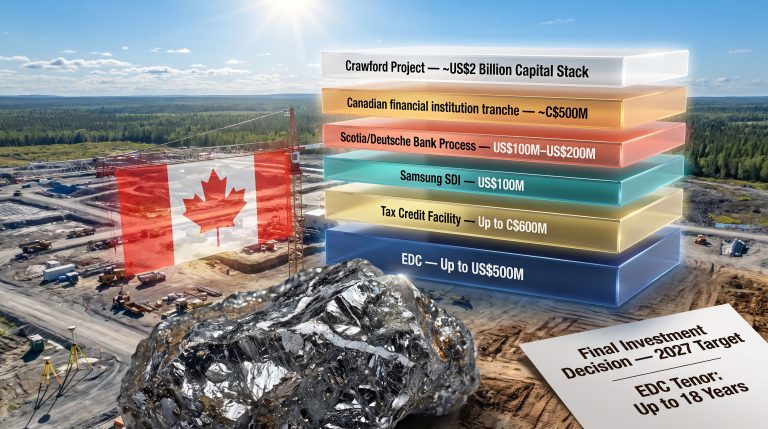
Government-backed investment funds also participate in mining project joint ventures to secure resource access for domestic industries. For instance, the US Exim loan strategy demonstrates how state-level involvement supports critical mineral supply chains through strategic financing mechanisms.
The Role of Investment Conferences in Capital Formation
Mining investment conferences serve as concentrated deal-making platforms that facilitate capital allocation efficiency between international investors and resource companies. The Mines and Money Hong Kong April 2026 conference exemplifies this function, bringing together mining executives, institutional investors, and strategic buyers during a period of increased Asian capital deployment in global resource projects.
Deal Flow Generation and Investment Process Acceleration
Conference participation enables mining companies to present projects directly to multiple investor groups within compressed timeframes. Pre-scheduled one-on-one meetings arranged through digital platforms maximise investor interaction efficiency while reducing travel costs and time requirements for due diligence processes.
Historical data from major mining conferences indicates significant deal completion rates following investor-company meetings. Mining companies report that conference presentations frequently lead to formal due diligence processes, with average timeframes from initial contact to investment commitment ranging from six to twelve months for development-stage projects.
Investor networking at conferences facilitates syndicated financing arrangements where multiple parties participate in large-scale mining project funding. This collaborative approach distributes risk while enabling larger transaction sizes than individual investors might pursue independently.
Market Intelligence and Price Discovery Functions
Mining conferences provide market participants with real-time intelligence regarding commodity demand trends, technological developments, and regulatory changes affecting the sector. Panel discussions featuring industry executives, government officials, and financial analysts offer insights not available through traditional research channels.
Information sharing at conferences influences investment timing decisions as participants assess market conditions and competitive dynamics. Merger and acquisition activity frequently accelerates following conference interactions as companies identify strategic partnership opportunities or acquisition targets.
Macroeconomic Factors Influencing Mining Investment in 2026
Interest rate environments significantly impact mining project economics through their effects on discount rates used in net present value calculations. Current central bank policy trajectories suggest continued elevated interest rates through 2026, increasing capital costs for mining development projects and affecting investment return thresholds.
Currency Dynamics and International Investment Flows
Mining companies with international operations face complex currency exposure management requirements as commodity prices are typically denominated in US Dollars while operating costs occur in local currencies. Australian Dollar weakness against the US Dollar provides competitive advantages for Australian mining operations, while strengthening currencies in other mining jurisdictions create cost pressures.
Currency hedging strategies become critical for mining project financing as lenders require protection against foreign exchange volatility. Forward contract arrangements, options strategies, and natural hedging through geographically diversified operations help mitigate currency risk exposure.
Inflation Impact on Mining Project Costs
Construction cost inflation significantly affects mining project development budgets, with steel, concrete, and specialised equipment prices experiencing substantial increases. Mining project capital costs increased by an average of 25% between 2021 and 2024 due to inflationary pressures and supply chain disruptions.
Labour cost inflation compounds capital cost pressures as skilled mining professionals command premium wages in tight labour markets. Remote mining locations face additional cost pressures from housing, transportation, and retention bonuses required to attract qualified personnel.
The next major ASX story will hit our subscribers first
Technology Integration Requirements in Modern Mining
Automation technology adoption in mining operations requires substantial capital investment but offers significant operational cost reductions and safety improvements. Autonomous hauling systems can reduce operating costs by 15-20% while eliminating human exposure to dangerous underground environments.
Digitisation and Data Analytics Investment
Modern mining operations increasingly rely on sensor networks, real-time monitoring systems, and predictive analytics to optimise production efficiency. Digital twin technology enables mining companies to simulate operational scenarios and optimise equipment utilisation patterns.
Implementation costs for comprehensive digital mining systems range from $10-50 million for large-scale operations, depending on mine size and complexity. Return on investment typically occurs within 3-5 years through improved operational efficiency and reduced equipment maintenance costs.
ESG-Driven Technology Investments
Environmental compliance requirements drive substantial technology investments in water treatment, air quality monitoring, and waste management systems. Carbon reduction mandates require mining companies to invest in renewable energy systems and electric vehicle fleets for mine operations.
Battery-electric mining vehicle adoption faces challenges from limited battery life and charging infrastructure requirements. However, operational cost savings of 30-40% compared to diesel equipment provide compelling economic incentives for electrification investments.
Regional Mining Investment Preferences and Risk Assessment
Australian mining assets attract significant Asian investor interest due to political stability, established regulatory frameworks, and proximity to Asian commodity markets. Australian mining companies received over $8 billion in foreign investment during 2024, with Asian investors representing approximately 60% of total foreign capital deployment.
African Mining Project Risk-Return Profiles
African mining projects offer attractive resource grades and lower labour costs but face elevated political and infrastructure risks. Recent changes in mining taxation policies across West African countries have created uncertainty for international investors considering new project investments.
The Democratic Republic of Congo's cobalt resources attract strategic investment despite governance challenges and infrastructure limitations. Major automotive and technology companies invest directly in Congolese mining operations to secure critical battery material supplies, accepting elevated political risk in exchange for resource access.
Latin American Regulatory Environment Assessment
Chile and Peru maintain investor-friendly mining policies with established regulatory frameworks that support international investment. Chile produces approximately 28% of global copper output and maintains competitive taxation structures for mining operations.
Brazil's mining sector faces environmental compliance challenges following recent tailings dam failures, resulting in increased regulatory scrutiny and higher compliance costs for mining operations. New environmental licensing requirements extend project development timelines and increase capital requirements for environmental management systems.
Evolving Institutional Investor Profiles in Mining Finance
Pension funds increasingly allocate capital to mining investments as inflation hedging strategies, with Canadian pension funds deploying over $25 billion in mining sector investments during the past five years. These institutional investors prefer established producing assets with predictable cash flows rather than exploration-stage projects.
Sovereign Wealth Fund Mining Investment Strategies
Sovereign wealth funds implement diverse approaches to mining sector exposure, ranging from direct project investment to fund allocation through specialised mining investment vehicles. Norway's Government Pension Fund Global maintains approximately 2% allocation to mining sector equities, while other sovereign funds pursue higher concentration strategies.
The Abu Dhabi Investment Authority and Qatar Investment Authority actively pursue direct mining investments, particularly in critical minerals projects that support domestic industrial development strategies. These strategic investors often accept lower financial returns in exchange for secure resource supply access.
Family Office Mining Investment Evolution
High-net-worth family offices increasingly view mining investments as portfolio diversification opportunities and inflation protection mechanisms. Mining sector allocations among family offices increased from 3% to 7% between 2020 and 2024 as investors sought commodity exposure during inflationary periods.
Family offices typically prefer mining royalty companies and streaming vehicles over direct mining equity investments due to lower operational risk exposure and more predictable cash flow characteristics. This preference drives capital toward established royalty companies rather than individual mining projects.
Strategic Implications for Global Mining Finance
The Mines and Money Hong Kong April 2026 conference occurs during a critical period for mining finance as Asian capital markets expand their influence in global resource project funding. Cross-border capital allocation patterns continue shifting toward Asian-controlled investment vehicles, requiring mining companies to adapt financing strategies to accommodate diverse investor requirements and regulatory frameworks.
Long-term supply chain finance evolution in mining involves increased downstream buyer participation in upstream project financing, creating integrated funding structures that align mining production with end-user commodity requirements. This evolution reduces commodity price risk for mining companies while providing supply chain security for industrial consumers.
Regional exchange listing trends reflect this capital market integration as mining companies increasingly pursue dual listings to access both Western and Asian investor bases. Hong Kong's role as a financial intermediary between mainland Chinese capital and international mining opportunities positions the territory as a critical component of future mining finance architecture.
Mining companies preparing for engagement with Asian capital markets must consider cultural business practices, governance structure modifications, and communication protocols that accommodate regional investor preferences. Additionally, effective capital raising strategies become essential while maintaining compliance with international financial reporting standards and environmental, social, and governance requirements.
Furthermore, successful navigation of this evolving landscape requires understanding of regional economic cycles, regulatory variations, and cultural investment preferences that differentiate Asian capital markets from traditional Western funding sources.
For mining executives attending the Mines and Money Hong Kong conference, strategic preparation involves comprehensive due diligence on potential Asian investors, cultural sensitivity training, and development of presentation materials that resonate with regional investment criteria and risk assessment frameworks.
This analysis is based on publicly available information and market observations. Mining investments involve substantial risks including commodity price volatility, operational challenges, and regulatory changes. Prospective investors should conduct independent due diligence and consult qualified investment advisors before making investment decisions.
Ready to Identify the Next Major Mining Discovery?
Discovery Alert's proprietary Discovery IQ model delivers real-time alerts on significant ASX mineral discoveries, instantly empowering subscribers to identify actionable opportunities ahead of the broader market. Understand why historic discoveries can generate substantial returns by visiting Discovery Alert's dedicated discoveries page and begin your 30-day free trial today to secure your market-leading advantage.