June 19, 2026

Global energy markets are experiencing a fundamental recalibration as Asia's two largest economies pursue dramatically different thermal coal procurement strategies. The strategic divergence between systematic import reduction and aggressive acquisition reflects competing philosophies about energy security, economic development priorities, and transition timelines that will reshape commodity flows for decades to come. Furthermore, the complexities of commodities market volatility continue to influence these procurement decisions.
What Drives Asia's Thermal Coal Import Dynamics in 2025?
The contrasting trajectories of China and India thermal coal imports reveal fundamentally different energy security paradigms operating within the world's most dynamic commodity markets. While China systematically reduces import dependency despite consecutive monthly gains, India maintains aggressive procurement strategies that prioritise supply security over price optimisation.
China's Strategic Contraction:
• November 2025: 30.96 million metric tons (up from 29.18 million in October)
• November 2024: 38.19 million metric tons
• Year-on-year decline: 19% reduction despite monthly increases
• December forecast: 31.33 million metric tons (down from 35.03 million in December 2024)
India's Expansion Approach:
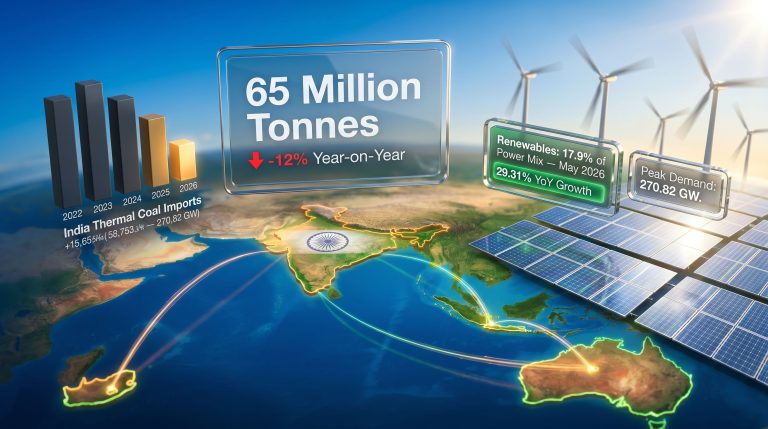
• November 2025: 13.01 million metric tons (up from 12.38 million in October)
• November 2024: 12.24 million metric tons
• Year-on-year growth: 6.3% increase
• December forecast: 12.15 million metric tons (seasonal decline pattern)
The underlying supply chain architecture demonstrates Indonesia's dominant position across both markets, commanding 64% of Chinese imports and 58% of Indian imports. This concentration creates strategic vulnerabilities while enabling supplier pricing power during periods of elevated demand. However, India's diversification toward South African and Russian suppliers indicates recognition of supply chain risks inherent in over-dependence on Southeast Asian sources.
Market structure analysis reveals distinct procurement behaviours reflecting domestic constraints and policy priorities. China's growing thermal coal imports occur alongside opportunistic purchasing that responds to price movements and strategic stockpile requirements. In addition, the US–China trade war continues to shape trade relationships across energy markets.
When big ASX news breaks, our subscribers know first
Why Is China Reducing Thermal Coal Imports Despite Winter Demand?
Beijing's systematic import reduction strategy operates through multiple coordinated policy mechanisms designed to achieve energy security through domestic production optimisation rather than international market dependence. The anti-involution campaign targeting industrial overcapacity directly constrains coal output despite winter electricity demand expectations, prioritising structural economic rebalancing over short-term import substitution.
Domestic Production Dynamics:
| Month | Output (Million Tons) | Year-on-Year Change |
|---|---|---|
| October 2025 | 406.75 | -2.3% |
| September 2025 | 411.51 | -1.1% monthly decline |
| October 2024 | 416.46 | Baseline comparison |
Strategic stockpile management provides the foundation for import reduction confidence. Current reserves of 230 million metric tons ensure 35 days of consumption capacity, creating buffer zones that enable procurement flexibility during price volatility periods. This inventory positioning allows Chinese buyers to execute tactical purchasing during price troughs while maintaining supply security during elevated pricing cycles.
Price Recovery Correlation Analysis:
Domestic coal pricing at Qinhuangdao Port demonstrates the economic logic underlying import decisions:
• June 2025 (four-year low): 610 yuan per metric ton
• November 2025 (one-year high): 835 yuan per metric ton
• December 2025 (current): 810 yuan per metric ton ($114.73 USD)
• Recovery magnitude: 33% above four-year lows
The Beijing anti-involution policy framework represents deliberate supply constraint strategy rather than resource limitations or logistics challenges. This campaign specifically targets overcapacity elimination across key industries, with coal sector production controls designed to optimise domestic supply chains while reducing import dependency vulnerabilities. Consequently, energy transition mining strategies must adapt to these changing policy environments.
Grid modernisation investments enable higher renewable penetration rates, systematically displacing coal-fired baseload dependency. However, winter electricity demand projections suggest coal power plants will increase fuel consumption during peak periods, creating tension between renewable transition objectives and immediate energy security requirements.
How Is India's Growing Import Appetite Affecting Global Coal Markets?
India's thermal coal import expansion operates independent of domestic power generation trends, revealing structural demand drivers beyond electricity production that reshape global supply allocation patterns. The apparent paradox of growing imports concurrent with declining coal-fired power generation signals industrial sector requirements maintaining consistent imported coal feedstock demand regardless of power sector cycles.
Power Generation Versus Import Divergence:
Coal-fired electricity generation declined 5.8% year-on-year in November 2025, marking the seventh negative month in eleven months of 2025, while thermal coal imports increased 6.3% during the same period.
This inversion demonstrates that non-power sector demand drives significant import growth, particularly steel and cement industries requiring specific coal grades unavailable through domestic production. The quality specifications for Indonesian 4,200 kcal/kg coal reflect India's industrial feedstock requirements distinct from power generation fuel needs.
Seasonal Procurement Patterns:
Indian thermal coal imports demonstrate predictable cyclical behaviour aligned with monsoon-dependent industrial production cycles:
• Summer peak: Maximum import volumes during pre-monsoon stocking
• Winter lift: Secondary increase during post-monsoon industrial recovery
• December seasonal decline: 6.6% reduction from November's 13.01 million tons
The premium pricing acceptance despite oversupply signals indicates either contractual commitment fulfilment or coastal region logistics economics favouring imports over domestic coal transportation. Meanwhile, India's thermal coal market outlook reveals complex dynamics affecting long-term demand projections. Current Indonesian coal pricing at $48.75 per metric ton represents a 20% premium above July 2025 four-year lows of $40.45 per metric ton, demonstrating India's willingness to absorb elevated costs for supply security.
Port infrastructure capacity utilisation requires expansion to accommodate increased throughput volumes as import growth continues. Coastal industrial regions maintain cost advantages for imported coal utilisation compared to domestic coal transportation from inland mining regions, supporting continued import growth independent of domestic production increases.
What Price Dynamics Are Influencing Asian Coal Import Decisions?
Price elasticity differences between Chinese and Indian procurement strategies reveal distinct approaches to commodity market participation that influence global thermal coal pricing mechanisms. Chinese opportunistic purchasing behaviour demonstrates classical trigger-point procurement aligned with strategic reserve management protocols, while Indian continuous procurement operates independent of price optimisation considerations.
Australian 5,500 kcal/kg Coal Price Evolution:
• June 6, 2025 (four-year low): $65.72 per metric ton
• August 2025: Chinese buying interest initiation following price collapse
• November 21, 2025 (one-year high): $86.96 per metric ton
• November 28, 2025 (current): $84.60 per metric ton
• Recovery magnitude: 28.7% increase from June lows
Indonesian 4,200 kcal/kg Coal Pricing Trends:
The Indonesian grade preferred by Indian buyers shows different volatility patterns:
• July 2025 (four-year low): $40.45 per metric ton
• November 28, 2025 (current): $48.75 per metric ton
• Seven-month high: $49.19 per metric ton
• Premium above lows: 20.6% despite continuous Indian purchasing
Market timing strategies reveal fundamental differences in procurement philosophy. Chinese buyers demonstrate surveillance-based purchasing, initiating significant volume increases following the June price collapse at $65.72 per metric ton. This trigger-point methodology optimises procurement costs while maintaining strategic inventory buffers sufficient for consumption security.
Indian procurement behaviour contradicts pure price elasticity models, maintaining continuous purchasing at elevated prices despite knowledge of recent historical lows. This approach suggests either contractual obligation fulfilment or recognition that domestic supply constraints override price considerations for industrial feedstock security. Furthermore, tariffs impact markets continue to shape pricing considerations across global coal trade.
How Do Domestic Coal Production Trends Shape Import Requirements?
Production capacity optimisation strategies between China and India create fundamentally different import dependency trajectories that influence long-term global supply allocation patterns. Chinese domestic production increases, despite recent monthly declines, provide strategic foundation for import reduction objectives, while Indian production-import gaps widen due to quality specifications and transportation infrastructure limitations.
Chinese Production Optimisation Framework:
The integration of anti-involution campaign objectives with energy security requirements creates controlled supply growth that systematically reduces import attractiveness:
• Technology improvements increase domestic coal efficiency
• Regional mining capacity adjustments balance supply with policy objectives
• Environmental compliance investments improve domestic coal competitiveness
• Strategic reserve management enables tactical import decisions
Chinese domestic coal cost advantages reflect infrastructure investments, mining technology deployment, and transportation network optimisation that collectively reduce import dependency requirements. The policy coordination between production controls and import strategies demonstrates comprehensive energy security planning extending beyond immediate market considerations.
Indian Production-Import Gap Dynamics:
Domestic production increases remain insufficient for growing demand due to structural constraints affecting both quantity and quality specifications:
• Transportation infrastructure limits domestic coal distribution efficiency
• Quality specifications require imported coal for industrial applications
• Coastal region logistics favour imports over inland transportation
• Industrial expansion outpaces domestic production capacity growth
The persistence of India's import growth despite domestic production initiatives indicates structural economic factors favour continued international market participation. Steel and cement industry requirements for specific coal grades create inelastic demand that domestic production cannot satisfy through quantity expansion alone.
What Are the Shipping and Logistics Implications?
Global dry bulk shipping markets face fundamental restructuring as Chinese import reduction affects vessel demand patterns while Indian import increases provide partial offset insufficient to maintain previous utilisation rates. The China and India thermal coal imports divergence creates route optimisation challenges and port infrastructure utilisation imbalances across the Indo-Pacific maritime network.
Capesize Vessel Demand Restructuring:
Chinese import volume reduction creates vessel capacity oversupply on traditional Australia-China routes, while Indian import growth requires capacity reallocation toward Indonesia-India corridors. This geographic shift affects freight rate structures and influences shipping company investment strategies for vessel positioning and long-term charter arrangements.
Port Infrastructure Utilisation Changes:
• Chinese port capacity underutilisation due to 19% import volume decline
• Indian port expansion requirements for increased throughput handling
• Storage facility management adapting to changing inventory patterns
• Handling equipment optimisation for different cargo volumes
The shipping sector adaptation requires strategic positioning adjustments as trade flow patterns shift between major importers. Indonesian coal producers benefit from reduced transportation distances to Indian markets compared to previous Chinese-dominated demand patterns, potentially influencing supplier pricing strategies and long-term production capacity planning.
Supply chain digitalisation investments become crucial for optimising procurement and logistics efficiency as market participants adapt to changing demand patterns. Moreover, data-driven mining operations enable better forecasting and logistics coordination throughout the supply chain. Port automation improvements and handling efficiency upgrades enable infrastructure operators to maintain profitability despite shifting volume allocations between different import destinations.
The next major ASX story will hit our subscribers first
How Will Energy Transition Policies Affect Future Import Trends?
Long-term energy transition strategies between China and India create diverging trajectories for thermal coal import requirements that will fundamentally reshape global commodity markets over the next decade. Chinese renewable integration acceleration systematically reduces coal dependency, while India's slower transition pace maintains import requirements despite growing renewable capacity additions.
Chinese Renewable Integration Timeline:
Beijing's carbon neutrality commitments drive structural changes that systematically reduce coal import dependency:
• Grid flexibility improvements enable higher renewable penetration rates
• Coal power plant retirement schedules reduce baseload requirements
• Energy storage deployment supports renewable grid integration
• Industrial energy efficiency improvements reduce total coal consumption
The coordination between renewable capacity additions and coal capacity retirements creates managed transition pathways that avoid energy security disruptions while achieving emissions reduction objectives. However, the timeline for complete coal phase-out remains subject to economic development priorities and energy security considerations during extreme weather events.
Indian Transition Pace Considerations:
India's energy access expansion requirements balance environmental objectives against economic development imperatives:
• Industrial sector coal requirements persist despite power sector renewable growth
• Economic development priorities maintain energy security emphasis
• Renewable adoption rates insufficient to offset growing total energy demand
• Coal import dependency continues for industrial feedstock applications
The differential transition speeds create sustained global coal demand from Indian markets while Chinese demand systematically contracts. This rebalancing affects supplier strategies, with Indonesian and Australian producers adapting capacity allocation between declining Chinese demand and growing Indian requirements.
What Investment and Market Opportunities Emerge?
The structural shift in Asian thermal coal demand patterns creates both challenges and opportunities across energy commodity markets, from mining operations to shipping companies and port infrastructure providers. Understanding these strategic differences becomes crucial for energy market participants, policymakers, and investors navigating evolving energy security approaches.
Coal Mining Investment Flow Redirection:
• Chinese domestic mining capacity expansion reduces international coal investment demand
• Indian import infrastructure development creates logistics sector opportunities
• Indonesian coal producer capacity optimisation adapts to shifting Asian demand
• Australian coal mining operations require market strategy adjustments
Technology and Infrastructure Investment Priorities:
Clean coal technology adoption affects import quality preferences as both countries implement environmental compliance requirements. Port automation and handling efficiency improvements become essential for maintaining competitiveness as trade volumes shift between different routes and destinations.
Supply chain digitalisation provides optimisation opportunities for procurement and logistics efficiency. Energy commodity investment strategies require adaptation to structural demand shifts, with coal futures pricing reflecting divergent Asian demand trends rather than traditional seasonal patterns.
Financial Market Implications:
| Investment Sector | China Impact | India Impact |
|---|---|---|
| Coal Mining Companies | Reduced Chinese market exposure | Increased Indian market focus |
| Shipping Companies | Route optimisation challenges | New corridor development |
| Port Infrastructure | Capacity underutilisation | Expansion requirements |
| Coal Futures | Price volatility from demand shifts | New hedging strategies needed |
The implications extend beyond immediate trade flows to encompass long-term energy transition strategies, supply chain resilience planning, and geopolitical dimensions of energy resource control in the Indo-Pacific region. In conclusion, the China and India thermal coal imports dynamics will continue shaping global commodity markets as both nations pursue distinct energy security strategies aligned with their respective economic development priorities.
Disclaimer: This analysis contains forward-looking statements and market forecasts based on current trends and available data. Commodity markets are subject to significant volatility influenced by geopolitical events, weather patterns, regulatory changes, and economic conditions that may differ substantially from current expectations. Investment decisions should be based on comprehensive due diligence and risk assessment appropriate to individual circumstances.
Ready to capitalise on evolving energy commodity markets?
Discovery Alert's proprietary Discovery IQ model delivers real-time alerts on significant ASX mineral and energy discoveries, empowering subscribers to identify actionable opportunities as global markets shift and new energy transition projects emerge. Begin your 30-day free trial today at Discovery Alert and position yourself ahead of these rapidly changing commodity market dynamics.