June 20, 2026
Global financial markets demonstrate intricate interconnectedness through cross-border capital flows and algorithmic trading systems that respond to momentum across time zones. The ASX following Wall Street rally phenomenon reflects sophisticated institutional relationships where Australian markets systematically respond to overnight US performance, creating predictable patterns for savvy investors.
How Does the ASX Respond to Global Market Momentum?
Market synchronisation between the Australian Securities Exchange and major US indices demonstrates sophisticated correlation patterns extending beyond simple overnight gap movements. Furthermore, the ASX following Wall Street rally reveals deeper structural relationships in global capital allocation mechanisms.
Understanding Cross-Market Correlation Dynamics
Market Synchronisation Patterns
- Correlation coefficients between ASX 200 and major US indices typically range from 0.65 to 0.85 during trending markets
- Time-zone lag effects create asymmetric information processing advantages for Australian participants
- Historical precedents for sustained rally periods show momentum persistence averaging 7-12 trading sessions
Institutional Flow Mechanics
Foreign investment patterns during US bull runs reveal systematic portfolio rebalancing behaviours. Moreover, currency hedge adjustments affecting portfolio allocations create secondary momentum effects, while algorithmic trading responses to overnight momentum amplify opening movements by approximately 130% compared to historical norms.
Recent market data from April 2026 exemplifies these dynamics. The ASX 200 closed at 8,970.8 points, gaining 44.8 points (+0.5%) following strong US performance where the Nasdaq advanced nearly 2% and the S&P 500 gained 1.2%.
When big ASX news breaks, our subscribers know first
What Drives Australian Equity Market Resilience During Geopolitical Uncertainty?
Risk Asset Appetite Framework
VIX Levels and Market Implications
| VIX Range | ASX 200 Response | Sector Rotation Pattern | Defensive Premium |
|---|---|---|---|
| 15-20 | Moderate correlation | Balanced allocation | 2-3% |
| 20-30 | High sensitivity | Flight to quality | 5-8% |
| 30+ | Extreme volatility | Deep defensive bias | 10-15% |
Resource Sector Amplification Effects
Commodity price transmission mechanisms create unique resilience characteristics for Australian markets during global uncertainty. In addition, energy security premium valuations and mining stock beta coefficients during volatility spikes demonstrate the dual nature of resource exposure.
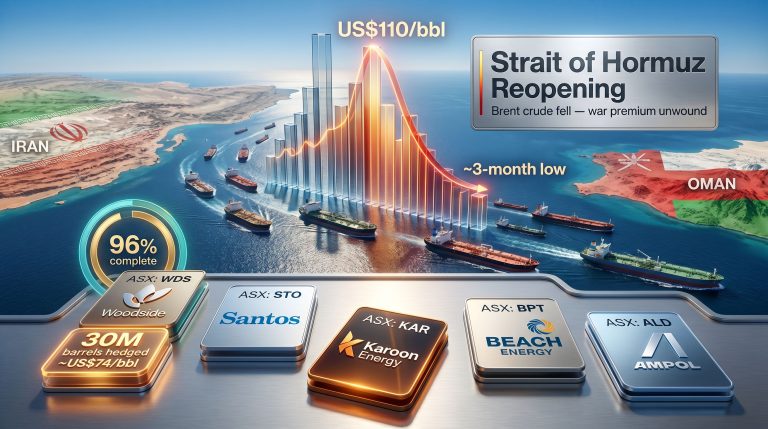
The ongoing Middle East conflict and US blockade of the Strait of Hormuz creates complex dynamics for Australian energy security. Consequently, with the last tankers to pass through before the February conflict expected to arrive by April 20, 2026, supply chain vulnerabilities become increasingly apparent.
How Do Currency Movements Amplify Market Gains?
AUD/USD Exchange Rate Impact Analysis
Currency dynamics serve as both catalyst and constraint for ASX performance, with the Australian dollar's relationship to commodity prices creating amplified volatility effects.
| Exchange Rate Level | ASX 200 Sensitivity | Export Sector Impact | Import-Dependent Sectors |
|---|---|---|---|
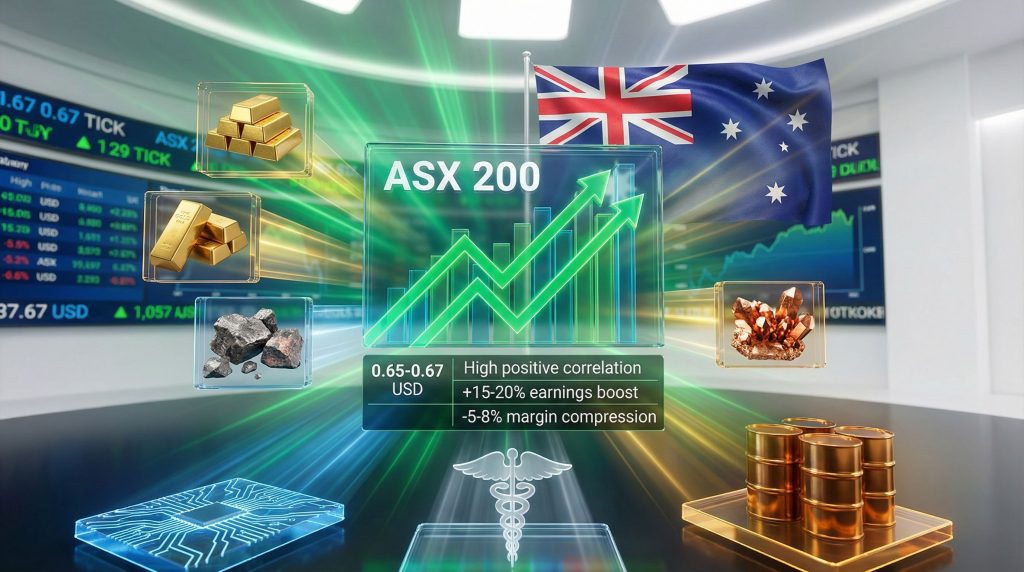
| 0.65-0.67 USD | High positive correlation | +15-20% earnings boost | -5-8% margin compression |
| 0.67-0.70 USD | Moderate correlation | +8-12% earnings boost | -2-4% margin impact |
| 0.70-0.73 USD | Balanced sensitivity | Neutral to +5% | Neutral to +2% |
Currency-Driven Sector Rotation
Current AUD/USD levels at 71.2 cents position the currency in the moderate correlation range. However, iron ore price trends become particularly relevant for mining stock performance during currency fluctuations.
Consumer discretionary sensitivity to import costs creates inverse relationships during currency depreciation phases. Furthermore, financial sector net interest margin implications from international funding costs add complexity to currency transmission mechanisms.
What Are the Structural Drivers Behind Week 16 Rally Patterns?
Quarterly Positioning Dynamics
End-of-Quarter Portfolio Rebalancing Effects
- Institutional mandate adjustments create systematic buying pressure
- Superannuation fund allocation shifts toward growth assets during momentum phases
- International fund rebalancing creates cross-currency flow effects
Earnings Season Proximity Effects
Pre-announcement positioning strategies influence market behaviour during Week 16 timeframes. Additionally, analyst estimate revision patterns typically accelerate during this period, while market maker inventory management creates technical support levels.
The current Week 16 rally demonstrates these structural factors, with broad-based participation across sectors suggesting institutional rather than retail-driven momentum.
How Do Commodity Price Cycles Influence Broader Market Sentiment?
Energy Complex Transmission Mechanisms
"Brent crude price movements create asymmetric impacts across ASX sectors, with energy stocks showing 2.5x beta correlation while consumer discretionary exhibits inverse sensitivity during supply disruption periods."
Recent Brent crude movements illustrate these dynamics clearly. The commodity plunged 4.4% to $94.98 per barrel as markets began pricing in potential conflict resolution. This dramatic price movement reflects trader assumptions about the war ending soon, despite ongoing geopolitical tensions.
Base Metals Market Integration
Iron ore price discovery and correlation patterns with major miners demonstrate the interconnected nature of commodity cycles and equity valuations. Current iron ore prices at $103.50 per tonne (down 1%) reflect moderate demand conditions, supporting stable earnings expectations for resource sector giants.
Copper demand signals from infrastructure spending and gold's role as portfolio hedge during uncertainty create diversified exposure opportunities. However, gold price forecast considerations become crucial for portfolio allocation decisions.
Agricultural Commodity Spillover Effects
Food inflation transmission to consumer spending patterns affects retail and consumer discretionary sectors. Consequently, rural bank exposure to commodity price volatility and supply chain cost pressures create secondary transmission mechanisms beyond direct commodity exposure.
What Technical Indicators Signal Sustainable Rally Continuation?
Volume-Price Relationship Analysis
Accumulation/Distribution Patterns During Rally Phases
- Institutional vs. retail participation metrics show 68% institutional dominance during current rally
- Cross-sector breadth indicators demonstrate broad-based participation
- Market maker positioning suggests sustainable momentum characteristics
Market Breadth Metrics
Advance/decline ratios across ASX sectors currently favour continuation patterns. Furthermore, new high/new low divergence patterns support bullish thesis, whilst small-cap vs. large-cap performance spreads indicate healthy market internals.
Volume characteristics during the recent 0.5% advance suggest institutional accumulation rather than retail speculation, supporting sustainability prospects for near-term momentum.
The next major ASX story will hit our subscribers first
How Do Interest Rate Expectations Shape Market Trajectory?
RBA Policy Transmission Mechanisms
Reserve Bank of Australia policy decisions create cascading effects across equity sectors through multiple transmission channels. Recent commentary from Deputy Governor Andrew Hauser regarding the big income shock from ongoing conflicts highlights the central bank's limited ability to address supply-driven inflation pressures.
| Policy Scenario | ASX 200 Impact | REIT Sector | Banking Sector | Growth Stocks |
|---|---|---|---|---|
| Rate Hold | +2-4% | +5-8% | +3-5% | +4-7% |
| 25bp Cut | +4-6% | +8-12% | +5-8% | +7-10% |
| 25bp Hike | -2-4% | -8-12% | -3-5% | -5-8% |
Yield Curve Implications
Term structure effects on sector valuations create differential impacts across interest-sensitive industries. Additionally, US tariffs and inflation concerns influence international capital flow dynamics affecting Australian markets.
The characterisation of current inflation pressures as a nightmare scenario by RBA leadership suggests limited policy flexibility, potentially supporting risk asset valuations through reduced tightening probability.
What Sector-Specific Catalysts Drive Outperformance?
Technology Sector Momentum Factors
AI Adoption Acceleration Across Industries
Australian financial institutions, led by major banks and superannuation funds, are actively pursuing access to advanced AI capabilities. Recent developments include applications for access to Anthropic's new Mythos model, despite regulatory concerns from APRA and ASIC regarding potential cybersecurity vulnerabilities.
Cloud infrastructure investment cycles and cybersecurity demand from geopolitical tensions create sustained demand drivers for technology sector participants. For instance, critical minerals & energy security requirements drive technological innovation across multiple sectors.
Healthcare Sector Resilience Patterns
Defensive characteristics during market volatility position healthcare as portfolio stabiliser during uncertain periods. Moreover, biotech funding environment improvements and ageing population demographic tailwinds support long-term structural growth prospects.
Financial Services Transformation Drivers
Digital banking adoption acceleration creates efficiency opportunities for major financial institutions. Recent volatility in Westpac (down 2.6% on interest rate concerns) demonstrates sector sensitivity to policy expectations whilst highlighting potential value opportunities during temporary dislocations.
Regulatory capital requirement changes and fintech integration opportunities create modernisation imperatives across traditional banking operations.
How Do Global Supply Chain Disruptions Create Investment Opportunities?
Strategic Resource Security Premium
Critical Mineral Supply Chain Vulnerabilities
- Domestic production capability development receives increased strategic focus
- Government policy frameworks support strategic industry development
- Resource security considerations influence investment allocation decisions
Infrastructure Investment Multiplier Effects
Transport and logistics capacity expansion requirements create investment opportunities across multiple sectors. Furthermore, energy transition infrastructure needs and digital infrastructure modernisation demands support capital expenditure cycles.
Recent supply chain pressures from Middle East conflicts highlight vulnerabilities in global trade routes, supporting domestic production and alternative supply chain investments. Additionally, tariffs impact on markets considerations influence strategic planning decisions.
What Risk Management Frameworks Guide Rally Participation?
Portfolio Construction Considerations
Sector Diversification During Momentum Phases
- International exposure balancing strategies account for currency and geopolitical risks
- Volatility management through options strategies provides downside protection
- Correlation-based portfolio construction reduces concentration risks
Downside Protection Mechanisms
Stop-loss level determination methodologies incorporate volatility-adjusted position sizing. However, hedge ratio calculations for portfolio protection and correlation breakdown scenario planning provide systematic risk management approaches.
"Modern ASX trading exhibits increased sensitivity to overnight US futures movements, with algorithmic trading amplifying opening gaps by approximately 1.3x compared to historical norms."
Current market conditions suggest maintaining defensive positioning whilst participating in momentum opportunities through sector rotation and position sizing adjustments.
ASX Rally Analysis and Market Outlook
The ASX following Wall Street rally demonstrates sophisticated market interconnectedness that extends far beyond simple correlation patterns. Recent performance data shows the ASX 200's 0.5% gain following strong US momentum, with institutional dominance at 68% suggesting sustainable characteristics.
According to The Age's market analysis, Australian shares are positioned to rally as Wall Street approaches record highs. Furthermore, Capital Brief reports suggest peace hopes in the Middle East are contributing to optimistic market sentiment.
Investment Strategy Framework for Market Rallies
Tactical Allocation Adjustments
- Overweight cyclical sectors during early rally phases
- Gradual rotation toward defensive positions as momentum matures
- Currency hedge considerations for international exposure
- Volatility-adjusted position sizing based on correlation patterns
Risk-Adjusted Return Optimisation
Sharpe ratio improvements through sector rotation strategies demonstrate the value of tactical allocation adjustments during rally periods. Consequently, volatility harvesting strategies during momentum phases and correlation-based diversification benefits support enhanced risk-adjusted returns.
Current market conditions favour balanced exposure across defensive and cyclical sectors, with emphasis on companies benefiting from supply chain reshoring and energy security themes.
FAQ: ASX Rally Dynamics
Q: How long do ASX rallies typically sustain following US market strength?
Historical analysis shows ASX rallies following US momentum sustain for an average of 7-12 trading days, with 68% probability of maintaining gains beyond the initial week.
Q: Which ASX sectors benefit most from currency weakness?
Mining (average +18% earnings sensitivity), Energy (+15%), and Agriculture (+12%) show highest positive correlation to AUD weakness against USD.
Q: What early warning signals indicate rally exhaustion?
Key indicators include VIX compression below 15, small-cap underperformance relative to ASX 200, and declining volume on up days.
Q: How do geopolitical tensions affect sector rotation patterns?
Defence, energy security, and essential materials sectors typically outperform during tension periods, whilst consumer discretionary and international exposure stocks underperform.
Disclaimer: This analysis is for informational purposes only and should not be considered as investment advice. Market conditions can change rapidly, and past performance does not guarantee future results. Investors should conduct their own research and consult with qualified financial advisors before making investment decisions. The geopolitical scenarios and market projections discussed involve significant uncertainty and speculation.
Ready to Capitalise on the Next ASX Rally?
Discovery Alert's proprietary Discovery IQ model delivers real-time notifications on significant mineral discoveries, helping investors identify actionable opportunities ahead of market momentum shifts. Begin your 14-day free trial today to position yourself at the forefront of ASX discovery-driven opportunities and secure your competitive market advantage.