
August 7, 2026
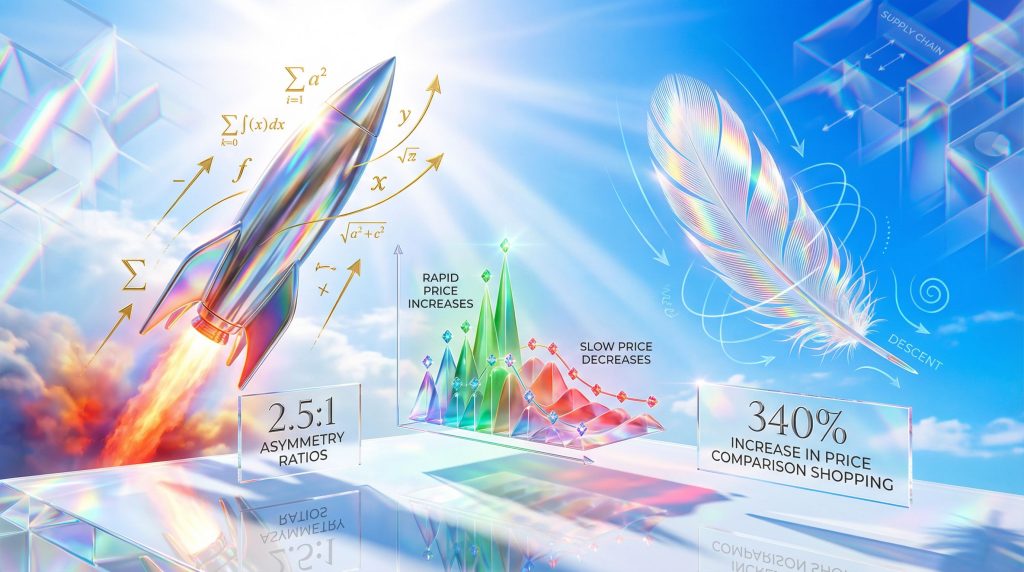
Global commodity markets operate on cyclical volatility patterns that create predictable yet frustrating pricing dynamics for consumers worldwide. These market forces become particularly visible during geopolitical disruptions, when essential goods like gasoline experience rapid cost fluctuations that seem disconnected from local supply conditions. Understanding these pricing mechanisms requires examining the complex interplay between supply chain structures, consumer psychology, and market efficiency theories that govern how costs transmit through economic systems. The rockets and feathers effect exemplifies these asymmetric market dynamics.
What Drives Asymmetric Price Transmission in Global Markets?
The phenomenon economists term asymmetric price transmission represents one of the most documented yet misunderstood aspects of modern commodity pricing. This economic concept describes how retail prices respond with dramatically different speeds and magnitudes to wholesale cost changes, creating the observable pattern where increases happen rapidly while decreases occur gradually.
Mathematical Framework Behind Price Asymmetries
Research conducted over five decades demonstrates consistent mathematical relationships in asymmetric pricing across multiple industries. Asymmetry ratios typically range from 2:1 to 4:1, meaning upward price adjustments occur two to four times faster than downward movements. These ratios remain remarkably consistent across geographic regions and market structures, suggesting fundamental economic forces rather than isolated market failures.
Vector autoregression models and error-correction frameworks quantify three critical components of this asymmetry:
- Speed of adjustment: Retail prices respond to wholesale increases within 1-3 days versus 5-14 days for decreases
- Magnitude completeness: Whether 100% of wholesale changes eventually reach consumers
- Directional bias: The mathematical difference in transmission elasticity between upward and downward movements
Historical Documentation and Cross-Industry Validation
The rockets and feathers effect first gained widespread attention during the 1973 OPEC oil embargo, when crude oil prices quadrupled while retail adjustments displayed significant lag patterns. Subsequent documentation during the 1979 Iranian Revolution crisis, when oil prices nearly tripled, provided additional empirical validation of these asymmetric patterns.
Academic research by economist Severin Borenstein at UC Berkeley established the foundational framework for understanding these dynamics in the 1990s. His comprehensive analysis demonstrated that retail gasoline prices exhibit markedly different responses to wholesale cost increases versus decreases, with the asymmetry extending far beyond simple cost-plus markup models.
Cross-industry studies have validated similar patterns across diverse sectors including agricultural commodities, utility services, and international commodity markets, suggesting the phenomenon reflects fundamental market dynamics rather than industry-specific anomalies. Furthermore, asymmetric price transmission has become a well-documented economic principle studied extensively in academic literature.
When big ASX news breaks, our subscribers know first
How Market Structure Creates Systematic Price Asymmetries
Understanding why prices move asymmetrically requires examining the structural foundations of commodity supply chains and the economic constraints facing different market participants. These structural elements create predictable pricing behaviors that persist across market cycles.
Replacement Cost Pricing Economics
The fundamental driver behind rapid price increases lies in replacement cost methodology, where retailers must price based on future procurement costs rather than historical inventory expenses. Retail gasoline margins average only 2-3 cents per gallon (approximately 0.6-1% of retail price), creating extreme vulnerability to wholesale price volatility.
Station owners cannot absorb wholesale cost increases without immediately raising prices due to working capital constraints. During rapid price increases, retailers must maintain sufficient cash reserves to purchase higher-priced inventory, forcing immediate retail price increases to preserve operating capital. Conversely, during price declines, retailers with existing higher-cost inventory can maintain higher retail prices while their cost basis gradually decreases.
| Supply Chain Tier | Information Source | Update Frequency | Price Adjustment Lag |
|---|---|---|---|
| Crude Oil Producers | Real-time trading platforms | Continuous | Immediate |
| Wholesale Refiners | Crude purchases + futures | Daily settlements | 1-2 hours |
| Jobber/Distributor | Wholesale pricing | 24-hour windows | 18-24 hours |
| Retail Stations | Distributor pricing | 6-24 hour windows | 2-8 hours variable |
Information Cascades and Market Concentration
Information asymmetries between supply chain tiers create cascading effects that amplify pricing volatility. Retail station managers receive price signals from suppliers typically 12-24 hours after wholesale movements, but they simultaneously observe consumer behaviour and competitor pricing in real-time.
During rapid price increases, competitor observations accelerate retail price adjustments to prevent customer defection, creating synchronised upward movements. When prices decline, the absence of competitive pressure reduces adjustment urgency, creating gradual downward movements.
Oligopolistic market structures further amplify these asymmetries. In approximately 60% of U.S. metropolitan areas, the top four retailers control over 50% of market sales, creating conditions where coordinated pricing emerges naturally. Rural areas with limited competition show more pronounced asymmetries, with ratios reaching 3-4:1 versus 2:1 in urban markets.
Forward Contract Obligations and Inventory Dynamics
Major refiners hedge 40-70% of forward crude oil requirements through futures contracts, creating price floors that limit downward flexibility regardless of spot market conditions. Additionally, approximately 65-75% of independent retailers purchase fuel through contract arrangements with 2-6 week pricing windows, creating systematic lags between spot price changes and purchasable inventory costs.
Average gasoline retail stations turn over inventory 7-10 times monthly, meaning exposure to wholesale price fluctuations occurs continuously. This rapid turnover rate ensures that replacement cost pressures transmit quickly to retail prices during volatile periods.
Why Consumer Psychology Amplifies Market Asymmetries
Consumer behaviour patterns create powerful feedback loops that accelerate upward price movements while dampening downward adjustments. These psychological factors represent critical but often overlooked drivers of asymmetric pricing.
Search Intensity and Shopping Pattern Variations
Research documents dramatic changes in consumer price-seeking behaviour during different market conditions. Price comparison app downloads increase 280-340% during rapid price increase periods versus baseline conditions, while dropping 75-85% during gradual price decline periods.
Critical Insight: During price spikes, consumers expand their geographic search radius by 40-60%, willingness to drive farther for cheaper fuel. During price declines, search radius contracts to only 15-20% above baseline levels.
This asymmetric search behaviour creates competitive pressure that forces retailers to adjust prices rapidly during increases but allows more gradual adjustments during decreases. The phenomenon demonstrates how consumer psychology directly impacts market efficiency and pricing speed. Moreover, research on why do prices rise like rockets but fall like feathers provides additional insights into these behavioural patterns.
Panic Buying and Demand Amplification
During sharp price increases exceeding 15 cents per gallon daily, surveys document that 35-45% of drivers attempt to fill tanks at higher than normal frequencies. This panic buying creates artificial demand surges that amplify price increases beyond what supply fundamentals would dictate.
Loss aversion psychological theory explains why consumers respond more intensely to price increases than decreases. Mental accounting biases affect purchase timing decisions, with consumers front-loading purchases during price spikes while delaying purchases during price declines have minimal impact on behaviour.
Reference Point Anchoring Effects
Consumer price perception operates through reference point mechanisms where recent high prices become anchored expectations. During periods of rapid increase, consumers accept higher price levels as the "new normal" more quickly than they adjust expectations downward during price declines.
This anchoring effect reduces consumer resistance to maintaining elevated prices even after wholesale costs begin declining, providing retailers with reduced competitive pressure to lower prices immediately.
Which Industries Experience the Most Pronounced Asymmetries?
While the rockets and feathers effect appears across multiple sectors, certain industries display particularly pronounced asymmetries due to structural characteristics and regulatory environments.
Energy Sector Asymmetries
Gasoline retail markets consistently show the most dramatic asymmetric patterns, with speed ratios reaching 3:1 to 4:1 in volatile conditions. Natural gas residential pricing displays seasonal amplification effects, where winter heating demand creates additional upward pressure during supply disruptions.
Electricity markets exhibit regulatory lag effects, where utility commission rate approval processes create institutional delays in both upward and downward adjustments. However, deregulated electricity markets show asymmetries similar to gasoline, confirming that regulatory structure influences asymmetry magnitude. Additionally, oil price movements and OPEC meeting insights significantly impact these pricing dynamics.
Agricultural and Food Commodities
Grain-to-bread price transmission demonstrates significant delays, with wheat price changes taking 4-8 weeks to fully transmit to retail bread prices. Coffee markets show pronounced asymmetries, where coffee bean price increases reach retail within 2-3 weeks while decreases require 6-12 weeks for full transmission.
Livestock and meat pricing exhibits complex asymmetries due to biological production cycles. Feed cost increases impact meat prices within 8-12 weeks, while feed cost decreases take 16-24 weeks to fully transmit due to existing livestock inventory and production commitments.
Transportation and Logistics
Airlines implement fuel surcharges within 24-48 hours of significant cost increases but remove surcharges over 3-6 month periods during cost declines. Shipping container rates respond immediately to fuel cost spikes but decline gradually over quarterly contract cycles.
Rideshare surge pricing algorithms create artificial asymmetries through dynamic pricing models that raise prices instantly during demand spikes but use historical averaging to reduce prices, creating mathematical asymmetries even in digital markets.
What Role Do Regulations Play in Price Asymmetries?
Government intervention and regulatory frameworks create additional layers of complexity that can either amplify or dampen natural market asymmetries, depending on policy design and implementation timing.
Strategic Reserve Interventions
Strategic petroleum reserve releases can dampen spike effects by increasing supply during crises, but these interventions typically occur after price increases have already transmitted through retail markets. Historical analysis shows reserve releases reduce peak prices by 10-15% but have minimal impact on adjustment speed.
Utility commission rate approval processes create institutional asymmetries where rate increases require regulatory approval over 3-6 month periods, while market-driven cost increases transmit immediately through fuel adjustment clauses. This regulatory structure creates asymmetries favouring consumers during cost increases but limiting benefits during cost decreases.
Anti-Gouging Legislation Effects
Emergency price controls during natural disasters create temporary suppression of upward asymmetries but often result in amplified increases once controls are lifted. Competition authority investigations into coordinated pricing typically focus on rapid increases while providing less scrutiny to gradual decreases, creating regulatory asymmetries in enforcement.
International Trade Policy Impacts
Tariff implementation versus removal demonstrates pronounced timing differences, with tariff increases transmitting to retail prices within 2-4 weeks while tariff removals take 8-16 weeks to fully benefit consumers. Export restriction announcements create immediate price impacts, while restriction lifting requires months for full price normalisation.
Currency hedging strategies further complicate international price transmission, with multinational companies using financial instruments that create lag effects in both upward and downward price adjustments. These dynamics become particularly relevant when examining tariffs impacting markets and US economy & tariffs relationships.
How Can Businesses and Consumers Navigate Asymmetric Pricing?
Understanding asymmetric pricing patterns enables both strategic business responses and consumer protection mechanisms that can mitigate the most severe impacts of price volatility.
Strategic Business Adaptation Methods
Dynamic pricing algorithms represent the most effective business response to asymmetric market conditions. Automated cost-plus models achieve 85% effectiveness in maintaining margins during volatile periods, significantly outperforming manual pricing strategies.
| Strategy Type | Implementation Method | Effectiveness Rating |
|---|---|---|
| Dynamic pricing algorithms | Automated cost-plus models | High (85%) |
| Inventory hedging | Futures contract coverage | Medium (60%) |
| Customer communication | Transparent cost explanations | Medium (55%) |
| Loyalty programmes | Price protection guarantees | Low (35%) |
Inventory hedging strategies using futures contracts provide moderate protection but require significant capital commitments and sophisticated risk management. Customer communication initiatives that explain replacement cost pricing can improve consumer understanding and reduce negative sentiment during price increases.
Consumer Protection and Adaptation Strategies
Price monitoring applications enable consumers to optimise purchase timing and location decisions. Bulk purchasing strategies during price valleys can provide 15-25% savings for consumers with adequate storage capacity and cash flow.
Substitute product identification becomes crucial during extended high-price periods. Community-based price information sharing through mobile applications and social networks can improve market transparency and competitive pressure.
Geographic arbitrage opportunities exist for consumers willing to travel modest distances during extreme price events, with savings of $0.20-0.40 per gallon common within 10-15 mile radius searches during peak volatility.
The next major ASX story will hit our subscribers first
What Economic Research Reveals About Long-Term Market Efficiency
Comprehensive academic analysis across global markets provides insights into whether asymmetric pricing represents market failure or efficient response to structural realities.
Global Empirical Evidence
Meta-analysis of 150+ studies spanning five decades shows consistent 2.5:1 asymmetry ratios across developed markets, with regional variations based on market maturity and regulatory frameworks. Technology adoption has reduced but not eliminated asymmetries, suggesting fundamental economic rather than purely informational causes.
Cryptocurrency markets demonstrate similar asymmetric patterns despite digital infrastructure and real-time information availability, confirming that information technology alone cannot eliminate asymmetries rooted in supply chain structure and consumer psychology.
Behavioural Economics Explanations
Dual-process theory applications explain asymmetric pricing through cognitive processing differences. System 1 (fast) thinking dominates during rapid price increases, creating emotional urgency that accelerates adjustment. System 2 (slow) thinking operates during price decreases, enabling more deliberative and gradual responses.
Cognitive load effects during high-volatility periods impair optimal decision-making for both consumers and businesses. Social proof mechanisms in competitive pricing environments create herding behaviours that amplify asymmetric patterns beyond individual rational responses.
Welfare Analysis and Economic Impact
Consumer surplus losses during asymmetric adjustment periods average $0.15-0.25 per gallon in gasoline markets, representing significant wealth transfers from consumers to industry participants. These losses concentrate disproportionately among lower-income households with limited substitution options.
Variance decomposition analysis shows approximately 60-70% of retail price volatility originates from wholesale shocks, while 30-40% results from market-structural factors including asymmetric transmission mechanisms. These patterns also influence broader commodity markets, including iron ore price trends across different sectors.
Can Technology Reduce Price Asymmetries?
Digital transformation and advanced analytics offer potential solutions to reduce the most extreme asymmetric pricing effects, though structural limitations persist.
Digital Platform Innovation
Real-time price comparison applications reduce consumer search costs and increase competitive pressure on retailers. Blockchain-based supply chain transparency could eliminate information asymmetries, though implementation costs remain prohibitive for most commodity markets.
AI-powered demand forecasting reduces uncertainty that drives precautionary pricing behaviours. Automated trading systems eliminate human behavioural biases but may amplify volatility through algorithmic trading strategies.
Regulatory Technology Applications
Algorithmic monitoring of price manipulation becomes increasingly sophisticated, with machine learning systems detecting coordinated behaviour patterns previously unidentifiable through manual surveillance. Real-time market surveillance systems enable regulatory intervention during extreme asymmetric periods.
Automated reporting of suspicious pricing patterns improves regulatory response time but raises concerns about market micromanagement and unintended consequences from increased intervention.
Technological Limitations
Despite technological advancement, replacement cost economics and working capital constraints remain unchanged by digital innovation. Consumer psychology shows minimal alteration despite improved information availability, suggesting asymmetries will persist even with perfect information systems.
What Are the Broader Economic Implications?
The rockets and feathers effect extends beyond individual markets to create macroeconomic distortions that affect monetary policy, inflation persistence, and economic inequality.
Macroeconomic Impact Assessment
Inflation persistence during economic recovery periods becomes amplified by asymmetric pricing, with price levels remaining elevated longer than fundamental supply-demand conditions would dictate. Consumer spending pattern distortions occur as households adjust purchasing behaviour to anticipate asymmetric price movements.
Central bank policy complications arise when asymmetric pricing creates inflation expectations that disconnect from underlying economic conditions. Wealth transfer effects from consumers to producers during asymmetric periods represent significant redistributional consequences that traditional economic models underestimate.
Social Equity Considerations
Lower-income households experience disproportionate impact from asymmetric pricing due to limited substitution options and cash flow constraints that prevent optimal timing of purchases. Geographic disparities in asymmetry ratios create regional inequalities, with rural areas experiencing more severe asymmetries than urban markets.
Essential goods versus luxury items show different asymmetric patterns, with necessities displaying more pronounced asymmetries due to inelastic demand characteristics. Small business vulnerability increases during asymmetric periods as working capital constraints affect smaller operators more severely than large corporations.
Understanding Market Realities in Price Dynamics
The rockets and feathers effect represents a complex interaction of structural economic forces, psychological factors, and regulatory frameworks that create predictable yet frustrating pricing patterns. Recognition that asymmetric pricing reflects fundamental market realities rather than simple manipulation enables more effective policy responses and business strategies.
Structural market factors including replacement cost economics, information asymmetries, and supply chain constraints create the foundation for asymmetric behaviour. Consumer psychology amplifies these structural effects through search behaviour variations and cognitive biases that respond differently to price increases versus decreases.
Technology and innovation can reduce but not eliminate asymmetries, as fundamental economic constraints persist despite improved information systems. Policy interventions must balance efficiency considerations with equity concerns while recognising that eliminating asymmetries entirely may create unintended market distortions.
The persistence of asymmetric pricing across industries, time periods, and technological advancement suggests these patterns represent efficient responses to structural constraints rather than correctable market failures. Understanding these dynamics enables better navigation of volatile commodity markets for both consumers and businesses operating within these economic realities.
This analysis is provided for educational purposes and does not constitute financial or investment advice. Market conditions and pricing dynamics may vary significantly based on specific circumstances and regulatory environments.
Looking for Opportunities in ASX Commodity Markets?
Discovery Alert's proprietary Discovery IQ model delivers instant notifications on significant mineral discoveries across ASX-listed companies, empowering subscribers to identify actionable opportunities ahead of the broader market during volatile commodity cycles. Understand why historic discoveries can generate substantial returns by exploring Discovery Alert's dedicated discoveries page, showcasing exceptional market outcomes from major mineral announcements.