
May 19, 2026
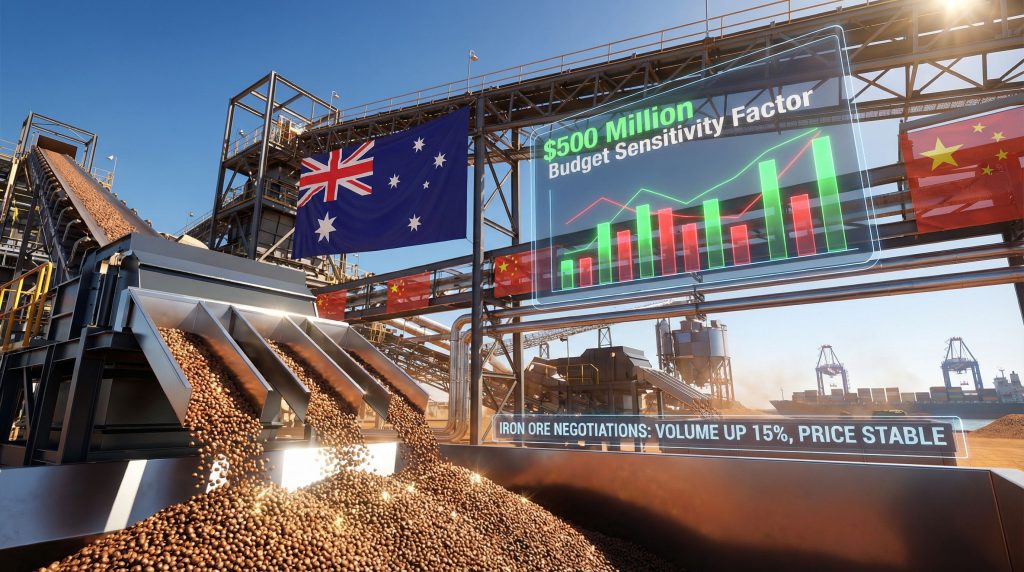
Australia-China iron ore negotiations represent far more than simple commodity price discussions. These talks function as a complex intersection of fiscal policy, trade relationships, and global economic stability. When state-backed entities wield purchasing power equivalent to controlling half of a $132 billion seaborne market, the ripple effects extend across government budgets, currency systems, and international supply chains. Furthermore, understanding iron ore price trends becomes essential for predicting these broader economic impacts.
The Macro-Economic Framework of Bilateral Resource Diplomacy
Australia's treasury calculations reveal extraordinary fiscal sensitivity to iron ore price movements, with each $10 fluctuation translating to A$500 million in tax receipt variations for the 2025-26 financial year. This mathematical relationship transforms commercial negotiations into matters of national economic security, where commodity price outcomes directly influence government spending capacity and policy implementation.
The emergence of China Minerals Resources Group (CMRG) as a centralised procurement entity represents a fundamental shift from market-driven pricing toward state-controlled purchasing strategies. This consolidation creates negotiating leverage that extends beyond traditional supply-demand mechanisms, introducing geopolitical considerations into commercial relationships. Consequently, Australia's iron ore leadership position faces unprecedented challenges from coordinated state purchasing power.
When big ASX news breaks, our subscribers know first
What Makes Iron Ore Negotiations Different from Standard Commodity Trading?
Strategic State Intervention vs. Market Mechanisms
Unlike conventional commodity transactions governed by spot market dynamics, Australia-China iron ore negotiations involve direct government oversight on both sides. CMRG's role as a state-backed buyer concentration mechanism demonstrates how centralised procurement can influence global commodity flows.
Key Structural Elements:
• State-backed buyer concentration controlling multiple steel mill purchases
• Government revenue dependency creating fiscal policy vulnerabilities
• Geopolitical considerations influencing commercial decisions
• Currency settlement preferences affecting international trade flows
Resources Minister Madeleine King emphasised the government's vigilant monitoring of these negotiations, stating that "iron ore serves as the bedrock of the economy with exports from the Pilbara region being vital to both the Australian community and federal budget planning", according to Reuters reporting.
The Procurement Ban Strategy
CMRG's selective restrictions on specific iron ore grades demonstrate sophisticated market manipulation techniques. Since September 2025, Chinese mills have been prohibited from purchasing BHP's Jimblebar fines, with similar restrictions applied to Jinbao fines since November 2025.
These targeted bans create immediate market disruptions by:
• Reducing spot market liquidity for affected grades
• Disrupting established price discovery mechanisms
• Increasing demand pressure on alternative suppliers
• Forcing shipping route and logistics modifications
BHP CEO Mike Henry acknowledged that negotiations have become broader in scope than previous years, requiring more time and playing out more publicly than historical patterns. Despite these challenges, Henry expressed confidence in reaching a negotiated solution.
How Do Procurement Bans Create Market Disruption?
The selective targeting of specific iron ore grades creates cascading effects throughout global steel supply chains. When CMRG implements procurement restrictions, it forces rapid adjustments across multiple market segments simultaneously. Moreover, these disruptions contribute to broader iron ore demand insights that reshape global market expectations.
Immediate Market Effects:
• Spot market liquidity reduction: Fewer active buyers for targeted grades
• Price discovery mechanism disruption: Reduced trading volumes affecting market signals
• Alternative supplier demand increases: Redirected purchases toward competitors
• Shipping route modifications: Logistics reorientation toward alternative markets
Long-term Strategic Implications:
• Precedent setting: Establishing templates for future negotiation tactics
• Supplier diversification acceleration: Encouraging alternative source development
• Contract term restructuring: Modifying traditional annual pricing agreements
The timing and specificity of these bans suggest calculated pressure designed to influence broader pricing discussions rather than simple quality concerns with particular ore grades.
What Role Does Supply Chain Geography Play in Negotiation Power?
Australia's Pilbara Region as Global Chokepoint
Australia controls approximately 50% of global seaborne iron ore exports, with the Pilbara region hosting three of the world's four largest iron ore miners: Rio Tinto, BHP, and Fortescue. Brazil's Vale represents the fourth major global supplier, creating a highly concentrated global production landscape.
This geographic concentration generates both leverage and vulnerability. While Australia benefits from controlling critical supply volumes, this concentration creates systemic risks when diplomatic or commercial relationships face disruption.
Supply Chain Vulnerabilities:
• Infrastructure bottlenecks: Port facility capacity limitations
• Weather-related disruptions: Seasonal impacts on shipping operations
• Regulatory exposure: Policy changes affecting export capacity
• Alternative supplier development timelines: Competitive project development cycles
Emerging Competition from African Projects
The Simandou project's first shipment in November 2025 represents a significant shift in global supply dynamics. With expected 2026 production of 20 million tons, this Guinea-based operation provides China with meaningful alternative sourcing options, potentially reducing Australian negotiation leverage.
African mining projects offer several strategic advantages for Chinese procurement:
• Geographic diversification: Reduced dependence on single-region supply
• Cost competitiveness: Potentially lower operational expenses
• Political relationships: Different diplomatic dynamics than Australia-China relations
• Infrastructure development opportunities: Chinese involvement in project development and financing
How Do Currency Settlement Preferences Affect Trade Relationships?
Yuan Internationalisation Through Commodity Trading
China's strategic preference for yuan-denominated settlements in iron ore transactions extends beyond simple currency convenience. This approach supports broader efforts to internationalise the yuan and reduce global commodity markets' dependence on US dollar transactions. However, these currency preferences also intersect with tariff market impacts affecting global trade relationships.
Economic Implications:
• Exchange rate risk redistribution: Shifting currency exposure between trading partners
• Central bank reserve composition changes: Encouraging yuan holdings among trading partners
• International payment system evolution: Developing alternative settlement mechanisms
• Trade finance mechanism modifications: Creating yuan-based financing instruments
When commodity transactions shift toward yuan settlements, it creates new financial infrastructure requirements and potentially alters global monetary system dynamics. This transformation affects not only bilateral trade but also broader international financial relationships.
What Are the Broader Economic Consequences of Pricing Volatility?
Government Revenue Stability Challenges
Australia's extreme sensitivity to iron ore price movements creates unprecedented fiscal planning complications. Unlike diversified economies where commodity price swings have limited budget impact, Australia's heavy reliance on mining taxation makes budget forecasting particularly challenging.
Resources Minister King highlighted this dependency, noting that "iron ore represents a bulk commodity that Australia has relied upon for budget support over an extended period". The government maintains active monitoring of price negotiations because impacts extend beyond corporate profitability to affect budget bottom lines directly.
Fiscal Policy Implications:
• Infrastructure investment timing: Project scheduling dependent on revenue projections
• Social program funding stability: Service delivery affected by revenue volatility
• Debt management strategy adjustments: Borrowing decisions influenced by revenue uncertainty
• Economic diversification policy priorities: Pressure to reduce commodity dependence
Corporate Earnings and Investment Decisions
Mining companies face increasing pressure to diversify revenue streams when operating in politically sensitive markets. The concentration of earnings in single commodity exposures creates vulnerability when state-backed negotiation tactics emerge.
This vulnerability encourages strategic responses including:
• Product portfolio diversification: Expanding into multiple commodity segments
• Geographic market expansion: Developing alternative customer relationships
• Value-added processing investments: Moving beyond raw material exports
• Financial hedging strategies: Managing price and political risk exposure
The next major ASX story will hit our subscribers first
How Do These Negotiations Influence Global Steel Market Dynamics?
Chinese Steel Mill Profitability Pressures
CMRG's aggressive negotiation stance reflects underlying pressures within China's steel industry, where mills experience margin compression from input cost inflation and domestic demand fluctuations. These pressures create incentives for state intervention in procurement processes.
Steel Market Ripple Effects:
• Global steel price adjustments: Raw material cost changes affecting final product pricing
• Alternative raw material demand increases: Scrap steel and substitute material utilisation
• Production capacity utilisation shifts: Mill operating rate modifications based on input costs
• Export competitiveness changes: Impact on Chinese steel in global markets
Infrastructure Development Funding Implications
Iron ore price negotiations directly impact infrastructure development funding capabilities in both countries. Lower prices reduce Australian government revenues available for domestic infrastructure investment, while potentially improving Chinese steel industry competitiveness for global infrastructure projects. In addition, these dynamics contribute to broader global recession concerns affecting international development financing.
This creates divergent development trajectories where:
• Australian infrastructure investment faces revenue-driven constraints
• Chinese global infrastructure projects benefit from improved steel cost competitiveness
• Third-country development projects experience altered supplier dynamics
• Global construction costs reflect iron ore price pass-through effects
What Strategic Options Exist for Managing Negotiation Risks?
Diversification Strategies for Australia
Market Diversification Approaches:
• India steel industry targeting: Expanding relationships with growing steel consumption markets
• Southeast Asian market development: Building supply relationships in developing economies
• European steel mill partnerships: Strengthening ties with established industrial markets
• Direct steel production investment: Moving up the value chain toward finished products
Product Diversification Strategies:
• Higher-grade ore production increases: Focus on premium product segments
• Pellet production capacity expansion: Value-added processing development
• Steel production technology investments: Vertical integration opportunities
• Alternative mineral development acceleration: Portfolio expansion beyond iron ore
Supply Security Strategies for China
Supply Chain Resilience Development:
• African mining project acceleration: Fast-tracking alternative source development
• Domestic ore production optimisation: Improving internal supply capabilities
• Recycling capacity expansion: Increasing scrap steel utilisation rates
• Alternative materials research investment: Developing substitute technologies
These strategic responses reflect recognition that current supply concentration creates mutual vulnerability requiring proactive risk management approaches.
How Do These Negotiations Affect Global Economic Stability?
Systemic Risk Considerations
The concentration of global iron ore trade between Australia and China creates systemic risks extending far beyond bilateral commercial relationships. Disruptions in this trade flow affect global steel availability, infrastructure development costs, and economic growth patterns worldwide.
Global Economic Implications:
• Construction cost inflation pressures: Raw material price volatility affecting building costs globally
• Infrastructure project timeline delays: Supply uncertainty impacting development schedules
• Alternative supplier market development: Accelerated investment in competing sources
• International trade pattern modifications: Shifting commercial relationships and logistics routes
Central Bank Policy Considerations
Iron ore price volatility influences monetary policy decisions in both Australia and China, as commodity price swings affect inflation expectations, currency stability, and economic growth projections. Central banks must account for these external factors when setting interest rates and implementing economic policy.
The A$500 million budget sensitivity metric demonstrates how commodity negotiations can constrain fiscal policy options, potentially requiring monetary policy adjustments to maintain economic stability during periods of price volatility. Furthermore, recent reports from the Sydney Morning Herald suggest that these pressures are intensifying, with significant implications for market stability.
What Does This Mean for Future Commodity Diplomacy?
The Australia-China iron ore negotiations establish precedents for state-influenced commodity trading that may extend to other critical materials. Understanding these dynamics becomes essential for governments, corporations, and investors operating in resource-dependent economies.
Emerging Patterns:
• State-backed procurement strategies becoming normalised in critical commodity markets
• Political considerations increasingly influencing commercial pricing decisions
• Geographic diversification accelerating across global supply chains
• Financial system adaptations developing to support alternative settlement mechanisms
The outcome of these negotiations will likely establish templates for future commodity diplomacy, potentially reshaping global markets from market-driven pricing toward politically influenced trade relationships. This transformation requires new analytical frameworks for understanding commodity market dynamics and their broader economic implications.
Long-term Strategic Implications
As these negotiation patterns mature, they create new requirements for:
• Risk management frameworks accounting for political intervention in commercial markets
• Supply chain diversification strategies reducing single-source dependencies
• Financial instruments managing political and commercial risk simultaneously
• Policy coordination mechanisms between governments and industry participants
The Australia-China iron ore negotiations represent a fundamental shift in how critical commodity markets operate, with implications extending across global economic systems and international relationships. Consequently, understanding these dynamics becomes crucial for navigating an increasingly complex commodity trading environment where commercial and political considerations intersect in unprecedented ways.
Ready to Capitalise on the Next Major Iron Ore Discovery?
Discovery Alert instantly alerts investors to significant ASX mineral discoveries using its proprietary Discovery IQ model, turning complex mining data into actionable insights. Understand why major mineral discoveries can lead to substantial market returns by exploring Discovery Alert's dedicated discoveries page, and begin your 14-day free trial today to position yourself ahead of the market.