
July 28, 2026
Australia's coal infrastructure faces unprecedented testing as extreme weather events intensify across the continent. The vulnerability of critical supply chains becomes evident when natural forces collide with complex industrial operations, revealing both resilience capabilities and systemic weaknesses within the sector. Understanding Australia's Abbot Point coal port post-cyclone recovery demonstrates the evolving challenges facing resource export terminals.
Understanding these dynamics requires examining how weather-related disruptions cascade through interconnected systems, affecting everything from vessel scheduling to global pricing mechanisms. The strategic importance of maintaining operational continuity during extreme events has never been more critical for Australia's resource economy, particularly given ongoing resource exports challenges affecting global trade flows.
How Do Extreme Weather Events Impact Australia's Coal Export Infrastructure?
The concentrated nature of Australia's coal export network creates amplified vulnerability during severe weather events. When tropical cyclones threaten Queensland's coastline, the effects ripple through global commodity markets within hours, demonstrating the critical interdependence of infrastructure systems. These impacts directly influence mining industry evolution as companies adapt operational strategies.
Recent cyclone activity illustrates these vulnerabilities with stark clarity. Tropical Cyclone Koji's impact on Queensland operations in January 2026 showcased both the immediate disruption potential and the sophisticated response protocols that modern coal terminals employ. The cyclone hovered offshore for approximately one week, creating extended periods of operational uncertainty before making landfall.
Immediate Infrastructure Impacts:
- Port closure protocols activated across multiple terminals
- Vessel movement restrictions affecting 15-20 ships simultaneously
- Rail and road network flooding extending disruptions beyond port facilities
- Emergency response systems coordinating regional recovery efforts
The Mount Isa rail line closure exemplifies how weather impacts extend beyond coal operations, affecting fertiliser, copper, and zinc movements across Queensland's resource corridor. These multi-modal disruptions create bottlenecks that persist long after ports resume operations, highlighting the importance of comprehensive haulage operations safety protocols.
Operational Recovery Timelines:
- 24-48 hours: Infrastructure damage assessment period
- 48-72 hours: Systems testing and gradual restart procedures
- Week 1: Coordinated vessel return and scheduling adjustments
- Week 2+: Full operational capacity restoration
Australia's Abbot Point coal port post-cyclone assessment demonstrated remarkable resilience during Cyclone Koji, emerging completely undamaged despite week-long adverse conditions. This outcome reflects modern infrastructure design specifications that prioritise weather resistance and rapid recovery capabilities.
When big ASX news breaks, our subscribers know first
Queensland's Coal Port Network: Strategic Infrastructure Assessment
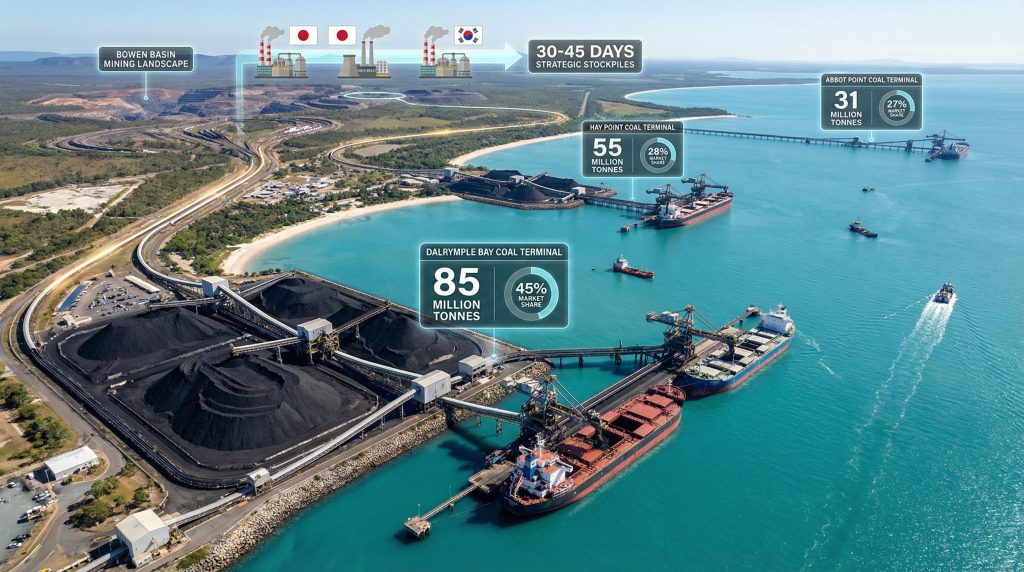
Queensland's northern coal export corridor encompasses three major terminals that collectively handle the majority of Australia's metallurgical coal shipments. Each facility serves distinct market segments while contributing to an interconnected system vulnerable to coordinated disruption.
| Port Facility | Annual Capacity | Market Share | Primary Specialisation | Strategic Function |
|---|---|---|---|---|
| Dalrymple Bay | 85 million tonnes | 45% | Metallurgical coal | Largest single terminal |
| Hay Point | 55 million tonnes | 28% | Mixed coking/thermal | BHP/Mitsubishi operations |
| Abbot Point | 31 million tonnes | 27% | Primarily metallurgical | Emerging basin access |
Abbot Point's position as the smallest facility by throughput masks its strategic importance within the broader network. The terminal processed 31 million tonnes during January-November 2025, representing approximately 27 percent of northern Queensland's coal shipments. This substantial market share creates material supply implications when weather events force operational suspensions.
The geographic concentration of these terminals within cyclone-prone regions creates systemic risk that extends far beyond individual facility capabilities. Unlike redundant infrastructure systems, each terminal serves specialised functions that cannot easily substitute for one another during disruptions.
Terminal Specialisation Analysis:
- Metallurgical focus: Dalrymple Bay and Abbot Point primarily serve steelmaking markets
- Mixed operations: Hay Point handles diversified coal varieties
- Market segmentation: Different terminals serve distinct customer bases and geographic regions
- Transport integration: Each facility connects to specific rail networks and mine sites
What Makes Abbot Point Strategically Important Despite Its Smaller Scale?
Abbot Point's strategic value extends well beyond its current throughput volumes, encompassing geographic advantages, modern infrastructure capabilities, and positioning for future market development. The facility's natural deepwater access reduces ongoing operational costs while providing enhanced weather resilience compared to ports requiring extensive dredging maintenance.
The terminal's proximity to emerging Galilee Basin developments creates forward-looking strategic importance that current capacity metrics fail to capture. As new coal projects advance through development phases, Abbot Point's geographic positioning provides direct transport access that could significantly increase future throughput. Furthermore, environmental monitoring systems at Abbot Point continue evolving to meet regulatory requirements.
Geographic Advantages:
- Natural harbour depth minimising dredging requirements
- Reduced exposure to rainfall-related draft restrictions
- Strategic positioning for Galilee Basin supply chain integration
- Protected anchorage facilities enhancing vessel safety during storms
Modern infrastructure specifications distinguish Abbot Point from older terminal designs, incorporating enhanced weather protection systems and automated monitoring capabilities. These technological advantages enable rapid post-disruption recovery, as demonstrated during Cyclone Koji's passage.
The facility resumed operations within 24 hours of the cyclone's passage, scheduling the NSU Newstar for departure on January 14th following the January 13th operational restart. This rapid turnaround reflects sophisticated damage assessment protocols and equipment specifications prioritising commissioning speed.
Operational Resilience Features:
- Flexible berthing configurations: Multiple vessel size accommodation capabilities
- Enhanced drainage systems: Improved water management during extreme rainfall
- Automated monitoring: Real-time weather tracking and response coordination
- Modern equipment protection: Specialised securing procedures for loading systems
How Do Cyclone Disruptions Cascade Through Global Coal Markets?
Weather-related supply disruptions create measurable impacts across international commodity markets through interconnected mechanisms spanning logistics, pricing, and strategic planning. The concentration of metallurgical coal supplies through Australian ports amplifies these effects, particularly affecting Asian steelmaking operations. Moreover, these disruptions directly influence commodity pricing dynamics across global markets.
Supply Chain Disruption Cascade:
-
Days 1-3: Vessel diversions and anchorage delays
- Immediate shipping schedule adjustments
- Emergency anchorage positioning for fleet protection
- Loading operation suspensions across affected terminals
-
Days 4-7: Spot market price volatility emergence
- Asian trading centres react to supply tightness signals
- Forward-buying urgency increases commodity demand
- Contract delivery timeline pressures develop
-
Weeks 2+: Contract renegotiations and force majeure considerations
- Long-term supply agreement adjustments
- Delivery schedule modifications
- Alternative sourcing strategy implementation
Strategic inventory management plays a crucial role in buffering these disruptions. Major steel producers in Japan, South Korea, and India maintain coal stockpiles specifically designed to provide 30-45 days of operational continuity during Australian supply interruptions.
Strategic Stockpiling Framework:
- Japanese steelmakers: 35-40 day average inventory buffers
- Korean producers: 30-35 day strategic reserves
- Indian operations: 40-45 day safety stock levels
- Emergency protocols: Accelerated consumption during extended disruptions
Chinese steelmaking demand patterns significantly influence market responses to Australian disruptions. December 2025 data showed Chinese purchases of 1.2 million tonnes from Gladstone, reflecting Beijing's housing market support measures that increased steel consumption and coal demand. Additionally, China demand prospects continue shaping global commodity flows.
The interconnected nature of global steel production means Australian weather events can affect construction projects, manufacturing schedules, and infrastructure development across Asia within weeks of initial disruption.
What Operational Contingencies Do Coal Ports Employ During Extreme Weather?
Modern coal terminals implement sophisticated weather monitoring and response systems that enable coordinated operational adjustments before, during, and after extreme weather events. These protocols balance commercial throughput optimisation with equipment protection and personnel safety requirements.
Pre-Event Preparation Protocols:
- Enhanced weather monitoring: Satellite tracking and meteorological analysis
- Accelerated loading schedules: Maximising throughput before storm arrival
- Equipment securing procedures: Specialised protection for conveyor systems and loading arms
- Vessel coordination: Staged departure scheduling for fleet protection
During Cyclone Koji, approximately 15-20 vessels executed coordinated movement patterns across a 3-4 day period, demonstrating the complexity of maritime traffic management during severe weather. Most vessels departed anchorages on January 10th before returning on January 11th as cyclone conditions intensified.
The Japanese-flagged Double Delight represented the last vessel departure before extended closure, carrying 46,033 tonnes of coal on January 8th. No subsequent departures occurred until the planned January 14th sailing of the NSU Newstar, representing a six-day export cessation period.
Post-Event Recovery Framework:
- Rapid damage assessment: 24-48 hour infrastructure evaluation protocols
- Systems testing sequences: Gradual restart of automated and manual systems
- Coordinated vessel return: Staged anchorage occupation and loading queue management
- Market communication: Real-time operational status updates to trading partners
Modern terminals maintain backup power systems and redundant communication networks to ensure operational coordination continues during grid disruptions. These capabilities enable faster recovery compared to older facilities lacking integrated technology systems.
How Do Rail and Road Disruptions Amplify Port Vulnerabilities?
Coal export operations depend on integrated transport networks extending hundreds of kilometres inland from port facilities. Weather damage to these corridors creates persistent bottlenecks that extend disruption periods well beyond port recovery timelines.
Queensland's rail infrastructure serves multiple commodity sectors simultaneously, creating complex interdependencies during extreme weather events. The Mount Isa rail line's closure due to flood damage affected fertiliser, copper, and zinc movements while demonstrating broader systemic vulnerabilities.
Critical Transport Corridor Analysis:
- Goonyella System: Primary conduit for major Bowen Basin coal operations
- Newlands Line: Northern Queensland mining connectivity
- Mount Isa Line: Multi-commodity corridor serving diverse mineral exports
- Alternative routing: Limited backup options during primary corridor closure
Strategic inventory management at both mine sites and port facilities provides operational flexibility during transport disruptions. Mining companies maintain significant stockpiles representing capital investment but enabling continued export operations when rail connections experience temporary closure.
These stockpiles serve dual functions during extreme weather events, providing buffer capacity when transport links fail while ensuring rapid loading resumption once ports reopen. The coordination between mine-site storage, transport capacity, and port throughput creates complex logistics challenges during recovery periods.
Multi-Modal Resilience Strategies:
- Distributed storage: Strategic stockpiling across supply chain nodes
- Transport redundancy: Multiple routing options where geographically feasible
- Flexible scheduling: Adaptive loading priorities based on transport availability
- Emergency protocols: Expedited procedures for critical shipment categories
The next major ASX story will hit our subscribers first
What Are the Long-Term Infrastructure Resilience Implications?
Climate adaptation strategies increasingly influence coal export infrastructure planning as extreme weather events intensify in frequency and severity. Modern facility designs incorporate enhanced resilience specifications that balance operational efficiency with weather protection capabilities.
Infrastructure Hardening Initiatives:
- Elevated conveyor systems: Protection against flood damage and debris impact
- Enhanced drainage infrastructure: Improved water management during extreme rainfall events
- Redundant power systems: Multiple generation sources ensuring operational continuity
- Automated response capabilities: Reduced human intervention requirements during emergencies
The geographic concentration of coal exports through northern Queensland creates ongoing strategic challenges despite individual terminal resilience improvements. Industry discussions increasingly focus on diversification strategies that reduce dependence on cyclone-prone regions.
Diversification Considerations:
- Southern port development: Expanding capacity in less weather-vulnerable regions
- Transport route alternatives: Rail network diversification reducing single-point failures
- Technology integration: Enhanced automation enabling faster post-disruption recovery
- Capacity distribution: Spreading export capability across broader geographic areas
Investment in backup systems and redundant infrastructure represents significant capital requirements but provides measurable operational benefits during extreme weather events. The rapid recovery demonstrated at Abbot Point reflects these investment priorities translating into practical resilience capabilities.
How Do Weather Disruptions Influence Global Coal Pricing Dynamics?
Weather-related supply constraints create immediate pricing pressures that transmit through global commodity markets with remarkable speed. Australian coal's dominant position in metallurgical markets means Queensland weather events can influence steelmaking costs across Asia within hours of disruption onset.
Spot market pricing mechanisms respond rapidly to supply tightness signals, with Asian trading centres monitoring Australian weather forecasts as closely as local coal production data. This immediate price transmission reflects the critical nature of Australian coal supplies and limited short-term substitute availability.
Price Impact Mechanisms:
- Immediate spot volatility: Rapid price increases reflecting forward-buying urgency
- Contract adjustment pressures: Force majeure considerations affecting long-term agreements
- Alternative sourcing costs: Premium pricing for non-Australian coal during disruptions
- Inventory valuation: Strategic stockpile worth increases during supply constraints
Long-term supply agreements increasingly incorporate sophisticated weather-related force majeure clauses that distribute risk between producers and consumers. These contractual innovations reflect growing awareness of climate-related disruption potential affecting global commodity flows.
Treasury forecasts project Australian coking coal prices declining to $140 per tonne by December 2026, yet weather disruptions can create temporary price spikes that override these long-term trends. Recent assessments showed metallurgical coal premium hard low-volatile reaching $218.55 per tonne, demonstrating continued market volatility.
However, ongoing environmental concerns regarding coal port operations continue influencing long-term planning decisions.
Strategic Implications for Australia's Coal Export Future
The Abbot Point incident during Cyclone Koji illustrates both the remarkable resilience capabilities of modern coal infrastructure and the persistent vulnerabilities created by geographic concentration in weather-prone regions. The facility's undamaged emergence from week-long adverse conditions demonstrates successful infrastructure hardening strategies. Consequently, Australia's Abbot Point coal port post-cyclone operations provide valuable lessons for industry planning.
However, the broader implications extend beyond individual terminal capabilities to encompass strategic questions about Australia's coal export architecture. The concentration of 27 percent of northern Queensland's coal shipments through a single facility creates material market impacts when weather forces operational suspensions.
Strategic Planning Considerations:
- Infrastructure diversification: Reducing geographic concentration of export capacity
- Technology integration: Enhanced forecasting and automated response systems
- Supply chain flexibility: Multiple transport routes for major mining operations
- Market adaptation: Contract structures accommodating increasing weather variability
Future development priorities must balance operational efficiency with resilience requirements, considering both immediate commercial pressures and long-term climate adaptation needs. The success of rapid recovery protocols demonstrates how Australia's Abbot Point coal port post-cyclone experiences provide templates for enhancing capabilities across Queensland's coal export network.
Investment in redundant systems, enhanced monitoring capabilities, and flexible operational protocols represents essential infrastructure development for maintaining Australia's competitive position in global coal markets despite increasing extreme weather frequency.
This analysis incorporates data from recent weather events, operational timelines, and market responses to provide strategic insights into Australia's coal export infrastructure resilience. Projections regarding future weather patterns and market developments involve inherent uncertainty and should be considered alongside comprehensive risk assessment frameworks.
Looking to Capitalise on Mining Sector Opportunities?
Discovery Alert's proprietary Discovery IQ model delivers instant notifications on significant ASX mineral discoveries, empowering investors to identify actionable opportunities ahead of the broader market. Start your 30-day free trial today and gain the market-leading advantage you need to make informed decisions in Australia's dynamic resources sector.