June 11, 2026
Australia's A$600 Million Copper Industry Lifeline: Securing Mount Isa's Future
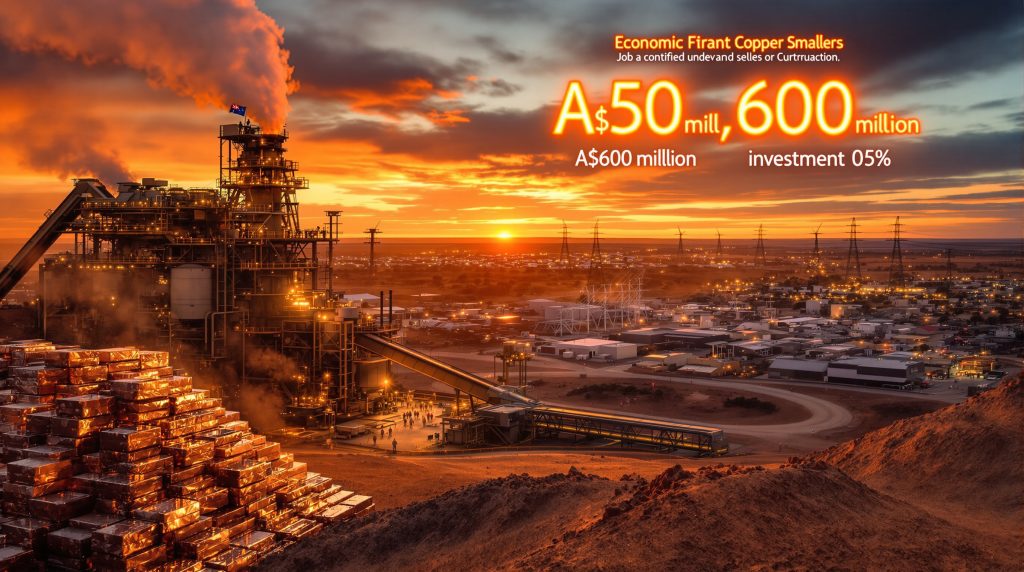
The Australian federal and Queensland state governments have jointly committed to a A$600 million support package to save Glencore's Mount Isa copper smelter and Townsville refinery. This decisive action secures a critical national asset responsible for approximately half of Australia's total copper smelting capacity while preserving hundreds of jobs in North West Queensland.
The funding will be delivered over three years in installments of up to A$200 million each, providing immediate financial stability while longer-term transformation plans are developed. This intervention comes at a crucial time as the 60-year-old facility faced mounting economic pressures that threatened its continued operation.
When big ASX news breaks, our subscribers know first
What Is the Mount Isa Copper Smelter Crisis?
The Economic Challenges Threatening Closure
The Mount Isa copper smelter has been battling severe economic headwinds that jeopardized its viability. Escalating energy costs have dramatically increased operational expenses, with Queensland's historically high electricity prices creating a significant competitive disadvantage. The facility has also struggled with rising gas prices, which are essential for its smelting processes.
Additionally, securing sufficient copper concentrate supplies has become increasingly difficult. Global mining companies have been developing integrated operations that keep concentrate within their own supply chains, limiting availability for independent smelters like Mount Isa.
International competition has intensified as newer, more energy-efficient smelting facilities in Asia can process copper at lower costs. These modern facilities typically benefit from government support, lower energy prices, and proximity to growing markets, placing additional pressure on Mount Isa's aging infrastructure.
Strategic Importance of the Mount Isa Complex
The Mount Isa smelter represents a cornerstone of Australia copper investments and mineral processing capability. As one of only two major copper smelters in the country, it accounts for approximately 50% of Australia's total copper smelting capacity – making it irreplaceable in the near term for maintaining domestic processing sovereignty.
The facility directly employs around 600 workers and supports an additional 500 jobs at Glencore's nearby Phosphate Hill operation. Beyond these direct positions, thousands of additional jobs throughout North West Queensland depend on the continued operation of this industrial cornerstone.
Queensland's Natural Resources and Mines Minister Dale Last emphasized this significance, noting: "The Mount Isa copper smelter and Townsville copper refinery are cornerstones of our economy that support not only 600 direct jobs, but thousands of jobs across the regional supply chain."
How Will the A$600 Million Funding Package Work?
Funding Structure and Timeline
The funding arrangement represents a collaborative approach between federal and state governments. The A$600 million package will be distributed over three years, with up to A$200 million provided annually. This structured approach allows for regular assessment of performance metrics while providing the financial certainty needed for continued operations.
The government support represents a significant compromise from Glencore's initial request, which according to industry sources had sought approximately A$2 billion over a decade to guarantee the smelter's long-term future. The more modest three-year package focuses on immediate viability while creating breathing room for transformation planning.
Both levels of government emphasized they worked "in lockstep" with Glencore to secure the deal following months of uncertainty after the miner warned it was reviewing the long-term viability of the aging smelter.
Capital Infrastructure and Transformation Planning
The funding package has been strategically divided to address both immediate needs and long-term sustainability. Queensland's contribution will primarily fund essential capital infrastructure works to maintain the smelter's operational capabilities. This includes critical maintenance, equipment upgrades, and operational improvements necessary to keep the facility running efficiently.
The federal portion will support a comprehensive transformation study exploring the region's complete copper value chain. This study will analyze everything from mining operations through processing, refining, and potential downstream manufacturing opportunities.
Industry Minister Tim Ayres emphasized that this approach looks beyond simply maintaining the status quo: "This funding will protect Mount Isa's workforce and regional Queensland industries, while reinforcing the need to deliver good skilled jobs to deliver a Future Made in Australia."
Why Is Saving the Mount Isa Smelter a National Priority?
Critical Mineral Processing Capability
Australia has positioned itself as a major player in the critical minerals supply chain, but a significant gap exists between its mining capacity and domestic processing capabilities. While Australia excels at extracting raw materials, it has historically exported most minerals with minimal value addition.
The Mount Isa smelter represents one of the country's few facilities capable of processing copper concentrate into higher-value materials. Industry and Innovation Minister Tim Ayres highlighted this strategic importance: "If Australia did not already have established facilities like the Mount Isa Copper Smelter, we'd be looking to build them to protect Australia's industrial capability."
Maintaining domestic processing capacity reduces vulnerability to international supply chain disruptions and provides greater economic returns from Australia's mineral wealth. This aligns with broader national objectives to move up the value chain in critical mineral industries.
Renewable Energy Supply Chain Significance
Copper plays a fundamental role in the global energy transition as an essential component in renewable energy infrastructure. A typical wind turbine contains up to 4.7 tons of copper, while solar power systems require approximately 5.5 tons of copper per megawatt. Electric vehicles use three to four times more copper than conventional internal combustion engine vehicles.
As surging copper demand for clean energy technologies accelerates, copper will remain a crucial material. By preserving domestic processing capability, Australia aims to strengthen its position in global clean energy supply chains while reducing dependence on overseas refining.
The facility's significance extends beyond its current operations – it represents infrastructural capability that would be prohibitively expensive to replace once lost. As Minister Ayres noted, the smelter is the type of facility that would need to be built if it didn't already exist, given its strategic importance to Australia's industrial capability.
What Regional Economic Impacts Were at Stake?
Mount Isa's Industrial Ecosystem
The Mount Isa copper smelter forms the heart of an integrated industrial ecosystem spanning hundreds of kilometers across North West Queensland. Its operations are intricately linked to multiple supply chains and supporting industries.
The facility's relationship with the Mount Isa to Townsville rail line is particularly significant. This 977-kilometer rail corridor serves as a vital transportation link for moving copper concentrate and refined products. Without the smelter's operations, the economic viability of this crucial infrastructure would be severely compromised.
Another key interdependency exists with Incitec Pivot's sulphuric acid production at Phosphate Hill. The smelter provides sulfur dioxide gas that is converted to sulphuric acid, which is then used in fertilizer production. This symbiotic relationship creates operational efficiencies for both facilities that would be lost if the smelter closed.
Regional Employment and Economic Stability
The employment impact of the copper smelter extends far beyond its direct workforce. While the facility itself employs approximately 600 workers, its economic footprint supports thousands of additional jobs throughout the regional economy.
These positions span diverse sectors including transportation, maintenance services, engineering, hospitality, retail, and public services. Many of these jobs are highly skilled and well-compensated, providing economic anchors for families throughout the region.
The potential closure would have created significant population decline in Mount Isa and surrounding communities. Previous industrial closures in similar regions have demonstrated how quickly regional populations can collapse when major employers depart, creating spiraling effects on property values, small businesses, and community services.
Minister Last emphasized that the funding agreement was about more than preserving jobs: "This deal is about standing with [workers], because we back Mount Isa, we back our metals processing sector and we back the hard-working Queenslanders who keep our economy strong."
How Will the Government Hold Glencore Accountable?
Performance Requirements and Monitoring
The funding agreement includes comprehensive performance requirements to ensure Glencore upholds its commitments. These conditions likely include maintaining minimum employment levels, operational standards, and capital investment targets throughout the funding period.
Regular reporting mechanisms will allow both governments to monitor compliance with these requirements. Minister Ayres was explicit about this accountability: "The Albanese Labor government will hold Glencore to account ensuring they uphold their commitments in this arrangement."
The staged disbursement of funds in annual increments provides the government with additional leverage to ensure compliance. This structure allows for potential adjustment or reconsideration if Glencore fails to meet its obligations under the agreement.
Taxpayer Value Assurance
Both governments emphasized their commitment to ensuring the funding delivers value for taxpayers. The agreement appears structured to balance immediate financial relief with longer-term planning, requiring Glencore to actively participate in transformation efforts rather than simply receiving ongoing subsidies.
Minister Last highlighted this balance, noting the deal was "financially responsible, delivers value for taxpayers, holds Glencore to account and most importantly, gives certainty to families and supports Mount Isa's future."
The transformation study represents a key component of this value proposition. By exploring pathways to greater sustainability and diversification, the governments aim to ensure their investment creates lasting benefits rather than simply delaying an inevitable closure.
The next major ASX story will hit our subscribers first
What Does the Future Hold for Mount Isa's Copper Industry?
The Transformation Study's Scope
The comprehensive transformation study will serve as a roadmap for Mount Isa's industrial future. Its scope extends beyond the smelter itself to examine the entire regional copper value chain, from mining operations through processing, refining, and potential downstream manufacturing.
Key areas likely to be examined include:
- Energy cost reduction strategies, potentially incorporating renewable energy solutions
- Process efficiency improvements to reduce operational expenses
- Technological upgrades to improve environmental performance
- Market diversification opportunities to ensure stable demand
- Potential new products or services that could be developed within the existing industrial framework
This holistic approach recognizes that the smelter's challenges cannot be addressed in isolation but require consideration of the broader regional industrial ecosystem.
Long-Term Viability Considerations
While the current funding secures operations for three years, questions remain about the long-term viability of the 60-year-old smelter. Several fundamental factors will influence its sustainability beyond the initial funding period:
-
Energy costs: Queensland's traditionally high electricity prices have been a major competitive disadvantage. Finding sustainable ways to reduce these costs is crucial.
-
Environmental performance: Increasingly stringent emissions standards create compliance challenges for older facilities. Technological upgrades may be necessary to meet future requirements.
-
Global competitiveness: The smelter must compete with newer, more efficient facilities in Asia and elsewhere. Improving productivity and operational efficiency will be essential.
-
Concentrate supply: Securing reliable, cost-effective copper concentrate supplies remains a challenge as global mining companies increasingly process their own materials.
The transformation study must address these fundamental challenges to create a sustainable future for copper processing in the region beyond the initial three-year lifeline.
What Broader Implications Does This Decision Have for Australia's Resources Sector?
National Minerals Strategy Alignment
The decision to support the Mount Isa smelter aligns with Australia's broader national minerals strategy, which aims to move up the value chain by processing more resources domestically. This represents a shift away from the historical pattern of exporting raw materials for processing overseas.
This approach reflects growing recognition that Australia has been capturing only a fraction of the potential value from its mineral wealth. By maintaining and potentially expanding domestic processing capabilities, the country can secure greater economic benefits and create more high-skilled jobs.
The support package also demonstrates practical implementation of the federal government's "Future Made in Australia" policy, which seeks to rebuild domestic manufacturing and processing capabilities across strategic industries.
Precedent for Government Intervention
The substantial funding commitment sets a precedent for government intervention in strategically important but financially challenged resource processing operations. This raises questions about how similar situations might be handled in other sectors facing international competitive pressures or transitional challenges related to decarbonization.
Other aging industrial facilities across Australia's resources sector may now look to the Mount Isa model as a potential template for securing government support. This could include aluminum smelters, steel producers, and other energy-intensive industries facing similar economic pressures.
The intervention also signals Australia's willingness to adopt more interventionist industrial policies to preserve strategic capabilities. This represents something of a departure from historical approaches that relied more heavily on market forces to determine industrial outcomes.
Balancing Short-Term Relief with Long-Term Planning
The A$600 million lifeline for Glencore's Mount Isa copper smelter represents a significant government commitment to preserving critical industrial infrastructure and regional employment. While providing immediate financial relief to keep the facility operational, the agreement also recognizes the need for longer-term transformation to ensure sustainable operations beyond the funding period.
For the communities of Mount Isa and North West Queensland, this intervention provides crucial breathing room and economic certainty after months of uncertainty. However, the true test will be whether the transformation study can identify and implement viable copper investment strategies to secure the region's industrial future in an increasingly competitive global market.
As copper continues to play a vital role in the global energy transition, maintaining domestic processing capabilities aligns with both economic and strategic objectives. The challenge now lies in transforming the aging facility into a competitive, sustainable operation that can thrive without ongoing government support, especially as copper price predictions and copper industry insights continue to indicate strong future demand.
Want to Identify the Next Major Mineral Discovery?
Discover high-potential ASX mineral announcements before the broader market using Discovery Alert's proprietary Discovery IQ model, which instantly transforms complex data into actionable insights. Explore why major discoveries like De Grey Mining have generated substantial returns by visiting Discovery Alert's dedicated discoveries page.