
May 20, 2026
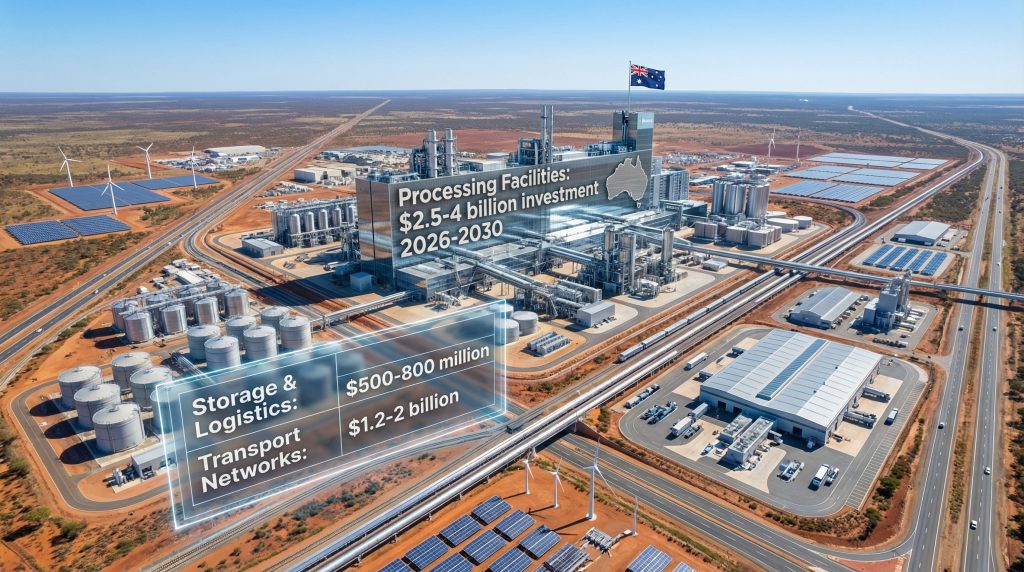
Australia's position in the global critical minerals landscape depends fundamentally on coordinated infrastructure development that transforms raw resource endowment into strategic competitive advantage. The AMEC submission on critical minerals infrastructure provides a comprehensive framework for understanding how targeted investment can reshape national economic security architecture. Furthermore, the transformative potential of coordinated infrastructure investment extends far beyond individual project economics, requiring examination of interconnected systems that support extraction, processing, and distribution networks through a comprehensive critical minerals strategy.
Mapping Australia's Critical Minerals Infrastructure Investment Requirements
Current infrastructure capacity across Australia's critical minerals sector reveals significant gaps that constrain the nation's ability to capture downstream value. Processing facilities remain limited in both capacity and technological sophistication, with most operations focused on primary extraction rather than value-added manufacturing. The $3.4 billion Resourcing Australia's Prosperity Program represents substantial federal commitment, yet infrastructure requirements extend well beyond exploration initiatives to encompass integrated processing, storage, and transport networks.
Strategic investment zones requiring immediate attention include Western Australia's lithium corridors, Queensland's rare earth deposits, and Northern Territory's emerging critical minerals provinces. These regions lack the coordinated infrastructure necessary to support large-scale processing operations, forcing many projects to export raw materials for overseas refinement.
| Infrastructure Category | Current Status | Investment Priority | Development Timeline |
|---|---|---|---|
| Processing Facilities | Limited downstream capability | High | 2026-2030 |
| Storage & Logistics | Fragmented systems | Medium-High | 2026-2028 |
| Transport Networks | Regional bottlenecks | High | 2026-2032 |
| Power Infrastructure | Renewable integration needed | Very High | 2026-2029 |
Comparative analysis against global competitors reveals Australia's infrastructure disadvantage. China's integrated supply chain model demonstrates how coordinated infrastructure investment creates competitive advantages that extend beyond resource endowment. Consequently, North American critical minerals initiatives increasingly emphasise shared infrastructure development, while European programmes focus on strategic autonomy through domestic processing capacity.
Regional Hub Development Strategy Analysis
Identifying optimal locations for integrated processing centres requires balancing resource proximity, transport access, and community considerations. The Association of Mining and Exploration Companies emphasises that strategic infrastructure planning should integrate spatial mapping approaches, where new deposits are identified alongside potential community concerns or competing land uses.
Multi-commodity facility design offers significant operational efficiencies through shared utilities, waste management systems, and technical expertise. Such facilities can process multiple critical minerals simultaneously, reducing per-unit costs whilst creating economies of scale that individual projects cannot achieve independently.
Cross-jurisdictional coordination frameworks remain essential for regional hub success. However, the AMEC submission highlights the importance of improved coordination between jurisdictions and the Commonwealth, particularly in developing common-user infrastructure that supports emerging critical minerals provinces through the strategic reserve framework.
When big ASX news breaks, our subscribers know first
What Workforce Capabilities Will Drive Australia's Critical Minerals Future?
The critical minerals sector's expansion trajectory requires workforce capabilities that currently exceed Australia's educational and training capacity. Skills requirements span the entire value chain, from geological exploration through advanced manufacturing, with particular emphasis on downstream processing and value-adding capabilities.
Skills Gap Assessment Across the Value Chain
Current workforce capacity assessment reveals significant shortfalls in specialised technical roles. Processing operations require metallurgical expertise that has diminished in Australian universities over recent decades. Moreover, advanced manufacturing capabilities demand cross-disciplinary knowledge combining materials science, engineering, and digital technologies.
Critical Challenge: Universities need incentives to rebuild lost capacity in earth sciences and geology programmes, particularly in areas of strategic importance such as critical minerals processing and refining.
International talent acquisition strategies become necessary to bridge immediate skills gaps whilst domestic capacity develops. However, sustainable workforce development requires comprehensive educational infrastructure transformation rather than reliance on temporary foreign expertise.
Educational Infrastructure Transformation Requirements
University programme expansion in earth sciences and metallurgy addresses foundational knowledge requirements, yet practical training infrastructure remains equally important. Industry-academia partnership models can provide students with hands-on experience whilst supplying industry with research capabilities and technical innovation.
Key Educational Components:
• Specialised degree programmes in critical minerals processing and refining
• Research partnerships between universities and mining companies
• International exchange programmes with leading global institutions
• Continuing education for existing workforce skill development
Apprenticeship and vocational training pathway development addresses practical skills requirements for processing operations, maintenance, and quality control. These programmes require significant coordination between educational institutions, industry associations, and government funding bodies to support energy transition security objectives.
How Can Strategic Community Engagement Reshape Project Outcomes?
Effective engagement with local communities and Traditional Owners forms the foundation of sustainable critical minerals development. The AMEC submission emphasises that maintaining strong social licence requires proactive identification of potential conflicts rather than reactive management approaches.
Social Licence Framework for Large-Scale Infrastructure
Traditional Owner engagement protocols must recognise the long-term nature of infrastructure development and processing operations. Benefit-sharing models extend beyond immediate royalty payments to include equity participation, employment opportunities, and capacity building initiatives that create sustained economic benefits for Indigenous communities.
Strategic mapping allows governments and industry to anticipate potential challenges earlier and address them before project development begins. This proactive approach requires spatial analysis of new deposit locations against community areas of concern and competing land uses.
Community Engagement Best Practices:
- Early consultation before project design finalisation
- Ongoing dialogue throughout project lifecycle
- Transparent benefit-sharing arrangements
- Cultural heritage protection protocols
- Environmental monitoring with community participation
Capacity Building Investment Models
Prescribed Bodies Corporate require increased funding to build organisational capacity for engaging with mining stakeholders and managing land access discussions efficiently. Current funding levels often leave Indigenous organisations under-resourced relative to the complexity of negotiations with large mining operations.
Community organisation development programmes should address technical, legal, and administrative capacity gaps. These programmes enable more effective participation in project planning and ongoing monitoring whilst building local expertise in critical minerals development.
Stakeholder Engagement Technology Platforms:
• Digital consultation systems for ongoing community feedback
• Real-time monitoring platforms for environmental and social impacts
• Information sharing portals for project updates and data transparency
• Cultural mapping tools for heritage site protection
What Regulatory Architecture Will Enable Infrastructure Acceleration?
The existing regulatory framework operates across federal, state, and local levels, creating complexity that can delay project development without necessarily improving environmental or social outcomes. AMEC advocates for regulatory optimisation based on incentives rather than additional compliance burdens.
Multi-Jurisdictional Coordination Mechanisms
Federal-state regulatory alignment strategies focus on bilateral agreement frameworks that reduce duplicate assessment processes whilst maintaining environmental standards. AMEC recommends prioritising assessment bilateral agreements with state and territory governments in the near term, progressing toward full approval bilateral arrangements over the longer term.
Environment Protection and Biodiversity Conservation Act reform implications extend beyond individual project approvals to encompass strategic infrastructure development. Reforms should facilitate coordinated infrastructure planning whilst ensuring environmental protection requirements remain robust alongside the broader mining industry evolution.
Regulatory Coordination Components:
• Bilateral assessment agreements between Commonwealth and states
• Streamlined approval pathways for strategic infrastructure
• Performance-based assessment criteria focused on outcomes
• Coordinated environmental monitoring across jurisdictions
Incentive Structure Design vs. Compliance Burden Management
Tax incentive optimisation for infrastructure development should encourage shared infrastructure investment whilst maintaining competitive neutrality principles. Regulatory streamlining without environmental compromise requires careful balance between efficiency and protection standards.
Performance-based approval mechanisms focus on achieving environmental and social outcomes rather than prescriptive process requirements. This approach allows flexibility in how objectives are achieved whilst maintaining clear accountability for results.
How Will Common-Use Infrastructure Networks Transform Sector Economics?
The development of common-user infrastructure represents a paradigm shift from individual project infrastructure toward coordinated regional development. AMEC recommends that the Australian Government encourage coordinated infrastructure planning to support emerging critical minerals provinces through water access, power supply, transport connectivity, and regional mineral hubs.
Shared Infrastructure Economic Modelling
Cost-benefit analysis of coordinated versus individual facility development demonstrates significant potential savings through shared infrastructure approaches. Processing facilities designed for multiple commodities can achieve economies of scale whilst reducing environmental footprints through integrated waste management and utilities systems.
Risk distribution mechanisms across multiple operators require careful legal and commercial structuring. Furthermore, revenue-sharing frameworks for common-use facilities must balance individual project economics with collective infrastructure investment requirements.
| Infrastructure Type | Individual Development | Shared Development | Potential Benefits |
|---|---|---|---|
| Processing Facilities | High capital intensity | Reduced per-user costs | Scale economies, technical expertise |
| Transport Networks | Duplicate investments | Coordinated corridors | Reduced environmental impact |
| Storage Systems | Limited capacity | Strategic reserves | Supply chain resilience |
| Utilities | Site-specific solutions | Regional integration | Renewable energy optimisation |
Supply Chain Resilience Through Infrastructure Integration
Strategic stockpiling facility requirements support both domestic market security and international supply chain stability. These facilities require sophisticated storage technologies that maintain product quality over extended periods whilst providing rapid deployment capabilities during supply disruptions.
Emergency supply chain activation protocols become increasingly important as critical minerals gain strategic significance. Infrastructure design should incorporate redundancy and alternative routing capabilities that maintain operations under various disruption scenarios.
International supply chain diversification strategies benefit from integrated domestic infrastructure that can serve multiple export markets efficiently. Regional mineral hubs help diversify supply chains and strengthen Australia's global position in critical minerals through flexible distribution networks.
What Technology Integration Will Define Next-Generation Infrastructure?
Digital infrastructure requirements for critical minerals extend beyond traditional industrial systems to encompass blockchain provenance tracking, artificial intelligence optimisation, and real-time supply chain monitoring capabilities through data-driven mining operations.
Digital Infrastructure Requirements for Critical Minerals
Blockchain provenance tracking systems provide transparent documentation of critical minerals from extraction through processing to end-use applications. These systems become increasingly important as downstream users require verification of sustainable and ethical sourcing practices.
AI-powered ore sorting and processing optimisation technologies can significantly improve recovery rates whilst reducing energy consumption and waste generation. Integration of these technologies requires substantial digital infrastructure investment alongside traditional processing equipment.
Technology Integration Components:
• IoT sensor networks for continuous monitoring and optimisation
• Advanced analytics platforms for predictive maintenance and quality control
• Automated material handling systems for improved safety and efficiency
• Digital twin modelling for process optimisation and scenario planning
Renewable Energy Integration Strategies
On-site renewable energy generation for processing facilities addresses both environmental sustainability and energy security concerns. Solar and wind resources in many critical minerals regions provide opportunities for cost-effective renewable energy integration.
Grid integration challenges require sophisticated power management systems that can balance variable renewable generation with consistent processing demands. Energy storage requirements for continuous operations become critical infrastructure components that enable renewable energy reliance.
The next major ASX story will hit our subscribers first
How Will Australia's Infrastructure Strategy Compare Globally?
International comparative analysis reveals different approaches to critical minerals infrastructure development, each with distinct advantages and limitations. Understanding these models provides insight into optimal strategies for Australian conditions.
Competitive Positioning Analysis
China's integrated supply chain model demonstrates how coordinated government and industry investment can create dominant market positions across multiple critical minerals. This model emphasises vertical integration from mining through manufacturing, supported by substantial state investment and coordination.
North American critical minerals infrastructure initiatives focus on strategic autonomy through reshoring capabilities and alliance building. The United States Inflation Reduction Act provides substantial incentives for domestic processing capacity whilst creating preferential supply arrangements with allied nations.
European Union strategic autonomy programmes emphasise circular economy principles and sustainable sourcing requirements. These initiatives create regulatory frameworks that favour suppliers meeting environmental and social standards whilst building domestic processing capabilities.
Strategic Advantage Development Through Infrastructure
Australia's unique value propositions include geological diversity, political stability, and established mining expertise. These advantages require reinforcement through infrastructure investments that enable downstream value capture whilst maintaining competitive cost structures.
Australian Strategic Advantages:
• Geological endowment across multiple critical minerals
• Political stability and transparent regulatory frameworks
• Established mining expertise and service sector capabilities
• Strategic geographic position serving Asian markets
• Strong rule of law providing investment security
Export market positioning strategies should leverage infrastructure investments to create differentiated product offerings rather than competing solely on cost. Premium positioning based on sustainability, reliability, and quality requires supporting infrastructure that can deliver these attributes consistently.
What Investment Mechanisms Will Fund Infrastructure Transformation?
Public-private partnership models for critical infrastructure must balance commercial viability with strategic national objectives. Government co-investment frameworks can reduce private sector risk whilst ensuring infrastructure development aligns with broader economic and security priorities.
Public-Private Partnership Models for Critical Infrastructure
Risk-sharing mechanisms between public and private sectors require careful structuring to align incentives whilst protecting taxpayer interests. Government involvement can address market failures in coordinated infrastructure development whilst leveraging private sector efficiency and innovation capabilities.
International development finance integration provides additional funding sources for large-scale infrastructure projects. Multilateral development banks and allied government finance agencies increasingly prioritise critical minerals infrastructure as strategic investments supporting supply chain security.
Strategic Reserve Implementation Requirements
Physical storage infrastructure specifications for strategic reserves must accommodate diverse critical minerals with varying storage requirements. Some materials require specialised atmospheric conditions or handling procedures that add complexity and cost to storage facility design.
Financial mechanisms for reserve accumulation require sustained funding commitments over multiple political cycles. Strategic release protocols for market stability must balance emergency supply requirements with market intervention impacts on commercial operators.
Future Scenario Planning: Infrastructure Resilience Under Global Pressure
Geopolitical tensions increasingly influence critical minerals markets, creating demand for infrastructure designs that maintain operations under various disruption scenarios. Supply chain resilience requires redundancy that may appear economically inefficient under normal conditions but provides essential security during crises.
Geopolitical Risk Mitigation Through Infrastructure Design
Supply chain disruption response capabilities require infrastructure flexibility that can redirect production or distribution rapidly. Alternative export route development reduces dependency on single transport corridors that may become compromised during international tensions.
Domestic market supply guarantee mechanisms ensure essential industries maintain access to critical minerals during export restrictions or international supply disruptions. These systems require domestic processing capacity that may not be economically optimal under normal market conditions.
Climate Change Adaptation in Infrastructure Planning
Extreme weather resilience requirements influence infrastructure design across all critical minerals operations. Processing facilities must withstand increasing weather variability whilst maintaining consistent output quality and environmental performance.
Water security for processing operations becomes increasingly challenging as climate patterns shift and water competition intensifies. Infrastructure investments in water recycling, alternative sources, and efficiency technologies provide operational resilience whilst reducing environmental impacts.
Climate Adaptation Strategies:
- Resilient infrastructure design for extreme weather events
- Water security systems including recycling and alternative sources
- Renewable energy integration reducing fossil fuel dependencies
- Carbon management infrastructure for emissions reduction
- Biodiversity offset systems supporting environmental sustainability
Implementation Roadmap: From Strategy to Operational Reality
Transforming strategic infrastructure concepts into operational reality requires phased implementation approaches that build capability progressively whilst maintaining commercial viability. Priority infrastructure projects for immediate implementation should demonstrate coordination principles whilst delivering tangible economic benefits.
Phased Infrastructure Development Timeline
Near-term priorities focus on removing immediate bottlenecks in transport and basic processing infrastructure whilst establishing frameworks for coordination and shared investment. Medium-term capacity expansion builds on initial successes to create integrated processing hubs serving multiple commodities and operators.
Implementation Phase Structure:
• Phase 1 (2026-2028): Transport corridors, basic processing, regulatory frameworks
• Phase 2 (2028-2031): Integrated processing hubs, storage facilities, workforce development
• Phase 3 (2031-2035): Advanced manufacturing, international integration, strategic reserves
• Phase 4 (2035+): Technology leadership, circular economy systems, global market leadership
Long-term strategic infrastructure vision should position Australia as the preferred supplier of sustainably produced critical minerals to democratic allies and partners. This vision requires infrastructure capabilities that support premium positioning rather than commodity competition.
Success Metrics and Performance Monitoring
Key performance indicators for infrastructure effectiveness must balance economic, environmental, and social outcomes. Regular review and adaptation mechanisms ensure infrastructure investments remain aligned with evolving market conditions and strategic priorities.
International benchmarking protocols provide objective assessment of Australia's infrastructure competitiveness relative to other major critical minerals suppliers. These assessments should encompass cost structures, processing capabilities, environmental performance, and supply chain reliability.
Disclaimer: This analysis is based on publicly available information and expert assessments. Infrastructure investment requirements and timelines may vary based on technological developments, market conditions, and policy changes. Readers should seek professional advice before making investment decisions related to critical minerals infrastructure.
What Infrastructure Opportunities Could Transform Your Mining Investment Portfolio?
Discovery Alert's proprietary Discovery IQ model instantly identifies significant ASX mineral discoveries across Australia's rapidly evolving critical minerals landscape, providing subscribers with immediate access to infrastructure-driven investment opportunities as they emerge. Explore how major mineral discoveries can generate substantial returns by visiting Discovery Alert's discoveries page, then begin your 14-day free trial to position yourself ahead of infrastructure development announcements.