July 12, 2026
Australia's energy security landscape has undergone fundamental structural changes over the past decade, creating vulnerabilities that extend far beyond simple supply-demand economics. The closure of domestic refining capacity, combined with increasing reliance on geographically concentrated import sources, has positioned the nation's fuel infrastructure at a critical juncture where traditional market mechanisms may prove insufficient during supply disruptions. Furthermore, recent oil price rally insights highlight the interconnected nature of global energy markets and their potential impact on Australia's fuel security framework.
Understanding Australia's Current Fuel Security Position
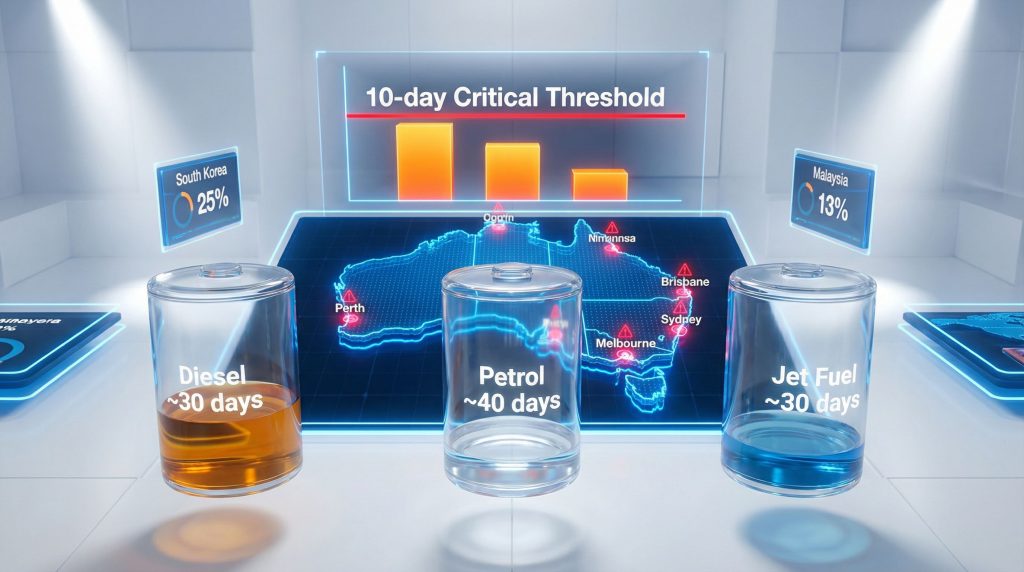
Australia's fuel reserves currently maintain approximately 30 days of diesel, 40 days of petrol, and 30 days of jet fuel in national stockpiles. These levels represent what government analysts describe as pre-conflict baseline conditions, with all fuel shipments secured through May 2026. However, this apparent stability masks underlying structural vulnerabilities that could rapidly deteriorate under specific economic and geopolitical pressures.
The nation operates under a four-tier emergency response framework, with fuel rationing in Australia representing the final escalation stage. Federal government economic modelling identifies a 10-day national stockpile threshold as the critical trigger point for implementing systematic fuel restrictions. This represents the moment when maintaining essential infrastructure takes precedence over general consumer access, fundamentally altering the nation's economic operations.
Moreover, the complexity of Australia's energy exports challenges adds another layer of vulnerability to the nation's overall energy security posture.
Critical Timeline Analysis for Rationing Implementation
Research conducted during the recent Middle Eastern conflict revealed specific vulnerability timelines that illuminate how quickly Australia could transition from normal operations to rationing conditions:
- 20% import reduction scenario: Complete stockpile depletion within six months
- 40% import disruption: Diesel reserves exhausted within 8-10 weeks
- Demand management measures: Could extend timeline by approximately one week
Current reserve levels position Australia at what analysts term the "yellow zone" of fuel security, where supply chain disruptions could trigger rationing implementation within three weeks under severe scenarios.
| Reserve Type | Current Supply Days | Historical Average | Rationing Trigger |
|---|---|---|---|
| Diesel | 30 days | 45-60 days | 10 days |
| Petrol | 40 days | 50-70 days | 10 days |
| Jet Fuel | 30 days | 40-55 days | 10 days |
When big ASX news breaks, our subscribers know first
Economic Drivers Behind Fuel Rationing Implementation
Multiple interconnected economic factors could precipitate fuel rationing in Australia, with import dependency representing the primary structural vulnerability. The nation's reliance on imported refined fuel has reached over 80% of total consumption, creating exposure to global supply chain disruptions that domestic production can no longer buffer.
Geographic Concentration Risk in Supply Sources
Australia's fuel import profile reveals dangerous concentration among Asian suppliers, with the top four sources providing over half of total imports:
- South Korea: 25% of refined fuel imports
- Malaysia: 13% of supply chain volume
- India: 8% of total imports
- Taiwan: 8% of refined products
- China: 7% of fuel supplies
- Other sources: 39% distributed across multiple suppliers
This geographic concentration creates compounding vulnerabilities when combined with the indirect Middle Eastern crude oil dependency. Much of Asia's refined fuel production relies on Middle Eastern crude oil, meaning regional conflicts can disrupt Australian fuel security through secondary supply chain effects. Additionally, understanding critical minerals & security becomes increasingly important as nations navigate resource dependencies.
Structural Economic Changes Eliminating Buffer Capacity
The closure of Australia's domestic refinery infrastructure has eliminated the economic flexibility to increase production during supply shortages. Unlike previous decades when domestic refineries could ramp up production to offset import disruptions, current infrastructure provides no surge capacity for emergency situations.
Economic Vulnerability Assessment: Each 1% reduction in fuel availability creates approximately 0.3% GDP impact across transportation-dependent sectors, with cascading effects amplifying through supply chain networks and consumer price inflation mechanisms.
This structural change means price mechanisms alone cannot resolve severe supply disruptions, necessitating administrative allocation systems during crisis periods. For instance, examining global patterns in energy transition challenges provides valuable context for understanding how other nations manage similar vulnerabilities.
Priority Access Framework During Fuel Rationing
Fuel rationing in Australia would operate through a hierarchical allocation system designed to maintain critical economic and social functions while managing severe supply constraints. The framework prioritises systemic continuity over individual consumer preferences, representing a fundamental shift from market-based to administrative resource distribution.
Tier 1: Essential Infrastructure and Emergency Services
Healthcare and Medical Facilities
- Hospitals and critical care facilities
- Emergency medical transport services
- Dialysis and life-support equipment operations
- Medical supply distribution networks
Critical Infrastructure Operations
- Electricity generation and distribution systems
- Water treatment and distribution facilities
- Telecommunications infrastructure maintenance
- Emergency response services (police, fire, ambulance)
Tier 2: Economic Continuity Services
Food Security Chain Operations
- Agricultural production and harvesting equipment
- Food processing and packaging facilities
- Cold chain transportation and storage
- Essential retail distribution networks
Public Transportation Systems
- Bus networks and urban transit systems
- Rail freight operations for essential goods
- Inter-regional passenger services
- Airport operations for critical flights
Tier 3: Restricted Access Categories
Commercial and Consumer Activities
- Non-essential retail operations
- Tourism and hospitality services
- Personal vehicle usage beyond essential trips
- Recreational transportation activities
The allocation system would likely operate through permit-based access, with critical users receiving guaranteed allocations while lower-tier users face quantity restrictions and potentially rationed purchase schedules.
Sectoral Economic Impact Analysis
Fuel rationing implementation creates differentiated economic impacts across industry sectors, with effects varying based on transportation dependency, operational flexibility, and alternative energy options.
Primary Economic Disruption by Industry
| Sector | Impact Severity | Primary Disruptions | Adaptation Period |
|---|---|---|---|
| Agriculture | High | Equipment operations, transport delays | 2-4 weeks |
| Manufacturing | Severe | Production interruptions, supply bottlenecks | 1-3 weeks |
| Retail | Moderate-High | Delivery constraints, inventory shortages | 3-6 weeks |
| Services | Variable | Client access issues, remote work shifts | 1-2 weeks |
| Mining | High | Extraction equipment, transport logistics | 2-5 weeks |
Regional Economic Variations
Metropolitan Area Advantages
- Higher public transportation density and capacity
- Greater economic diversity reducing single-sector dependency
- Enhanced infrastructure for alternative transportation modes
- Concentrated essential services reducing travel requirements
Regional Community Vulnerabilities
- Limited public transportation alternatives
- Higher agricultural sector concentration
- Extended travel distances for essential services
- Reduced economic diversity increasing sector-specific risks
Remote Area Critical Dependencies
- Extreme vulnerability to supply chain disruptions
- Limited infrastructure for transportation alternatives
- Potential for complete economic isolation
- Dependency on air transport for essential supplies
Manufacturing Sector Specific Impacts
Manufacturing operations face particularly severe disruptions due to just-in-time supply chain models and energy-intensive production processes. Key vulnerabilities include:
- Supply chain interruptions: Delayed raw material deliveries affecting production schedules
- Transport cost escalation: Increased logistics expenses reducing profit margins
- Shift scheduling disruptions: Reduced transport availability affecting workforce management
- Export contract challenges: Difficulty meeting international delivery commitments
Consequently, understanding global trends such as the US oil production impact becomes crucial for predicting how international market dynamics might affect domestic manufacturing sectors.
Alternative Transportation Infrastructure Capacity
Economic resilience during fuel rationing depends heavily on the rapid deployment and optimisation of existing alternative transportation systems, combined with emergency capacity expansion programmes.
Public Transportation Optimisation Strategies
Immediate Capacity Enhancement Measures
- Extended operating hours utilising existing vehicle fleets
- Increased service frequency on high-demand routes
- Temporary route additions serving essential destinations
- Priority boarding systems for essential workers
Economic Efficiency Metrics for Public Transport
- Passenger capacity: 40-60 people per fuel unit versus single vehicles
- Cost efficiency: 60-80% reduction in per-passenger-kilometre costs
- Infrastructure utilisation: 200-300% increase during rationing periods
- Energy efficiency: 5-8 times more fuel-efficient than private vehicles
Freight Transportation Rebalancing
Rail Network Capacity Utilisation
- Shift from road to rail freight where infrastructure exists
- Consolidated shipping reducing total vehicle movements
- Hub-and-spoke distribution models minimising fuel consumption
- Priority rail access for essential goods transportation
Last-Mile Delivery Innovation
- Electric vehicle deployment for short-range deliveries
- Cargo bicycle networks for urban distribution
- Community collection point systems reducing individual trips
- Consolidated delivery schedules maximising vehicle efficiency
Infrastructure Capacity Limitations
Current alternative transportation infrastructure faces significant capacity constraints that would limit effectiveness during rationing periods:
- Public transport fleet limitations: Existing vehicles may lack capacity for 3-5x usage increases
- Rail freight bottlenecks: Limited rail infrastructure between major cities
- Electric vehicle charging: Insufficient charging infrastructure for rapid fleet conversion
- Active transportation: Limited bicycle and pedestrian infrastructure in many regions
Economic Sustainability Timeline Under Rationing
The duration that Australia's economy could function under fuel rationing depends on restriction severity, alternative system capacity, and the underlying causes of supply disruption. Economic modelling suggests differentiated impacts across time horizons.
Short-Term Economic Adaptation (0-3 months)
Immediate Economic Adjustments
- 20-30% reduction in non-essential economic activity
- Rapid shift to remote work arrangements where technically feasible
- Supply chain consolidation and optimisation
- Emergency public transportation capacity deployment
GDP Impact Projections
- Month 1: 2-4% GDP contraction primarily in transportation-dependent sectors
- Month 2: 4-7% cumulative economic impact as supply chain effects compound
- Month 3: 6-10% total economic reduction with service sector adaptations beginning
Medium-Term Structural Adaptation (3-12 months)
Business Model Evolution
- Permanent adoption of remote work practices reducing transportation demand
- Localised supply chain development reducing long-distance transport dependency
- Investment acceleration in fuel-efficient and alternative energy technologies
- Service sector digital transformation reducing physical transportation needs
Economic Rebalancing Mechanisms
- Contraction in transportation-intensive industries
- Growth in digital services and remote-capable sectors
- Regional economic specialisation reducing inter-regional transport
- Consumer behaviour shifts toward local consumption patterns
Long-Term Economic Transformation (12+ months)
Extended rationing periods would catalyse fundamental structural changes in Australia's economic organisation:
- Energy system transformation: Accelerated transition to renewable transportation fuels
- Localised manufacturing revival: Reduced viability of long-distance supply chains
- Digital-first business models: Permanent shift toward remote service delivery
- Urban planning evolution: Reduced geographic dispersion of economic activity
The next major ASX story will hit our subscribers first
Government Economic Policy Framework
The economic framework supporting fuel rationing implementation involves multiple coordinated policy instruments designed to maintain essential functions while minimising broader economic system collapse. In addition, National Cabinet's four-step fuel supply plan provides the strategic foundation for emergency responses.
Market Intervention and Price Control Mechanisms
Fuel Excise and Tax Policy
- Temporary reduction or suspension of fuel excise taxes to moderate consumer prices
- Targeted tax rebates for essential service providers maintaining critical operations
- Dynamic pricing mechanisms based on supply availability and priority user categories
Anti-Profiteering and Market Stability
- Enhanced penalties for price manipulation during supply emergencies
- Regulated pricing structures for essential sector fuel access
- Market monitoring systems detecting and preventing supply hoarding
Economic Support and Transition Programmes
Direct Financial Assistance Mechanisms
- Subsidies for public transportation system expansion and optimisation
- Financial support for businesses transitioning to alternative energy systems
- Compensation programmes for severely impacted industries and regions
Infrastructure Investment Acceleration
- Fast-tracking of alternative fuel infrastructure development projects
- Public transportation system capacity upgrades and expansion
- Electric vehicle charging network rapid deployment programmes
Employment and Social Stability Measures
Economic disruption from fuel rationing in Australia requires coordinated employment support to maintain social stability:
- Workforce transition programmes: Retraining for industries less dependent on fuel-intensive operations
- Essential worker support: Enhanced compensation and benefits for critical infrastructure employees
- Regional development assistance: Economic support for communities heavily dependent on transportation-intensive industries
International Trade and Economic Competitiveness Implications
Fuel rationing creates significant implications for Australia's international economic relationships and competitive position in global markets, with effects extending beyond immediate supply constraints.
Export Sector Vulnerability Assessment
Mining and Resource Exports
- Transportation bottlenecks affecting port delivery schedules and contract fulfilment
- Increased extraction and processing costs reducing international price competitiveness
- Equipment operation restrictions limiting production capacity
- Quality control challenges during extended transport and storage periods
Agricultural Export Challenges
- Harvesting equipment restrictions affecting crop timing and quality
- Cold chain transportation disruptions threatening perishable goods exports
- Processing facility limitations reducing value-added export capacity
- International contract compliance difficulties affecting long-term trade relationships
Import Dependency and Supply Security
Critical Import Prioritisation Framework
- Medical supplies and pharmaceutical products receiving highest priority
- Essential manufacturing components maintaining production capability
- Food security imports ensuring domestic nutritional requirements
- Energy infrastructure components supporting alternative fuel development
Supply Chain Geographic Reorientation
- Preference shift toward regional suppliers reducing transportation distances and fuel requirements
- Bulk purchasing agreements maximising transportation efficiency per fuel unit consumed
- Strategic stockpiling programmes for essential imports reducing transport frequency requirements
International Economic Relationship Impacts
Fuel rationing affects Australia's broader international economic engagement through:
- Trade agreement compliance: Potential difficulties meeting delivery commitments under existing trade agreements
- Foreign investment attractiveness: Reduced economic stability potentially affecting international investment flows
- Regional economic integration: Increased focus on Asia-Pacific economic relationships reducing dependence on distant markets
- Technology transfer acceleration: Enhanced cooperation with nations possessing advanced alternative energy transportation systems
International Rationing Experience and Economic Lessons
Historical and contemporary examples of fuel rationing provide valuable insights for economic planning, crisis management strategies, and recovery pathways relevant to Australian conditions.
European Crisis Response Models
Netherlands 1973 Oil Crisis Economic Response
- Car-free Sundays implemented reducing national fuel consumption by approximately 15%
- Public transportation usage increased by 40% during restriction periods
- Economic activity restructuring toward weekdays improving overall operational efficiency
- Long-term behavioural changes reducing per-capita fuel consumption even after crisis resolution
Germany 2022 Energy Security Economic Management
- Industrial energy rationing prioritising essential production maintaining export capacity
- Coordinated economic support packages preserving employment during transition periods
- Accelerated renewable energy infrastructure investment creating long-term energy security
- International cooperation frameworks ensuring supply chain continuity during restrictions
Developing Economy Rationing Strategies and Outcomes
Sri Lanka 2022 Fuel Crisis Economic Impact Analysis
- Priority allocation systems maintained essential services during severe shortages
- Economic contraction reaching 25% demonstrated extreme rationing impact potential
- Recovery timeline extending 18 months with substantial international financial support
- Social stability maintenance through targeted distribution rather than pure market mechanisms
Economic Planning Lessons for Australia
- Early intervention effectiveness: Proactive measures prevent severe economic disruption more effectively than reactive responses
- Alternative infrastructure investment: Pre-existing alternative transportation capacity provides crucial economic resilience during crisis periods
- International cooperation requirements: Supply security during rationing requires coordinated international assistance and supply agreements
- Social equity considerations: Rationing systems require careful design to prevent disproportionate impacts on vulnerable populations
Recovery and Long-Term Economic Adaptation
International experience demonstrates that fuel rationing periods often catalyse permanent economic structural changes extending beyond the immediate crisis resolution:
- Energy efficiency improvements: Businesses and consumers adopt permanently more efficient practices
- Transportation system modernisation: Crisis periods accelerate infrastructure investment in alternative systems
- Economic resilience enhancement: Post-crisis economies often demonstrate improved shock absorption capacity
- Regional economic rebalancing: Reduced long-distance economic integration in favour of local and regional systems
The Australian context suggests similar transformation potential, with the nation's geographic characteristics and economic structure providing both challenges and opportunities for adaptation during potential fuel rationing periods. However, the unique aspects of Australia's fuel rationing plan reveal specific mechanisms designed to address these geographical and economic considerations.
Disclaimer: This analysis is based on publicly available government modelling, economic research, and historical case studies. Economic impact projections represent estimates based on available data and should not be considered definitive forecasts. Readers should consult official government sources and financial advisors for specific planning decisions. The timeline and severity of potential fuel rationing depend on numerous unpredictable factors including international conflicts, supply chain disruptions, and government policy responses.
Could Fuel Rationing Create New Investment Opportunities in Energy Security?
Discovery Alert's proprietary Discovery IQ model delivers real-time alerts on significant energy and critical minerals discoveries, instantly empowering subscribers to identify actionable opportunities as Australia navigates its evolving energy security landscape. Begin your 14-day free trial today and secure your market-leading advantage in the rapidly transforming resources sector.